For those in the northern hemisphere, the last full week in January last week kicks off with Blue Monday - the day claimed to be the most depressing of the year. Weather is bleak, sunsets are early, resolutions are broken, and there’s only the vaguest glimpse of a holiday on the horizon. It’s perhaps this miserable context that is making the field seem extra productive, with a spate of new projects, toppings out and, completions announced this week.
The week of 21 January 2019 in review, after the break:
With its historic but dilapidated waterfront, San Francisco has decided to restore the shoreline that could greatly influence the future of the city both environmentally and economically. The Port, contemplating between a piecemeal rebuilding pier-by-pier and a singular comprehensive construction of the waterfront, invited architecture and landscape firms to submit the reimagined proposals.
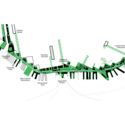
Global design firm HASSELL, known for their innovative recreational projects, envisioned an approach to preserve the significant history and culture of the pier while creating a sustainable green corridor in a playful manner. In order to activate the Embarcadero as an "interconnected greenway," HASSELL plans on developing the ecological areas along the waterfront as well as improving the accessibility between the recreational land with the surrounding transit hubs.
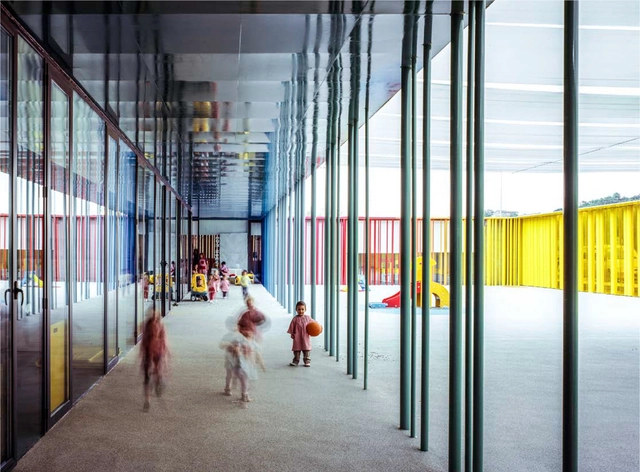
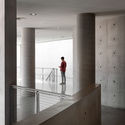
Inducing a surreal physical experience through minimal maneuvers, buildings with smooth concrete panels and simple geometric volumes instinctively hint at the work of Japanese architect Tadao Ando. At an ongoing exhibition at the Centre Pompidou, photographs of the headquarters of Fabrica, Ando's first European commission in 1992, are showcased. Located near the city of Treviso, the building was an old villa restored to become a thriving creative research center.
Villa Pastega Manera, built on an area of 51,000 square meters, went through a rigorous study of traditional construction techniques and material sampling to commence the redesign. The photographs feature the harmonious integration between the historical structure and seamless renovations.
The Fondation Le Corbusier has celebrated its 50th anniversary with the unveiling of a restored apartment originally designed by the famous architect. The studio apartment on Nungesser-et-Coli in Paris was designed by Le Corbusier in 1931 for his own habitation and was completed in 1934.
The apartment underwent two years of restoration following its listing as a classified world heritage site in 2016 and is now open to the public.
https://www.archdaily.com/904426/le-corbusiers-restored-parisian-apartment-opened-to-the-publicNiall Patrick Walsh
MVRDV has released details of their proposed renovation of a 19th-century listed building on Slodowa Island in Wroclaw, Poland. The “Concordia Hub” will see the retention of the existing façade, with the addition of a contemporary rear extension to “create a focal point” for the general public and visitors.
The site’s former use as a German artillery base in 1945 means almost all of the island’s structures were destroyed in the closing months of World War II. The Concordia Hub scheme seeks to preserve one of the only surviving heritage structures on the island, while transitioning the building into the modern age.
https://www.archdaily.com/903159/mvrdv-proposes-respectful-renovation-for-19th-century-heritage-building-in-wroclaw-polandNiall Patrick Walsh
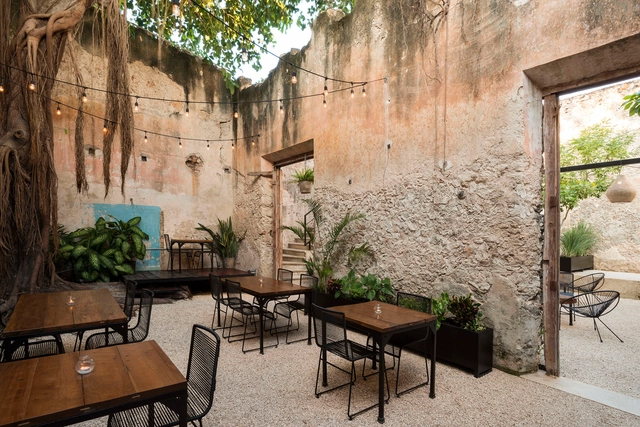
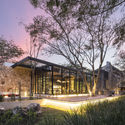
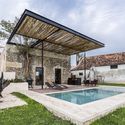
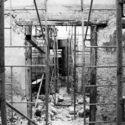
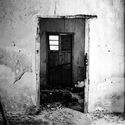
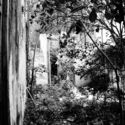
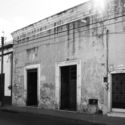
The architectural history of Mexico bears with it a wealth of symbolism that gives insight into the different time periods that have played host to contemporary cultural movements throughout the country's history.
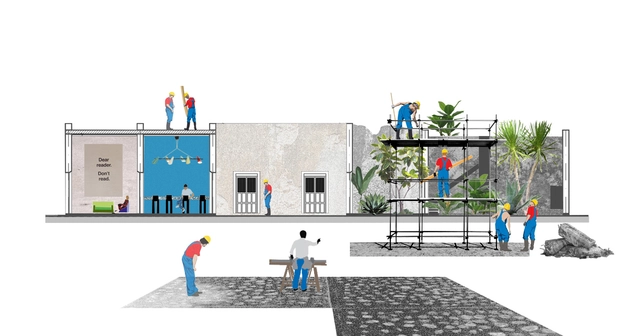
Today, it's common to hear well-known architects calling for, not the creation of new spaces, but for the restoration of already existing ones. This stance insists that it is one's duty as an architect to rescue a site's memory by bringing it into the here and now.
As philosopher Jean Paul-Sartre put it, "what is important is not what happens to us, but what we do with what happens to us." In keeping with Sartre's phrase, we have compiled a list of 6 restoration projects that aim to rescue sites and show the interconnectedness of different time periods in Mexican history.
In his book The Right to the City (1968), Henri Lefebvre talks about ending the creation of spaces managed by the logic of profit, to launch a plan of "self-managed territory" that does not leave aside the "historical heritage," nor allow the decomposition of space, but instead works for the restitution of urban centers as places of creation.
Globalization has produced cities without limits whose focus has been on the immediate benefit, directly attacking the preservation of cultural heritage, among other things.
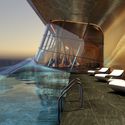
Zaha Hadid Architects have released images of their proposed redevelopment of the historic Mercury House, situated in the tourism and entertainment center of Paceville on Malta’s east coast. An extensive renovation to the existing structure will see the integration of residential apartments, a boutique hotel, and a range of public spaces and amenities.
The boldest addition to the derelict heritage site will be a 31-story tower, rotating as it rises in response to different functional programs. The resulting form seeks to instill “a sense of dynamism within its silhouette that changes when viewed from different directions around Paceville."
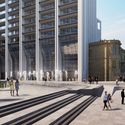
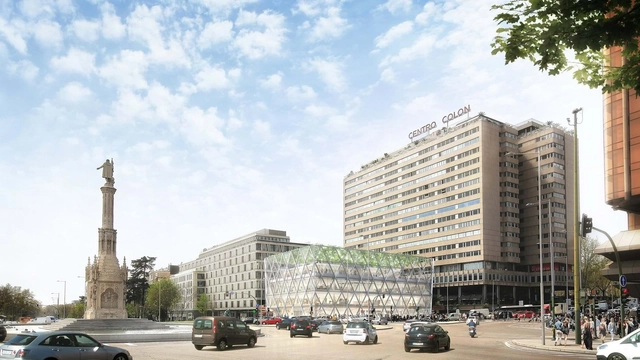
Foster + Partners has released details of their proposed comprehensive refurbishment of the Plaza Colón building in Madrid. Located at a historically significant site in Madrid, the scheme will see the transformation and revitalization of the existing structure to “create a new iconic landmark.”
Located at the junction of Madrid’s main north-south and east-west arteries, the building occupies one of the most important intersections in Madrid and forms a key part of the city’s long-term urban vision. The building also faces the bustling Plaza de Colón, one of the largest public spaces in Madrid, while linking three distinct districts containing luxury shopping, finance, art, and historic tradition.
https://www.archdaily.com/896786/foster-plus-partners-reveal-proposal-for-refurbished-axis-of-madridNiall Patrick Walsh
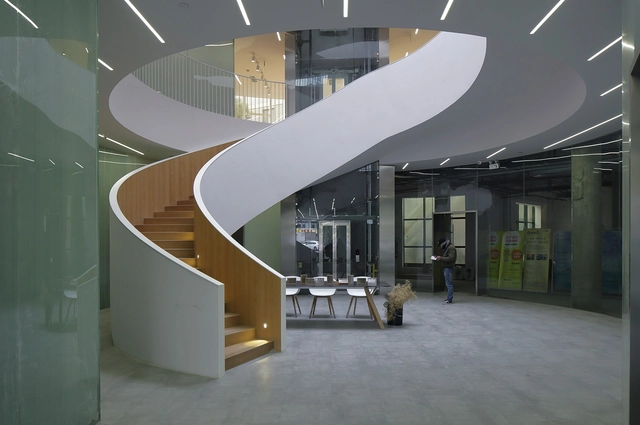
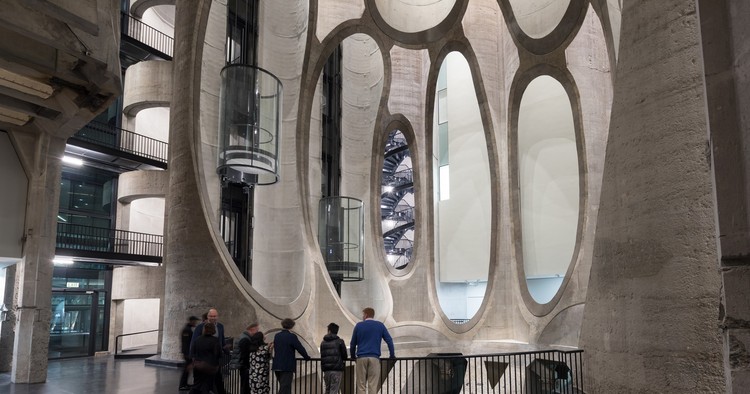
The Zeitz Museum of Contemporary Art Africa—or Zeitz MOCAA for short—recently received first place in ArchDaily's Refurbishment in Architecture awards, with its striking design transforming a formerly derelict industrial building into an iconic landmark in South Africa’s oldest working harbor. Developed by the V&A Waterfront in Cape Town and designed by Heatherwick Studio, the mixed-use project is now “the world’s largest museum dedicated to contemporary art from Africa and its diaspora.” To celebrate the award, we sat down with group leader Matthew Cash to discuss the challenges faced during the project, its cultural importance to Africa, and the practice’s interest in refurbishment as a whole.
MVRDV has unveiled its vision for transforming the Communist-era “Tirana Pyramid” in Albania into a center for technology, art, and culture. Under the plans, the abandoned structure will be revitalized as a multifunctional technology education center for Tirana’s youth, with the existing dark interior becoming open, bright, and green.
The Tirana Pyramid was opened in 1988 as the Enver Hoxta Museum, designed in honor of Albania’s former communist leader. Since then, the building has transitioned into a NATO base during the Balkan Wars, a nightclub, and an event space. Though now in decay, the building remains a popular spot for young people keen to climb on its roof. As a nod to this unique appropriation, MVRDV has made the roof officially available for all visitors.
https://www.archdaily.com/894779/mvrdv-to-transform-communist-era-pyramid-into-center-for-art-and-technology-in-albaniaNiall Patrick Walsh
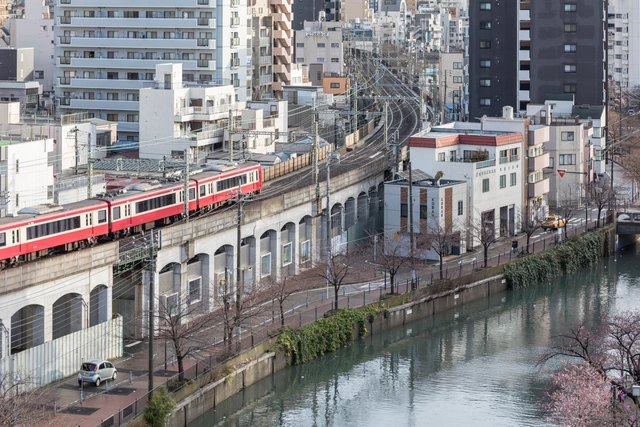
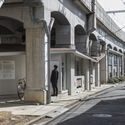
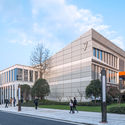
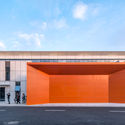
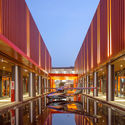
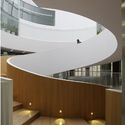
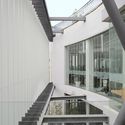
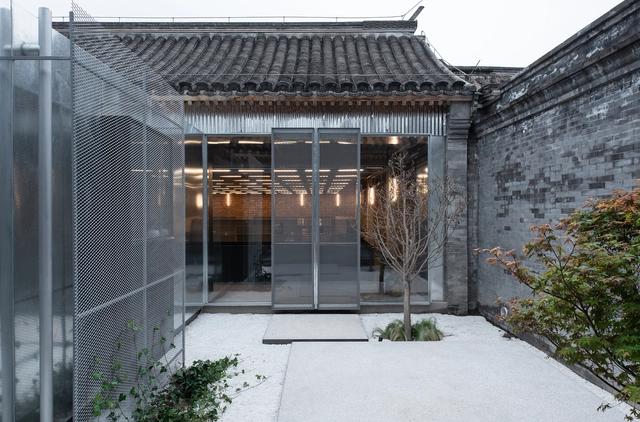
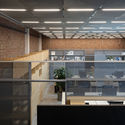
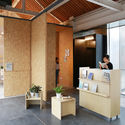
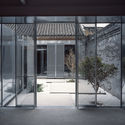
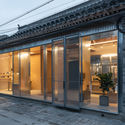
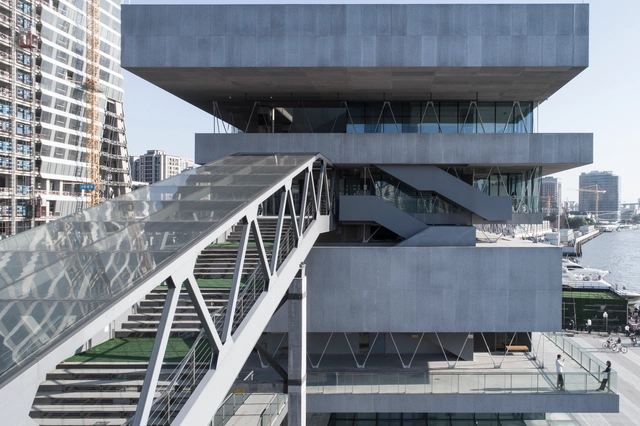
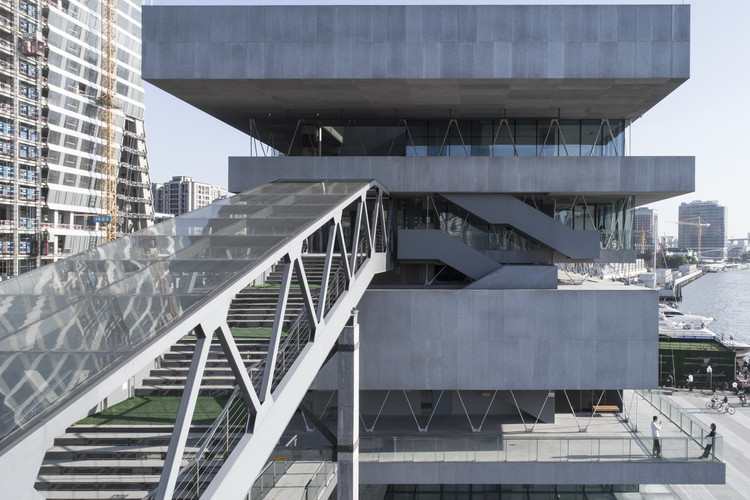
A +100 meter stretch of land beneath a train overpass in Koganecho, a district of Yokohama, Japan, underwent a progressive refurbishment in which seven different types of community space, each designed by a different architect, were built within a pre-set spatial grid. Historically there were many social issues in the area, largely in relation to its profitable but dangerous black market and red-light district. Once the illegal activity was eradicated in 2005, the underpass presented a great opportunity for social re-development, and the resultant project - the Koganecho Centre - emphasized an age-old Japanese cultural commitment, where what was once broken is used to make something new.





.jpg?1542418264&format=webp&width=640&height=580)
.jpg?1542418287 "Courtesy of HASSELL")
.jpg?1542418241 "Courtesy of HASSELL")
.jpg?1542418252 "Courtesy of HASSELL")
.jpg?1542418264)




.jpg?1540209301&format=webp&width=640&height=580)
.jpg?1540209293 "© FLC/ADAGP/Mercusot")
.jpg?1540209287 "© FLC/ADAGP/Mercusot")

FLC_Beaux_Arts_Paris_4juin2018_FLC.jpg?1540209273 "© FLC/ADAGP")
.jpg?1540209301)
.jpg?1538567368&format=webp&width=640&height=580)
.jpg?1538567368 "Courtesy of MVRDV")
.jpg?1538567396 "Courtesy of MVRDV")
.jpg?1538567380 "Courtesy of MVRDV")
.jpg?1538567412 "Courtesy of MVRDV")
.jpg?1538567368)












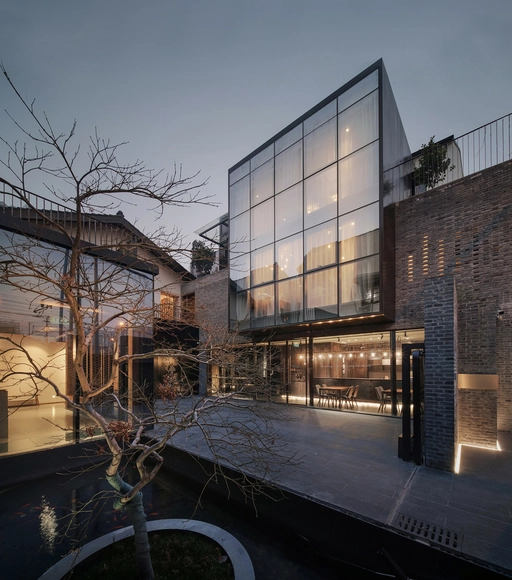
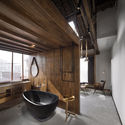
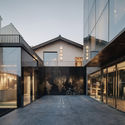
.jpg?1527838125 "Atrium. Image © Schran Image")
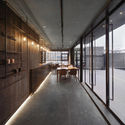



_MVRDV.jpg?1526659703)
_MVRDV.jpg?1526659742 "Courtesy of MVRDV")
_Gent_Onuzi.jpg?1526659725 "© Gent Onuzi")
_MVRDV.jpg?1526659753 "Courtesy of MVRDV")
_MVRDV.jpg?1526659703 "Courtesy of MVRDV")
_MVRDV.jpg?1526661234)