1. ArchDaily
  2. Restoration

Restoration: The Latest Architecture and News

Kleinewelt Architekten and Citizenstudio Envision Moscow's Gateway to the Five Seas

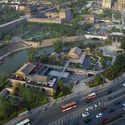
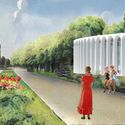
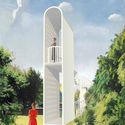
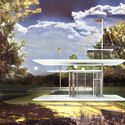
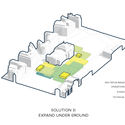
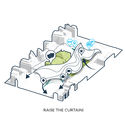
Kleinewelt Architekten in partnership with Citizenstudio / Gorozhane Group, created a re-design proposal for the Northern River Boat Station Park, also known as the Park of Five Seas, in Moscow. Built in the 1930’s, the current park is supposed to act as the city’s gateway to the five seas: the White, Baltic, Black, Azov, and Caspian Sea. However, the park is removed from city life and separates Moscow from it’s historic waterways.
Kleinewelt Architekten and Citizenstudio Envision Moscow's Gateway to the Five Seas - MonumentsKleinewelt Architekten and Citizenstudio Envision Moscow's Gateway to the Five Seas - MonumentsKleinewelt Architekten and Citizenstudio Envision Moscow's Gateway to the Five Seas - MonumentsKleinewelt Architekten and Citizenstudio Envision Moscow's Gateway to the Five Seas - MonumentsKleinewelt Architekten and Citizenstudio Envision Moscow's Gateway to the Five Seas - More Images+ 15

Dark Arkitekter Plans to Rejuvenate Oslo with National Theatre Rehabilitation

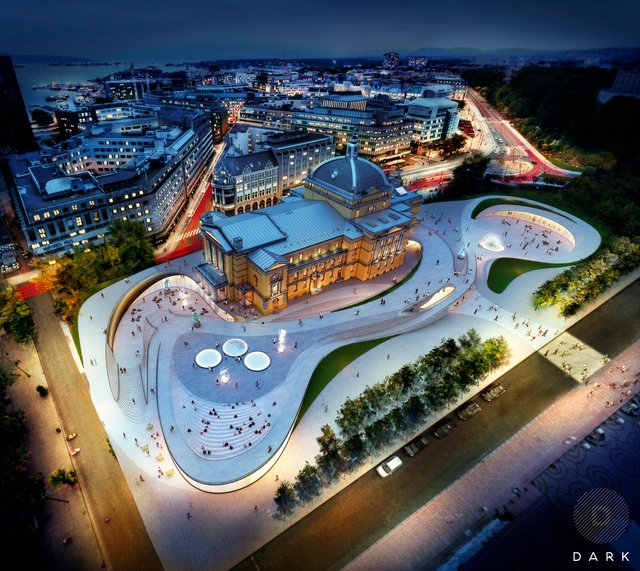
Oslo-based architecture firm Dark Arkitekter hopes to jumpstart the revitalization of the city’s cultural center with their proposed rehabilitation of the National Theatre and redevelopment of the surrounding public space. The government is currently planning to renovate the 118-year-old structure, but Dark Arkitekter was unimpressed with the minimal-effort plan and so put forth their design on behalf of the Theatre.
Dark Arkitekter Plans to Rejuvenate Oslo with National Theatre Rehabilitation - Image 1 of 4Dark Arkitekter Plans to Rejuvenate Oslo with National Theatre Rehabilitation - Image 2 of 4Dark Arkitekter Plans to Rejuvenate Oslo with National Theatre Rehabilitation - Image 3 of 4Dark Arkitekter Plans to Rejuvenate Oslo with National Theatre Rehabilitation - Image 4 of 4Dark Arkitekter Plans to Rejuvenate Oslo with National Theatre Rehabilitation - More Images+ 7

Behind India's Ambitious Plan to Create the World's Longest River

Subscriber Access | 

Against the backdrop of an ever-increasing number of its farmers committing suicides, and its cities crumbling under intensifying pressure on their water resources—owing to their rapidly growing populations—India has revived its incredibly ambitious Interlinking of Rivers (ILR) project which aims to create a nation-wide water-grid twice the length of the Nile. The $168 billion project, first envisioned almost four decades ago, entails the linkage of thirty-seven of the country’s rivers through the construction of thirty canals and three-thousand water reservoirs. The chief objective is to address India’s regional inequity in water availability: 174 billion cubic meters of water is proposed to be transported across river basins, from potentially water-surplus to water-deficit areas.

The project is presented by the Indian government as the only realistic means to increase the country’s irrigation potential and per-capita water storage capacity. However, it raises ecological concerns of gargantuan proportions: 104,000 hectares of forest land will be affected, leading to the desecration of natural ecosystems. Experts in hydrology also question the scientific basis of treating rivers as “mere conduits of water.” Furthermore, the fear of large-scale involuntary human displacement—an estimated 1.5 million people—likely to be caused by the formation of water reservoirs is starting to materialize into a popular uprising.
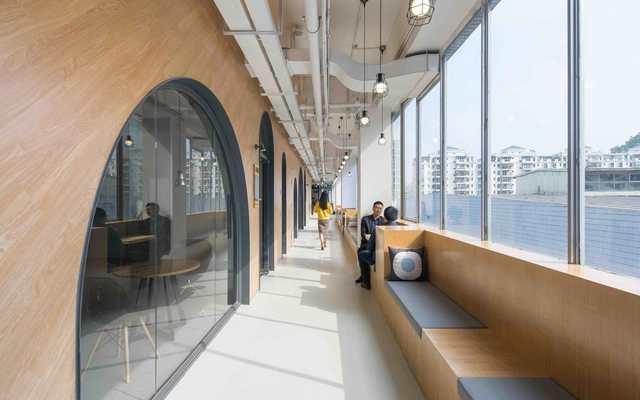
SimplyWork 6.0 Co-Working Space / 11architecture

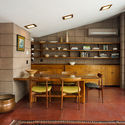
SimplyWork 6.0 Co-Working Space / 11architecture - Offices Interiors, Door, Table, ChairSimplyWork 6.0 Co-Working Space / 11architecture - Offices Interiors, FacadeSimplyWork 6.0 Co-Working Space / 11architecture - Offices Interiors, Facade, Arch, Door, Chair, TableSimplyWork 6.0 Co-Working Space / 11architecture - Offices Interiors, Door, Arch, Table, ChairSimplyWork 6.0 Co-Working Space / 11architecture - More Images+ 16

  • Architects: 11architecture
  • Area Area of this architecture project Area:  2100
  • Year Completion year of this architecture project Year:  2017

Mies van der Rohe's Other Illinois Home, the McCormick House, to Undergo Restoration

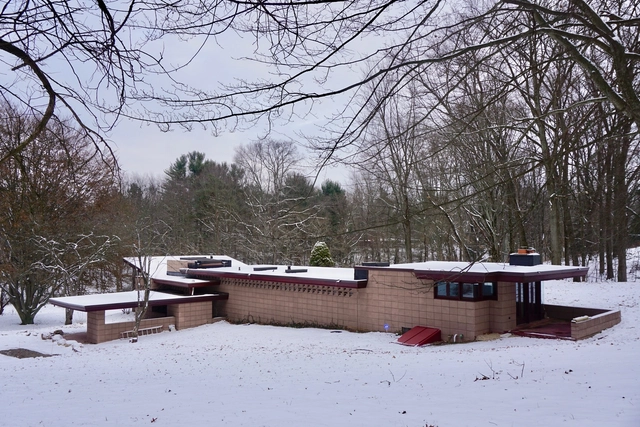
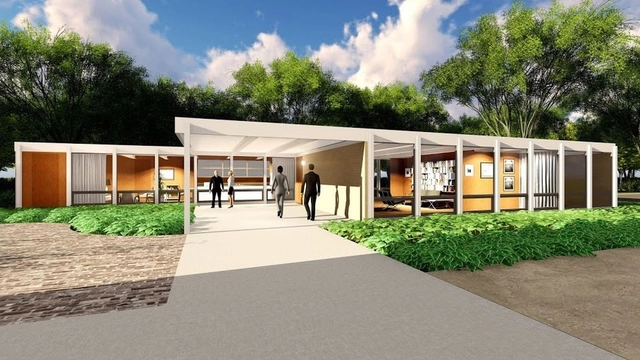
As Mies van der Rohe’s adopted city, Chicago and its surrounding area are home to more of the Modernist architect’s projects than anywhere else in the world, from Crown Hall to Federal Center to the Farnsworth House. Perhaps for that very reason, the McCormick House, located in the Chicago suburb of Elmhurst, is one of the lesser known projects in the architect's’ oeuvre – despite being one of just three single-family homes in the United States completed by Mies.

Built in 1952 for Robert McCormick Jr. – the owner of the land where Mies' 860-880 N. Lake Shore Drive was constructed – the house was moved down the street in 1994, where it was attached to the newly built Elmhurst Museum of Art via a 15-foot-long corridor. While its relocation allowed the building to remain in good care over the next 23 years, it also obscured the home’s front facade, “camouflaging one of the most prized objects in the museum's collection.”

But that’s all about to change, thanks to an upcoming restoration that will remove the offending corridor, allowing the original architecture to shine once again.
From War Relic to Mixed-Use: Plans to Build a “Green Mountain” Atop a Bunker in Hamburg

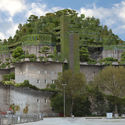
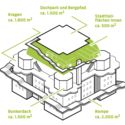
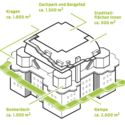
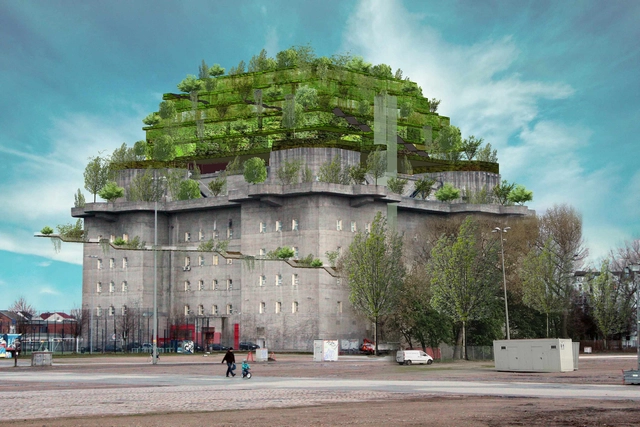
A team of local residents and architects in Hamburg’s neighborhood of St. Pauli have been granted planning permission for a proposal to repurpose a war bunker dating back from the 1940s. Coined Hilldegarden, the proposal seeks to create a “green mountain” garden atop the disused roof of the bunker along with a range of mixed-use projects that increase its height by several stories. “We are rebuilding what we inherit.” The project’s initiative states, “Adding something to history while dealing with it and thereby reshaping history itself.”
From War Relic to Mixed-Use: Plans to Build a “Green Mountain” Atop a Bunker in Hamburg - Image 1 of 4From War Relic to Mixed-Use: Plans to Build a “Green Mountain” Atop a Bunker in Hamburg - Image 2 of 4From War Relic to Mixed-Use: Plans to Build a “Green Mountain” Atop a Bunker in Hamburg - Image 4 of 4From War Relic to Mixed-Use: Plans to Build a “Green Mountain” Atop a Bunker in Hamburg - Image 3 of 4From War Relic to Mixed-Use: Plans to Build a “Green Mountain” Atop a Bunker in Hamburg - More Images+ 14

Catalan Church Restored Using Ingenious Tensioning System

Subscriber Access | 

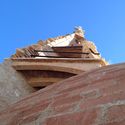
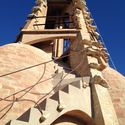
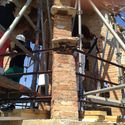
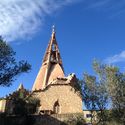
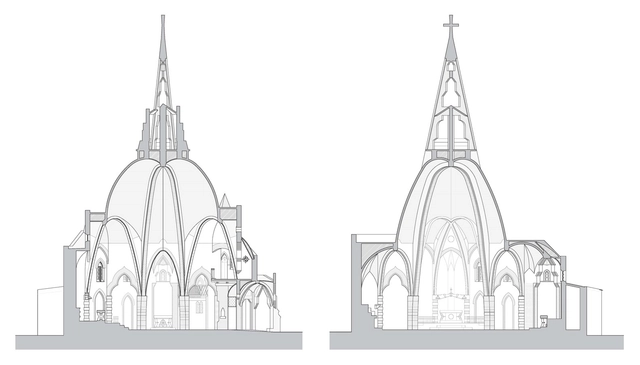
The object of this architectural restoration is the Church of the Sacred Heart of Jesus, in Vistabella, the work of Catalan architect Josep Maria Jujol (16 September 1879 – 1 May 1949). The original design dates from 1917 with the construction completed in 1923. The building is a magnificent and personal work of Catalan architecture.

The simplicity of the materials used—basically brick, mortar, and stone—contrasts with the spectacular formal richness of the structural solutions: columns, arches, and vaults that generate a complex, rich, and surreal interior space typical of the mysticism of Jujol.

Catalan Church Restored Using Ingenious Tensioning System - Image 1 of 4Catalan Church Restored Using Ingenious Tensioning System - Image 2 of 4Catalan Church Restored Using Ingenious Tensioning System - Image 3 of 4Catalan Church Restored Using Ingenious Tensioning System - Image 4 of 4Catalan Church Restored Using Ingenious Tensioning System - More Images+ 18

Gaudí's First-Ever House to Open as a Museum Following Major Restoration

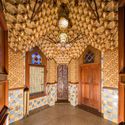
Gaudí's First-Ever House to Open as a Museum Following Major Restoration - Image 4 of 4
© Casa Vicens, Barcelona 2017. Photo by: Pol Viladoms

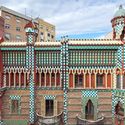
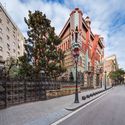
Antoni Gaudí’s first ever house, Casa Vicens, is set to open to the public this autumn following a major restoration effort. Located in the Barcelona neighborhood of Gràcia, the house was originally built for broker Manuel Vicens from 1883 to 1885 – helping to define Gaudí’s signature style and helping to usher in the era of Art Nouveau architecture in Catalonia.
Gaudí's First-Ever House to Open as a Museum Following Major Restoration - Featured ImageGaudí's First-Ever House to Open as a Museum Following Major Restoration - Image 1 of 4Gaudí's First-Ever House to Open as a Museum Following Major Restoration - Image 2 of 4Gaudí's First-Ever House to Open as a Museum Following Major Restoration - Image 3 of 4Gaudí's First-Ever House to Open as a Museum Following Major Restoration - More Images+ 20

This Rope Reinforcement System is an Innovation in the Structure of Adobe Buildings

Subscriber Access | 

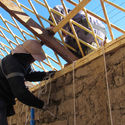
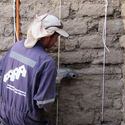
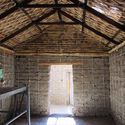
In the city of Belén, Chile, as a part of the second phase of a Training Program for the Restoration of Facades in Belén, two historically important structures were recently completely restored. The project was financed by the Regional Government of Arica and Parinacota and SUBDERE (Undersecretariat of Regional and Administrative Development), in partnership with the Altiplano Foundation.

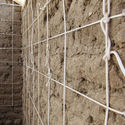
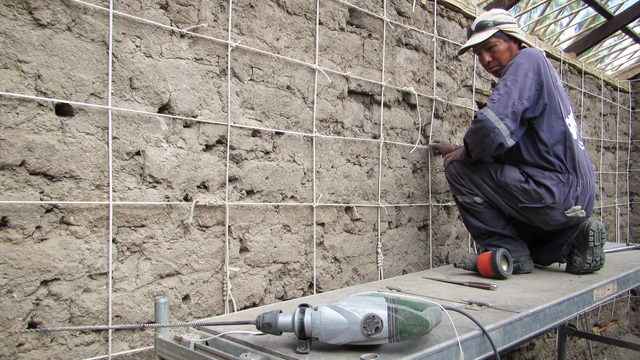
In both houses, the foundations and, where necessary, the walls were reinforced, and the traditional Andean roof and existing carpentry was restored. Notably, the structural reinforcement of the adobe walls used a rope mesh system, which was first seen in Chile in 2014 as part of the restoration of a church in San Pedro de Atacama.
This Rope Reinforcement System is an Innovation in the Structure of Adobe Buildings - SustainabilityThis Rope Reinforcement System is an Innovation in the Structure of Adobe Buildings - SustainabilityThis Rope Reinforcement System is an Innovation in the Structure of Adobe Buildings - SustainabilityThis Rope Reinforcement System is an Innovation in the Structure of Adobe Buildings - SustainabilityThis Rope Reinforcement System is an Innovation in the Structure of Adobe Buildings - More Images+ 4

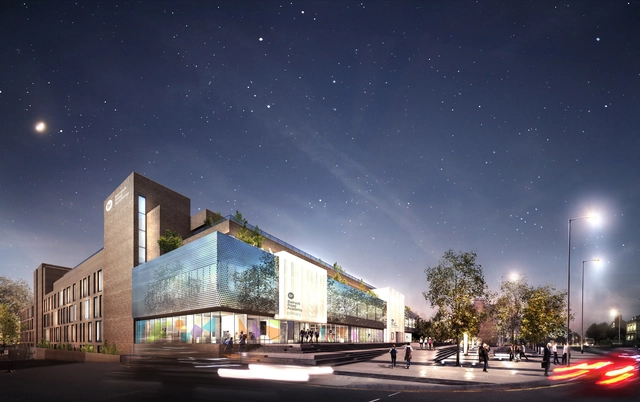
Architecture Initiative Transforms Derelict Brutalist Northampton Landmark into Mixed-Use Academy

London-based firm Architecture Initiative has released updates of their mixed-use scheme set to transform a neglected brutalist building in Northampton, England. The Northampton International Academy, currently an abandoned Royal Mail sorting office, will be centered around educational, commercial, and community use. The scheme aims to address a need for school places in a manner which contributes to the economic regeneration of the local area.

Architecture Initiative Transforms Derelict Brutalist Northampton Landmark into Mixed-Use Academy - FacadeArchitecture Initiative Transforms Derelict Brutalist Northampton Landmark into Mixed-Use Academy - FacadeArchitecture Initiative Transforms Derelict Brutalist Northampton Landmark into Mixed-Use Academy - LightingArchitecture Initiative Transforms Derelict Brutalist Northampton Landmark into Mixed-Use Academy - ChairArchitecture Initiative Transforms Derelict Brutalist Northampton Landmark into Mixed-Use Academy - More Images+ 17

Competition Winning Stadium Design Promotes Inclusivity in Dunkirk, France

The SOCKEEL + OLGGA consortium have won a competition to design the new Tribut Stadium in Dunkirk, France. The historic stadium, in a prominent location on a canal bank in central Dunkirk, will be transformed into a 5,000 seat stadium seeking to maximize inclusiveness and accessibility.

Competition Winning Stadium Design Promotes Inclusivity in Dunkirk, France - Image 1 of 4Competition Winning Stadium Design Promotes Inclusivity in Dunkirk, France - ChairCompetition Winning Stadium Design Promotes Inclusivity in Dunkirk, France - Image 3 of 4Competition Winning Stadium Design Promotes Inclusivity in Dunkirk, France - FacadeCompetition Winning Stadium Design Promotes Inclusivity in Dunkirk, France - More Images+ 6

Mecanoo Unveils Design for Experimental Garden and Palace Restoration in The Netherlands

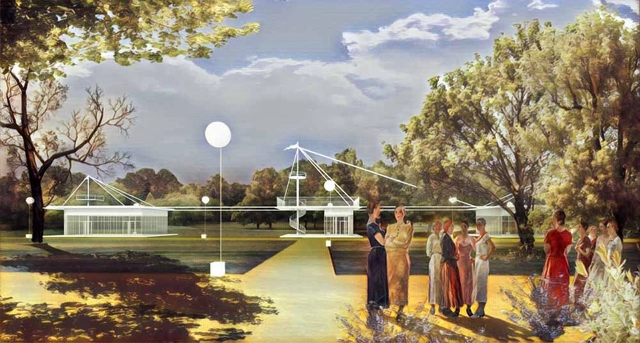
Mecanoo has unveiled its design to transform The Soestdijk Estate into Eden Soestdijk, “an experimental garden for a sustainable society and a paradise destination for all” in The Netherlands. In an effort to become an educational tool for environmental awareness, the project aims to make a significant contribution to meeting the UN’s Sustainable Development Goals.

“The world is facing pressure from increasingly larger and more complex problems when it comes to water, food, climate and energy,” said Anton Valk, chairman of the Eden Soestdijk foundation. “Eden Soestdijk wants to tackle these problems and contribute to a more sustainable society by stimulating and inspiring visitors to change their behaviour in a positive way.”

An architectural greenhouse behind the palace gardens will be the centerpiece of the project, and will house an interactive exhibition focusing on topics like circularity, ecological balance, and social aspects of sustainability.

Mecanoo Unveils Design for Experimental Garden and Palace Restoration in The Netherlands - Image 1 of 4Mecanoo Unveils Design for Experimental Garden and Palace Restoration in The Netherlands - Image 2 of 4Mecanoo Unveils Design for Experimental Garden and Palace Restoration in The Netherlands - Image 3 of 4Mecanoo Unveils Design for Experimental Garden and Palace Restoration in The Netherlands - Image 4 of 4Mecanoo Unveils Design for Experimental Garden and Palace Restoration in The Netherlands - More Images+ 4

"Hardcore Heritage": How RAAAF is Redefining Historical Preservation

This article was originally published by Metropolis Magazine as "'Hardcore Heritage': RAAAF Reveals Its Latest Experiment in Historical Preservation."

In the practice of historic preservation, there is often a temptation to turn a building into an object on display—meticulously restored, unchanging, physically isolated—in order to remove it from the flow of history. The multidisciplinary Amsterdam-based studio Rietveld-Architecture-Art-Affordances (RAAAF) situates itself in opposition to this method of dealing with architectural remnants. Instead, it proposes to make history tangible by altering these decaying structures in a way that makes their stories plainly visible. The practice has a name for this approach—"hardcore heritage."

The Destruction of Memory: A Documentary on the War Against Cultural History

This article was originally published by Metropolis Magazine as "The Destruction of Memory, A Documentary."

"Part of war and conflict has always been the collateral damage. Buildings have fallen in the path of military objectives, but, [...] in this war, buildings aren't destroyed because they're in the way of a target. The buildings are the target." As the narrator of The Destruction of Memory so eloquently explains, the destruction of culture—of buildings, books, and art—is often not an accidental consequence of conflict. As we can see by the actions of ISIS in Iraq and Syria today, the destruction of cultural artifacts is part and parcel of a conscientious strategy to target and destroy the collective memory, history, and identity of a people.

Álvaro Siza Restores the Carmo Convent Area in Lisbon

Due to a fire in 1988, the Chiado district of Lisbon had many of its buildings damaged or partially destroyed by the flames, and an intense restoration and recovery project led by Álvaro Siza has been going on for over a decade.

Among the strategies employed by the Portuguese architect (and winner of the 1989 Pritzker Prize) is the reorganization of routes and walkways, creating elevated walkways to facilitate access to the area and the flow of locals and visitors. According to the Municipal Council of Lisbon, Siza has recently completed the connection between one of the courtyards of the Carmo Convent (Patio B) to the Largo do Carmo square and the Carmo Terraces with a pedestrian path.

Álvaro Siza Restores the Carmo Convent Area in Lisbon - Image 1 of 4Álvaro Siza Restores the Carmo Convent Area in Lisbon - Image 2 of 4Álvaro Siza Restores the Carmo Convent Area in Lisbon - Image 3 of 4Álvaro Siza Restores the Carmo Convent Area in Lisbon - Image 4 of 4Álvaro Siza Restores the Carmo Convent Area in Lisbon - More Images+ 3

Cádiz Castle Restoration: Interesting Interpretation or Harmful to Heritage?

Subscriber Access | 

In 2011, after the partial collapse of the Matrera Castle in Cádiz, Spain (dating back to the 9th century) the city decided to restore the remaining tower, with the aim of preventing its collapse and protecting the few elements that were still standing.

The challenge fell into the hands of Spanish architect Carlos Quevedo Rojas, whose design received the approval of the Regional Government of Andalucía, in compliance with the Historical Heritage law 13/2007, which prohibits mimetic reconstructions and requires the use of materials that are distinct from the originals.

In the words of the architect: “This intervention sought to achieve three basic objectives: to structurally consolidate the elements that were at risk; to differentiate the additions from the original structure (avoiding the mimetic reconstructions that our law prohibits) and to recover the volume, texture and tonality that the tower originally had. The essence of the project is not intended to be, therefore, an image of the future, but rather a reflection of its own past, its own origin.”

The polemical restoration has provoked a broad international discussion about heritage restoration, and the Izquierda Unida group has said it will bring the case to the Andalusian Parliament’s Culture committee to see if the restoration was the result expected by the Ministry of Culture. On the other hand, while the building had previously received only sporadic visits, it has now become a new tourist attraction in the area.

Why has a restoration based on the anastylosis technique – which exists around the world – caused so much controversy? It is it really a “heritage massacre” as the media has said? Do you think it could have been carried out in a better way?

Join the debate and leave your comments after the break.

The Met Breuer: A Loving Restoration of a Mid-Century Icon

Subscriber Access | 

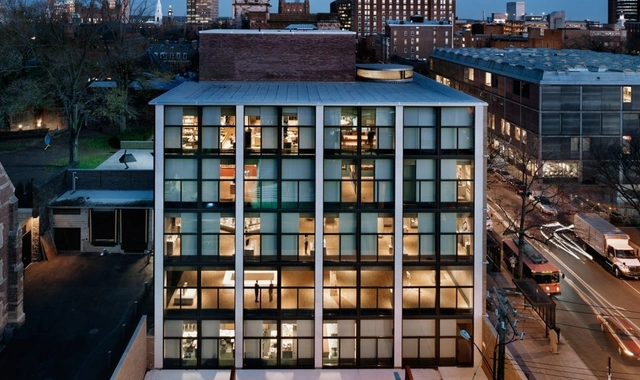
The New York art world let out a collective cry of grief when the Whitney Museum of American Art abandoned Marcel Breuer's iconic 1966 building on Madison Avenue at 75th Street. Whether New Yorkers loved, loved to hate, or hated to love the old Whitney, Breuer's building suddenly became the building that evoked more passion than any other.

Now, thanks to a restoration led by New York City firm Beyer Blinder Belle, the iconic building has been transformed into the Met Breuer—the bold new showcase for the Metropolitan Museum of Art's renewed embrace of modernist and contemporary art. It will open to the public on March 18, 2016, and as the crowds ready to descend, the curators and architects are no doubt anxious to see whether, by faithfully adhering to Breuer's original vision, the restored building will succeed in both delighting museum-goers and helping redefine the Met's public image.

The Met Breuer: A Loving Restoration of a Mid-Century Icon - Image 1 of 4The Met Breuer: A Loving Restoration of a Mid-Century Icon - Image 2 of 4The Met Breuer: A Loving Restoration of a Mid-Century Icon - Image 3 of 4The Met Breuer: A Loving Restoration of a Mid-Century Icon - Image 4 of 4The Met Breuer: A Loving Restoration of a Mid-Century Icon - More Images+ 15

How My Trip to Jordan to Escape Design Rekindled My Faith in Architecture

Subscriber Access | 

Let yourself be silently drawn by 
the stronger pull of what you really love.

To the bewilderment of many friends, this quote by Rumi adorns the cover of my portfolio. It justifies my pursuit of a career in architecture instead of a more stable field. Although I teasingly explain that “architecture is chronic,” the quote still holds some truth.

As an architect, I thought I did my due diligence: working long, underpaid hours and late nights to build a solid portfolio. But, despite the recognition one’s work may receive, underpayment and employment uncertainty are considered part of the job. On the other hand, the diversity inherent to the profession promotes creative thinking and an aspiration to incite meaningful change; thus, it continues to ignite the imagination.

That’s why, when the opportunity presented itself in the summer of 2014, I took leave from work to visit the Middle East. Yes, that is correct. Having the opportunity to grow up in the East and then to live in the West, I know better than to submit to the media’s fear-inspiring propaganda. I figured that speaking the language and being a seasoned traveler would come in handy. So I set out on an expedition that not only reconnected me to architecture, but also led to one of the most meaningful projects I have worked on.

How My Trip to Jordan to Escape Design Rekindled My Faith in Architecture - Image 1 of 4How My Trip to Jordan to Escape Design Rekindled My Faith in Architecture - Image 2 of 4How My Trip to Jordan to Escape Design Rekindled My Faith in Architecture - Image 3 of 4How My Trip to Jordan to Escape Design Rekindled My Faith in Architecture - Image 4 of 4How My Trip to Jordan to Escape Design Rekindled My Faith in Architecture - More Images+ 13