Upon completing the long and arduous study of architecture, we are awarded a professional degree certifying that we possess the ability to design a habitable space, and the license to sign off on the blueprints to build it. Yet these are technical and functional skills; the artistic dimension of architecture often depends on the humanity transmitted by the mentors who educate us, enabling us to bring that quality to the spaces we design.
This article is part of a collaboration with the website coolhuntermx. It was originally published on February 2, 2020, under the title "Un parque moderno para Guadalajara" and written by David Lozano Díaz.
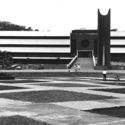
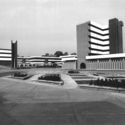
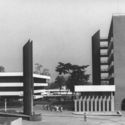
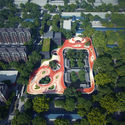
In 1971, architect Fernando González Gortázar, at 29 years of age, was commissioned to build González Gallo Park. This commission served a dual purpose: to commemorate the late former governor José de Jesús González Gallo and to provide a substantial new public space for the developing neighborhoods in eastern Guadalajara.
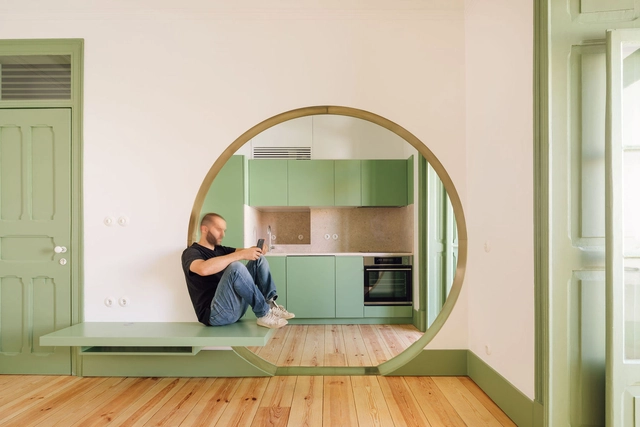
With a vast built heritage, Lisbon's contemporary architectural production is rich in rehabilitation projects. Lacking space for new buildings - unless one is willing to pay for the land's high market price - Lisbon's current architecture prescinds tabula rasa and faces the challenge of working with what already exists - often limiting itself to design only interior spaces.
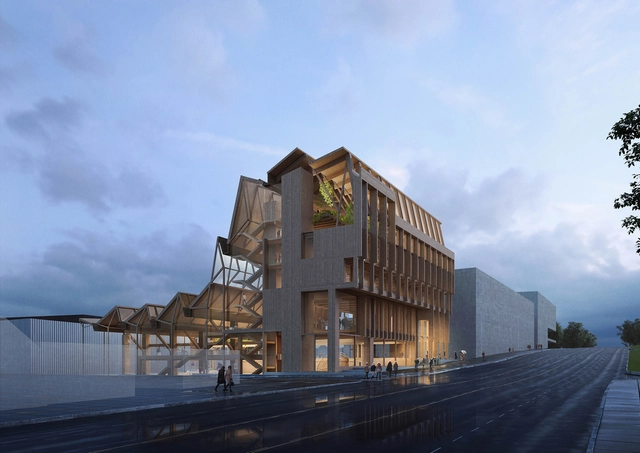
Grafton Architects. Image Courtesy of Fay Jones School of Architecture and Design, University of Arkansas
Selected from 69 submissions from 10 countries, six international firms were shortlisted for the design competition of the future Anthony Timberlands Center for Design and Materials Innovation at the University of Arkansas.
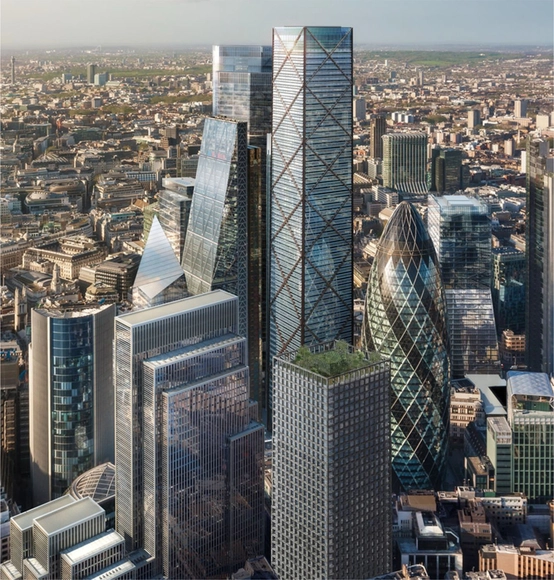
Stone Tower Research Project. Image Courtesy of Groupwork
Groupwork, in collaboration with Jackson Coles, Eight Associates, Webb Yates, The Stonemasonry Company and Polycor, is investigating the possibilities to build large commercial buildings in stone, through the Stone Tower Research project and The New Stone Age exhibition.
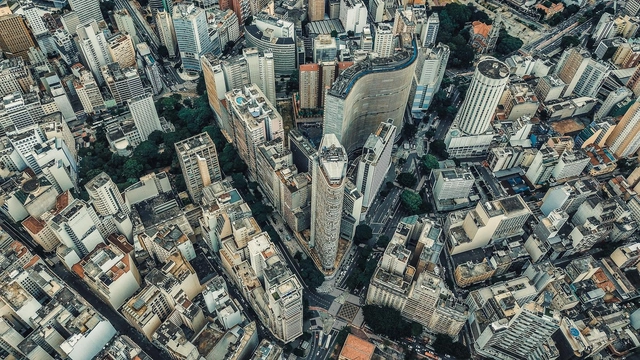
Aerial view of downtown São Paulo. Photo by Sergio Souza, via Unsplash
Why stay in the city?
For many urban dwellers, the answer is obvious: “It’s hard to find a job in a smaller town. Plus, there’s not even a movie theater, restaurant options are limited, and the schools aren’t that great.”
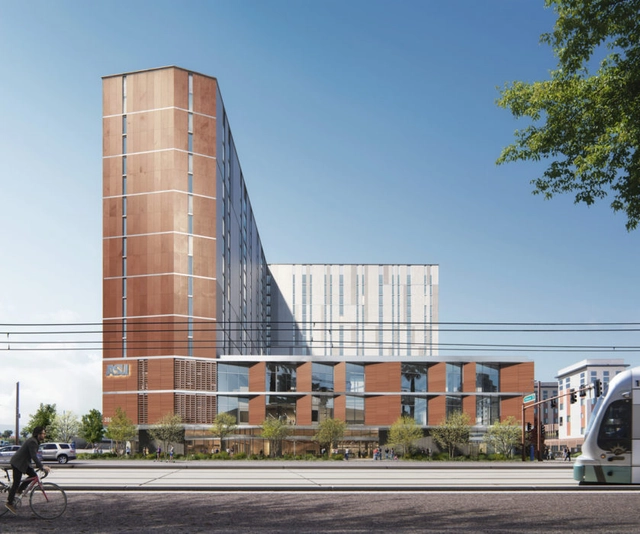
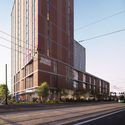
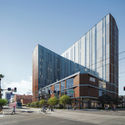
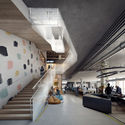
Studio Ma has broken ground on a new mixed-use tower complex for Arizona State University in Phoenix. The downtown residence hall and entrepreneurial center aims to foster innovation and collaboration for students and the campus community. The 16-floor residential tower includes academic and interdisciplinary facilities with living space for up to 530 students. The design was made to connect with the city and regional businesses.
Craftmanship is back. Following a century of mass production and industrial development, crafts are starting to be revalued and reinterpreted. A new sensitivity towards raw materials, the recovery of local techniques and the defense of small-scale trade are a few of the claims that this comeback represents. Materials such as earth and ceramics, textiles and wood are being reinterpreted by designers, artists, and architects around the world, in search of both their own style and the representation of collective nostalgia.
The Biomimicry Institute and Biomimicry South Africa have launched a new course covering the fundamentals of biomimicry. Called ‘Learn Biomimicry’, the online course kicks off in support of the Earth Day Network’s call for creative, innovative, and brave solutions needed to regenerate and repair the damage done to the planet.
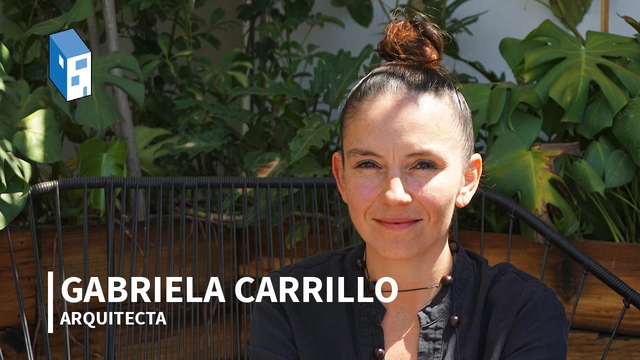
The professional career of Mexican architect Gabriela Carrillo reveals an impeccable and relentless commitment to recognizing the values of the territory in order to provide spaces that dignify their inhabitants. This approach has shaped her practice for 19 years, nine of which she spent as a partner at Taller de Arquitectura Mauricio Rocha + Gabriela Carrillo. Her work has been recognized with numerous awards, including the Gold Medal from the French Academy of Architecture.
For the fourth time, we are giving our readers the responsibility of recognizing and awarding the projects that have made the greatest impact on the profession through the 2020 ArchDaily Brasil Building of the Year Award. By voting, you become part of an impartial network of jurors recognizing the most relevant projects of the past year.
Over the next three weeks, the collective intelligence of our readers will filter through hundreds of projects from Portuguese-speaking countries—Brazil, Portugal, Mozambique, Angola, Guinea-Bissau, East Timor, Equatorial Guinea, Macau, Cape Verde, and São Tomé and Príncipe—published in 2019, selecting the best built works in the Portuguese-speaking world.
From a pool of hundreds of projects published in 2019, readers will choose their favorites, with the 15 most voted advancing to the second stage of voting.
Climate Care – A Curriculum for Urban Practice was a 10-day public program curated by Gilly Karjevsky and Rosario Talevi for the Floating University in Berlin. Climate Care explored the correlations between the environment, urban practices, and education, constructively addressing not only environmental climate challenges but also scrutinizing the complex social, political, and economic climates that surround us today.
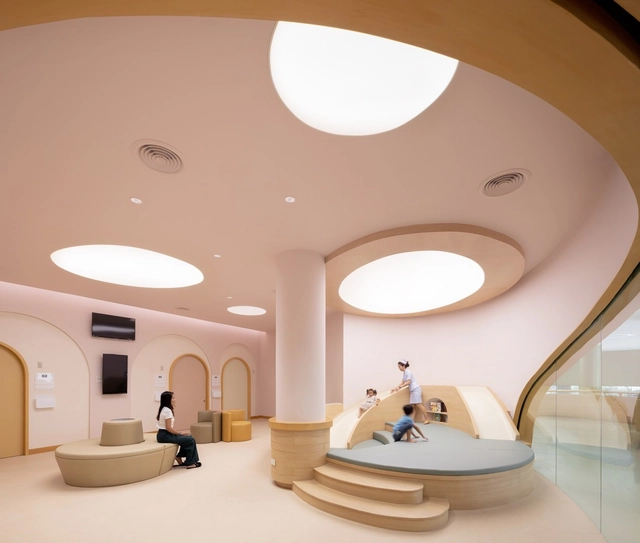
Architecture and interior design constantly evolve to meet the needs of society and part of its social role is to assist the well-being of those who transit and use their spaces daily. Hospital architecture is a niche responsible for the development of projects focused on the health area, based on specifications, requirements, and regulations that guarantee and ensure the comfort of patients - it is continuously studying intrinsic issues of how a sick body behaves in space, in order to create environments that assist in the rehabilitation process.
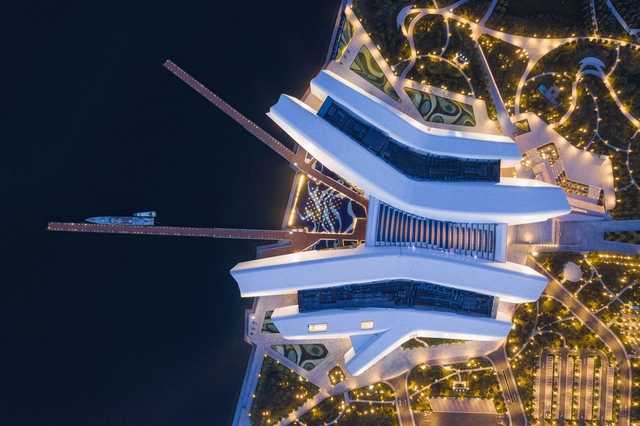
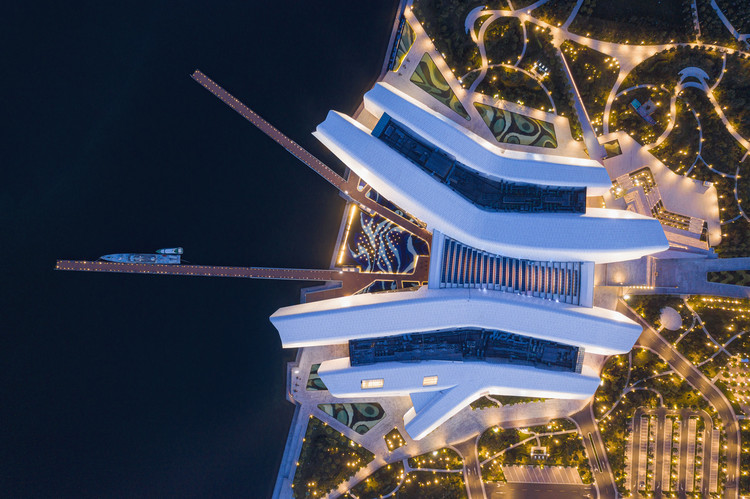
China’s latest landmark, the National Maritime Museum is now open to the public. 6 years in the making, the project is first of its kind. Designed by COX Architecture, after winning the international design competition back in 2013, the museum is located in the recently developed Binhai New Area, in the city district of Tianjin.
The annual QS- Quacquarelli Symonds ranking for top universities has been unveiled. Based on academic reputation, employer reputation, and research impact, the ranking highlights every year the best universities for each profession. In the 2020 Architecture/ Built Environment division, the list reveals that the Massachusetts Institute of Technology (MIT) is back on top.
Over the last three months, Coronavirus has spread to more than 100 countries and claimed more than 3,800 lives (as of 8th March 2020). It has also plunged many global industries into a paralysis, from canceled flights and mass quarantines to disruptions in supply chains and financial markets. Setting aside the serious health implications of the outbreak, the coronavirus epidemic has, in an unorthodox way, amplified a debate over the future of work. With millions of people around the world working from home as a result of the outbreak, whether through quarantine or as a company precaution, the question is being asked by outlets around the world: are we seeing the beginning of the end of the traditional office typology?
Color-tunable lighting is an exciting and relatively new lighting technology that allows users to control the color of light anytime after installation and attune lighting to individual preferences or specific application needs.
https://www.archdaily.com/934845/how-color-tunable-lighting-improves-productivityDavid Hakimi
From academic institutes in North America to residential projects in the Middle East, the various disciplines of Bauhaus and its influence on architecture and design are noticeably present in projects all over the world. While most projects acquired the school's universal language, a few unique ones combined Bauhaus' theory and design principles with the site's cultural and climatic specificity.
This article is a collaboration between ArchDaily and the Arieh Sharon Org. All historical images were shared by the organization.
With the launch of ODA2020, this year we celebrate the twelfth anniversary of the Building of the Year Award (ODA), the highest recognition in the Spanish-speaking architectural world, where the winners are chosen by popular vote. Starting today, Tuesday, March 10, and for the next three weeks, our readers will be responsible for determining which projects inspired us in 2019, faithfully representing the identity of our local contexts while shaping the way architecture is practiced around the world.
Over the next three weeks, the entire ArchDaily en Español network (Plataforma Arquitectura, ArchDaily México, ArchDaily Colombia, and ArchDaily Perú) will serve as the platform for celebrating the best built architecture in Spain and Spanish-speaking Latin American countries.
From a pool of nearly one thousand projects published in 2019, you can easily find your favorites by browsing each category and using the search tool to filter projects by country and architecture firm.
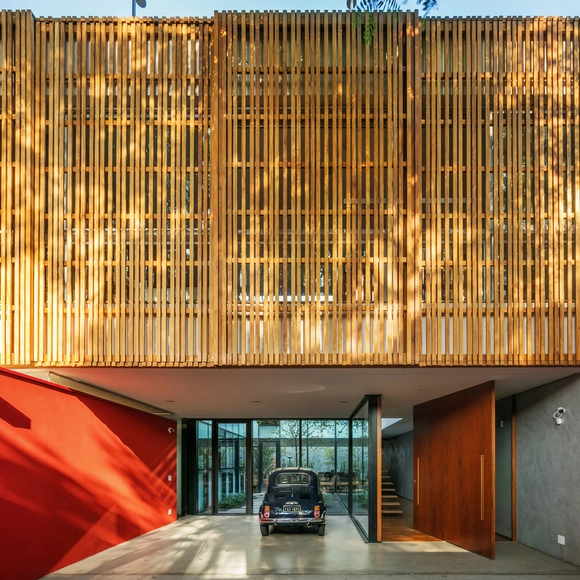
Unlike standard doors, pivot door systems do not require conventional hinges. The pivots—the hardware that allows the door to rotate—are hidden from view, installed at both the top and bottom of the panel to create a vertical axis around which it swings. Because these pivots can be positioned near the frame or further toward the center of the panel, pivot doors are typically larger than average. This increased size compensates for the reduced clearance in the passageway, as the offset axis of rotation causes part of the door to swing inward, unlike traditional hinged doors.
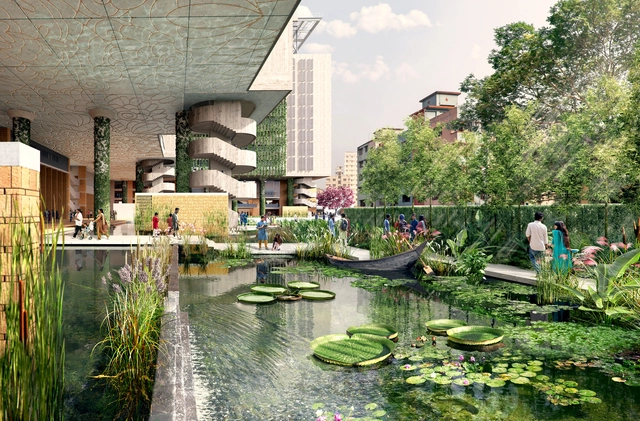
WOHA and BRAC University have unveiled the latest images from the 5.3-acre university campus, scheduled for completion in 2021. Located in Dhaka, Bangladesh, the intervention will transform a polluted and flooded wasteland into a sustainable inner-city campus and public park.
Design and the City is a podcast by reSITE, raising questions and proposing solutions for the city of the future. In the fifth episode, Yosuke Hayano, principal partner for MAD Architects, talks about Creating Emotional Connections to Nature. Always asking “How do you bring modern architecture into the future and connect humans with nature?” Hayano discusses the creative approach of the firm.
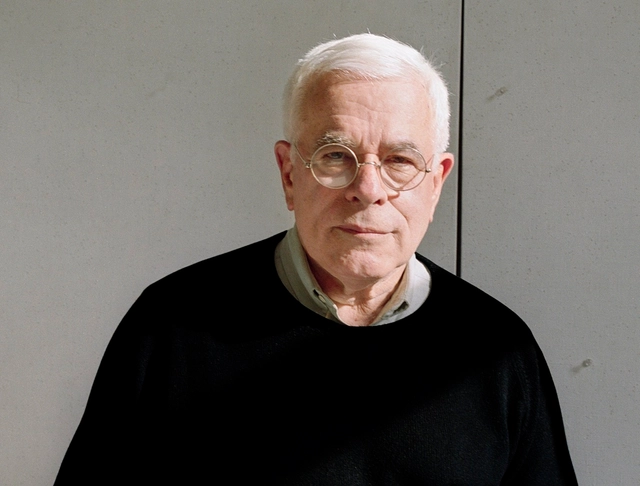
This January, Peter Eisenman was interviewed by Marc-Christoph Wagner at his studio in New York City. Featured by the Louisiana Museum of Modern Art, the video “Learn the language” explores how Eisenman stresses the importance of communication and of knowing the language of the field you’re interested in.
Geovana leaves her house already running late. It usually takes her two hours and three different transfers to get to her job in the city center. But it rained all night and her house flooded. She, her mother, and her siblings tried to save their furniture and other belongings. At 2:00 AM, when the rain finally let up, she managed to rest a bit, only to wake up shortly after. After yesterday's rain, she knows the streets in her neighborhood will be flooded, and her commute will take an hour longer than usual.
https://www.archdaily.com/1124068/women-in-citiesGraciela Medina, Lara Ferreira, Tama Savaget e Debora Pill





.jpg?1582834753&format=webp&width=640&height=580)
.jpg?1582834791 "via Shutterstock")

.jpg?1582834753)