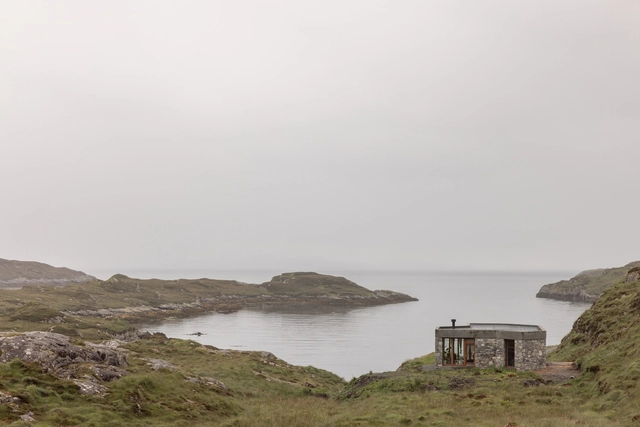
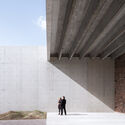
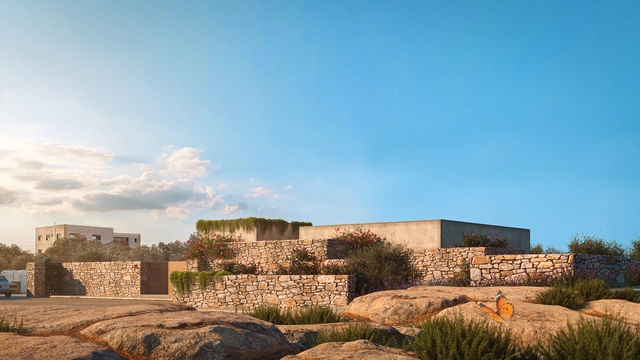
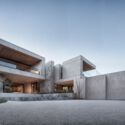
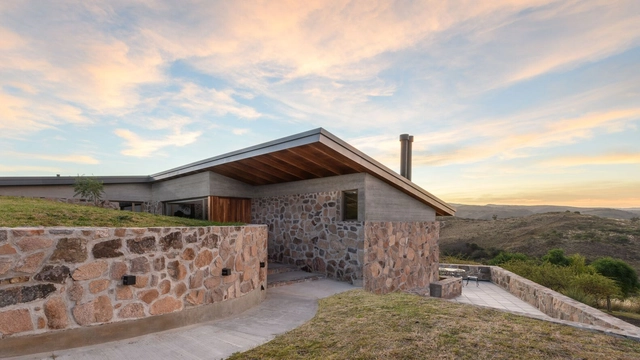
Caochan na Creige, designed by Izat Arundell, has been announced as the winner of the RIBA House of the Year 2025 award. The timber-framed, stone-clad self-build is located in Scotland's Outer Hebrides, occupying a compact rural plot defined by exposed weather conditions and a distinct geological setting. Built by and for its architect owners, the house was selected for its clear response to site constraints, its material strategy, and the consistency between design intent and construction.
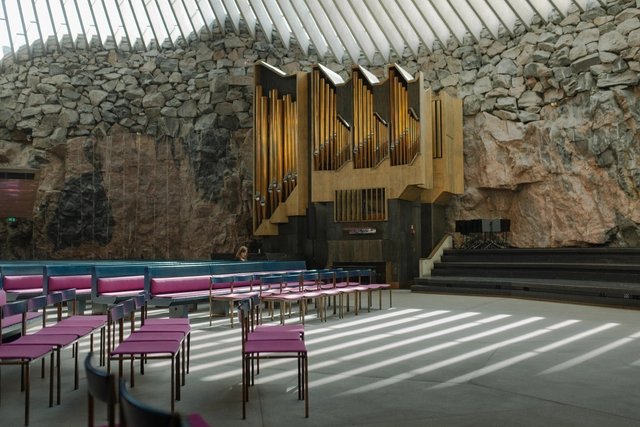
Near the center of Helsinki, Finland, in the Töölö neighborhood, one can find the Temppeliaukio Church, an unusual-looking Lutheran church nestled between granite rocks. Approaching the square from Fredrikinkatu street, the church appears subtly, a flat dome barely rising above its surrounding landscape. An unassuming entrance, flanked by concrete walls, leads visitors through a dark hallway, and into the light-filled sanctuary carved directly into the bedrock. The exposed rock walls earned it the alternative name “The Church of the Rock.” To contrast the heaviness of the materials, skylights surrounding the dome create a play of light and shadows and a feeling of airiness.
The church is the result of an architectural competition won by the architect brothers Timo and Tuomo Suomalainen in 1961. Their original solution was recognized not only for its creativity but also for the respect it showed to the competition’s goal: “to include the organization plan for the whole Temppeliaukio Square, taking into attention that as great part as possible of the rock outcrop of the square to be preserved.” The winning proposal achieves this by embedding the church inside the rock and placing parish facilities on the edges of the hillock. This article explores the story behind the Temppeliaukio Church both narratively and visually, through the lens of Aleksandra Kostadinovska, a professional photographer from Skopje.
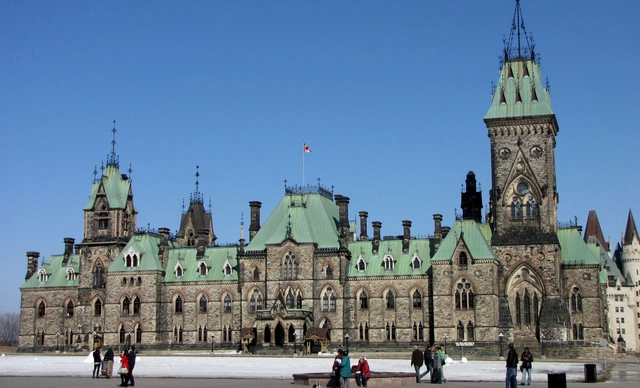
Heritage restoration has always been an intricate process that requires delicate balancing between preserving the integrity of historic materials while integrating contemporary techniques that can enhance accuracy, efficiency, and resilience. With the restoration process of Parliament Hill in Ottawa, Canada's capital city, this intersection of tradition and technology is now on full display. The East Block, built in 1865, offers a compelling example of how digital tools can support the efforts of heritage restoration and contribute to a centuries-old craft such as stone carving.
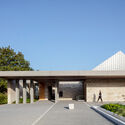
As people take greater control over the rituals surrounding their deaths, cremation has become an increasingly popular option worldwide. This shift has prompted the thoughtful design of spaces that address the profound emotions tied to cremation, life and death, and stillness. Architects are increasingly grappling with the question of what role architecture plays in these rituals.
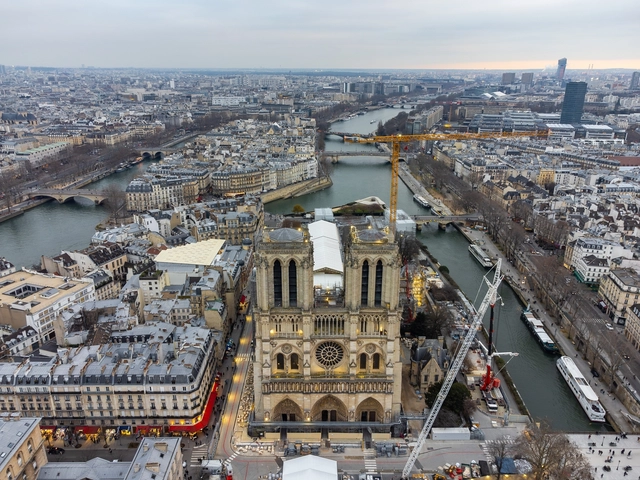
Notre Dame Cathedral reopened on December 7th, 2024, welcoming visitors for the first time since the 2019 fire. The restoration of Notre Dame Cathedral was a massive undertaking, led by chief architect Philippe Villeneuve, assisted by Rémi Fromont and Pascal Prunet. The project involved approximately 2,000 craftspeople, 250 companies, and about $900 million, demonstrating the immense scale and complexity of the work on a tight deadline. Despite the major milestone of opening before the end of the year, the restoration works are not yet complete, as they are scheduled to continue through 2026.
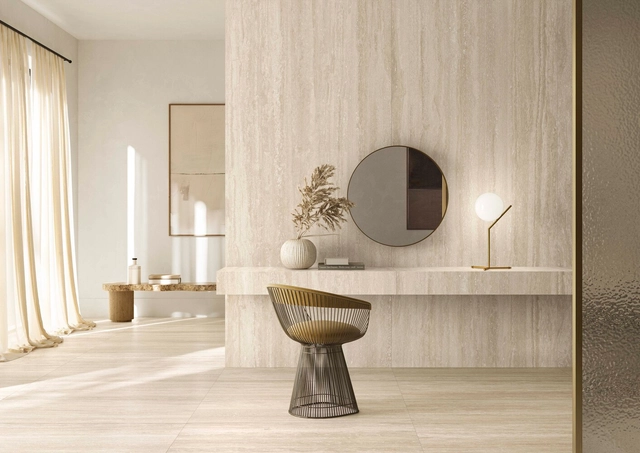
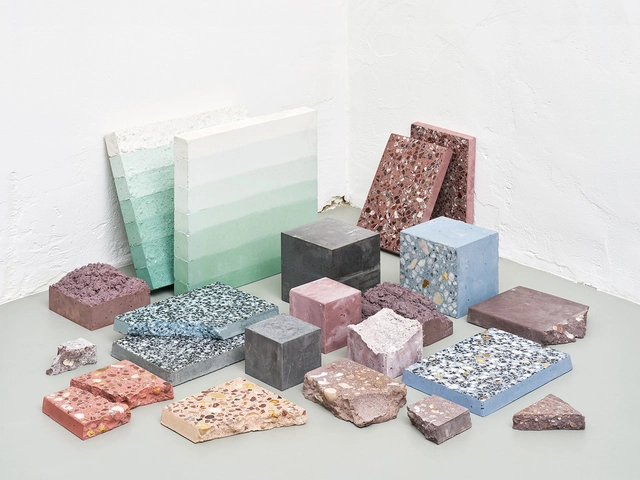
Pietra Tiburtina - Campidoglio. Image Courtesy of Casalgrande Padana
Travertine —known as lapis tiburtinus by the ancient Romans— has endured for centuries as one of the most iconic materials in Italian design heritage. This limestone has left a lasting mark on architectural history, from the monuments of the Roman Empire to contemporary works like the Church of 2000 and the Ara Pacis Museum. Over time, its aesthetic has evolved alongside art and design, adapting to technical advancements while preserving its essence and relevance in modern architecture.
https://www.archdaily.com/1022299/carving-pietra-tiburtina-a-contemporary-approach-to-classic-travertineEnrique Tovar
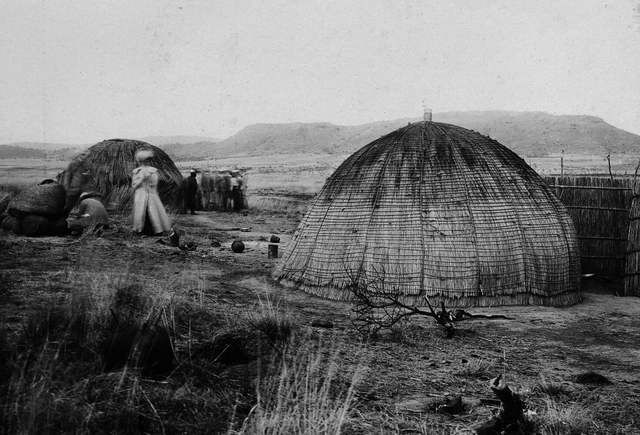
Reflecting on the past is often viewed as nostalgia or, from a more critical standpoint, as a sign of regression. However, looking back can offer valuable insights into a society that sometimes appears overly focused—if not obsessed—with the future and technology. In architecture, this reflection allows us to reconnect with our roots and appreciate the knowledge accumulated over generations. It invites us to explore how our ancestors designed durable structures adapted to their environment. Refined through centuries of observation, experimentation, and likely even errors, these systems demonstrate a profound understanding of local materials and building techniques.
https://www.archdaily.com/1020943/heritage-in-mud-stone-and-reeds-rediscovering-ancestral-construction-techniquesEnrique Tovar
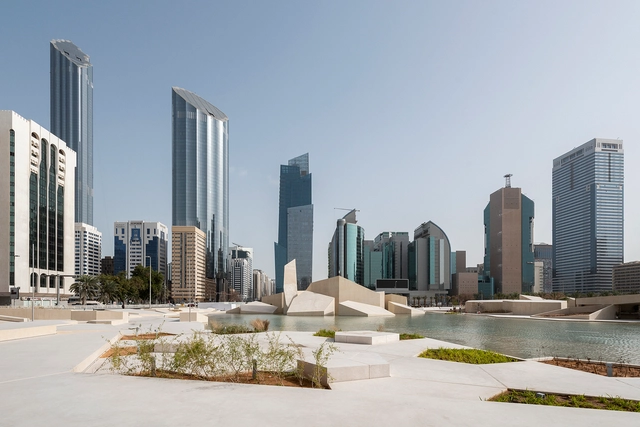
Landscape architecture has traditionally been associated with lush greenery, rooted in the historical development of gardens and parks as spaces that bring nature into urban areas. This connection to greenery is deeply ingrained in the origins of the field, where the creation of verdant retreats was seen as both aesthetically pleasing and beneficial to human well-being. However, in regions like the Middle East, where water scarcity and harsh climates are more prevalent, there is a growing trend toward using local materials such as sand, stone, minerals, and indigenous plants. This shift reflects a more sustainable approach, reimagining landscape architecture to align with the environmental and cultural contexts of the region.
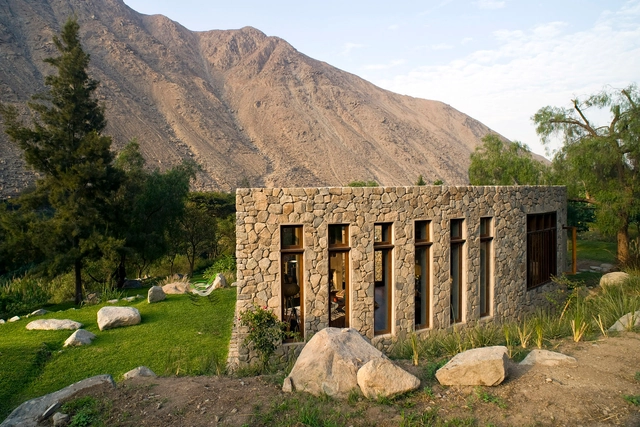
Throughout history, stone has been a vital building material because of its strength, beauty, and inherent appeal. Stone has been used to build long-lasting constructions for ages, from historic monuments to contemporary residences. Because of its resilience, it is suitable for both interior and exterior design projects, providing a diverse array of appearances. There are numerous varieties of stone, each with a distinct texture and color, including marble, granite, and limestone. Because of this diversity, stone may be creatively used by architects and builders to create accents or entire buildings. This curated selection of Unbuilt Architecture,submitted by the ArchDaily community, showcases how stone is still a dependable and adaptable building material that can combine old-world craftsmanship with contemporary style.
Thermal mass is the ability of a material to absorb, store, and release heat. Used to moderate building temperatures by reducing fluctuations, the concept is crucial in improving energy efficiency. Materials with relatively high thermal mass, such as stone, concrete, rammed earth, and brick, can absorb significant heat during the day and release it slowly when temperatures drop at night, reducing the need for heating and cooling systems. Properties like heat capacity, thermal conductivity, and density are all considered when assessing the thermal mass property of a material.
A Trombe wall is a passive solar building feature that enhances thermal efficiency. Positioned on the sun-facing side of a structure, it consists of a wall made from materials like brick, stone, or concrete, and a glass panel or polycarbonate sheet placed a few centimeters in front of it. Solar radiation penetrates the glass during daylight hours and heats the masonry wall. This wall then slowly releases the stored heat into the building during the cooler nighttime hours, maintaining a more consistent indoor temperature without the need for active heating systems.
Organizing, shaping, stacking. Transforming raw materials from the soil into architecture. This is a challenge that many Latin American architects embrace, demonstrating that scarcity can be daunting but also a rich opportunity to unleash creativity.
The use of materials extracted from the local soil serves a dual purpose. In regions with limited industrialization, using locally sourced materials makes economic sense because industrial materials such as concrete and steel are expensive and often require long-distance transportation, adding to their cost. Environmentally, choosing locally sourced materials from the start of a project reduces transportation needs and carbon emissions, supporting sustainability efforts.
“The Mindfulness City will be a sustainable city. To be mindful is to be aware — to perform best,” said Giulia Frittoli, partner and head of landscape at BIG. The Kingdom of Bhutan is a landlocked Buddhist country in the eastern Himalayas, nestled between China and India. It covers 14,000 square miles and has a population of nearly 800,000.
The Royal Office of Bhutan asked BIG, Arup, and Cistri to develop a plan for a new Mindfulness City in Gelephu in southern Bhutan, near the border with India. The city will span 386 square miles and include a new international airport, railway connections, hydroelectric dam, university, spiritual center, and public spaces.
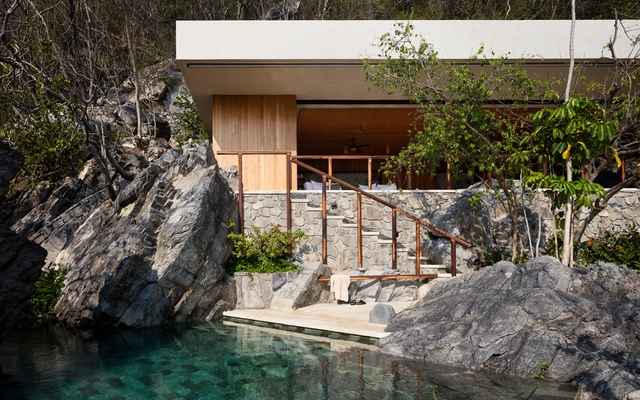
Due to their aesthetic, sustainable, durable, and resistant qualities, stone materials have accompanied the disciplines of architecture and engineering since their origins. As is known, in Mexico, stone has been a fundamental element in pre-Hispanic constructions where experimentation was done with vaults, ashlars, masonry, etc.
However, the industrialization of this material, the perfection of techniques, and experimentation with its various applications have allowed buildings erected today to continue using it in different ways and various regions of the country, specifically in wooded areas. For this reason, we have compiled a selection of projects that include houses, haciendas, hotels, restaurants, and terraces to continue inspiring you.
From Tafí del Valle to San Carlos de Bariloche, the implementation of natural stone in contemporary Argentine architecture reveals the decisions of architects seeking to maintain a dialogue with their surrounding environment and highlight the purity of materials. While stone is one of the oldest building materials, enduring throughout history, its application in homes in Uruguay, Brazil, and Mexico highlights different characteristics in terms of textures, shapes, shades, and patterns.
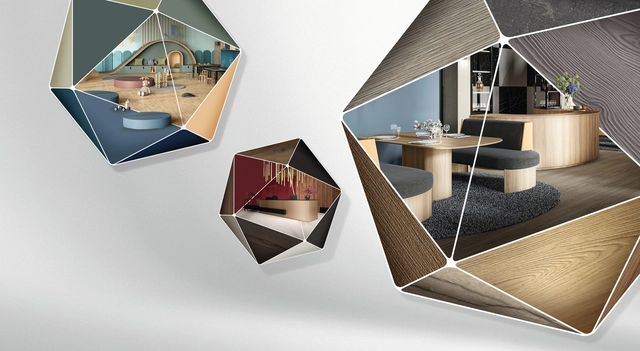
Nowadays, the cycles of change around society and architecture have generated new urban models, emerging technologies, and design trends that underline the need for constant adaptability in all areas. In this context, aspects such as flexibility, reliability, and simplicity emerge as distinctive elements, both in architecture and in the components that constitute it, including materials. This is why lines such as the EGGER Decorative Collection 24+, crafted from wood-derived materials, seek to redefine concepts through a rolling series, updated at most every two years. This dynamic enables a more agile response to new trends, influences, and product innovations that arise in the built environment.
https://www.archdaily.com/1012771/from-wood-stone-steel-and-uni-colors-a-decorative-collection-for-fast-moving-trendsEnrique Tovar
A building’s materiality is what our bodies make direct contact with; the cold metal handle, the warm wooden wall, and the hard glass window would all create an entirely different atmosphere if they were, say, a hard glass handle, a cold metal wall and a warm wooden window (which with KTH’s new translucent wood, is not as absurd as it might sound). Materiality is of just as much importance as form, function, and location—or rather, inseparable from all three.
Here we’ve compiled a selection of 16 materials that should be part of the design vocabulary of all architects, ranging from the very familiar (such as concrete and steel) to materials that may be unknown to some of our readers, as well as links to comprehensive resources to learn more about many of them.
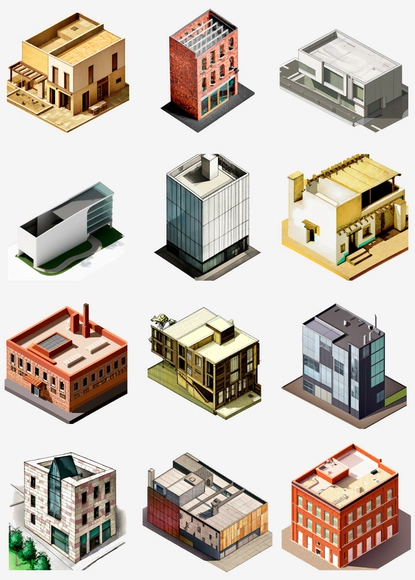
A contemporary building immersed in a built environment. This building is made of (material). An isometric view with realistic textures. Image via DALL.E 2
As AI has become more accessible, we have witnessed examples illustrating its diverse applications. Prominent among these are generative AIs, which excel in their ability to “create” images through prompts, many distinguished by their composition and vividness. These AI systems are neural networks with billions of parameters, trained to create images from natural language, using a dataset of text–image pairs. Thus, although the initial question posed by Turing in the 1950s, “Can machines think?” still recurs today, the generation of images and text is grounded in existing information, limiting their capabilities.
What has surprised many is the increasingly apparent closeness to overcoming the Turing test and the growing similarity, in terms of visualizations, to what an architect with skills in this field can achieve. In this context, while the debate persists in the architectural community about whether AI can process architectural concepts, this article explores how it interprets materials to develop these visual representations. With that in mind, a single prompt was developed for this experiment (with materiality as its variable) to delve into the obtained results.
https://www.archdaily.com/1010723/does-ai-correlate-materiality-with-contemporary-architecture-an-experiment-with-six-building-materialsEnrique Tovar