The City of Vancouver has agreed to purchase the Arbutus Corridor from Canadian Pacific Railway for $55 million to make way for a future public greenway. According to a report by CBC, this ends a long-standing dispute between the city and CP Rail over the worth of the nine kilometer stretch of land, which hasn't been used for nearly 15 years.
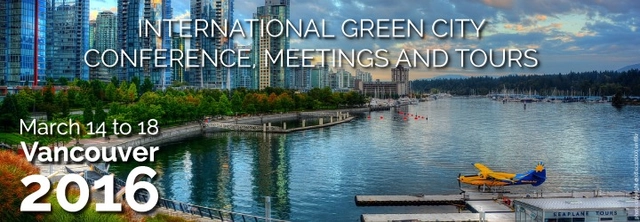
AIPH and Canadian Nursery Landscape Association (CNLA) invites all those with an interest in making our cities healthier and happier to join them in Vancouver, Canada on 16-18 March 2016 for the AIPH International Green City Conference, sponsored by TD Canada. The event will be held in conjunction with the AIPH Spring Meetings, the ELCA Board Meetings and the Landscape Canada Summit. The conference will give delegates a chance to see innovations in urban green infrastructure and planning on a global scale.
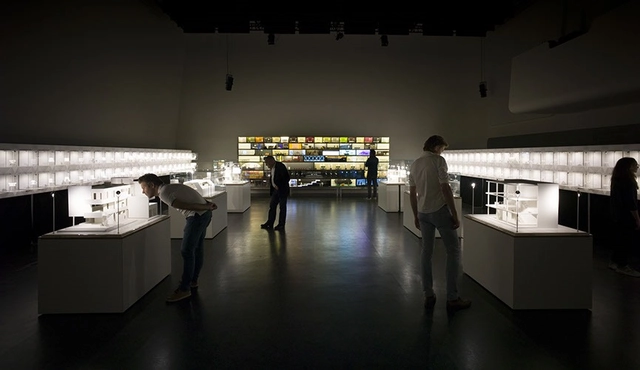
Dudoc (Dutch Urban Design Centre) Vancouver in co-operation with the Consulate General of the Netherlands is excited to present the Dutch Design Supermodels travelling exhibit that showcases the ingenuity of design and architecture from the Netherlands. View 3-D printed scale models of a century’s worth of iconic buildings & chairs designed by great Dutch architects.
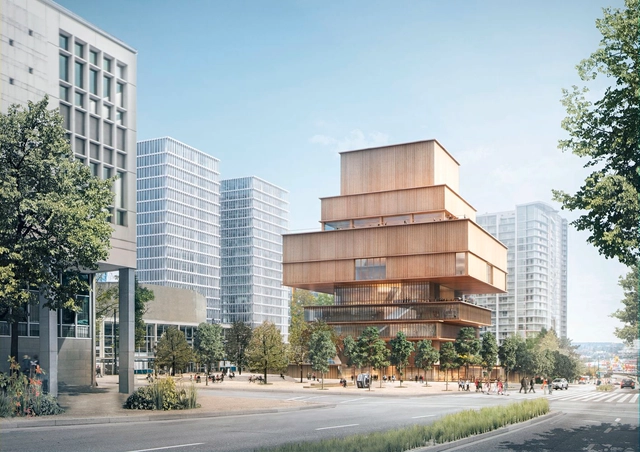
Herzog & de Meuron have unveiled plans for a new Vancouver Art Gallery. Aiming to become a "vibrant new cultural destination" that utilizes the last vacant lot in the City's downtown, the new 230-foot-tall facility will serve the Gallery's expanding collection, featuring work from local and international contemporary artists.
Designed as a stacked wooden structure whose bulk is lifted high above the street, the building is comprised of seven public levels that offer a range of uniquely sized galleries. Setbacks and overhangs respond directly to the context, framing views of the city and North Shore Mountains, while allowing light to filter down to the open-air courtyard below.
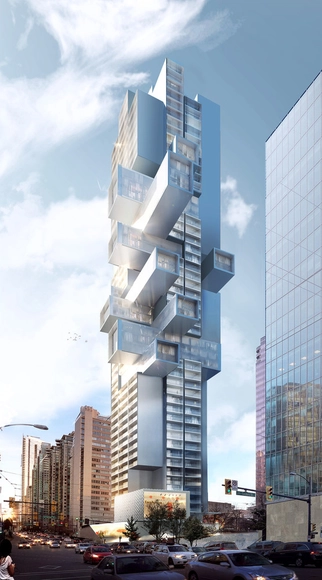
Büro Ole Scheeren has envisioned a "future vision for vertical living." Designed to serve as an "urban pivot" on one of Vancouver's main avenues, 1500 West Georgia Street, the multifaceted tower features a system of vertically shifted apartment modules and outdoor terraces that branch out horizontally to "engage the space of the city and activate Vancouver's waterfront skyline."
“Vancouver possesses a unique balance of urban conditions surrounded by spectacular nature that provides fertile ground for envisioning new possibilities for future living in a cosmopolitan and environmentally-friendly city” says Ole Scheeren. “The design for this building exemplifies our ambition to reconnect architecture with the natural and civic environment and go beyond the hermetic confines of towers that increasingly inscribe our lives.”
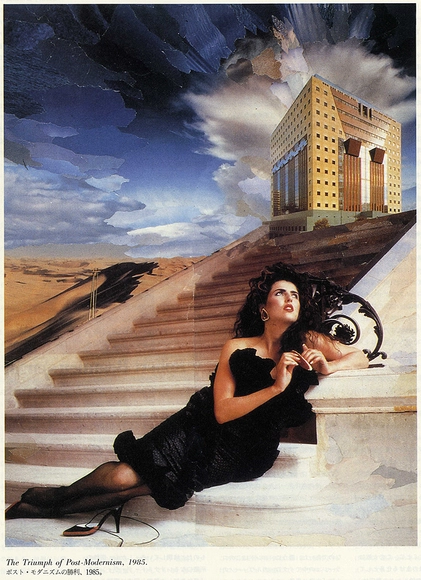
Being such a recent movement in the international architectural discourse, the reach and significance of post-modernism can sometimes go unnoticed. In this selection, chosen by Adam Nathaniel Furman, the "incredibly rich, extensive and complex ecosystem of projects that have grown out of the initial explosion of postmodernism from the 1960s to the early 1990s" are placed side by side for our delight.
From mosques that imagine an idyllic past, via Walt Disney’s Aladdin from the 1990s, to a theatre in Moscow that turns its façade into a constructivist collage of classical scenes, "there are categories in post-modernism to be discovered, and tactics to be learned." These projects trace forms of complex stylistic figuration, from the high years of academic postmodernism, to the more popular of its forms that spread like wildfire in the latter part of the 20th century.
Lateral Office'sArctic Adaptations exhibition, which was recognised with a Special Mention at the 2014 Venice Biennale, will travel make its debut in Canada at the Winnipeg Art Gallery this week before heading to Whitehouse, Vancouver, and Calgary. The exhibition "surveys a century of Arctic architecture, an urbanising present, and a projective near future of adaptive architecture in Nunavut" though interactive models, photography, and topographical maps of the twenty five communities of the area, as well as Inuit carvers’ scale models of some of the most recognised buildings in the territory. In addition, it proposes a future of adaptive and responsive architecture for Canada's northern territories.
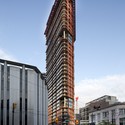
Taking the urban high-rise “one step further,” BIG’s Vancouver House (formerly known as the Beach and Howe Tower) is a gesamtkunstwerk - total work of art. Detailed to the smallest scale, the grand scheme makes use of a difficult site trisected by the Granville overpass and burdened by setbacks, transforming it into a “lively village” at the city’s gateway.
Learn how Bjarke Ingels plans to revolutionize urban living by watching the video above.
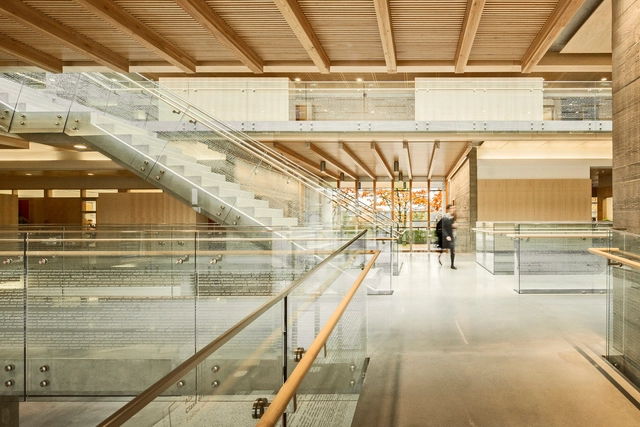
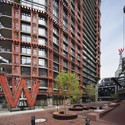
Officially opened in 2010, the Woodward’s Redevelopment project designed by Vancouver based Henriquez Partners Architects and situated in the city’s Downtown Eastside (DTES), was a contentious proposal from the time of its inception, and has continued to be so in the almost five years since its completion. Yet as the large-scale mixed-use complex, and its role in the community, nears the first of many milestone anniversaries, it offers us a chance for critical reflection and allows for perceptions and understandings to be gathered and assessed.
What has made Woodward’s an interesting case study, however, is the project’s attempt to act as a model for responsible development with respect to the regeneration of its surrounding urban and community context. Yet there has also been much criticism, with fears over rapid gentrification and claims that it has displaced some of the community’s most at-risk residents. For managing partner Gregory Henriquez, however, it was seen as an opportunity to introduce a place of inclusivity into the neighbourhood and as a chance to “share a portion of the wealth created in real estate development to support the greater good.”