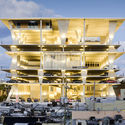
In theory, parking spaces serve only one function: park a car safely until it is used again, and in terms of design, car garages are flexible and straightforward, requiring minimal design interventions. However, parking spaces nowadays are no longer considered one-function buildings. The emptier the space, the more potential it has to integrate additional functions. Architects and urban planners have redefined traditional parking lots, adding recreational and commercial facilities to the structure. Instead of a typical structured grid plan with yellow and white markings on the floor, we are now seeing inviting structures that incorporate green facades and rooftop playgrounds, car washes, cafeterias, and work/study zones.
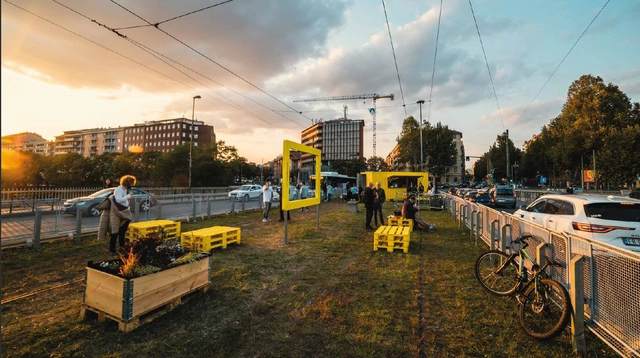
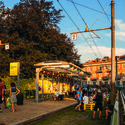
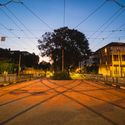
Ever since the tramline’s closure, the 800-meter-long strip in the center of Corso Gabetti and Ponte Regina Margherita in Turin, has been abandoned. To make use of the dead area and give residents an extra space outdoors following Italy's severe pandemic repercussions, non-profit cultural association Torino Stratosferica has transformed the tree-lined strip into Precollinear Park, a temporary public space fit for socially-distanced leisure.
Courtesy of OUTCOMIST, Diller Scofidio + Renfro, PLP Architecture, CRA - Carlo Ratti Associati and Arup
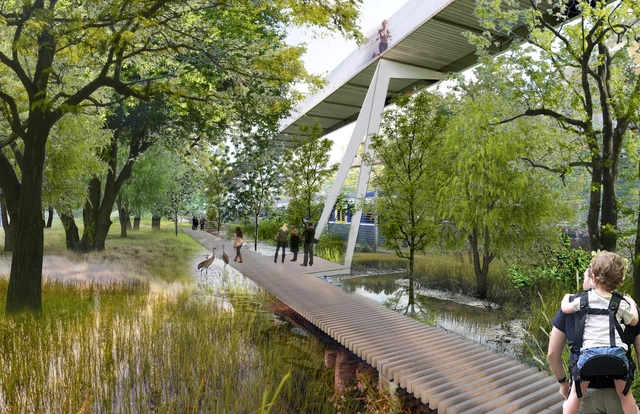
Led by OUTCOMIST, an international design team including Diller Scofidio + Renfro, PLP Architecture, CRA - Carlo Ratti Associati, and Arup won the competition to revitalize the Porta Romana Railway Area, transforming the industrial site into a diverse green neighborhood in Milan. Rehabilitating a disused railway yard into a connective tissue that links the southeast area of the city to the center, the development will generate a rich biodiverse public space, including a large urban park.
Davenport Master Plan . Image Courtesy of Downtown Davenport Partnership
WXY Studio has partnered with the Downtown Davenport Partnership (DDP) to develop Davenport 30: A Resilient City, a new master plan that aims to provide a sustainable and inclusive city that reconnects its citizens to the surrounding neighborhoods. The award-winning architecture and urban design studio’s proposal focuses on revitalizing the city’s urban fabric and turning it into an innovative hub for businesses, entertainment, and leisure, all while prioritizing the citizens’ health.
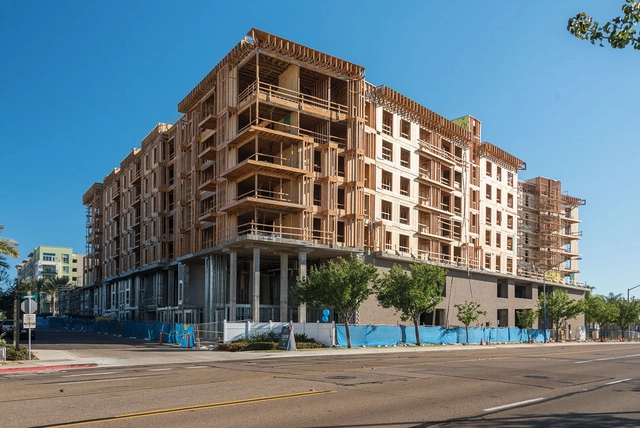
In an ideal world, architects would have free reign to design whatever they imagined. But the reality of the profession is that it comes with strings attached, and our visions are limited by clients, budgets, and perhaps the most dominating force, building codes. These codes have restricted and reshaped architecture so much, that it has forged a new type of building- the “stick frame over podium”, or “five over two” design. The result is a very distinct aesthetic of buildings and a notable monotony that has nearly redefined mid-rise residential architecture across the country.
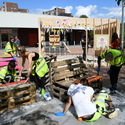
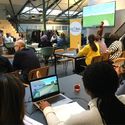
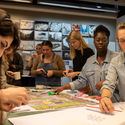
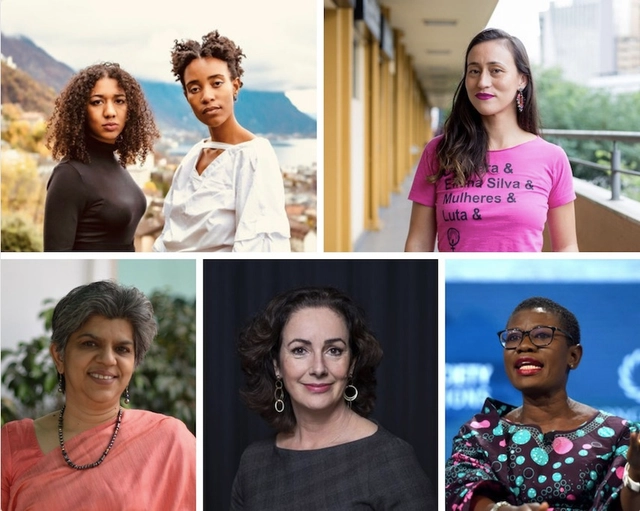
While in a lot of countries around the world, the construction, architecture, engineering, and urban planning sectors, are still reserved for men, initiatives that empower women in these fields are surfacing everywhere around the globe. Playing a huge role in the integration of female power into these disciplines, these movements take on many forms such as organizations, websites, platforms, etc. working with professionals, artisans, and workers.
From providing skills, connecting outstanding females, ensuring exposure, and promoting the works of pioneers, these initiatives have the common purpose of encouraging women to have an impact on their built environment.
HerCity is a platform that involves women in urban development, in order to make better cities for everyone. Turning the tables and putting girls in the expert position, the digital toolbox aims to create more inclusive, equal, and sustainable cities and communities. The initiative makes methods and tools available to urban actors globally, in order to support cities in integrating girls’ participation in their long-term strategies.
Launched on Women’s day 2021, the guide for urban planning and design is a collaborative effort between UN-Habitat and Global Utmaning, the Swedish independent think tank. ArchDaily had the chance to talk with the team behind this digital toolbox, discussing the narratives, the process, and inclusive planning on a worldwide level.
In theory and practice, in the modern era, the idea of spatial separation between home and work was related to the traditional sexual division of men and women, and of their role in life. Going back to the earliest feminist thinking in architecture, in western industrialized communities, we are elaborating in this article on women’s changing role in the 20th century and its impact on the space we experience today.
Almost one year into the COVID-19 pandemic, life is starting to feel like it might regain its sense of normalcy. With promising vaccines being slowly rolled around the globe, the focus is shifting away from the immediate, and into what the future looks like- including where people want to live. At the beginning of the pandemic, stories all across the media claimed that cities were dead, people were leaving as a permanent measure of safety and well-being, and that the real estate market would experience a long and slow recovery to the boom it had experienced in the pre-pandemic world. But there’s been a shift, and it’s happening fast- people are returning to cities almost as suddenly as they once left them.
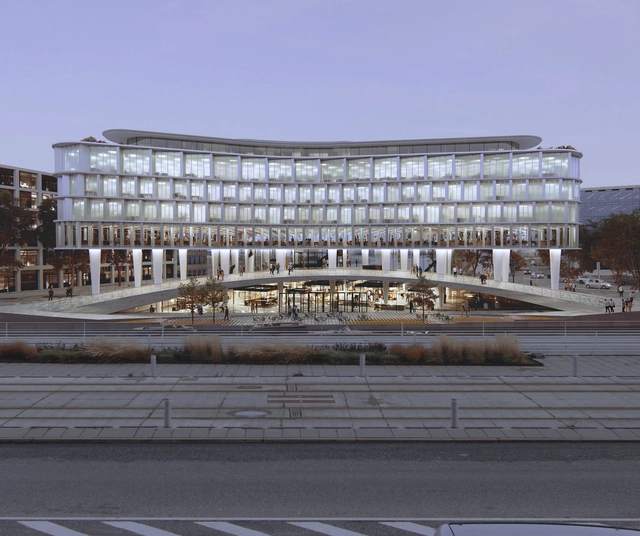
Dorte Mandrup has imagined ‘The Hinge’, a landmark transition between the new urban area Aarhus Ø and the historic town of Denmark’s second-largest city. The new city gate will put in place an innovative and sustainable urban focal point. Expected to open in 2026, The Hinge was designed in collaboration with landscape architect Kristine Jensen and Søren Jensen Consulting Engineers.
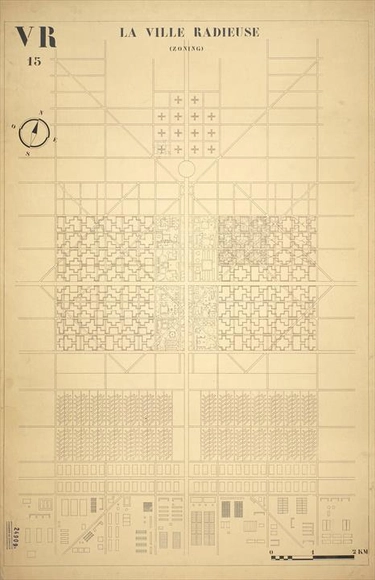
The Master Plan of the Radiant City. Image Courtesy of LE CORBUSIER FOUNDATION
Throughout history, religious reformers and visionary starchitects have attempted to envision the future of our cities: from the Venetian model city of Palmanova to the multi-story housing complex for 5,000 people drafted by Italian architect Paolo Soleri, from Frank Lloyd Wright’s Broadacre City to Le Corbusier’s Radiant City, numerous masterplans have been crafted to illustrate some of the most unprecedented ambitions.
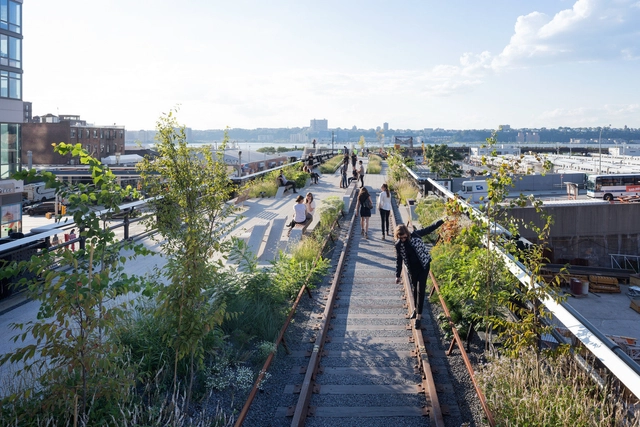
Understanding what drives economic, social, and educational disparities between communities is one of urbanism’s most critical and highly-discussed topics. It’s an increasingly complex issue, with many factors at play- one of them being the design and location of desirable urban green spaces. While sometimes they are a tool that helps to bolster underserved communities in terms of health and economic benefits, safety, and climate resistance, other times they can actually drive out the residents that they are created to serve. Now, the challenge lies in how to design these recreational sites to create better futures for all.
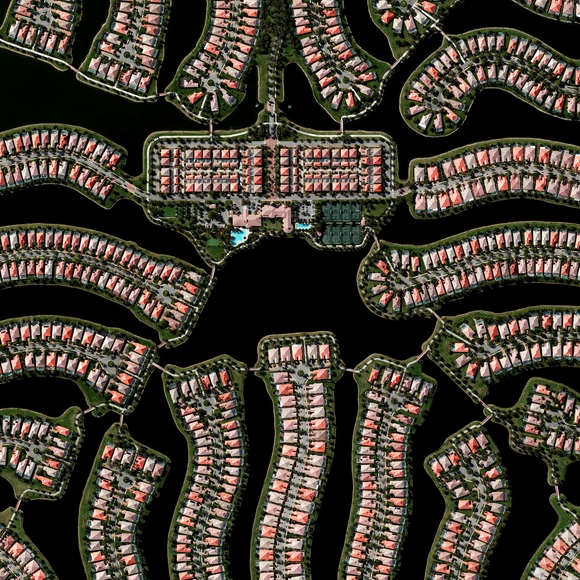
The state of Florida, in the United States, is bordered to the south, east, and west by the Atlantic Ocean, with a coastline of over two thousand kilometers in length, and is characterized by extensive areas of lakes, rivers, and ponds. Land booms during the early and mid-20th century resulted in the development of new communities and the expansion of low-density suburbia across many parts of the state, which frequently incorporated the abundant water resources, sometimes failing in their efforts.
As long as cities have been around, there’s been one pressing question central to their future: “What makes urban areas desirable?” Over half of the world’s inhabitants live in cities and that number is projected to climb over the next decade with more than 5 billion people inhabiting urban cores globally. To prepare for this demand, cities are finding ways to be more desirable, draw in talent, and entice both big and small businesses, all while finding more ways to create equitable living opportunities for all.
In our increasingly urbanized world, everything and everyone has adopted a lifestyle of nomadism. New environmental and social constraints have forced people to have a constant "on-the-go" behavior, so much so that almost everything has acquired wheels, even the buildings. But with the rise of debates like "is humankind being replaced by robots?" and "is technology taking over?", urban mobility has helped give access to housing, healthcare, and education in places with extreme difficult conditions.
To shed the light on globally-thriving mobile activities, the France-based Institut pour Ville en Mouvement, or City on the Move Institute, is an organization that has been addressing the challenges posed by urban mobility and contributing to the emergence of innovative solutions. In a series of short Youtube clips, the organization invited experts in the fields of architecture, urban planning, and technology to share their insights on the future of urban mobility.
Imagine having a blank canvas on which to master-plan a brand new city; drawing its roads, homes, commerces, and public spaces on a fresh slate and crafting its unique urban identity. Every urban planner has fantasized about designing a city from scratch and luckily for some, this dream is morphing into concrete opportunities.
Over the last two decades, new, master-planned cities have emerged from the ground up at an unprecedented scale, the majority of which have been created in Asia, the Middle East, Africa, and Latin America, with currently over 150 new cities in the making. This new type of urban development has shown to be particularly seductive in emerging markets, where they are sold as key parts of the strategy to leapfrog from agriculture and resource-based systems to knowledge economies by attracting foreign capital and boosting economic growth.















.jpg?1614899251 "Courtesy of Charlie Hui, Viswerk. 2020.")
.jpg?1614898654 "© Juju Berzô")







.jpg?1611288061 "The Line project in Saudi Arabia. Image © NEOM")