These days, wellness is a commonly-used word in design and other areas, but what does it truly mean? According to the National Wellness Institute, the concept is defined as "an active process through which people become aware of, and make choices toward, a more successful existence." It can be viewed from different perspectives, such as environmental, intellectual, spiritual and physical factors. Although these elements can be integrated separately into one’s life, they can also complement each other and work together. For example, exercise does not only provide physical benefits; it contributes to emotional wellness as well.
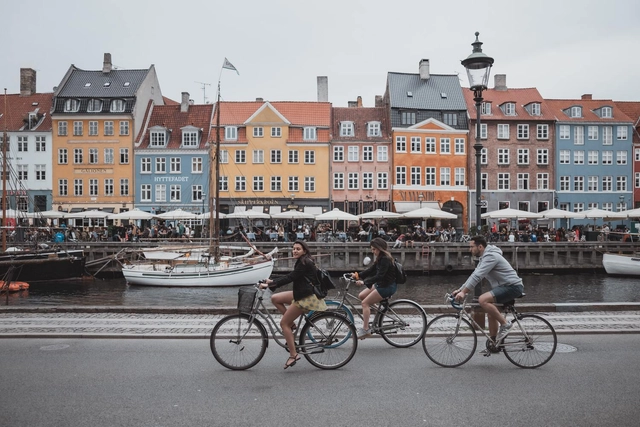
According to the World Happiness Report, Denmark has continually topped the survey of happiest countries for years. Copenhagen, the capital of Denmark, is known for its brightly colored waterfront buildings and radical contemporary architecture, both reflecting the joyful ethos of the city. The maritime metropolis is an urban designer’s favorite case study with its carbon-neutral infrastructure, pedestrian and bike-friendliness, and thriving public realm.Danish designers have cracked the code to build happier cities, leaving plenty of models to learn from.
The past couple of decades introduced the world to new ways of living as a result of different social, economic, and ecological changes. Naturally, these changes found their way into the architecture and urban practice, provoking new concepts within traditional typologies. Designing a space, regardless of its function, has always prioritized users' needs and ensured practicality and functionality, but recently, keywords like flexibility, privacy, inclusivity, and eco-consciousness have become driving forces behind design processes. In this interior focus, we will look at how current cities and living trends across the world have reshaped interior design and introduced modifications to typical typologies.
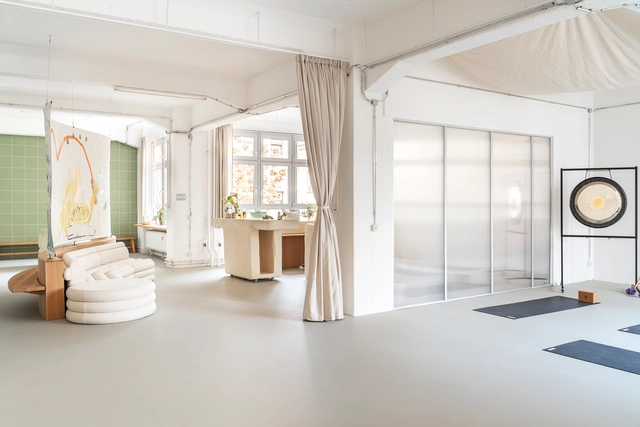
Originating in ancient India and verbally transmitted through the ages, Yoga has become a widespread and popular practice that engages the body and the spirit into reaching a stillness of the mind and a clear self-consciousness. There are varied schools of Yoga that reflect different origins and types of practices, however, they all require a combination the physical movement with mental, and spiritual awareness. The physical and mental health benefits that a regular practice can generate, despite turbulent or hard times, were recognized by the United Nations on the 21st of June 2022 Yoga day with the theme of Yoga for Humanity.
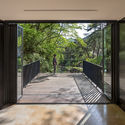
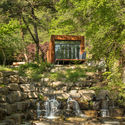
Shigeru Ban Architects designed a wellness retreat on Japan’s Awaji Island. The project features a bridge-like wooden structure suspended above the lush landscape, providing visitors with a zen experience. The Vierendeel timber girder allows for a 21-metre span and a significant cantilever on one end of the 90-metre long structure. The Zenbo Seinei retreat, which will focus on meditation and healthy food, is currently under construction and is set to open this spring.
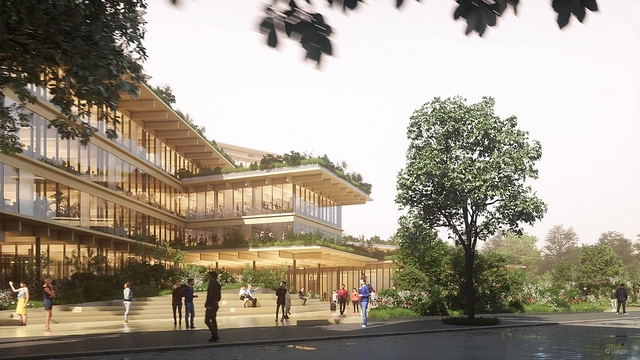
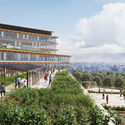
Construction has begun on “Welcome, feeling at work”, a biophilic office of the future in Milan, Italy. Designed by Kengo Kuma & Associates and commissioned by Europa Risorse, this venture seeks to create a workspace centered on employee health and wellbeing, integrated within its local environment. Imagined to be one of the most sustainable office development to date, the project is scheduled for 2024.
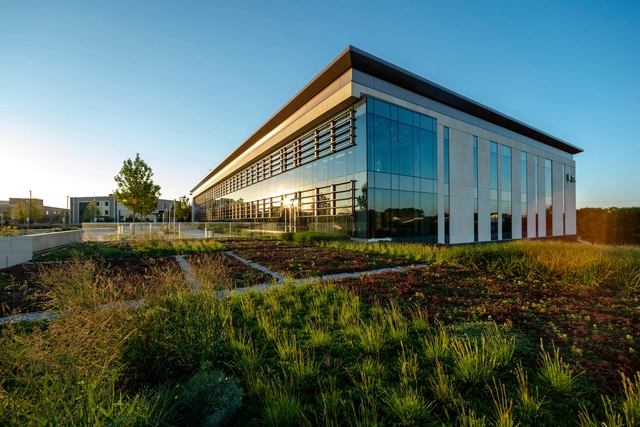
Palos Health South Campus | Orland Park, IL. Image Courtesy of HED
Designing for health and wellness is inherent to architecture. At HED, great architecture is rooted in real world outcomes that foster healthier spaces and environments. Today, the firm's healthcare team works to deliver progressive medical care facilities grounded in continuous learning, adaptation and experience. As the firm's National Healthcare Design Leader, Alberto Salvatore is working to inspire a Culture of Health across the United States.
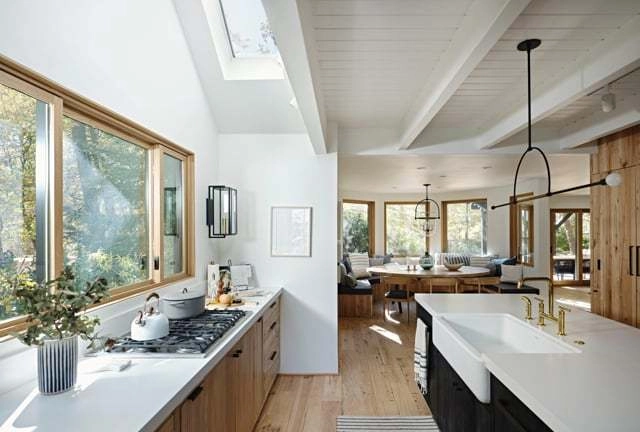
Danish company VELUX began with a belief in building healthier homes. Created over 75 years ago by Villum Kann-Rasmussen, the manufacturer has now expanded around the world, with millions of people getting fresh air and daylight through their products. With recent events on the COVID-19 pandemic, Lone Feifer and Peter Foldbjerg of VELUX explore how architects and designers can find better ways to work at home and create healthy living spaces.
BRIEF Things aren't going too well right now. Each new day seems to add to the uncertainty about the immediate and long-term impact of the Coronavirus pandemic. Whether you think that people are overreacting or it is truly a global health emergency, one fact is objectively true: Covid-19 has affected billions of lives: if not physically than economically and mentally.
Entire cities in China have been on lockdown for weeks and now Europe faces the same pressures. Behind the news stories that love to flash statistics on infection rates are real people who are uncertain of what this
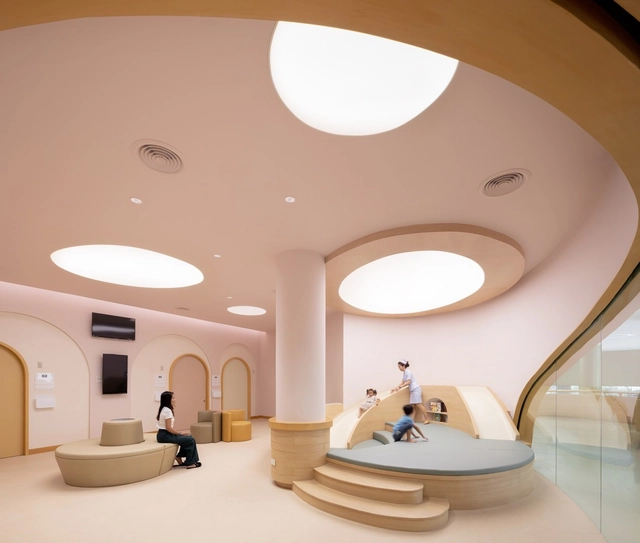
Architecture and interior design constantly evolve to meet the needs of society and part of its social role is to assist the well-being of those who transit and use their spaces daily. Hospital architecture is a niche responsible for the development of projects focused on the health area, based on specifications, requirements, and regulations that guarantee and ensure the comfort of patients - it is continuously studying intrinsic issues of how a sick body behaves in space, in order to create environments that assist in the rehabilitation process.
FuturArc Prize 2020 asks how an Asian city might restore a human-nature balance.
TASK 1) Pick a city in Asia. This may be the city you live in or one that you are familiar with. 2) Evaluate the loss of natural habitats and ecosystem services. 3) Understand the impact of this loss on the well-being of humans and other species. 4) Propose new elements and networks that will invite Nature back and restore ecosystem services.
This year, you decide the scale and boundary of the intervention. Your proposal can be at the city-scale; it can be a retrofitted neighbourhood; or it can be a prototype for
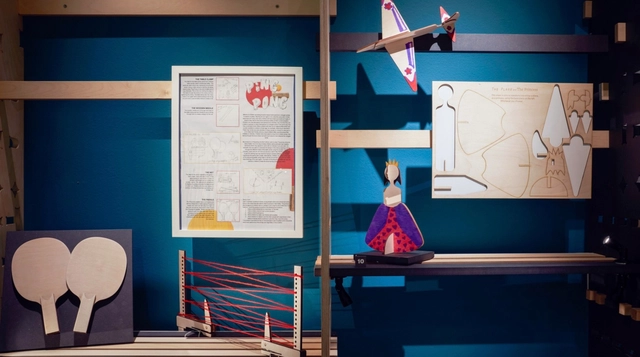
How does our built environment affect us? This major exhibition spanning two galleries examines the positive and negative influence buildings have on our health and wellbeing. From Dickensian London to the bold experiments of postwar urban planners, and from healing spaces for cancer patients to the role architecture can play in global healthcare provision, we look anew at the buildings that surround and shape us.
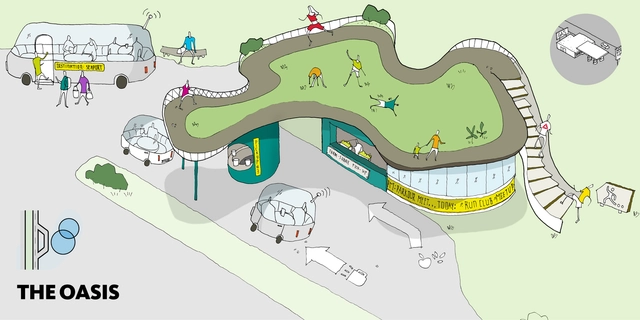
The gas station does not usually catch one’s fancy. It is a ubiquitous building, one built primarily for function instead of for pleasure or community. We see them all the time but barely give them a second glance unless the need arises – and then, we get our fuel, and we are out of the station in minutes.
With the smell of gasoline and the usual convenience store spread, these service stations do not exude any particular sense of wellness. Neither have their flat, perennial structures captured the imagination of architects – until now.
Reebok and Gensler are the first to catch on to the enormous potential of the common gas station. These buildings sit on prime real-estate all over the country, from highways to local streets. In their new collaborative project, “Get Pumped,” the global architecture firm and the fitness brand are coming up with a plan to re-do the gas station as we know it.
Today we live in a rapidly aging society. The shift in the population pyramid means that traditional healthcare systems need to be reimagined in order to efficiently support an increasing senior population. This added pressure on healthcare is significant--the number of older adults in the US alone requiring long-term healthcare support is set to increase from 15 million to 27 million by 2050. By partnering with designers, healthcare providers can create valuable responses to address these growing needs.
One building typology that expresses this designer-provider partnership are centers for healthy living (CHL). CHLs help to bridge the gap between the senior living and healthcare sectors, and go beyond simple clinic or exercise spaces. Taking a more holistic approach, they seek to become accessible destinations for programs that nurture wellness while providing a sense of place and community.
In a new downloadable report, Perkins Eastman have explored this typology in great depth by investigating existing CHLs. Through spatial and market research, case studies and user surveys, their findings identify strategies for improving upon the CHL model in the future. Read on for our summary of their discoveries.
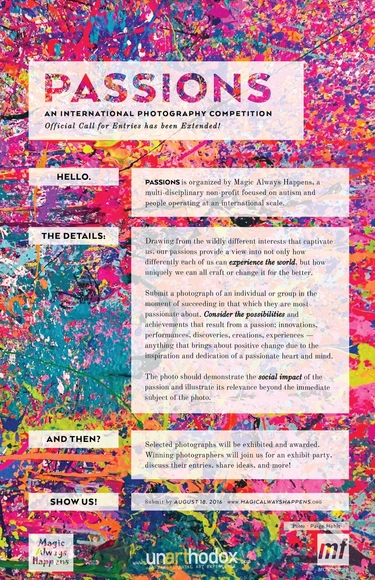
PASSIONS: An International Photography Competition Official Call for Entries
Organized by Magic Always Happens, PASSIONS benefits autism research and action, and is a juried award and exhibit to be shown at Unarthodox in New York City later this year. Drawing from the wildly different interests that captivate us, our passions provide a view into not only how differently each of us can experience the world, but how uniquely we can all craft or change it for the better.
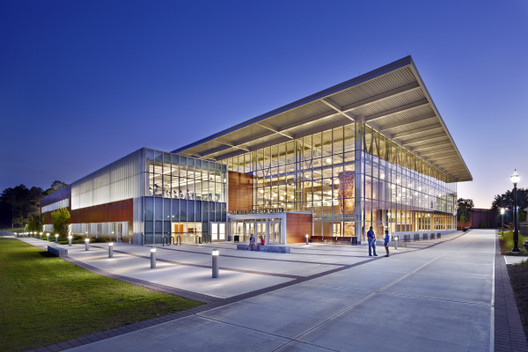
Until recently, student health and counseling services have predominantly been offered independently of athletics and recreation. But as institutions contemplate a more unified approach to health and wellness, the boundaries of these traditionally separated campus services are becoming blurred. Many believe that unifying these various programs and services under one roof is in the best interest of their students’ long-term health, as well as a potential budgetary and operational boon.
This recent shift in mindset has supported the emergence of a new breed of recreation centers that is only anticipated to multiply. “We’re seeing more and more universities come to us with a new set of challenges and program needs, as opposed to simply saying ‘we need this type of building,” says Brad Lukanic, Cannon Design’s executive director of education.
More on this new breed of Wellness Center, after the break...

















.jpg?1584702899&format=webp&width=640&height=580)