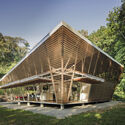
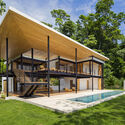
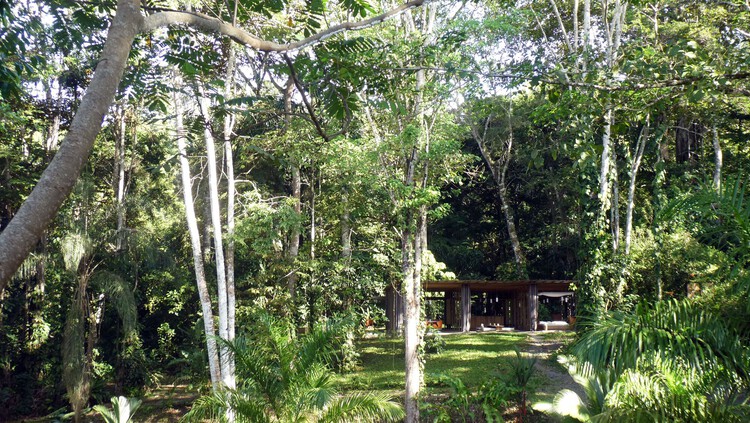
In temperate and cold climates, architecture typically begins with a defensive gesture. The building envelope is a sealed boundary designed to resist the exterior environment through insulation, vapor barriers, and mechanical control. In cold countries like Canada, where winter temperatures can plunge well below freezing, airtightness is not a luxury. In this context, buildings must resist the exterior environment entirely to maintain interior comfort. However, in Central America, a region spanning from Belize to Panama, architectural logic shifts from exclusion to negotiation. In this region, the envelope is not a wall of defense but a specialized filter.
Buildings were always intended to solve a straightforward problem: shelter. Through form and material, they protected occupants from the weather and organized human activity. Modern architecture, along with evolving lifestyles, added new priorities — efficiency, density, structural innovation, and aesthetics. People now demand more from buildings. Occupants increasingly want environments that actively support how they live, work, and feel.
Wellness has become a central concern in modern times. Decades of research in environmental psychology and building science reveal that indoor conditions can profoundly affect human health and behavior. Lighting influences circadian rhythms and sleep patterns. Air quality impacts cognitive performance and respiratory health. Temperature and acoustics shape comfort and concentration.
Bahrain's architectural participations in the international exhibitions have gained increasing global recognition, marked most recently by major awards at Expo 2025 Osaka and the Venice Architecture Biennale. These milestones reflect a broader trajectory in which the country's design culture, rooted in climatic intelligence and cultural continuity, has become a prominent voice in international conversations on context-driven architecture.
This growing visibility builds upon a deep architectural lineage. Bahrain's identity has long been shaped by its position as a maritime crossroads of the Arabian Gulf, where the legacy of pearling settlements and the compact urban fabric of Muharraq and Manama reveal a dialogue between local traditions and global exchange. Today, that dialogue evolves through practices that merge preservation with experimentation, translating heritage into a contemporary architectural language that is both place-specific and forward-looking.
Jenny E. Sabin is an American architect, designer, and educator known for her work at the intersection of architecture, computation, and biomaterials. She integrates digital fabrication, responsive materials, and bio-inspired design into her architectural practice and runs an experimental architecture studio, Jenny Sabin Studio, based in Ithaca, NY. In this interview with Louisiana Channel, she shares her personal journey from artist to scientist, explains how biological and material systems can be applied at an architectural scale, and discusses her teaching and research roles at Cornell University. She elaborates on her interest in bringing people together through new strategies for responsive and adaptive architecture. In her view, the connections between the digital, the physical, and the biological define a paradigm shift in the evolution of architecture, converging with other realms of physical experience to create a more interconnected future.
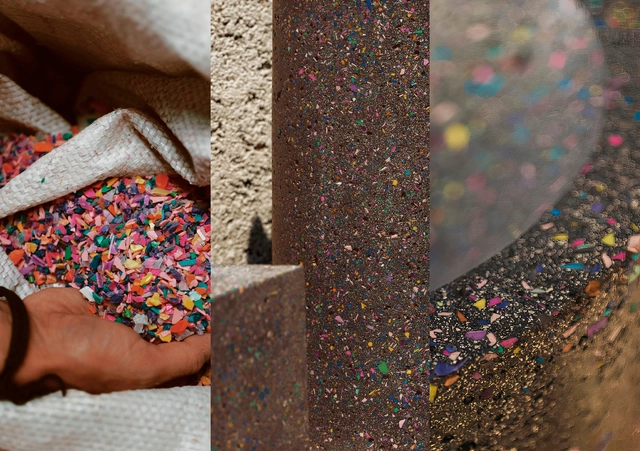
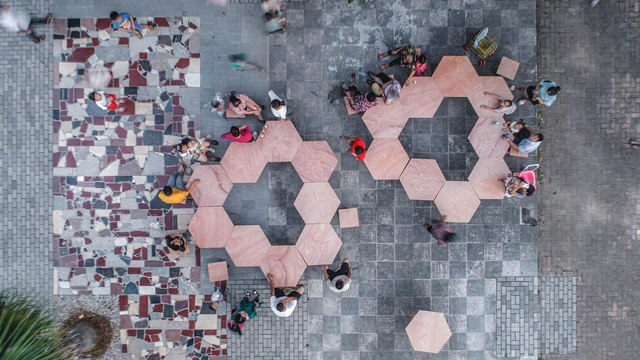
For decades, our society and the development of our built environment have been strongly associated with intensive extractive processes. While these methods were fundamental to the growth of urban areas, they also laid the groundwork for significant challenges that contemporary generations face today. Nowadays, construction debris accumulates on the peripheries of our cities, and plastic waste floats in the oceans.
In this context, and similarly to the idea expressed by Alvar Aalto, who stated that "modern architecture does not imply the use of new materials, but rather employing existing materials more humanely," it is crucial to reconsider how we manage our resources and waste. This shift in direction provides us with new opportunities to address the challenges that the ongoing climate crisis has brought. In response, various actions are now being taken, using materials such as food waste, recycled wood, and plastic debris, among others, exploring innovations in a context where raw materials are becoming increasingly scarce.
https://www.archdaily.com/1013787/casting-furniture-with-upcycled-plastics-and-urban-debris-los-colados-projectEnrique Tovar
How do we create buildings that use energy efficiently? Traditionally, efforts to green the built environment have centered on the physical infrastructure, often overlooking the relationships between people and space. The emergence of the technological era has ushered in "Smart Buildings." that employ machine learning and automation. These innovative structures are designed to operate with impressive energy efficiency, however, they are largely disconnected from their occupants. What if buildings could be made smarter and more sustainable by engaging with their occupants?
Illustrations from the Icon, where large structures provide a context for an overlapping of physical and virtual experiences. Image Courtesy of John Marx/ Form4 Architecture
This article is the fourth in a series focusing on the Architecture of the Metaverse. ArchDaily has collaborated with John Marx, AIA, the founding design principal and Chief Artistic Officer of Form4 Architecture, to bring you monthly articles that seek to define the Metaverse, convey the potential of this new realm as well as understand its constraints.
Of all the attributes that will define the Metaverse the single most important is that of experience. As we move more deeply into the Anthropocene Era humans seem to be shifting their interests from collecting things to collecting experiences. As the demand for experiences grows more intense and detailed, the need for content, and the clever and effective use of that content, will rise exponentially. From a more detailed perspective, the management and quality of those experiences will determine the initial success of the Metaverse. This is where the concept of a Responsive AI Concierge comes into play.
This article is the fifth in a series focusing on the Architecture of the Metaverse. ArchDaily has collaborated with John Marx, AIA, the founding design principal and Chief Artistic Officer of Form4 Architecture, to bring you monthly articles that seek to define the Metaverse, convey the potential of this new realm as well as understand its constraints.
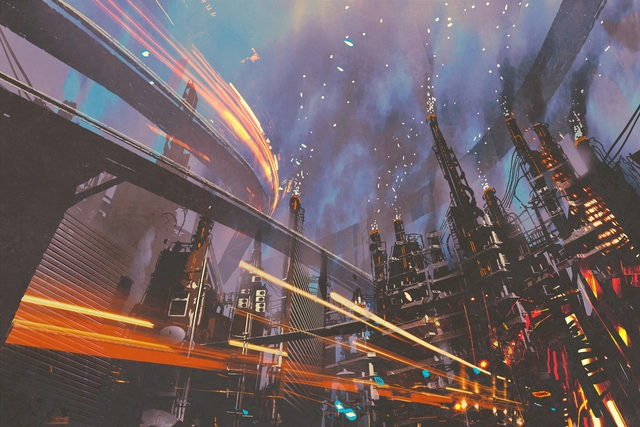
Science fiction writers inspire us with bold and provocative visions of the future. Huxley, Orwell, Assimov, and Bradbury easily come to mind. They have imagined great advances in technology and oftentimes predicted shifts in social structure that were a result of the human need to open Pandora's Box. A large part of the charm and allure of science fiction is the bold audacity of some of these predictions. They seem to defy the laws of nature and science, and then, faster than you might have thought, the spectrum of human inventiveness makes it so.
Advancements in technology have paved the way for a revolutionary approach to architecture, one that involves responsiveness and movement. This concept called "kinetic architecture" allows buildings to dynamically adapt to their ever-changing surroundings. As of today, kinetic principles are commonly applied to enhance the environmental sustainability of buildings, especially through facades. However, kinetic architecture has the potential to impact the built environment in other facets as well. In public spaces, kinetic architecture holds immense promise, presenting opportunities to make them more accessible, inclusive, and user-friendly. Introducing kinetic elements into public spaces challenge long-held assumptions about architecture as a passive arrangement, ushering in a new era of interactive and engaging urban environments.
Climate change has been one of the most pressing topics of this year, and for a good reason. Its effects are visible not only in natural habitats but also in urban environments. The construction industry has an important role to play in this dynamic. Throughout the year, events such as COP27 emphasized the importance of striving to achieve net carbon zero and the challenges faced by developing countries affected by increasingly devastating natural disasters. Possible directions for development include actions at varying stages and scales, from optimizing green spaces for urban heat control to employing local and innovative building materials to minimize the carbon footprint or passing laws that help create more sustainable urban and natural environments.
This article represents a roundup of articles published on ArchDaily during the course of 2022 with themes related to climate change and architecture’s potential to make a difference. It breaks down the topic into four main questions: What Are Cities Doing to Mitigate Urban Heat? How to Tackle Rising Sea Levels? What Was COP27 and Why Does It Matter? Can Building Materials Play a Role in Achieving These Goals? The last section presents an overview of new legislation approved during 2022 as a way of understanding how state and local governments are imposing this need for change.
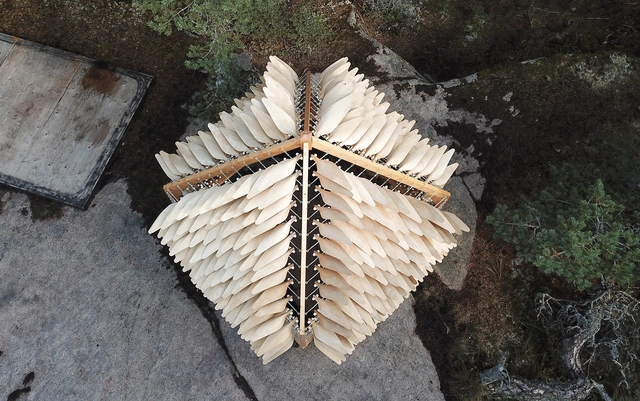
Designed by NEON, the Shiver House is a radical reinvention of the common Finnish Hut (mökki). The project is a kinetic "animal-like" structure which moves and adapts in response to surrounding natural forces. Shiver House is an exploration into the idea that architecture can be used as a means to create a closer emotional link between its inhabitants and the natural world it sits within. In addition, the project explores the idea that architecture can be made to seem "alive" with the intention that this will engender a deeper and longer-lasting emotional relationship between people and the structures they inhabit.
Conceptually, the piece thus suggests that architecture, rather than static and function-led, can be a poetic, living, and dynamic element that changes the way we relate to the landscape that surrounds us.
https://www.archdaily.com/942956/functional-shelter-and-experiential-device-600-kinetic-shingles-shape-neons-shiver-houseLilly Cao
City of the Future is a bi-weekly podcast from Sidewalk Labs that explores ideas and innovations that will transform cities.
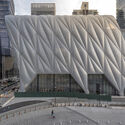
In the final episode of season 2, hosts Eric Jaffe and Vanessa Quirk discuss the past, present, and future of responsive architecture with Sidewalk Labs’ director of public realm Jesse Shapins, engineer and microclimate expert Goncalo Pedro, Bubbletecture author Sharon Francis, and renowned architect Liz Diller of Diller Scofidio + Renfro.
Videos
Songdo in South Korea is perhaps the most complete realization yet of the smart city concept. Image Courtesy of Cisco
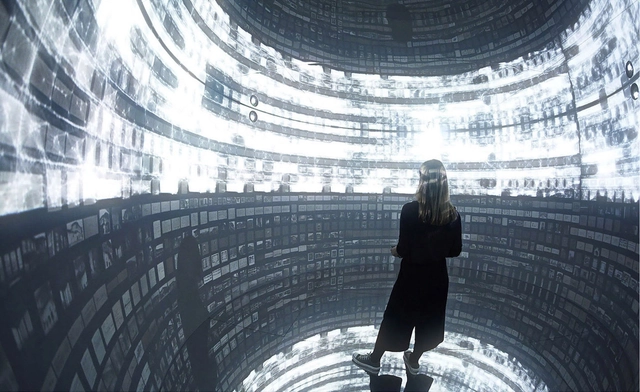
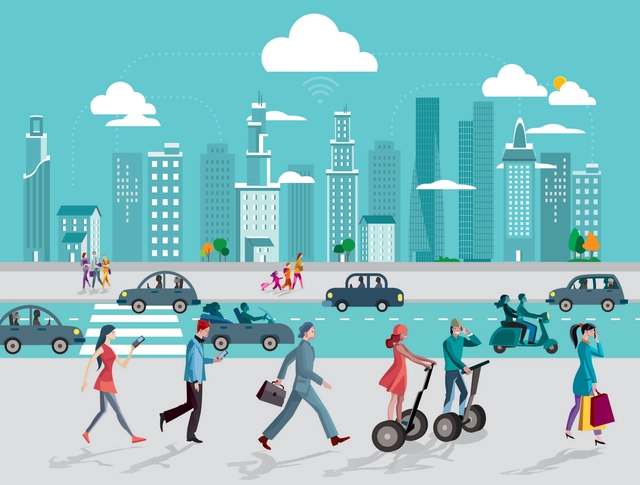
In order to be successful in any field, professionals must stay ahead of the curve—though in architecture nowadays, technology progresses so quickly that it’s difficult to be on the front lines. Virtual Reality can transport architects and their clients into unbuilt designs and foreign lands. Smart Cities implement a network of information and communication technologies to conserve resources and simplify everyday life. Responsive Design will give buildings the ability to be an extension of the human body by sensing occupants' needs and responding to them.
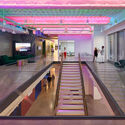
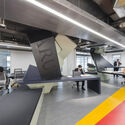
With the technology boom, if architects want to stay in the game they will inevitably have to work alongside not only techies but scientists too. Neuroscientist Colin Ellard works “at the intersection of psychology and architectural and urban design.” In his book, Places of the Heart: The Psychogeography of Everyday Life, Ellard examines how our technology-based world impacts our emotions and behavior to try to figure out what kind of world we should strive to create.































.jpg?1511989021&format=webp&width=640&height=580)