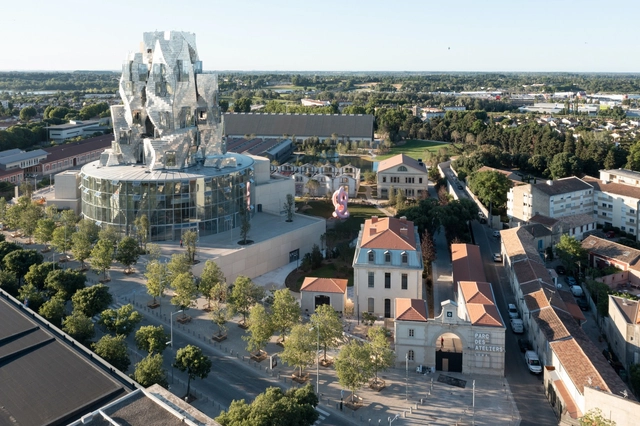
LUMA Arles / Gehry Partners. Photography by Iwan Baan. Image Courtesy of Gehry Partners
This week's news reflects architecture's simultaneous engagement with cultural reflection, professional legacy, and the material realities of building cities. The passing of Frank Gehry prompted a broader reassessment of late 20th- and early 21st-century architectural practice, while Shigeru Ban's selection as the recipient of the 2026 AIA Gold Medal brought renewed attention to socially driven design and the profession's public responsibilities. These milestones unfolded alongside wider conversations sparked by Human Rights Day, examining architecture's role in equity, housing access, and safety worldwide, and forward-looking discussions setting the architectural agenda for 2026 through major international events and cultural programs. At the scale of the built environment, these themes are echoed in three projects shaping future urban conditions: Powerhouse Company's transformation of a former limestone quarry into a mixed-use neighbourhood in Bærum, near Oslo; the groundbreaking of Riverside Wharf, a hospitality-led development contributing to the regeneration of Miami's River District; and Foster + Partners' approved retrofit of 1 St James's Square in London, focused on structural retention and long-term urban resilience.
Color of the Year 2026 "Cloud Dancer". Image Courtesy of Pantone
PantoneColor Institute has introduced PANTONE 11-4201 Cloud Dancer as the Color of the Year 2026, a soft white selected for its understated presence and sense of visual calm. The hue, described as balanced and airy, appears against a broader cultural context in which designers and creatives are reassessing the role of clarity, simplicity, and spatial quietude. Framed as a color that resembles a blank canvas, Cloud Dancer signals a renewed interest in environments that support reflection and measured creativity rather than constant acceleration.
Unlike the 2024 Color of the Year selections, the 2025 picks reveal more commonalities among the colors chosen by major paint industry leaders. Each year, designers and enthusiasts from various fields gather within companies worldwide to reignite the conversation about color and its connection to contemporary culture. For the 2025 forecast, earth tones seem to be the big winners: Pantone's Mousse Chocolate is joined by cinnamon, brown, and burgundy shades from Benjamin Moore, Graham & Brown, Behr, and C2 Paint. Companies like AkzoNobel, Valspar, and Comex opted for more vibrant colors to celebrate optimism and joy, while Sherwin-Williams and Jotun didn't limit themselves to a single color. Instead, they introduced entire palettes centered on tranquility and relaxation. These concepts appear to be the guiding themes for 2025.
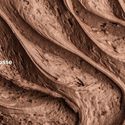
Pantone Color Institute has selected PANTONE 17-1230 Mocha Mousse as the Color of the Year 2025. The warm, brown hue, reminiscent of chocolate mousse and latte coffee, aims to bring a sense of comfort, intimacy, and elegance. This represents a versatile hue that can be combined in a multitude of pallets, from monochromatic earthy shades to mixtures of soft pastels, or even exotic combinations of vibrant colors balanced out with the rich yet subdued tone of Mocha Mousse.
Known internationally as the world’s foremost voice on all things color, Pantone’s Color of the Year program has been predicting and even directing color trends for 25 years – reflecting the cultural environment across multiple creative sectors that use the language of color and color psychology such as branding, marketing, fashion, and product design to name a few, as well as architecture and design.
But color trends aren’t just about what’s hot and what’s not. Color plays an important role in stimulating the senses, evoking memories or feelings based on past experiences and collective influences around the world. In the color psychology of retail design, for example, specific hues have been found to alter consumers’ comfort and energy levels, ultimately dictating shoppers’ preferences and behavior. In medical environments, combining a neutral base with calming accent colors has been shown to reduce stress and anxiety.
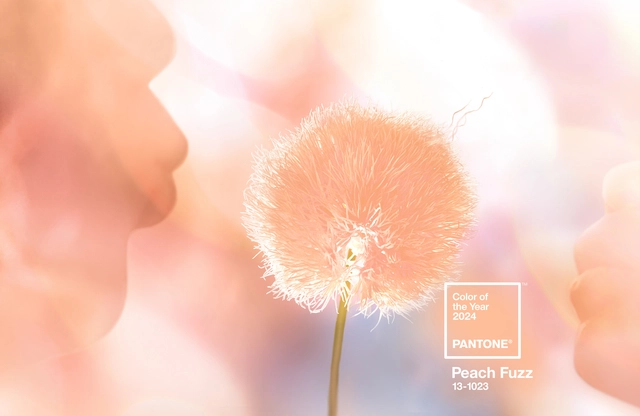
Pantone has just just announced “Peach Fuzz” or PANTONE 13-1023,” the 2024 Color of the Year. Known for its color standards and digital solutions in the design community, Pantone announced the color aiming to move towards empathy and understanding. A hue between pink and orange, the color is soft and inviting and offers “tenderness and communicating a message of caring, community, and collaboration.”
Pantone has revealed its Color of the Year for 2023, 18-1750 Viva Magenta, a brand-new color "brave and fearless, whose exuberance promotes a joyous and optimistic celebration." The shade falls under the red family and is inspired by the tone of cochineal extract, one of the most precious dyes historically used to color textiles, cosmetics, and food.
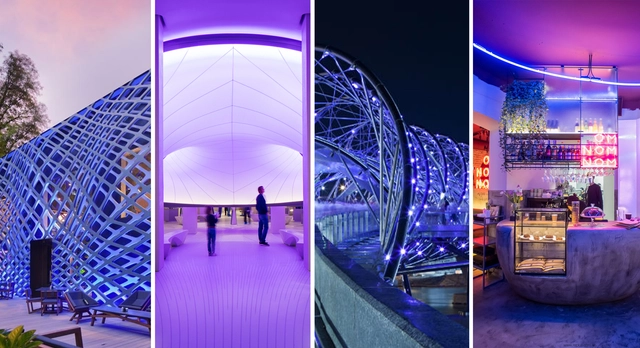
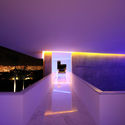
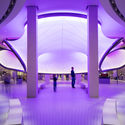
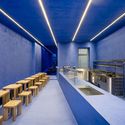
Pantone has revealed its Color of the Year for 2022; 17-3938 Very Peri, a brand new color "whose courageous presence encourages personal inventiveness and creativity". The shade falls under the blue color family but with violet red undertones, illustrating the fusion of our modern times and how the digital world has morphed with our physical one. In architecture, shades of periwinkle blue and lavender have long been used in installations, commercial spaces, and lighting, instilling an overall calming, optimistic, and positive effect on the human mind.
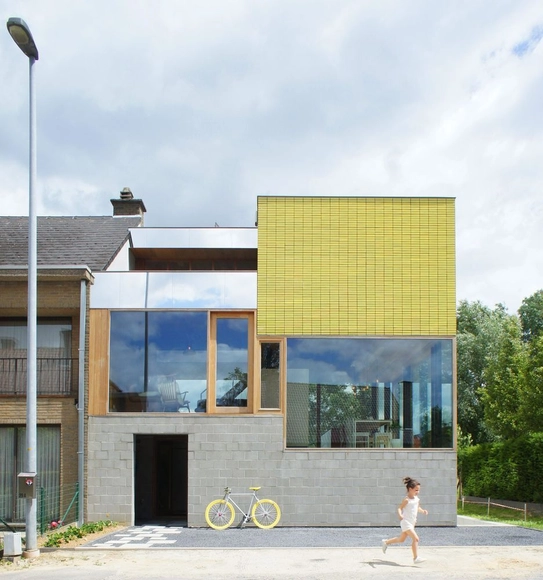
Stephanie & Kevin / Atelier Vens Vanbelle. Image Courtesy of Atelier Vens Vanbelle
On December 9, Pantone announced its color(s) of the year for 2021: PANTONE 17-5104 Ultimate Gray and PANTONE 13-0647 Illuminating. Selecting two colors for only the second time in 22 years, Pantone described the chosen yellow and gray as independent but complementary, representing a theme of unity and mutual support. Whereas PANTONE 13-0647 Illuminating is bright and vivacious, PANTONE 17-5104 Ultimate Gray is firm and dependable, the marriage of which represents strength, optimism, and fortitude following a markedly challenging year. In architecture, this palette combining playfulness and solemnity has been used in social spaces, domestic spaces, care spaces, and more to communicate similar themes of resilience and positivity.
Below are 14 examples of projects using Pantone’s 2021 colors of the year.
https://www.archdaily.com/953768/pantones-color-of-the-year-2021-yellow-and-grey-in-architectureLilly Cao
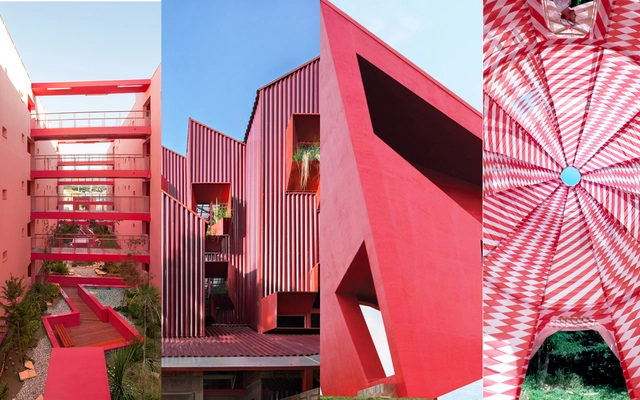
Pantone Color Institute™ has announced the color that would set the trends of 2020: a tone that "inspires calm, confidence and connection" in a process of transition to a new era. The PANTONE 19-4052 Classic Blue Color, which was described as "timeless and durable," is reminiscent of the sunset sky and "helps focus thoughts."
A few days ago, the PantoneColor Institute ended the annual suspense of fashionistas and color connoisseurs everywhere by announcing its 2019 Color of the Year: Living Coral. Described by the Institute as “an animating and life-affirming coral hue with a golden undertone that energizes and enlivens with a softer edge,” [1] PANTONE 16-1546 will surely be seen throughout the new year and perhaps in places you wouldn’t expect.
"Anyone can be a photographer nowadays, all you need is a smartphone." Although this is a well-known cliche, that doesn't mean it's entirely untrue. Recently, with the advancement of smartphone technology, aided by social networks, the growth of photographic capabilities on these devices has increased at an exponential speed.
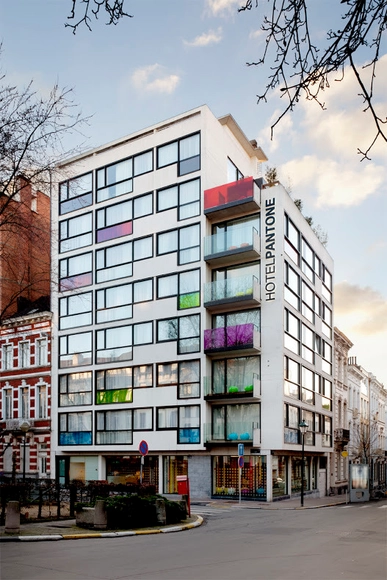
The Pantone Hotel, a seven-story hotel in Brussels with decor inspired by the famous Pantone color system, opened for business in 2010, but these candy-colored images of its multi-hued rooms were new to us. Designed by interior designer Michel Penneman and architect Olivier Hannaert, and photographed by Sven Laurent, the Pantone Hotel serves up 59 rooms in a wide variety of color schemes, perfected by Pantone's authoritative color matching system. It is the apotheosis of the company's transition into manufacturing lifestyle products, with the "Pantone Universe" range containing everything from mugs to cufflinks, all colored to an exact specification with their identifying code.











.jpg?1578067578&format=webp&width=640&height=580)


.jpg?1578067578)