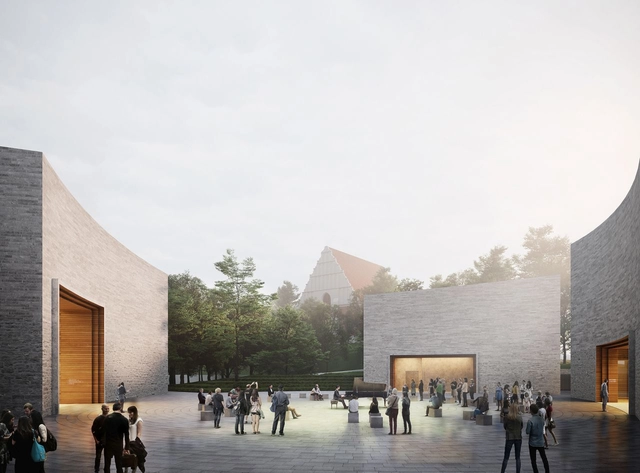
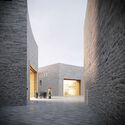
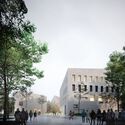
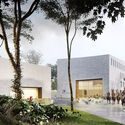
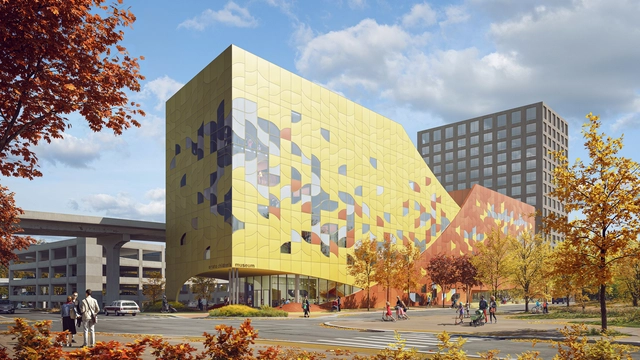
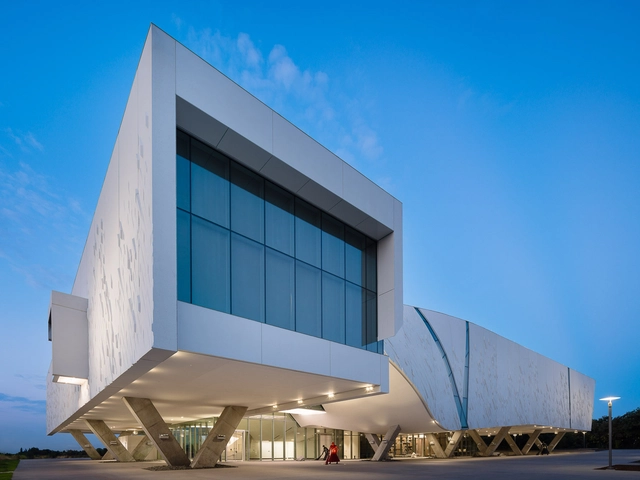
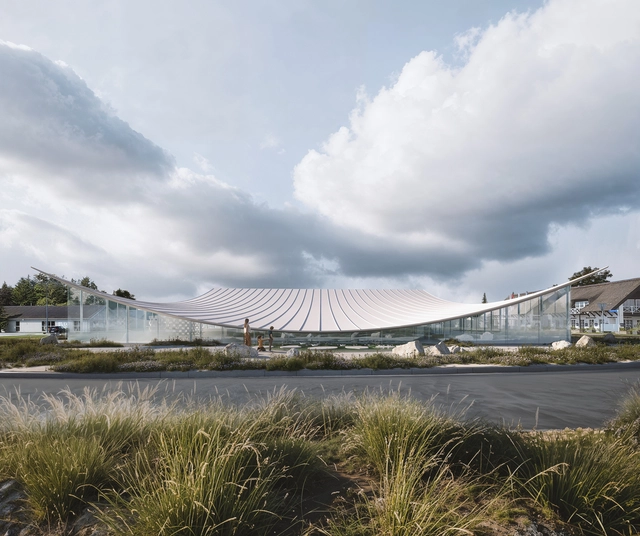
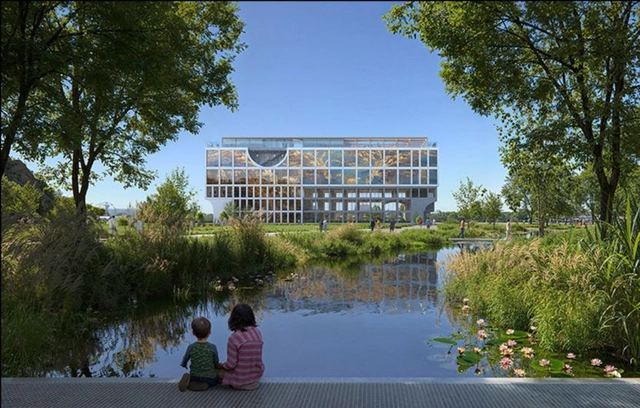
WXCA Architectural Design Studio has unveiled its design for a new museum aiming to honor the 1918-1919 patriotic uprising and victory of the people of Greater Poland. Situated near the historic St. Adalbert's Hill, home to an 800-year-old church, the museum is set to become a significant cultural and historical site. In addition to its preservation of history, the museum aims to offer the people of Poznań a contemporary public space to highlight this collective heritage. WXCA architects won the 2019 competition for the museum design and urban concept. The project began construction in early 2024 and is expected to open to the public in 2026.
Snøhetta has revealed its design for a new building dedicated to a well-loved institution, the OmahaChildren's Museum. Located just a few blocks from the Kiewit Luminarium and overlooking the river, this new facility is designed following best practices in early child development, providing exhibits and programming aimed at fostering joy, curiosity, and connection for young children and their caregivers.
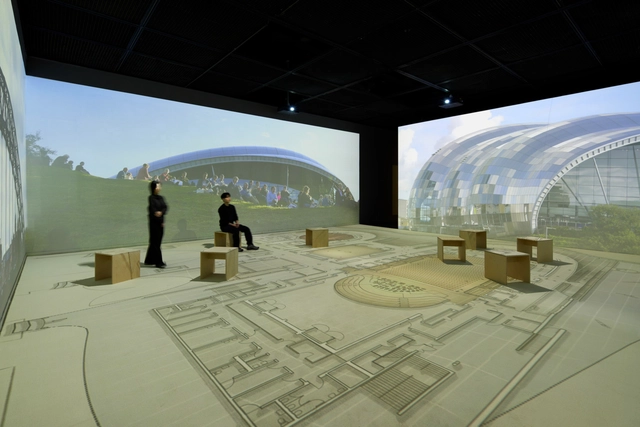
With the heightening of ecological and social crises all around the world, architects have had to re-evaluate their role, impact, and design approach. As the "new needs" of people arise, new architectural processes must be explored to answer them. However, this still comes with much resistance from the standing practices and push for financial gain that often makes it difficult to implement more comprehensive solutions. These notions led the CCA (Canadian Center for Architecture) to launch their new 3-part film and exhibit series called " Groundwork", curated by the associate director, Francesco Garutti. Through this project, the CCA selected and followed three renowned contemporary architects/practices as they developed their concepts and field research, which allowed them to engage respectfully with their site and residing communities. It's an up close and personal look into what motivates the selected architects to examine alternative ways of designing and the challenges they go through as the three parallel stories unfold.
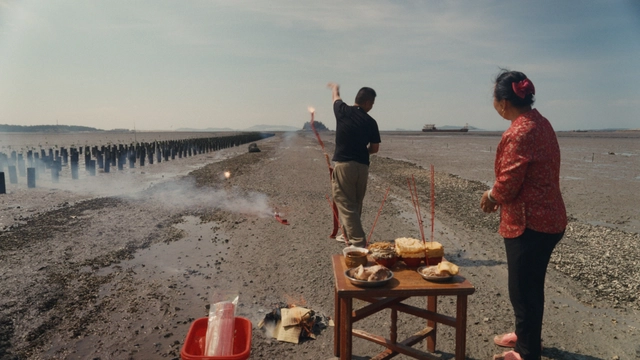
The first exhibit opening and movie screening was held in May 2024, followed by an in-conversation event with the program curator and architect, where the question of "What is architecture today" was discussed. The exhibit and its many showcased elements, channels visitors along to the first site exploration with DnA's Xu Tiantian as she ventures "Into the Island" of Meizhou, China, in the summer of 2022.
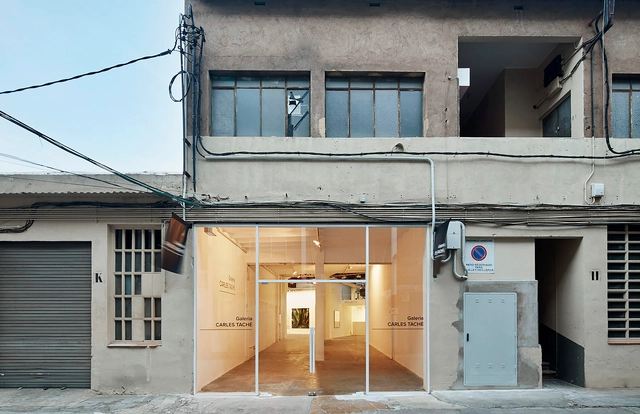
The relationship between art and humanity dates back to the origins of civilization. Museums have become spaces where vast collections of art and artifacts narrate the history of time, humankind, cities, and countless stories about cultures and societies. Over the years, the museum's role has evolved, taking on different forms and scales, including the modern-day art gallery. The importance of art and culture in contemporary cities and neighborhoods is undeniable. However, galleries serve multiple roles in integrating art and culture into daily life. Why are these spaces valuable to communities? How do they support emerging artists? How can galleries revitalize neighborhoods?
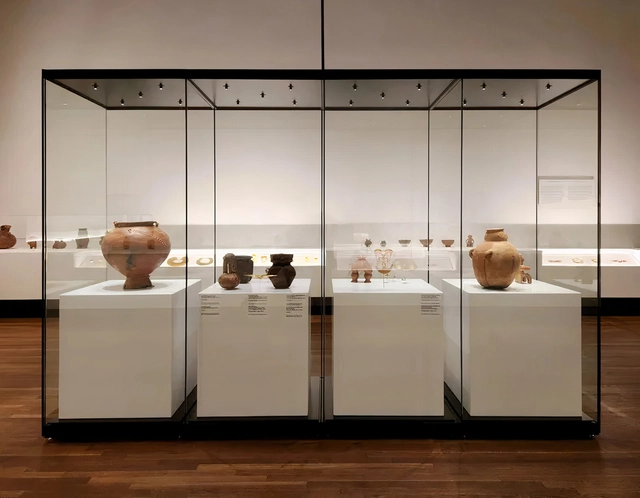
Exhibition spaces convey carefully curated content with the goal of educating, inspiring, and engaging visitors, using objects and displays to tell stories. In addition to promoting education, cultural preservation, and aesthetic appreciation, these environments encourage creativity and interaction. With immersive and interactive experiences, they allow visitors to form meaningful connections with new knowledge, different perspectives, and important cultural heritages, creating both intellectual and emotional engagement.
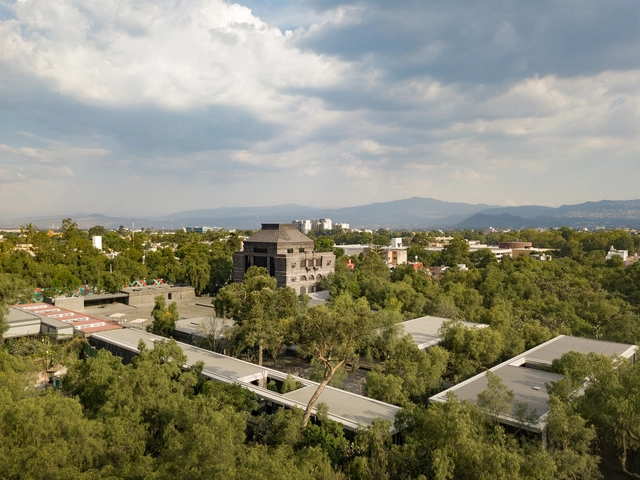
Mexico City is renowned for its abundant museums, heritage sites, and cultural richness. In fact, the capital has over 173 museums, big and small spread out through its 16 alcaldías or burroughs. The presence of these cultural spaces injects and intensifies the artistic appeal and aspect of the vibrant city. With many pioneering Mexican architects having intertwined modern art and architecture, this gave rise to iconic museums and classics of Mexican modernist architecture.
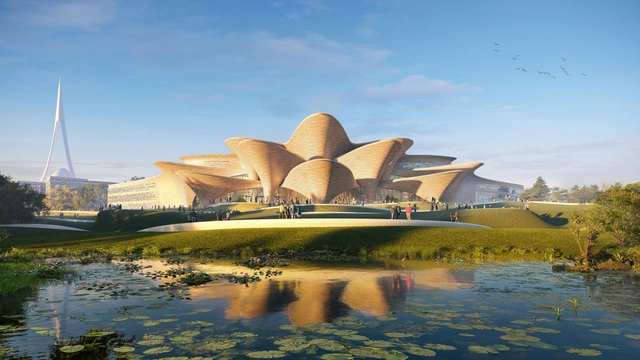
Zaha Hadid Architects (ZHA) has been announced as the architect of the Alisher Navoi International Scientific Research Centre, an expansive cultural and educational facility taking shape in New Tashkent, Uzbekistan. The center is set to incorporate the Navoi State Museum of Literature, along with a 400-seat auditorium and an International Research Center and residential school dedicated to training 200 students in the Uzbek language, literature, and music.
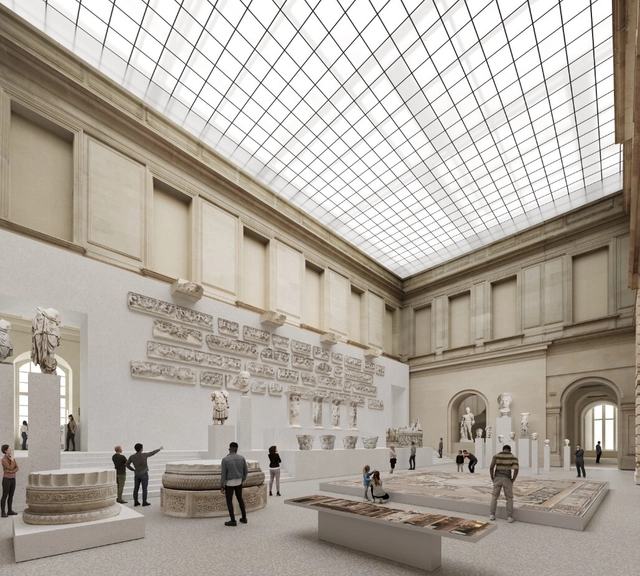
The Louvre Museum in Paris has announced the American-French consortium WHY Architecture -BGC as the winner of an international competition for the exhibition design of the museum's ninth department, dedicated to Byzantine and Eastern Christian Art. The 5,500-square-meter project aims to offer a more balanced and connected narrative of the Roman, Byzantine, and Islamic civilizations, fostering a greater understanding of the influences and relationships between artistic expressions of these historical regions. The spaces are expected to open to the public in 2027.
Bjarke Ingels Group (BIG) is leading the transformation of a former supermarket into the new Museum for Paper Art in Denmark's North Jutland region. With paper art deeply ingrained in Danish cultural heritage, symbolized by Le Klint's folded lampshades and H.C. Andersen's intricate paper cuttings, this renovation and expansion aim to elevate the museum's profile and double its visitor numbers. The design will celebrate paper as both an art form and a craft, extending the museum's role in promoting this unique heritage.
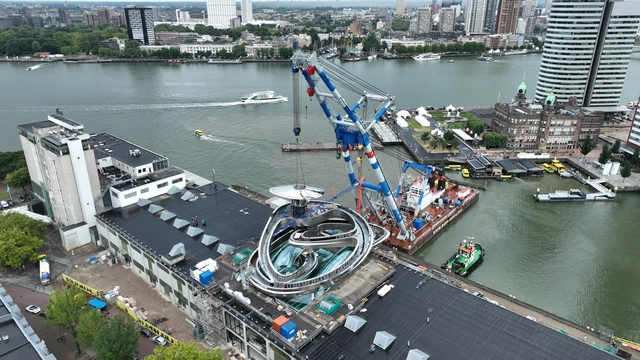
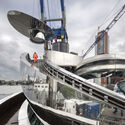
Designed by MAD Architects, the FENIX Museum of Migration is scheduled to open in Rotterdam's City Harbor in 2025. Currently under construction, the museum is set to explore the global narrative of migration through art, architecture, photography, and history. Situated in a 16,000-square-meter warehouse built in 1923, once part of the world's largest warehouse, the building has historical significance as a key storage and shipping hub for the Holland America Line. New construction photographs showcase the assembly of the metallic helix, named The Tornado, taking shape above the historical warehouse.
Courtesy of David Kohn Architects, noA Architecten, and Asli Çiçek
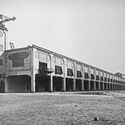
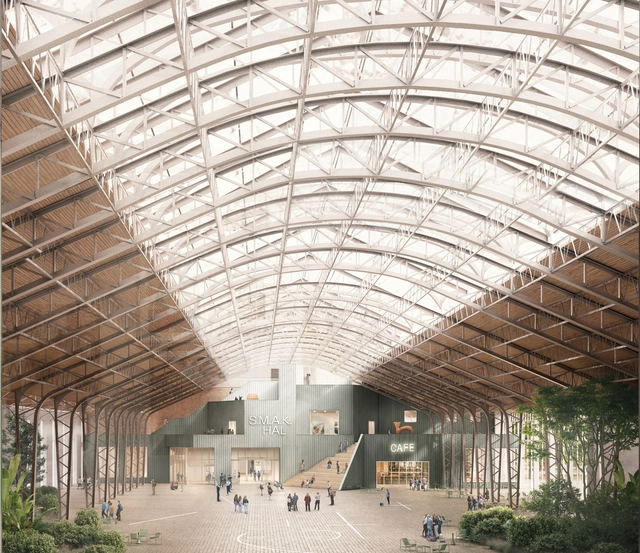
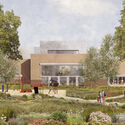
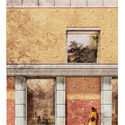
The team comprised of David Kohn Architects, noA Architecten, and Asli Çiçek has won the international competition for the redesign of SMAK, the Municipal Museum of Contemporary Art in Ghent, Belgium. The project includes the reconfiguration of the museum grounds and the extension of a cluster of historic buildings in the center of the city. Established in 1999, the Stedelijk Museum voor Actuele Kunst aims to redefine its relationship with the city and to create more appropriate space for the design of its extensive contemporary art collection.
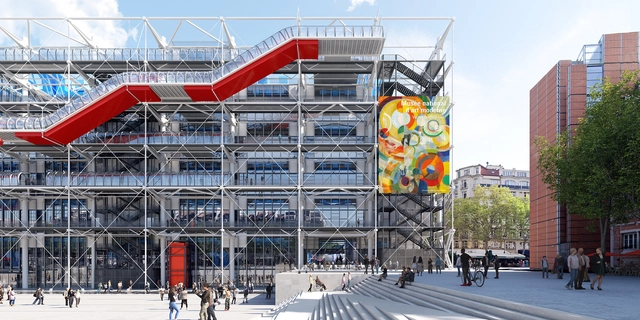
In 2020, the French Minister of Culture approved an extensive renovation program for the Centre Pompidou with the purpose of resolving the building's technical issues and ensuring the long-term viability of the iconic structure. Designed by Renzo Piano and Richard Rogers in 1971, the museum was conceived as a "living cultural machine," sparking controversy due to its unusual architecture. To ensure an efficient renovation process, the building will be fully closed for a period of 5 years, from September 2025 until 2030. French architecture studio Moreau Kusunoki has been commissioned to lead the renovation project, collaborating with Frida Escobedo Studio and AIA Life Designers, who are entrusted with the technical component of the project. The architects have been selected following an international competition, with Renzo Piano as one of the jury members.
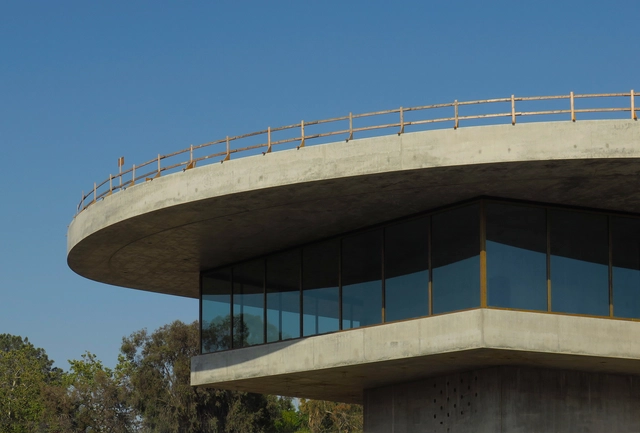
Paul Clemence has released a new series of images showcasing the ongoing construction works in The Los Angeles County Museum of Art (LACMA). Undergoing massive transformations, including a new building by Swiss architect Peter Zumthor, the LACMA is the largest art museum in the western United States. Approved in 2019, Zumthor’s design, known as the David Geffen Galleries, aims to modernize the museum’s campus.
The Hainan Science Museum - construction progress. Image Courtesy of MAD Architects
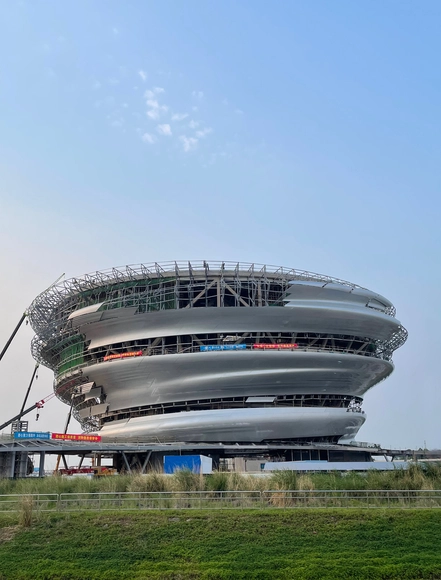
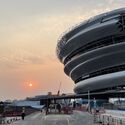
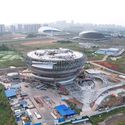
The Hainan Science Museum, designed by Ma Yansong / MAD Architects, is progressing through its construction phases. The project began its design phase in 2020, broke ground in November 2021, and completed its main structure in June 2023. The museum, located on the west coast of Haikou City in Hainan Province, aims to be a landmark that integrates modern architecture with natural surroundings, promoting the convergence of technology and nature. The museum is expected to finish its curtain wall and landscaping by June this year and open for visitors in 2025.
Courtesy of Neutelings Riedijk Architects / ARS Architectes
Neutelings Riedijk Architects and ARS Architects Urbanistes have just won a competition to design the Cité des Imaginaires and Grand Musée Jules Verne in Nantes, France. Selected from 160 entries, their design seeks to revitalize the historic “Moulins de Nantes” mil, also known as CAP44. This industrial heritage site, notable for its unique Hennebique concrete structure, is set to be transformed into a sustainable structure within the Garden Extraordinaire. Additionally, the museum will celebrate the legacy of the renowned author Jules Verne, born in Nantes.
Foster + Partners has debuted their first-ever exhibition in Korea at the Seoul Museum of Art. Marking a significant moment for the studio and its relationship to South Korea, the exhibition “Future Positive” showcases the work of Norman Foster and Foster + Partners to Korean audiences for the first time. On display from April 25th until July 21st, 2024, visitors will have the opportunity to explore the comprehensive showcase of Foster’s architectural journey from 1967 to the present day.