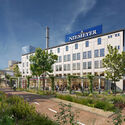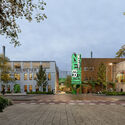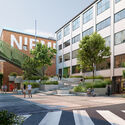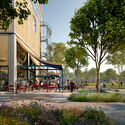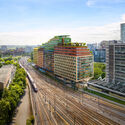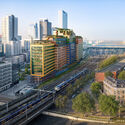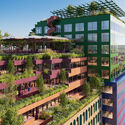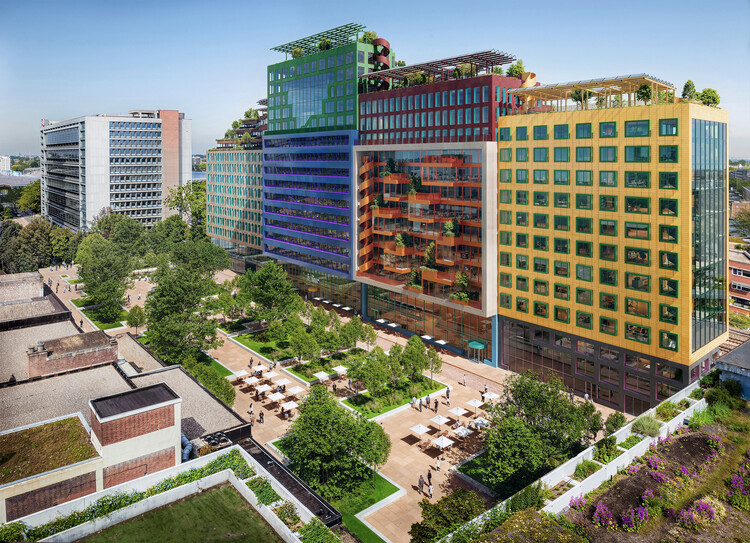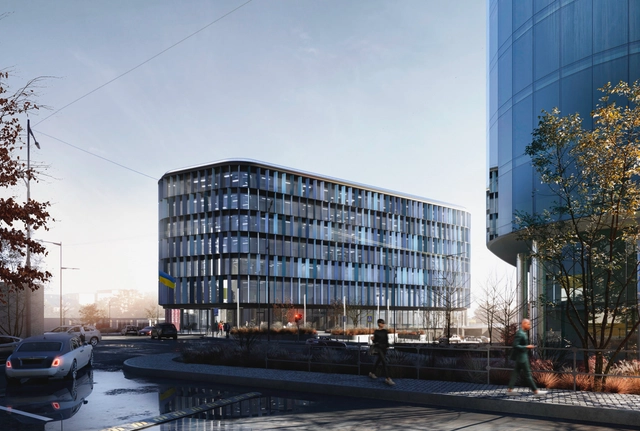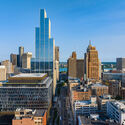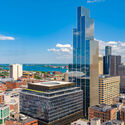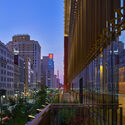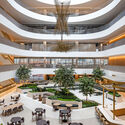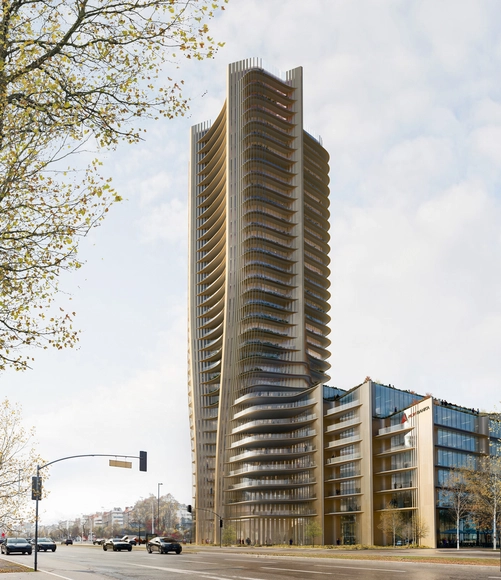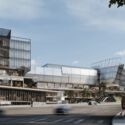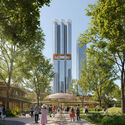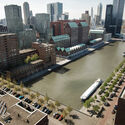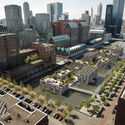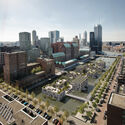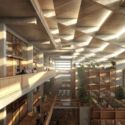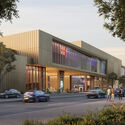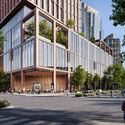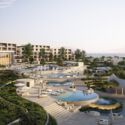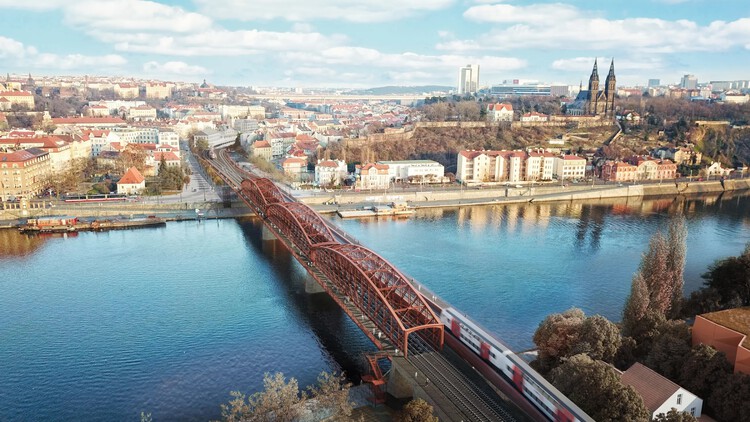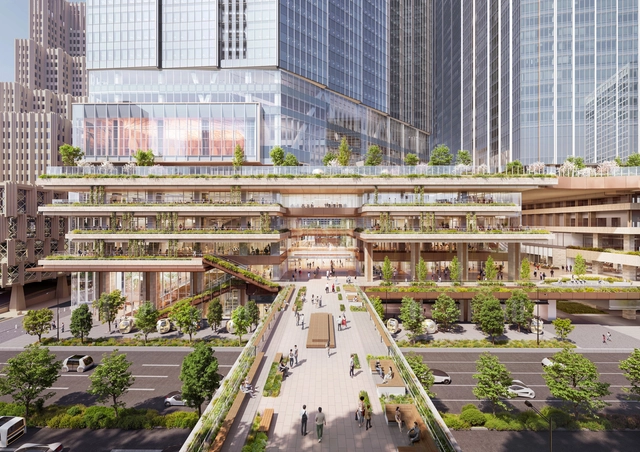
MVRDV and SYNRG have received approval to construct Schieblocks, a 47,000-square-metre office building in Rotterdam, the Netherlands. Designed for developer LSI, who markets the project as The Bluezone Offices, the building will occupy a narrow site along the railway line, reaching 61 metres in height and extending almost 150 metres in length. The programme includes commercial spaces at ground level, offices throughout, and a restaurant and event venue on the upper floors. Conceived as a "3D neighbourhood," the design breaks the large volume into a series of colourful, distinct blocks that incorporate numerous references to Rotterdam's architectural character.
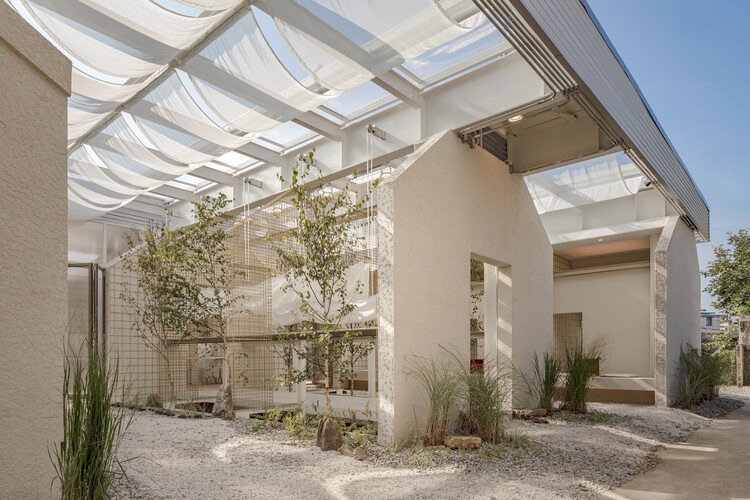
While adaptive reuse has been increasingly acknowledged as a vital architectural strategy worldwide, its discourse and implementation in Asia are still expanding—driven by growing ecological awareness and a shifting understanding of architectural knowledge. Rather than accelerating a developmentalist model centered on demolition and new construction, architects today are confronted with a different approach to the built environment: treating the existing structure as a resource—an archive of materials, spatial organizations, and informal histories.
Adaptive reuse is often associated with the preservation of historic buildings and culturally significant heritage. Yet the vast field of seemingly 'less-valued' structures—abandoned houses, standard yet old dwellings, non-conforming office buildings, and overlooked urban voids—has become ground for experimentation. These sites challenge architects and designers to reconsider prevailing standards of efficiency and market-driven development, and to imagine spatial and ecological practices that avoid the continual loss of embodied material and cultural knowledge inherent in constant rebuilding.
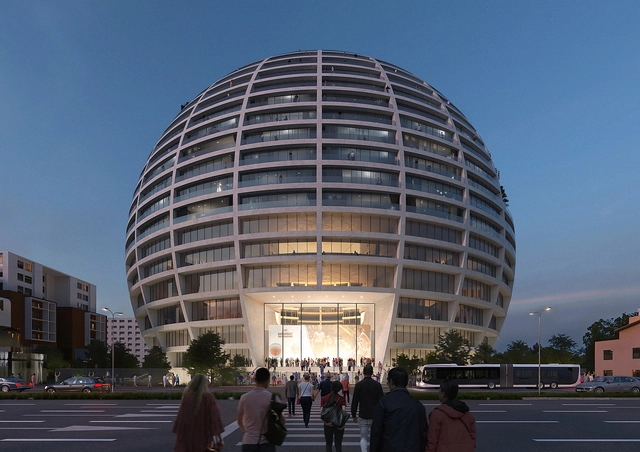
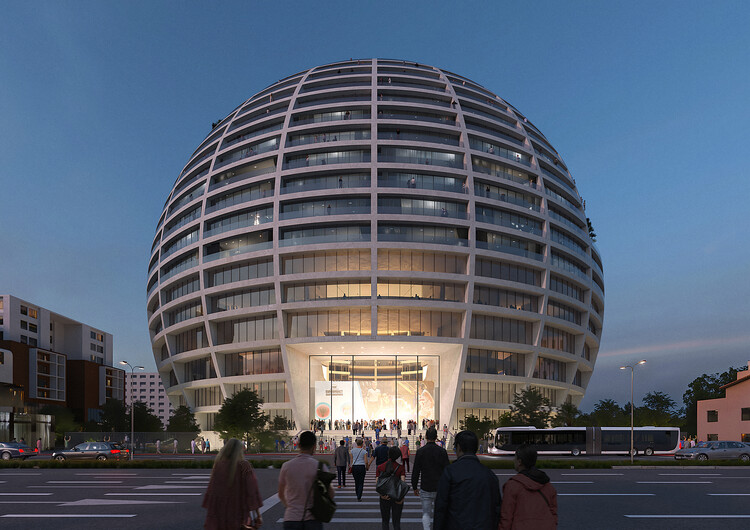
"The Grand Ballroom" Asllan Rusi sports palace project in Tirana, Albania by MVRDV. Image Courtesy of MVRDV
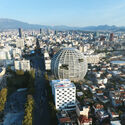
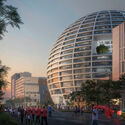
Tirana, the capital of Albania, is experiencing a rapid transformation driven by the long-term urban strategy outlined in the Tirana 2030 (TR030) Master Plan. Developed in 2017 by Stefano Boeri Architetti, UNLAB, and IND [Inter.National.Design] through a competition organized by the Ministry of Urban Development, the plan's objectives include increasing urban density, improving public infrastructure, and integrating green spaces and open areas into the urban fabric. It is in this dynamic setting that MVRDV has won the international competition for Tirana's new Asllan Rusi Sports Palace. Conceived as a mixed-use development, the project, named The Grand Ballroom, combines a 6,000-seat arena for basketball and volleyball with residential apartments, a hotel, and ground-level retail. With its spherical form exceeding 100 metres in diameter, the design adds a distinctive landmark to Tirana's growing collection of ambitious architectural projects.
As cities continue to expand upward, the office tower remains one of the most visible symbols of architectural ambition and urban evolution. No longer defined solely by efficiency or corporate image, contemporary workplace architecture is being reimagined as a hybrid ecosystem, one that balances density with daylight, productivity with well-being, and technology with material and spatial integrity. The following unbuilt projects, submitted by the ArchDaily community, reveal how architects across continents are rethinking the typology of the tower, turning verticality into an opportunity for connection, adaptability, and sustainability.
From India's Shivalik Curv and Embassy Zenith, where form and movement are combined to redefine skyline identity, to Dungen in Sweden, a low-rise timber office that mirrors the calm of a forest grove, each project explores how workplaces can become more flexible, humane, and environmentally conscious. In Kyiv, APEX Business Center positions itself as a catalyst for urban vitality, while Jakarta's BNI Tower PIK 2 transforms the corporate tower into a crystalline symbol of growth. In Munich and Ankara, mixed-use concepts like Highrise Hufelandmark and Rhythm Ankara explore the office as part of a broader civic landscape, where work, leisure, and public life intersect.
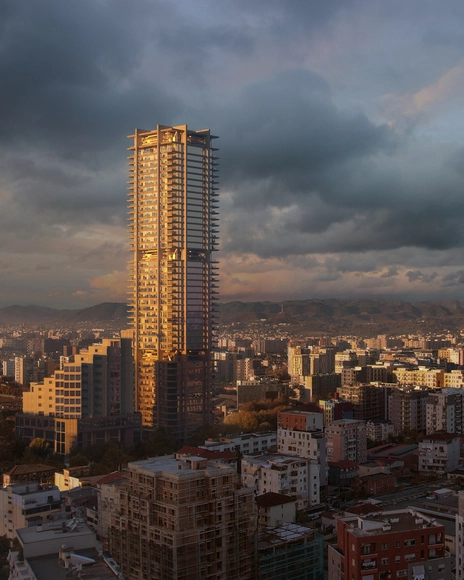
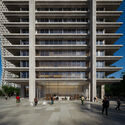
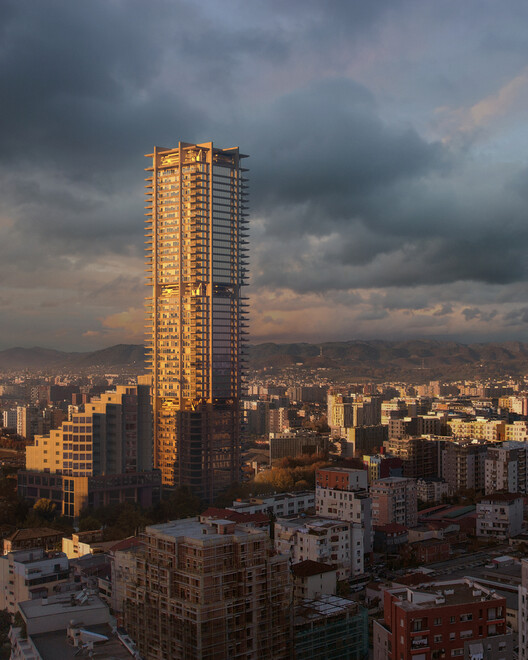
Oricon Tower project by Eduardo Souto de Moura and OODA. Exterior render. Image Courtesy of Plomp
Eduardo Souto de Moura and OODA have unveiled the design of the Oricon Tower, a 180-meter mixed-use skyscraper planned for Tirana, Albania. Located near OODA's recently completed Bond Tower, the project is part of the city's ongoing transformation under the Tirana 2030 Masterplan, which envisions a denser and more connected urban core. The tower will house offices, residences, retail areas, and a hotel, contributing to the city's evolving skyline and serving as a new urban gateway between Tirana's historic center and its expanding western districts.
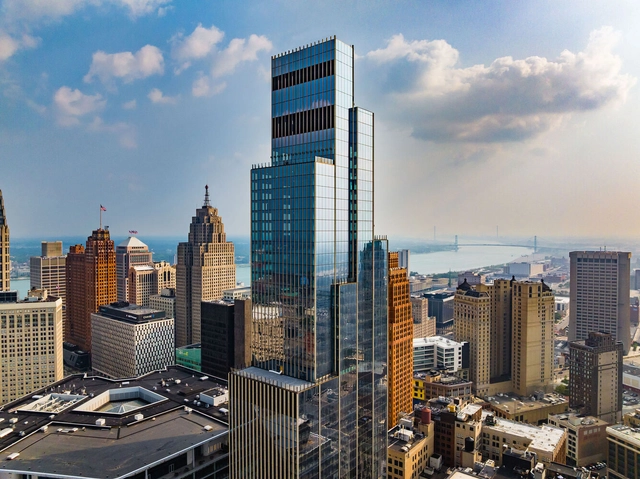
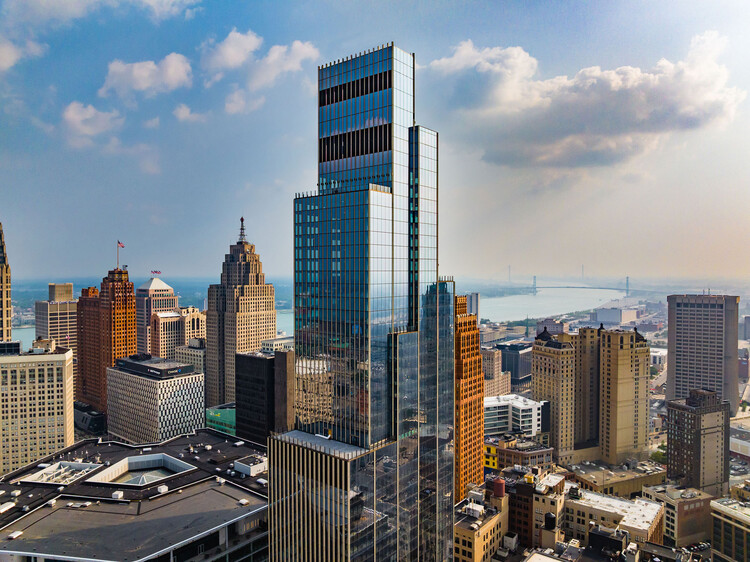
Hudson's Detroit mixed-used development. Aerial view. Image Courtesy of Bedrock
Detroit-based Bedrock development group has announced the completion of the first phase of its Hudson's Detroit mixed-use project in the city center. The project was first unveiled in 2017, when the company presented plans for a 1.2-million-square-foot development designed by SHoP Architects to be built on one of downtown Detroit's long-abandoned sites, formerly occupied by the J.L. Hudson's Department Store. Once the tallest department store in the world and a central gathering place for the city throughout much of the 20th century, the site has now been reimagined as a contemporary urban destination. After nearly a decade of planning and construction, Hudson's Detroit aims to bring new activity and public space to a location emblematic of the city's commercial and cultural past.
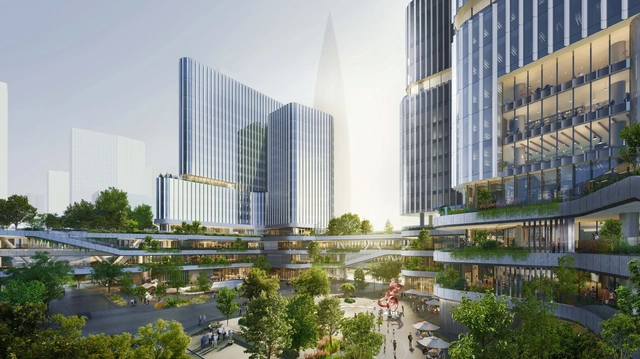
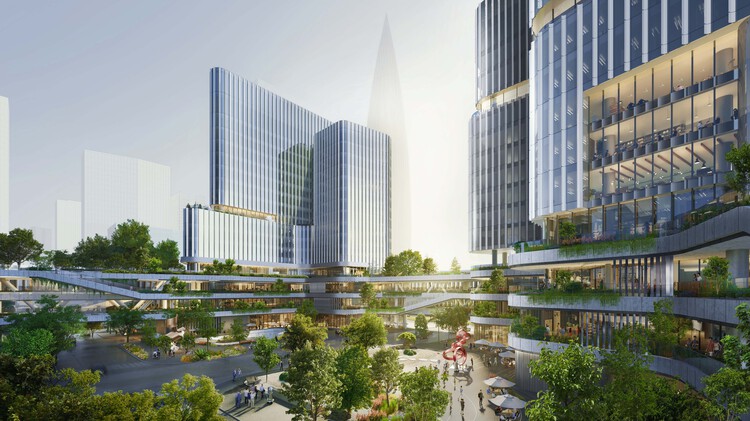
Houhai Hybrid Campus design. Render. Image Courtesy of Büro Ole Scheeren
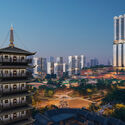
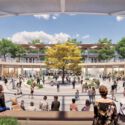
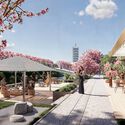
The international firm Büro Ole Scheeren has unveiled images of the Houhai Hybrid Campus, a new urban complex in Shenzhen's Houhai district. The development is situated in a strategic area within the original Shenzhen Special Economic Zone (SEZ), bridging the city's commercial center and its bayfront. The release of the Hybrid Campus images coincided with the 45th anniversary of Shenzhen's designation as a Special Economic Zone, a milestone marking the city's transformation from a fishing village into a global innovation hub. Currently under construction, the Hybrid Campus integrates work, living, culture, commerce, leisure, recreation, and nature into a unified urban complex, scheduled to open in late 2026.
In contemporary architecture, hotel design is no longer defined solely by luxury and accommodation. Instead, it is becoming a platform to explore questions of identity, ecology, and cultural meaning. Beyond providing rooms and amenities, hotels today aim to create immersive experiences that connect travelers to local traditions, landscapes, and communities. In this curated selection of unbuilt hospitality projects, submitted by the ArchDaily community, speculative and competition-winning proposals offer a glimpse into the future of hospitality, where sustainability and storytelling are as central as comfort and style.
IOTA Seoul I mixed-use development. Render. Image Courtesy of Foster + Partners
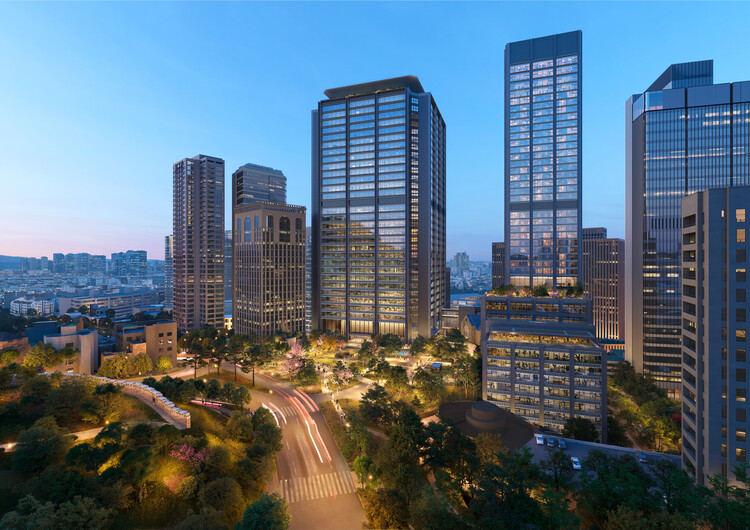
Foster + Partners has released images of the proposed design for IOTA Seoul I, a mixed-use development in Seoul, South Korea. The project would be located between Seoul Station and Namsan, a 270-meter-high peak in the Jung-gu district in the south-central part of the city. The site has been described by the architects as a landmark location due to its historical significance as one of Seoul's gateways for travelers arriving by train.
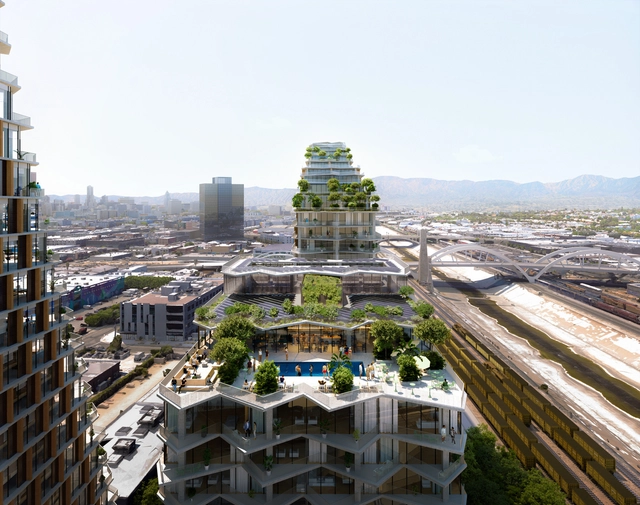
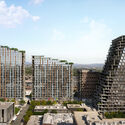
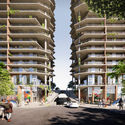
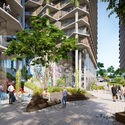
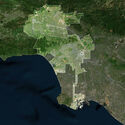
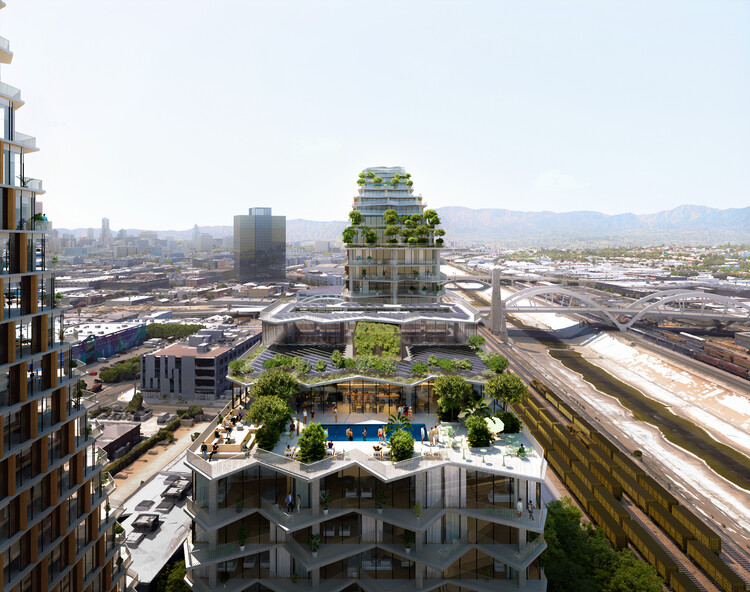
In December 2016, BIG unveiled the first images of a concrete superstructure for Los Angeles' Arts District. The project, a mixed-use complex called 670 Mesquit, was originally projected to cover 2.6 million square feet (242,000 square meters) and include office space, residential units, and two hotels, marking BIG's first project in Los Angeles. In July 2025, nearly nine years after the original proposal, the Los Angeles City Council approved the project to be eventually built in multiple phases.
From forest-inspired offices in Sweden to jungle-nest clubhouses in Tulum, mixed-use architecture continues to evolve as a tool for integrated living. As cities grow and our expectations of public, private, and commercial space shift, designers are increasingly rethinking how different functions including work, play, rest, learning, can coexist in a single architectural language. These projects suggest that buildings and projects no longer need to silo activities, but rather choreograph them to reflect the rhythms of everyday life.
This collection, submitted by the ArchDaily community, presents a global spectrum of approaches to mixed-use design, from large-scale masterplans to conceptual theses. What ties them together is a commitment to spatial overlap, ecological sensitivity, and reimagined programs that prioritize user experience. Whether it's a student dormitory in Tehran, a public plaza in Cairo, or a community hub in Texas, each project embraces complexity to create spaces that are alive with interaction, transformation, and meaning.
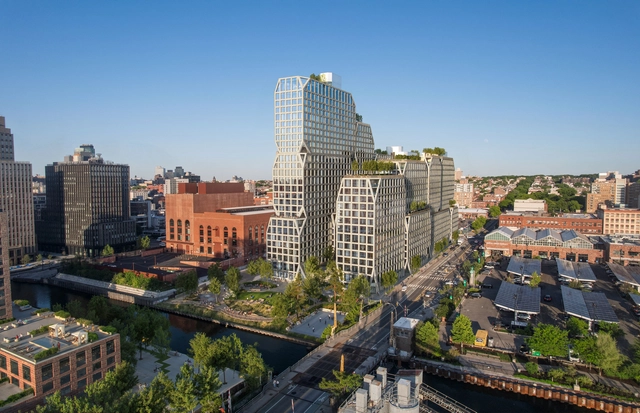
The proposed mixed-use tower at 175 Third Street is the fifth building planned across four sites within the Gowanus Wharf development in Brooklyn, New York. With views toward Manhattan and the Statue of Liberty, the 1,080,000 sq ft proposal includes affordable housing, retail and artist spaces, fitness areas, social and entertainment spaces, culminating in a rooftop with lounging zones and an outdoor pool. The project also envisions a 28,000-sq-ft public waterfront esplanade designed by Field Operations, intended to contribute to the ecological rehabilitation of the Gowanus Canal, continuing the broader transformation of this industrial neighborhood. Other project collaborators include dencityworks | architecture, AKRF, bucharest.studio, DeSimone, Ettinger Engineering Associates, Fried Frank, Hatfield Group, Impact Environmental, and Jenkins and Huntington.
Following an international competition, Polish American architect Daniel Libeskind's firm, Studio Libeskind, in collaboration with La Compagnie de Phalsbourg, has been selected to design the flagship building for the Léon Blum district, adjacent to the future Line 15 station of the Grand Paris Express. The competition featured eight teams, including Snøhetta, Valode et Pistre, Stefano Boeri, Sou Fujimoto, and Jean-Paul Viguier. The winning project is a mixed-use building of over 20,000m², featuring a green wall and incorporating bio-sourced materials. The project is part of a broader urban development strategy for Issy-les-Moulineaux, an extra-wall area of Paris currently undergoing significant transformation.
Renzo Piano Building Workshop (RPBW), in collaboration with Holger Meyer Architekten, has won the competition for the new Midstad project in Frankfurt. Led by Joost Moolhuijzen and Erik Volz, the design reimagines the future of European city centers as resourceful and multifunctional. The project involves a 35,000 m² rehabilitation of an existing department store on the Zeil in Frankfurt's city center, integrating a six-story mass timber extension and a mixed-use, community-driven program. The project involves reconstruction during ongoing operation, partial demolition, and the expansion of the existing department store.