In Hong Kong, where interiors and small buildings are routinely caught between two extremes—high-gloss "luxury" finishes on one end, and budget-cautious industrial roughness on the other—a third attitude has emerged through the calibration of both: a uniquely precise, relevant, and materially honest execution that is not dependent on price point. This is calibrated rawness. Calibrated rawness describes an architecture that retains the directness of matter and materiality—concrete, metal, blockwork, exposed structure, visible services—while subjecting it to rigorous control.
The "raw" is not a costume, and the "refined" is not polished; it is a discipline of precise execution, producing spaces that feel balanced and considered, yet never "made up" or overworked. Studio 1:1 demonstrates this attitude consistently across its work—and its upcoming publication, Architecture under the Radar: Three Projects in Asia (with a foreword by Nader Tehrani), offers a timely frame through which to read this ethos as more than an aesthetic, but as a repeatable architectural method.
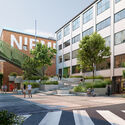
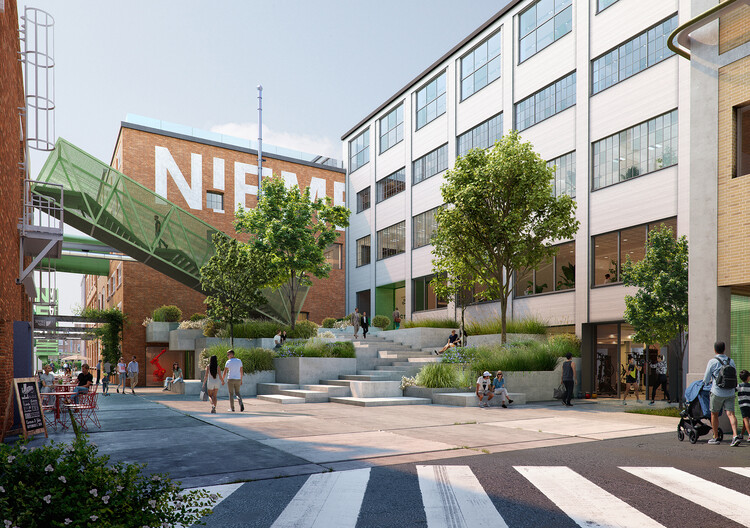
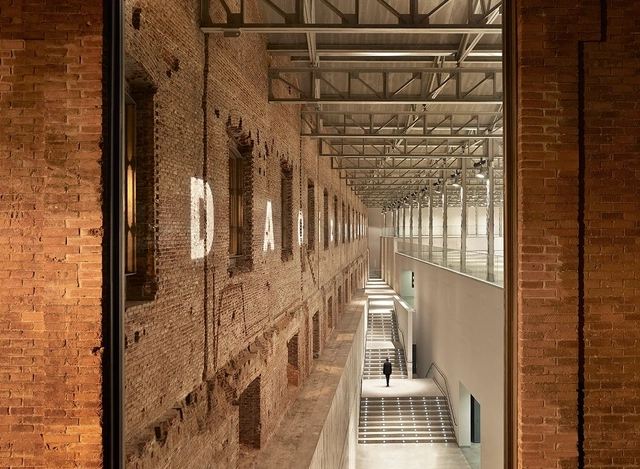
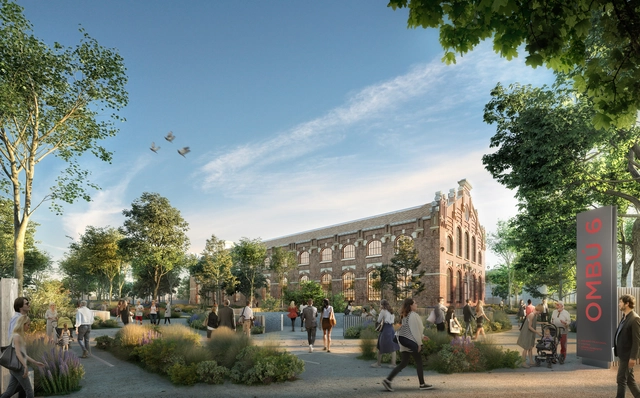
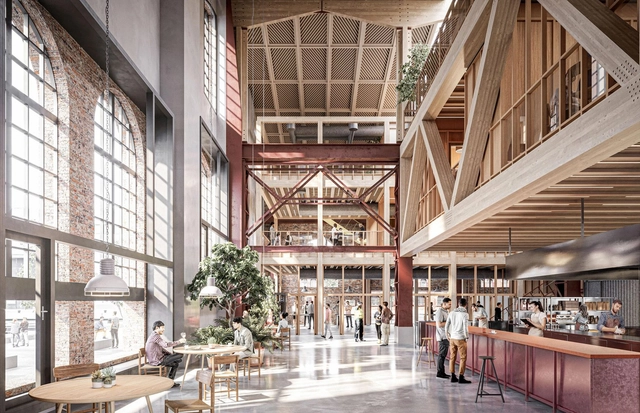
Studioninedots is leading the transformation of a 200-year-old tobacco factory site into Niemeyer, a mixed-use urban complex accommodating digital innovation, cultural venues, hospitality, education, and manufacturing within the existing industrial buildings. Located on Paterswoldseweg in Groningen, the Netherlands, the 38,000 m² project is commissioned by MWPO, with MWPO and Campus Groningen jointly acting as clients for the Shared Facilities. Currently in the design phase (2023–2025), the project's provisional timelines indicate a phased construction start beginning with the factory's southern section in 2026, followed by the northern section in 2027. The Amsterdam-based office's proposal opens the formerly closed industrial ensemble to the public, introducing cafés, galleries, workshops, and shared workspaces distributed across interior streets and adjacent park areas.
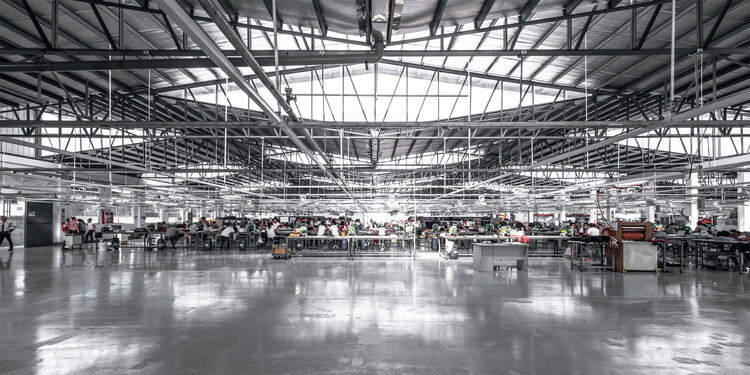
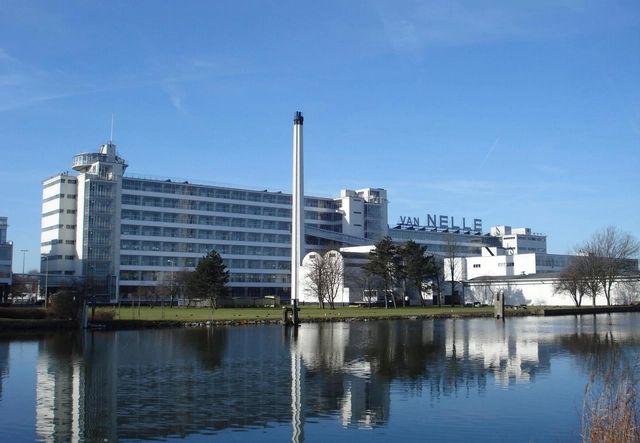
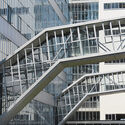
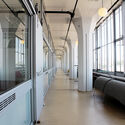
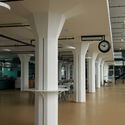
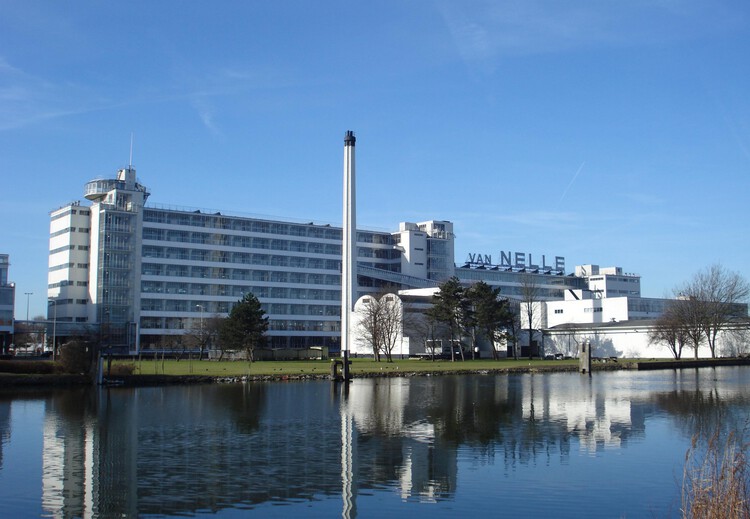
Envisioned as a "daylight factory", the Van Nelle complex introduced revolutionary architectural and social concepts for its time. By integrating glass, steel, and concrete into an open, rational layout, it demonstrated how design could transform industrial processes while improving the lives of the people within. It was not merely a space for production but a symbol of optimism, representing the potential of architecture to reshape industries and communities.
A historic symbol of the industrial age, the sawtooth roof is a lasting legacy of architectural history. Although a functional invention born from necessity nearly 200 years ago, the iconic shape is enjoying a renaissance in many contemporary projects.
Made up of many long, thin roofs with irregular pitches laid alongside each other, a sawtooth roof positions its steeper edges – filled with glass panels – away from the equator. This allows large buildings to control their solar gain by omitting direct sunlight, while still allowing uniform indirect natural light to fill an entire interior area.
No building stands in isolation. Engaging environmental and cultural networks, architecture is an inherently grounded art. As such, limits, constraints, and restrictions drive the design process forward, engendering solutions that celebrate the world as we find it. Embodying this dynamic, renovations and adaptive reuse projects embrace challenging problems and existing conditions. This is especially true when working with industrial buildings, places where machinery, manufacturing, and power combine.
Courtesy of Urban Agency | COBE | LuxPlan |Urban Creators
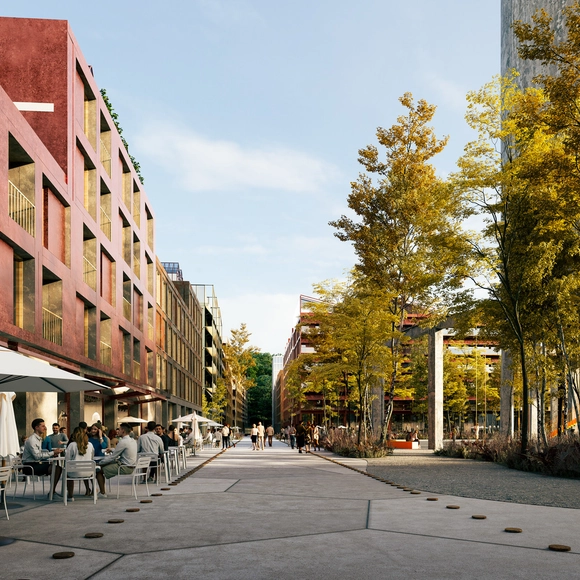
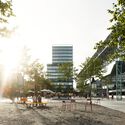
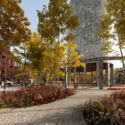
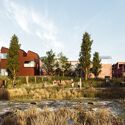
Urban Agency, in partnership with COBE, won in 2019 a competition to transform a former steel factory into an 850,000 square meters car-free mixed-use district. The industrial site is planned to become a mixed-use district, with housing for over 8,000 new residents, office spaces, schools, workshop spaces, and 268,000 square meters of landscape, including a reactivated river area. The master plan strategies focus on urban nature, renaturalization, preservation and reuse, car-free streets, and an adapted dense mix of buildings and functions.
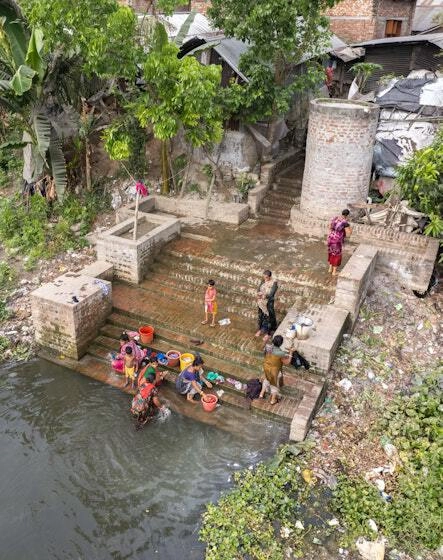
Urban River Spaces, Jhenaidah. Image Courtesy of Aga Khan Award for Architecture
Aga Khan Award for Architecture (AKAA) announced the winners of the 2022 edition. From a pool of 463 projects nominated for the 15th Award Cycle (2020-2022), the six winners show examples of architectural excellence in the fields of contemporary design, social housing, community improvement and development, historic preservation, reuse and area conservation, as well as landscape design and improvement of the environment. Two projects from Bangladesh, one from Indonesia, Iran, Lebanon, and Senegal, will share the UDS 1 million award, one of the largest in architecture.
General view of the revitalised industrial building sitting in a landscaped garden. Image Courtesy of Foster + Partners
Foster + Partners is leading massive refurbishment works on a historic building in Madrid. The renovation project that will put in place an office building for Acciona, seeks to revitalize an abandoned old industrial building built in 1905, generating over 10,000 square-meters of new spaces.
Kjellander Sjoberg has revealed plans to transform the historical building Gjuteriet into an innovative, open public meeting place. Located in the Varvstaden district, a new sustainable neighborhood in Malmö, Sweden, the project will become a contemporary and versatile work environment. Fitting 300 workspaces across 4,600 sq. m., the building also includes meeting rooms, open lounges, conference rooms, a conservatory, studios, exhibition spaces, a test kitchen, and wellness facilities.
Force Majeure - Futura. Image Courtesy of Jeanne Schultz Design Studio
Putting together competition entries from all around the world, this week’s curated feature for Best Unbuilt Architecture showcases inspiring approaches and concepts. Submitted by our readers, the selection highlights uncommon proposals, part of international contests. While some are winning projects, others received honorable mentions.
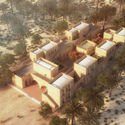
Serie imagines stacked timber pavilion-like offices, Schlaich Bergermann Partner, LAVA, and Latz + Partner design new pedestrian and cycle bridge over the Neckar River in Heidelberg, Germany and Aidia Studio create an Oculus in the Emirati desert. Other competition entries include a landscaped avenue by ZXD Architects in Hangzhou, a community school in Egypt by Hand Over, a winning pavilion for the Singapore’s Archifest 2020 by ADDP Architects and OWIU Design Studio; and a Baha’i House of Worship by SpaceMatters in India.
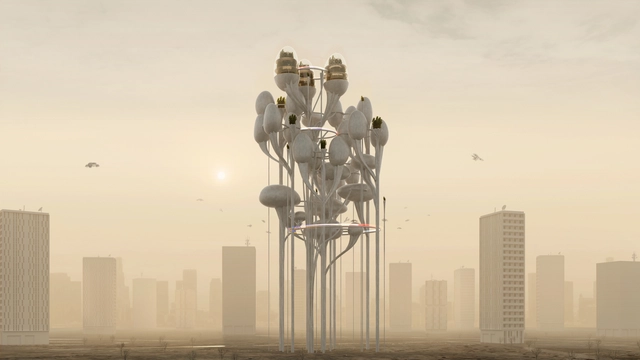
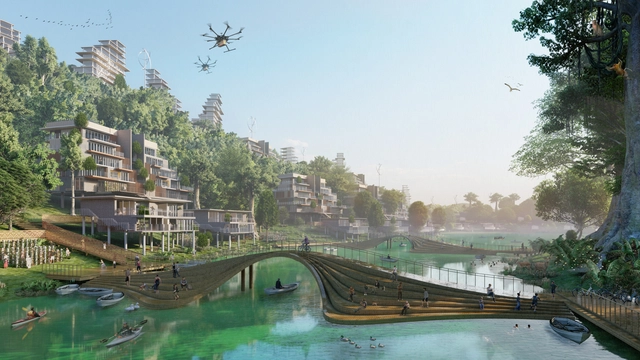
“The Infinite City” smart city design for Indonesia New Capital. Image Courtesy of AntiStatics Architecture
Presented part of international competitions, this week’s best-unbuilt architecture gathers award-winning projects submitted by our readers. Highlighting as usual diverse approaches from across the globe, ArchDaily is rounding up in this article, a curated selection of cultural, civic, and urban proposals.
In Singapore, an adaptive reuse project transforms a power station into a creative industrial hub, while in Indonesia, a smart city design for the new capital generates an ecologically responsible environment. Moreover, Kjellander Sjöberg designs and develops an original city block in Stockholm, and TheeAe imagines a city hall for China. Other proposals include an entire reflective surface for a public square in Italy, a new city district in Tampere Finland, a University building in Warsaw, and a school for contemporary art in Vienna.