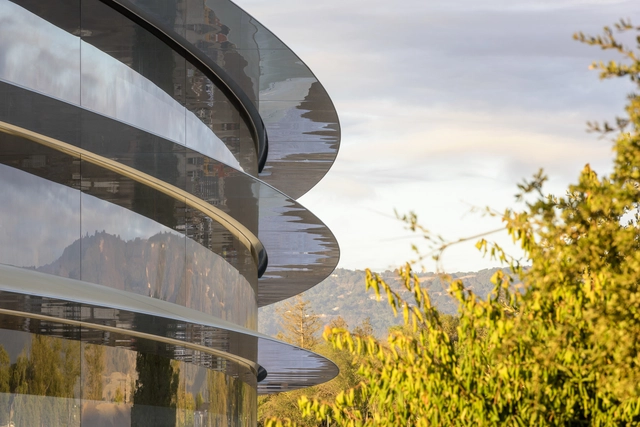
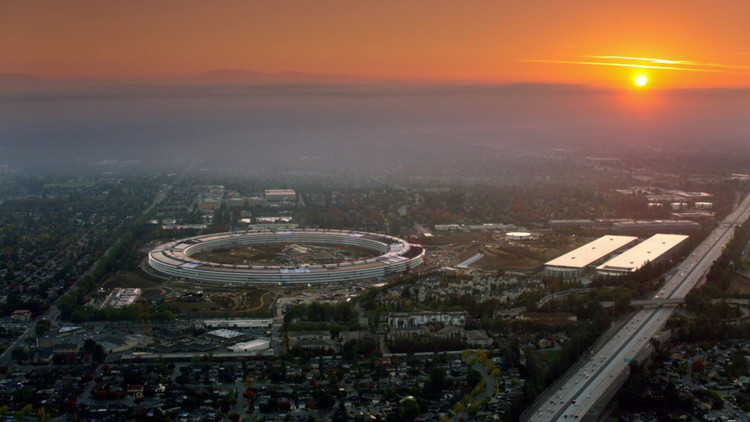
The "Spaceship" has landed and the dust, it appears, is starting to settle. In an article by Adam Rogers, which follows Wired's exclusive breakdown of the new Apple Campus in Cupertino, California, a convincing case is put forward against its design and wider masterplan. "You can’t understand a building without looking at what’s around it," Rogers argues – and most, including its architects, Foster+Partners, would surely be inclined to agree.
Whether you call it the Ring (too JRR Tolkien), the Death Star (too George Lucas), or the Spaceship (too Buckminster Fuller), something has alighted in Cupertino. And no one could possibly question the elegance of its design and architecture. This building is $5 billion and 2.8 million square feet of Steve Jobsian-Jony Ivesian-Norman Fosterian genius.
https://www.archdaily.com/873463/splendid-isolation-questions-raised-about-apple-cupertino-campus-foster-partnersAD Editorial Team
Humanity always cherishes great works of art that stand the test of time. This June, for example, marks the 50th anniversary of The Beatles’ psychedelic Sgt. Pepper's Lonely Hearts Club Band, and the 20th anniversary of Radiohead’s dystopian Ok Computer. These psychologically satisfying birthdays have generated serious appreciation and nostalgia. Similarly, we also love to praise the longevity of innovative architecture. The AIA bestows an annual “Twenty-five Year Award” to acknowledge projects that have "stood the test of time” and “exemplify design of enduring significance.” But one project a year seems stingy. Below are 15 modern classics which, though not always given the easiest start in life, we’ve come to adore:
Construction is an exercise in frugality and compromise. To see their work realized, architects have to juggle the demands of developers, contractors, clients, engineers—sometimes even governments. The resulting concessions often leave designers with a bruised ego and a dissatisfying architectural result. While these architects always do their best to rectify any problems, some disputes get so heated that the architect feels they have no choice but to walk away from their own work. Here are 6 of the most notable examples:
“It’s a pretty amazing building. It’s a little like a spaceship landed” - Steve Jobs
WIRED has published an in-depth article exclusively detailing Apple’s new headquarters that has now opened in Cupertino, California. Coined as the “One Last Thing” Steve Jobs had envisioned prior to his death in 2011, journalist Steven Levy takes the reader through a step-by-step tour of the new Apple Park campus guided by design spearhead Jonathan Ive and head of facilities Dan Whisenunt. Designed in collaboration with Foster + Partners, the sprawling 75 acres hosts facilities ranging from a 100,000 square foot Wellness Center, a hilltop theater, a 755-foot entrance tunnel (tiled Apple white of course) and immense 4-storey glass doors that open up the Ring’s equally giant café to the elements.
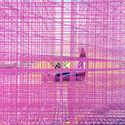
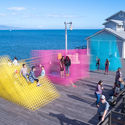
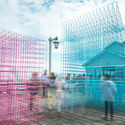
A vibrant pavilion has arrived to grace the boardwalks of California’s Santa Barbara waterfront. The pavilion entitled Runaway has been designed by SPORTS, an architecture and design collaboration of Greg Corso and Molly Hunker, recently selected as one of the Architectural League of New York’s emerging young practices for 2017. Blending a bright, colorful character with functional modernity, Runaway was installed on the Waterfront of Santa Barbara in March 2017, one of several locations the pavilion will travel to throughout the year.
What did Pritzker Prize winner Frank Gehry get when he designed the Stata Center, an exuberantly whimsical academic complex for MIT? A very large check, plus a major lawsuit, alleging negligence and breach of contract due to rampant leaks, mold, cracks, drainage problems and sliding ice. Sometimes the most inspired designs can go awry. And when they do, some clients lawyer up. Here are 9 fascinating examples.
With rapid advancements in technology and crystal clear imagery, drones have allowed us to experience our cities and landscapes from unimaginable vantage points and perspectives. In its series of videos, YouTube channelMingomatic uses drones to capture the sights and scenes of predominantly American cities and various locations from above, offering glimpses of skylines, oceans, highways and terrains (and seals!). Check out the 10 videos below for some spectacular views, and find Mingomatic’s full selection, here.
https://www.archdaily.com/870021/experience-cities-from-above-with-these-crystal-clear-drone-videosOsman Bari
Spring is finally here, which means over 100,000 people are making the trip to the California desert for the 2017 edition of the Coachella Valley Music and Arts Festival. In addition to the top-billed musicians, the event has become known as a showcase for some of the best up-and-coming artists, designers and architects to work on a large-scale, instagram-friendly scene.
With the first weekend now in the books, we’ve rounded up some of the best art/architecture installations from this year’s festival.
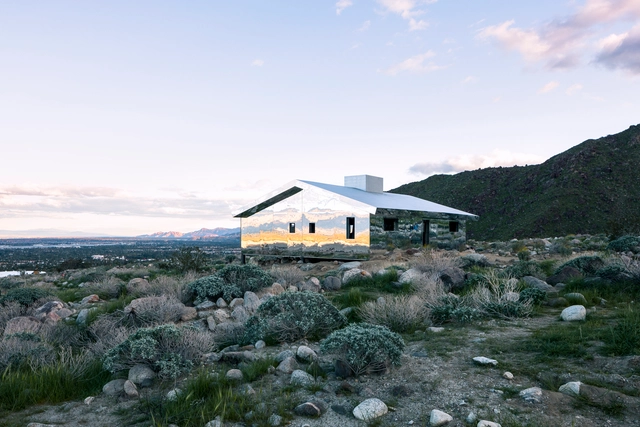
Marrying the great expanses of the American west with a series of mirrored faces, MIRAGE is an installation situated in the Southern California desert and the work of Doug Aitken, an American artist, and filmmaker. An experimental adaptation of the traditional suburban ranch-style house, the sculpture hones in on architecture’s relationship with its landscape, manifesting itself as a life-sized kaleidoscope.
The California Ranch Style house was first designed by a small collective of architects in the 1920s and 30s, inspired by the spatial fluidity of Frank Lloyd Wright’s work and melded with the local single storey homes that belonged to ranchers. Following the Second World War, the simplicity of this housing typology resulted in its quick rise in popularity, adopted by commercial builders to match the rapid urbanization of the American countryside.
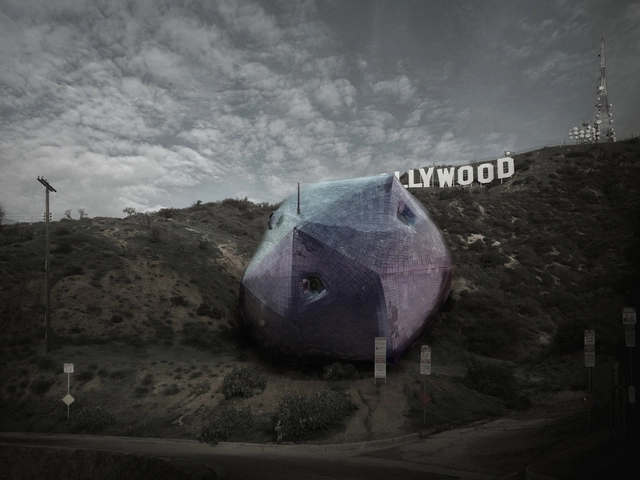
First Place: Ambivalent House / Hirsuta (Jason Payne, Michael Zimmerman, Joseph Giampietro, Ryosuke Imaeda); Los Angeles, California, USA. Image Courtesy of arch out loud
Architectural research initiative arch out loud, in partnership with Last House on Mulholland (LHOM), has released the winner of their competition to design a house of the future, to be sited directly below the Hollywood Sign.
Serving as a “design charette” to generate ideas about potential uses for the currently open site, the competition called for residential designs that demonstrate the use of innovative technology and integrative environmental strategies, while capitalizing on the prominence of the site.
The Hollywood competition received entries from 500 designers across the world, selecting three winners, with an additional owner’s choice.
The winners of the Hollywood design competition are:
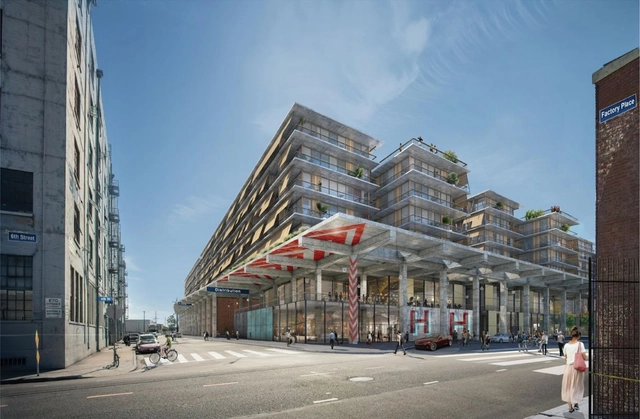
View from the street. Image Courtesy of Los Angeles Department of City Planning
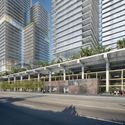
The Los Angeles Department of City planning has released a new study surrounding Herzog & de Meuron’s 6AM mixed-use development planned for LA’s Arts District. Originally revealed last fall, the estimated $2 billion complex would constitute the Swiss firm’s first project in the Southern California city, and could play a major role in the revitalization of the downtown area.
Apple today announced that Apple Park (also referred to as Apple Campus 2) will be ready to occupy beginning in April. Envisioned by Steve Jobs as a “center for creativity and collaboration,” the 175-acre campus will serve as a new home for more than 12,000 employees, who will be moved-in over a six month period. Construction on outer buildings and park spaces will continue through the summer.
As the finishing touches are applied to the long-awaited Apple Campus 2 (due to be completed in spring of this year), a new report from Reuters has revealed the fantastical strive for perfection demanded by Apple’s in-house project management team. Compiled from interviews with over 20 current and former workers on the project, the piece delves into the exceptional level of detail to which they have held their construction team, which is said to have been the cause of the delay from the project’s original 2016 completion date.
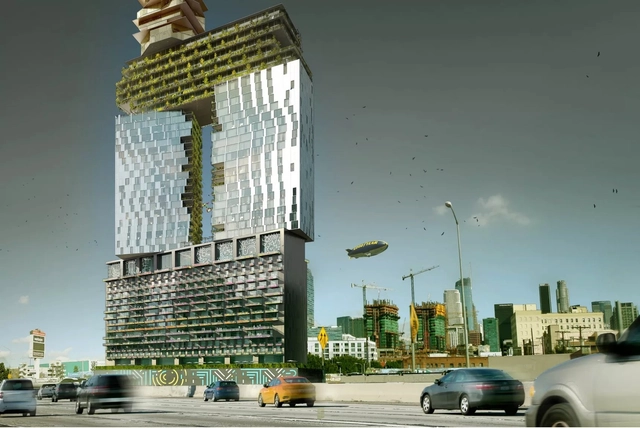
An eclectic stacked skyscraper may become downtown Los Angeles’ newest landmark. Designed by Gensler, the 52-story tower at 1600 South Figueroa would add to Central LA’s current development boom, contributing a mix of housing, retail, offices and a hotel to the area located near the Staples Center and LA Live Entertainment district.
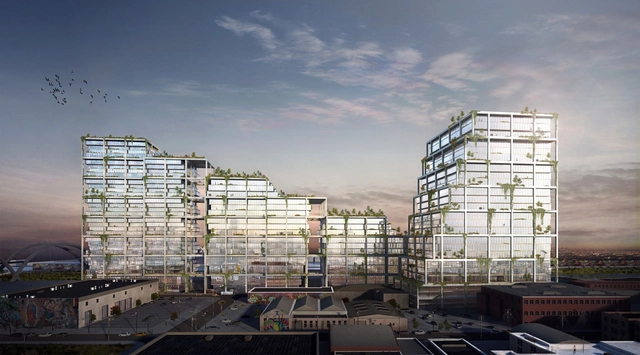
BIG has revealed plans for a 2.6 million square foot (242,000 square meter) mixed-use complex in LA’s burgeoning Arts District. Called 670 Mesquit, the project will take the form of a series of stepped boxes containing 800,000 square feet of office space, 250 residential units and two hotels. The development will mark BIG’s first project in Los Angeles.
Following an unofficial update in August 2016, Apple's Campus 2 is entering the final stages of construction. A new drone video, captured by aerial videographer Matthew Roberts earlier this month, shows the 'Research and Development' facility nearing full completion and capped by a vast roof plant, the 'tantau roof' on the security kiosk in place, and an epic effort in landscaping taking place both within the "spaceship's" courtyard and across the company's enormous property. Only one crane now remains on site and the solar installations appear to be around 60% complete, suggesting that the scheduled 2017 move-in date remains on track.
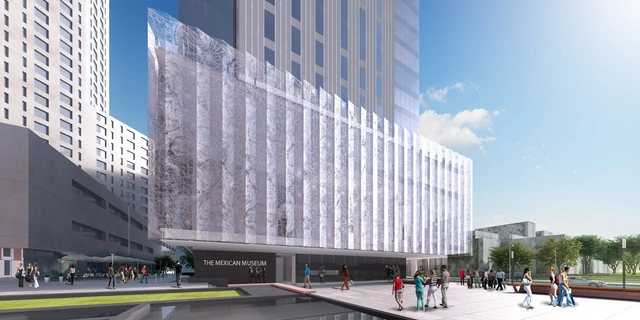
Earlier this year construction started on the new home for The Mexican Museum, designed by TEN Arquitectos. Located in San Francisco’s Yerba Buena Cultural District, it will fill the first four floors of Millennium Partners’ 700,000 square foot luxury residential tower. The new museum will become a social, cultural and educational center for the promotion of Mexican and Mexican-American art and culture in San Francisco, California.
"The project encourages social commitment and celebrates diversity. The museum is a plural space via a social bond with the community’s history and culture and urban management strategies based on diverse uses and social gatherings," states TEN Arquitectos.
The museum plans to open its doors in the spring of 2019. See below for more details.
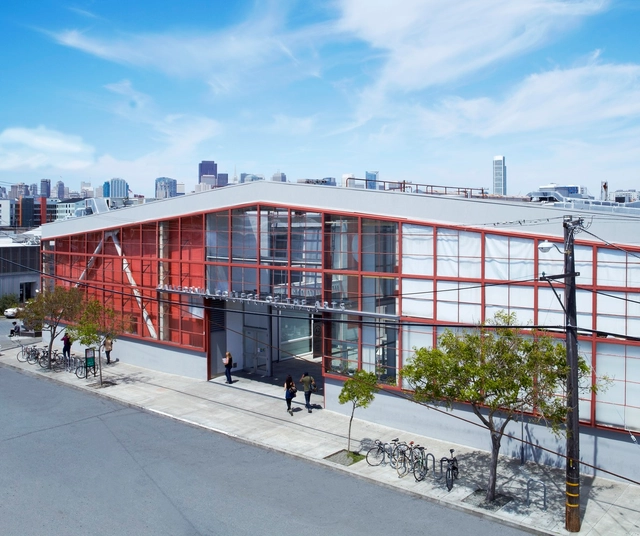
Over the next five years, Studio Gang and CCA will collaborate to create a new campus to host 2,000 students, 600 faculty members, 250 staff members, and 34 academic programs, and to be a model of sustainable construction and practice.











.jpg?1494051634)