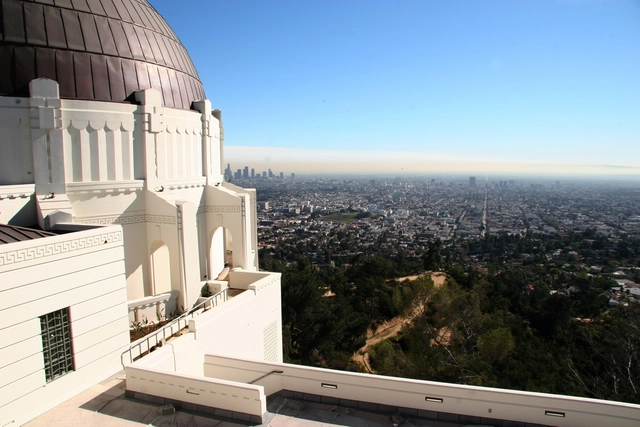
The SAH Los Angeles Seminar bridges the Society's efforts in historic conservation to the contemporary built environment and the local public and professional community. The LA Seminar will critically look at SurveyLA, a five-million dollar, city-wide study of historic resources sponsored by the J. Paul Getty Trust and the City of Los Angeles. As described online, “SurveyLA – the Los Angeles Historic Resources Survey – is Los Angeles' first-ever comprehensive program to identify significant historic resources throughout our city. The survey marks a coming-of-age for Los Angeles' historic preservation movement, and will serve as a centerpiece for the City's first truly comprehensive preservation program."
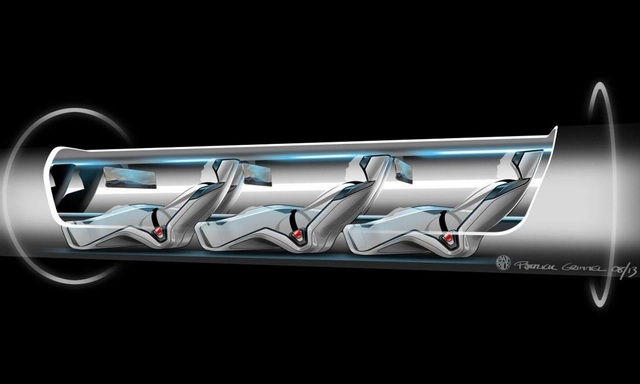
A group of Massachusetts Institute of Technology(MIT) engineering students has won the first round of a competition to design transport "pods" for Elon Musk's ultra-fast Hyperloop. Selected from more than 100 other university teams, the top teams will now have the opportunity to build their pods for a trial run on the Hyperloop Test Track (now under construction) by April 2016. If successful, the pods will be able to transport up to 30 people at speeds of 700 miles-per-hour through the Hyperloop's 12-foot diameter tube.
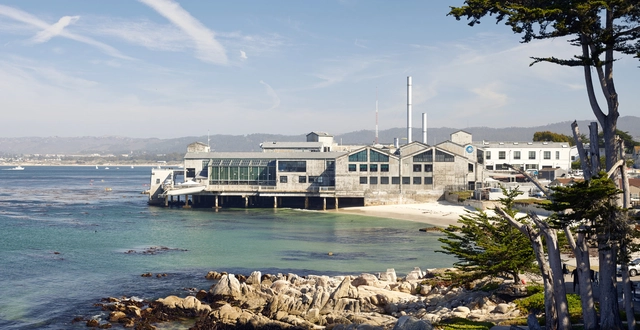
Monterey Bay Aquarium / EHDD. Image Courtesy of Bruce Damonte
The Monterey Bay Aquarium in Monterey, California, has been selected for the 2016 American Institute of Architects' (AIA) Twenty-five Year Award. Designed by EHDD of San Francisco, and completed in 1984, the Monterey Bay Aquarium is a "light-filled ensemble of diverse spaces, unique among aquariums in its interweaving of indoors and out," says the AIA. The award is presented yearly to a project that has "stood the test of time by embodying architectural excellence for 25 to 35 years."
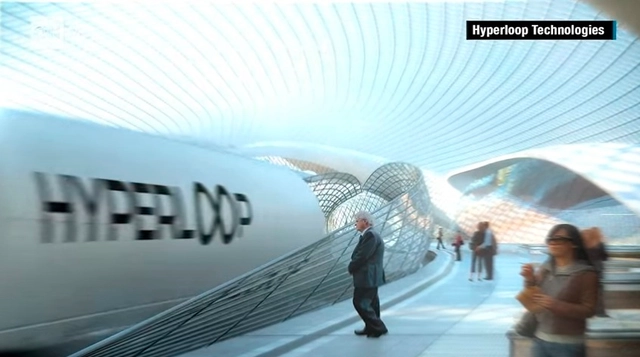
Hyperloop Technologies is starting to realize its high-speed transit system. As Tech.Mic reports, pipes for the project's first test tube are showing up in Nevada. Hyperloop was first outlined by Elon Musk in 2013 as a response to California's pricey bullet train plan that aim to connect Los Angeles to San Francisco. The ultra-fast, energy efficient Hyperloop proposes to send pods of people through a depressurized tube at speeds up to 700 miles-per-hour. It is believed that the new system could be running as soon as 2020.
Exterior Rendered View. Image Courtesy of Alajajian Marcoosi Architects
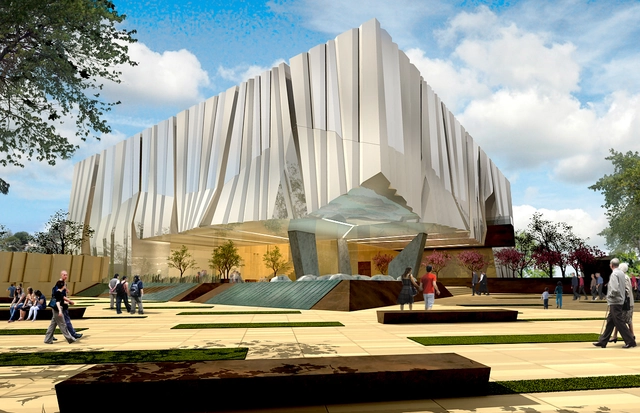
Alajajian Marcoosi Architects has unveiled designs for an Armenian American museum, with the aim of educating the public on the Armenian American story. The project will be located on the corner of Verdugo Road and Mountain Street in Glendale, California, with negotiations currently underway for ground lease agreements.
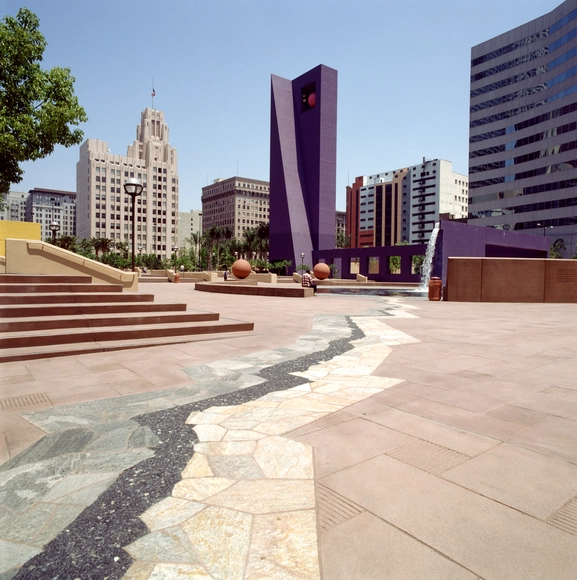
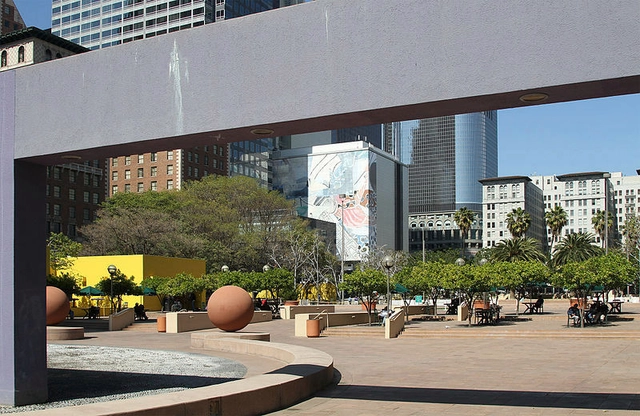
Four teams have been chosen to move on to the second stage of the Pershing Square Renew competition. Aiming to transform downtown Los Angeles' oldest park, the finalists will now refine their schematic proposals in preparation of a second review in March 2016. The winning scheme will potentially be the five-acre park's sixth iteration, replacing Mexican architect Ricardo Legorreta and landscape architect Laurie Olincurrent design that first opened in 1994.
The four teams and their preliminary ideas, include:
Following the demolition of the original lifeguard station at the La Jolla Shores beach in San Diego, RNT Architects was commissioned to design its replacement. The project began with several models proposing different directions for the project – its final iteration began with a single, miniature staircase leading to a small shelter on top.
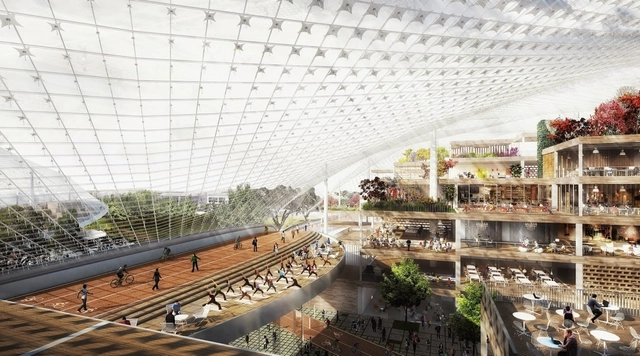
This past February, BIG and Heatherwick Studiounveiled their designs for Google’s new Mountain View Headquarters in California. The project, which will be built by robots, faced sizeable critique, as well as site complications—that have since been resolved—over the past year. Now, as a part of Esquire’s 2015 Breakouts, Bjarke Ingels—founder of BIG—is speaking out about how the firm won the Google bid, and why the headquarters could create a new mold for Silicon Valley urbanism. Ingels goes on to discuss other major BIG projects, like 2 World Trade Center, and an upcoming NFL stadium. Read the full Esquire interview, here.
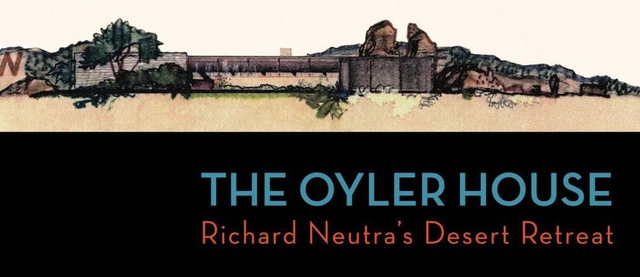
Join us for another portrayal of one of America’s greatest architects: Richard Neutra. The Oyler House: Richard Neutra’s Desert Retreat explores how Neutra, considered the “father of California Modern architecture,” came to befriend this modest small-town family and how he was inspired by the site’s stunning desert setting, which Neutra compared with the grandness of the mystical Gobi Desert.
Ten practices from around the world have been shortlisted in a competition that aims to transform Los Angeles' Pershing Square one of Southern California's top destinations. Located on a five-acre plot in the city's downtown, Pershing Square is Los Angeles' oldest park. Each semi-finalist has been challenged to develop proposals based off of experiences. A small selection of finalists will be selected in December to move on to the competition's final phase.
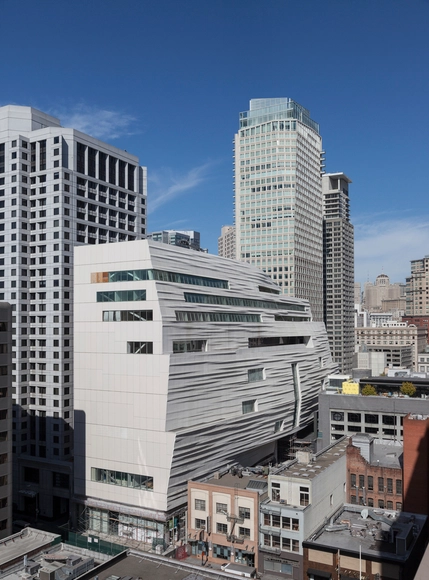
Snøhetta's 10-story expansion of the San Francisco Museum of Modern Art (SFMOMA) is nearing completion. As announced by SFMOMA, the "transformed" museum will reopen to the public on Saturday, May 14, 2016. Its new 235,000-square-foot addition (that nearly tripled SFMOMA's gallery space) was designed by Snøhetta to "weave" into the city and connect "seamlessly" to the museum's existing 225,000-square-foot building designed by Mario Botta.
Tucked away on a 1.3 acre lot, this house in Los Altos, California was renovated by Bart Prince -- transformed from a rectangular cabin into an eclectic combination of forms, inspired by the owners, Dale and Margo Seymour’s, love of math, art and geometry. The newly built structure is composed of steel and glulam, creating angular forms with generous glazing to create open, day-lit spaces. To navigate the California law that glass cannot be installed in non-vertical positions, an acrylic substitute was used for many of the home’s irregular windows.
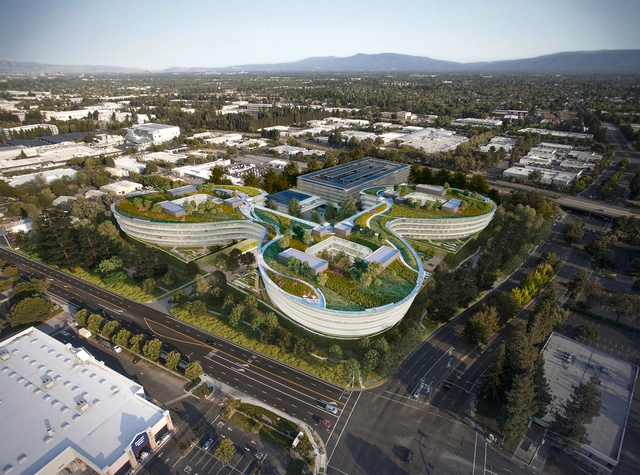
Plans for Apple's newest California "spaceship" has been unveiled. Named after its bordering streets, Central & Wolfe hopes to transform a 1970s office park in Sunnyvale into a "futuristic office campus." The 19 acre site, located just five miles from Apple's main Cupertino campus (currently underway), was designed by HOK and is currently under review.
If built, it will replace nine aging buildings with a clover-like design comprised of three interconnected structures - each rising six stories.
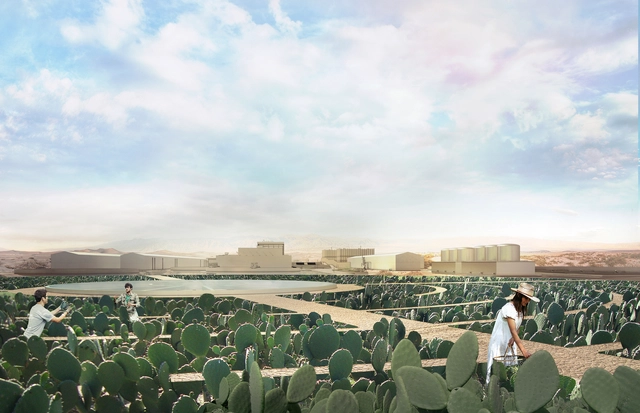
Although global warming may only be partially to blame for California’s now four-year, record-breaking drought – intensifying it by 15 to 20 percent, say scientists – the long term implications of the weather phenomenon are a preview of a drier future with less predictable weather patterns.[1] As ecology and architecture begin to share responsibility in the implications of climate change, future solutions will need to balance architectural needs with ecological imperatives. Many designers are accounting for water scarcity in schemes for the drought-stricken state, but only recently have ideas addressed this issue head-on. “Grassroots Cactivism,” an award-winning proposal by Ali Chen, suggests that the drought-tolerant nopales cactus, with a variety of uses, is an ideal candidate for aiding water-conservation in California.
Read on for more about this biological breakthrough in water conservation.
The Broad has officially opened its doors in downtown Los Angeles. Taking four years to complete, the highly anticipated, 120,000-square-foot building houses a prominent collection of postwar and international contemporary art owned by billionaire philanthropists Eli and Edythe Broad. During the press preview, VernissageTV caught up with the building's architect, Elizabeth Diller of Diller, Scofidio + Renfro, to gain a better understanding of The Broad's “veil over the vault" concept.
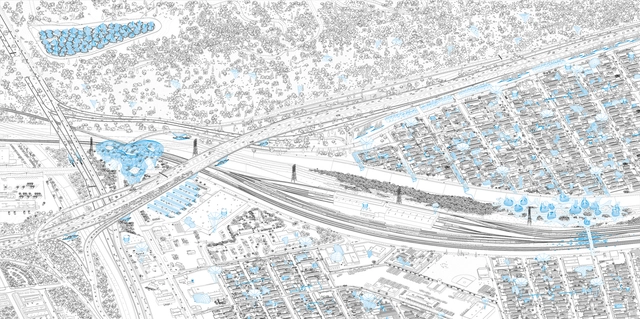
Lorcan O’Herlihy Architects (LOHA) has designed a speculative system of interventions for the Los Angeles River that “examines the relationship between urbanization and water use to develop new models of densification that recognize and tap into existing ecological and infrastructural patterns.” Called WATERshed, the design is part of the A+D Museum’s ongoing “Shelter: Rethinking How We Live in Los Angeles” exhibition that explores new typologies of housing in Los Angeles.
With their model for urban regeneration, LOHA hopes to address issues like the ongoing California drought, as well as the United Nation’s prediction that by 2030, nearly half of the world’s population will be living in areas of high water stress. Thus, the plan utilizes the Los Angeles River as a resource for water use and management in order to provide a path for sustainable growth in Los Angeles, and an example for other cities.
A soaring contemporary space for the divine, The Cathedral of Our Lady of the Angels opened to the public in 2002. Designed by Pritzker Prize-winning Spanish architect Rafael Moneo, the Roman Catholic cathedral is a monument to the successes of postmodernism deep in the heart of downtown Los Angeles. The cathedral features modernist decoration, from angular wooden pews to steel chandeliers complete with blown glass orbs, and can host up to 3,000 visitors in its sunlight spaces with ample outdoor space in the adjacent gardens and plaza.
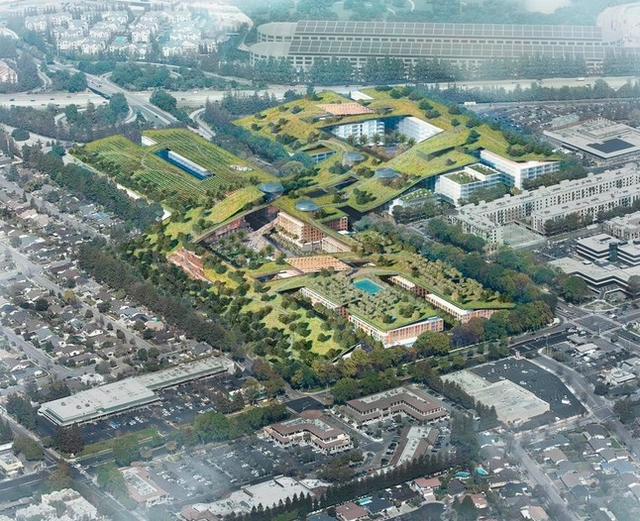
Rafael Viñoly and OLIN have unveiled plans to transform Cupertino's Vallco Shopping Mall into a new mixed-use neighborhood that boasts the "world's largest green roof." The current plans call for a 15-block sustainable town center with 625,000-square-feet of retail, two-million-square-feet of office space and 800 residential units. All this, if approved, would be topped by a 30 acre public green space with a 3.8 mile trail network that runs through orchards, vineyards, an amphitheater and play areas.