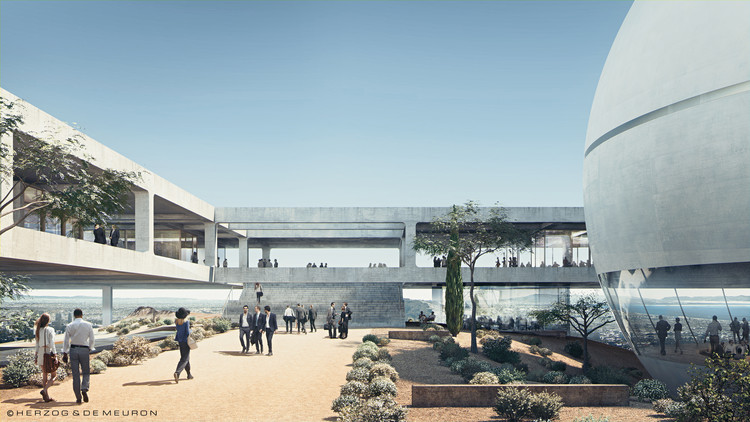
Herzog & de Meuron, in collaboration with Michel Desvigne Paysagiste, Inessa Hansch and executive architect Gensler, have revealed designs for a new “Scholars’ Campus” for global think tank the Berggruen Institute to be located in the Santa Monica Mountains overlooking the city of Los Angeles.
Inspired by the designs of traditional monasteries and hilltop villages, the scheme is rooted in the restoration and appreciation of the landscape. Along with the series of structures containing the Institue’s residence, meeting and study spaces, over 90% of the 447-acre site will be preserved as natural open space.
Downtown Los Angeles’ skyscraper boom continues – this time straying south to the intersection of South Olive and 11th Street, where developer Crescent Heights has submitted plans for a new 70-story residential tower housing 794 apartment units. Designed by ODA, 1045 Olive is planned to top out at a height of 770 feet, which would make it Los Angeles’ tallest residential building and 4th tallest overall.
Unique to the structure (and fitting for Los Angeles) would be the massive amount of space dedicated to parking: 13.5 total floors would be dedicated to parking spots, including an above ground 8-story core that would be wrapped in apartments to visually conceal the cars within.
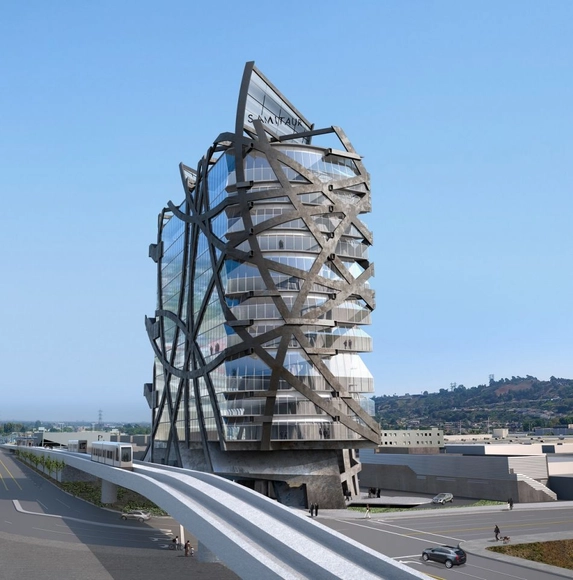
After starting and stopping for nearly 20 years, a 17-story Deconstructivist tower by Eric Owen Moss Architects seems to finally be underway in Los Angeles’ Culver City neighborhood after construction permits were approved earlier this year. Originally known as the Glass Tower, the project has been revived as (W)rapper, a nod to the structure’s enveloping steel exoskeleton.
A new flythrough video of the project shows the inside and out of the 230-foot tower, including its double-height and mezzanine office levels, as well as a spacious rooftop terrace. In total, the building will offer 160,000 square feet of office space and two levels of underground parking. Located adjacent to the Expo Line’s LA Cienega/Jefferson station, the project was originally envisioned as a multi-tower development in the late 90s, before being reduced to its current form.
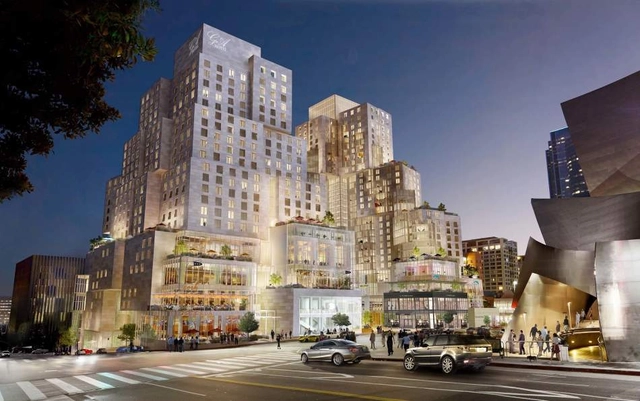
Renderings for a new office building in the Playa Vista neighborhood of Los Angeles designed by Gehry Partners have been revealed in documents released by the LA Department of City Planning. Called New Beatrice West, the eight-story development consists of a series of terraced glass boxes, capped with abundant vegetation aimed at contributing passive energy-efficiency to the complex. The new building will integrate an existing adjacent office building that currently houses the offices of Gehry Partners.
https://www.archdaily.com/876240/renderings-revealed-of-gehry-partners-future-tree-covered-playa-vista-officeAD Editorial Team
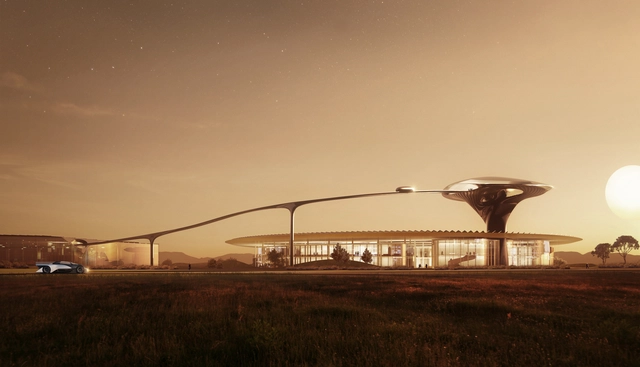
MAD Architects has unveiled designs for a new campus for Faraday Future (FF), makers of “the world’s fastest-accelerating electric car.” Located on the site of a former Naval base on Mare Island, adjacent to the Napa River in Northern California, the campus has been envisioned as a “zero-emission base” that will support not only the company’s research, development, and manufacturing headquarters, but also public outreach programming and ecological restoration of the river.
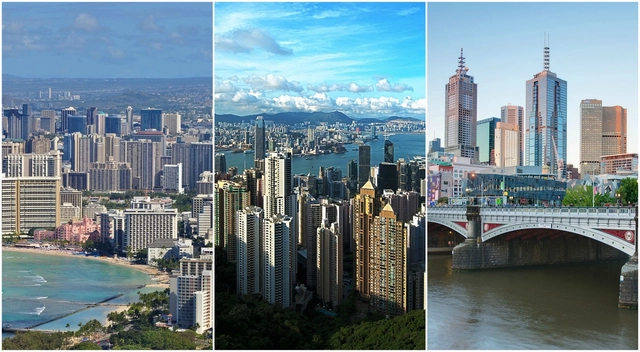
As anyone who has recently attempted apartment-hunting in a major urban area will know, reasonably-priced housing can be difficult to come by for many and salaries don’t always seem to match the cost of living. This gap is contributing to housing crises in developed and developing countries worldwide. People are simply being priced out of cities, where housing has become a commodity instead of a basic human right. Financial speculation and states’ support of financial markets in a way that makes housing unaffordable has created an unsustainable global housing crisis.
Earlier this year the 13th Annual Demographia International Housing Affordability Survey was released for 2017, revealing that the number of “severely unaffordable” major housing markets rose from 26 to 29 this year; the problem is getting worse. The study evaluates 406 metropolitan housing markets in nine of the world's major economies and uses the “median multiple” approach to determine affordability. By dividing the median house price by the median household income of an area, this method is meant to be a summary of “middle-income housing affordability.”
Architecture at Zero is a zero net energy design competition open to students and professionals worldwide, engaging architecture, engineering, and planning students and professionals in the pursuit of energy efficient design.
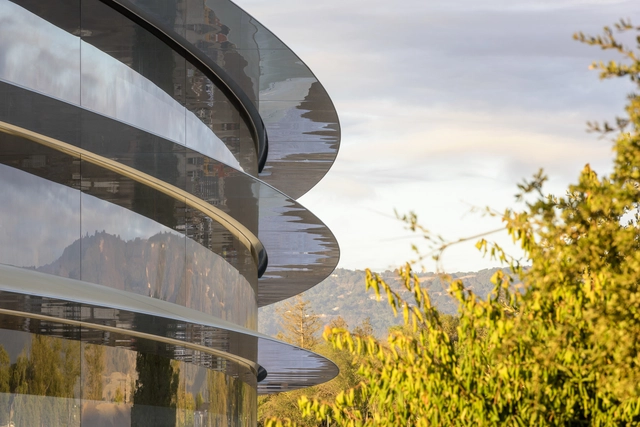
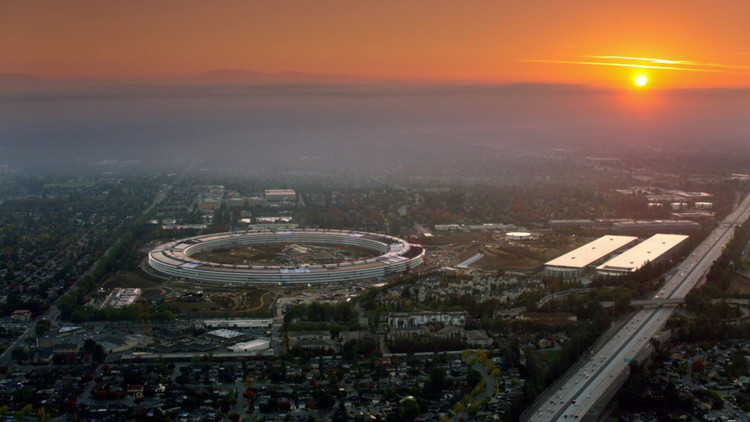
New footage from drone videographer Duncan Sinfield reveals that finishing touches are being applied to one of the Apple Campus's more important outward-facing buildings, and perhaps its most 'public' – the "Steve Jobs Theater". Designed and constructed using similar elements to the nearby office 'ring'—including large convex glazed panels and precise, rounded cladding panels—the theater's main function will be to host the company's world-renowned keynote addresses, in which they present new products.
https://www.archdaily.com/874648/new-drone-footage-captures-finishing-touches-being-applied-to-apples-steve-jobs-theaterAD Editorial Team
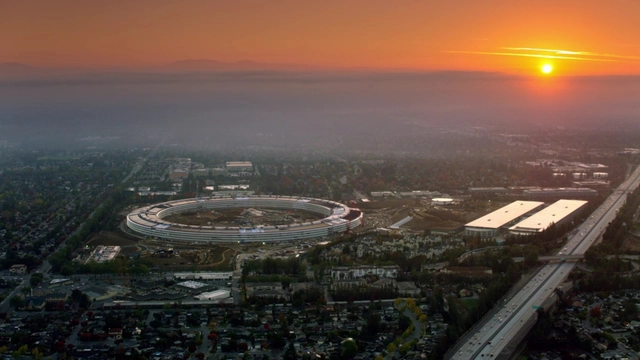
The "Spaceship" has landed and the dust, it appears, is starting to settle. In an article by Adam Rogers, which follows Wired's exclusive breakdown of the new Apple Campus in Cupertino, California, a convincing case is put forward against its design and wider masterplan. "You can’t understand a building without looking at what’s around it," Rogers argues – and most, including its architects, Foster+Partners, would surely be inclined to agree.
Whether you call it the Ring (too JRR Tolkien), the Death Star (too George Lucas), or the Spaceship (too Buckminster Fuller), something has alighted in Cupertino. And no one could possibly question the elegance of its design and architecture. This building is $5 billion and 2.8 million square feet of Steve Jobsian-Jony Ivesian-Norman Fosterian genius.
https://www.archdaily.com/873463/splendid-isolation-questions-raised-about-apple-cupertino-campus-foster-partnersAD Editorial Team
Humanity always cherishes great works of art that stand the test of time. This June, for example, marks the 50th anniversary of The Beatles’ psychedelic Sgt. Pepper's Lonely Hearts Club Band, and the 20th anniversary of Radiohead’s dystopian Ok Computer. These psychologically satisfying birthdays have generated serious appreciation and nostalgia. Similarly, we also love to praise the longevity of innovative architecture. The AIA bestows an annual “Twenty-five Year Award” to acknowledge projects that have "stood the test of time” and “exemplify design of enduring significance.” But one project a year seems stingy. Below are 15 modern classics which, though not always given the easiest start in life, we’ve come to adore:
Construction is an exercise in frugality and compromise. To see their work realized, architects have to juggle the demands of developers, contractors, clients, engineers—sometimes even governments. The resulting concessions often leave designers with a bruised ego and a dissatisfying architectural result. While these architects always do their best to rectify any problems, some disputes get so heated that the architect feels they have no choice but to walk away from their own work. Here are 6 of the most notable examples:
“It’s a pretty amazing building. It’s a little like a spaceship landed” - Steve Jobs
WIRED has published an in-depth article exclusively detailing Apple’s new headquarters that has now opened in Cupertino, California. Coined as the “One Last Thing” Steve Jobs had envisioned prior to his death in 2011, journalist Steven Levy takes the reader through a step-by-step tour of the new Apple Park campus guided by design spearhead Jonathan Ive and head of facilities Dan Whisenunt. Designed in collaboration with Foster + Partners, the sprawling 75 acres hosts facilities ranging from a 100,000 square foot Wellness Center, a hilltop theater, a 755-foot entrance tunnel (tiled Apple white of course) and immense 4-storey glass doors that open up the Ring’s equally giant café to the elements.
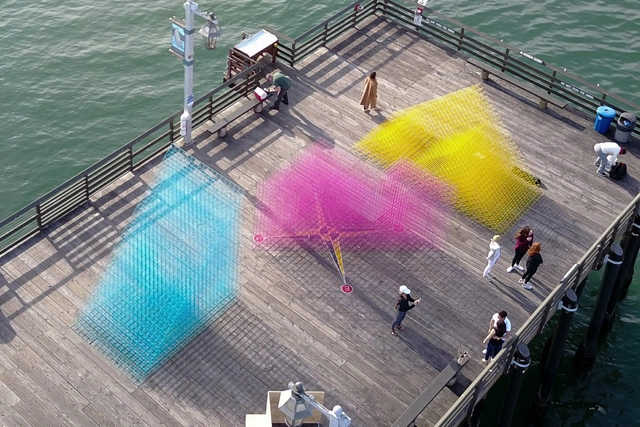
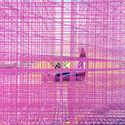
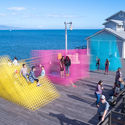
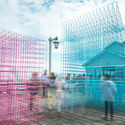
A vibrant pavilion has arrived to grace the boardwalks of California’s Santa Barbara waterfront. The pavilion entitled Runaway has been designed by SPORTS, an architecture and design collaboration of Greg Corso and Molly Hunker, recently selected as one of the Architectural League of New York’s emerging young practices for 2017. Blending a bright, colorful character with functional modernity, Runaway was installed on the Waterfront of Santa Barbara in March 2017, one of several locations the pavilion will travel to throughout the year.
What did Pritzker Prize winner Frank Gehry get when he designed the Stata Center, an exuberantly whimsical academic complex for MIT? A very large check, plus a major lawsuit, alleging negligence and breach of contract due to rampant leaks, mold, cracks, drainage problems and sliding ice. Sometimes the most inspired designs can go awry. And when they do, some clients lawyer up. Here are 9 fascinating examples.
With rapid advancements in technology and crystal clear imagery, drones have allowed us to experience our cities and landscapes from unimaginable vantage points and perspectives. In its series of videos, YouTube channelMingomatic uses drones to capture the sights and scenes of predominantly American cities and various locations from above, offering glimpses of skylines, oceans, highways and terrains (and seals!). Check out the 10 videos below for some spectacular views, and find Mingomatic’s full selection, here.
https://www.archdaily.com/870021/experience-cities-from-above-with-these-crystal-clear-drone-videosOsman Bari
Spring is finally here, which means over 100,000 people are making the trip to the California desert for the 2017 edition of the Coachella Valley Music and Arts Festival. In addition to the top-billed musicians, the event has become known as a showcase for some of the best up-and-coming artists, designers and architects to work on a large-scale, instagram-friendly scene.
With the first weekend now in the books, we’ve rounded up some of the best art/architecture installations from this year’s festival.




.jpg?1502913677&format=webp&width=640&height=580)
.jpg?1500566908&format=webp&width=640&height=580)
.jpg?1500566881 "via LA Department of City Planning")
.jpg?1500566871 "via LA Department of City Planning")
.jpg?1500566918 "via LA Department of City Planning")
.jpg?1500566892 "via LA Department of City Planning")
.jpg?1500566908)










.jpg?1494051634)
