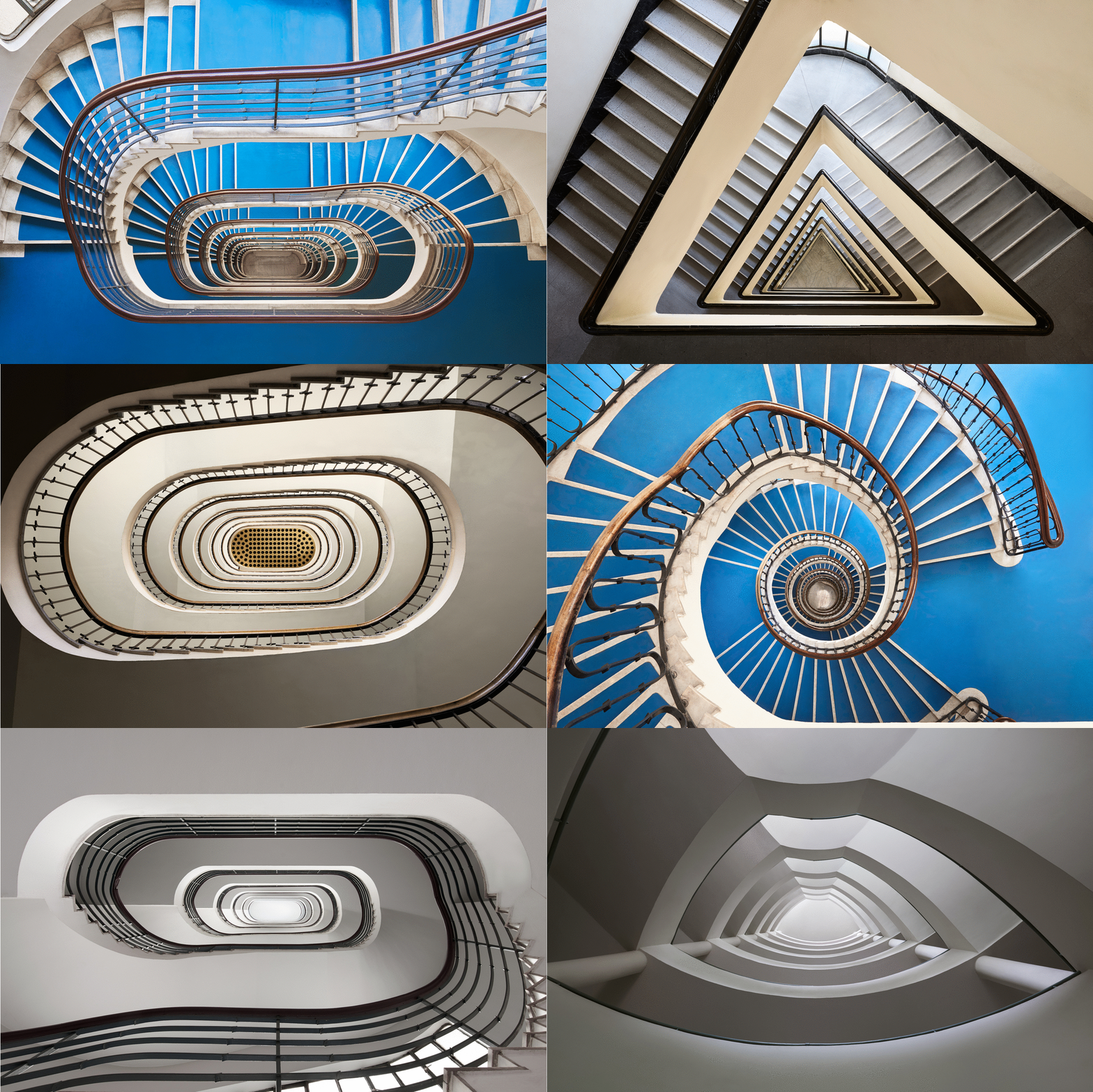
Fine arts and commercial photographer Balint Alovits has released Time Machine, his latest photo series documenting Art Deco and Bauhaus staircases throughout Budapest, Hungary.
Shown from the same central perspective, the photographs “create a new dimension by splitting space and time, staying within the visual limits of the project’s concept, while the perception of the architectural details evokes the idea of infinity.”
“I have always liked Art Deco and Bauhaus buildings,” said Alovits. “Whenever I step into one of these caracoles, I feel a certain pulling energy looking up from the bottom or down from the top. I wanted to collect and showcase all the different shapes and colors that these stairways feature.”
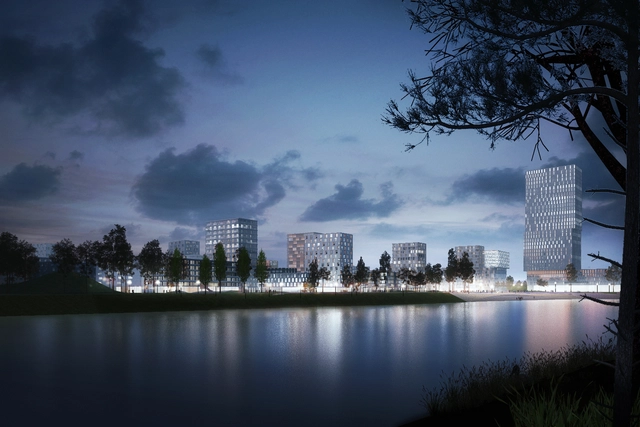
ADEPT Architects has won the commission to design a new masterplan for the Budapart neighborhood of Budapest, a project that will become the largest singular urban development in the city for nearly 30 years. Based on a distorted grid structure, the design will reference both historic and modern parts of the city, and will encompass 54 hectares of mixed-use space.
Located on the [‘Buda’] bank of the Danube River, the Budapart masterplan aims to create a green and human scaled neighborhood rather than just another new modern development. The fantastic location on the waterfront, the existing characteristic landscape qualities and the close vicinity to the central city are the main attractions that each generate huge potential to make the new neighborhood an epicenter of its own, described the architects in a recent press release.
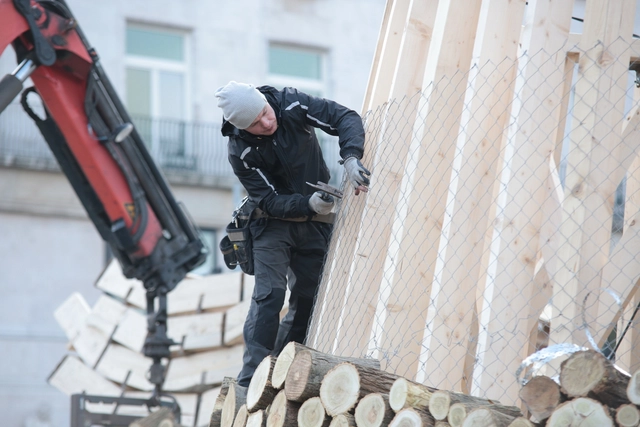
Hello Wood has continued its tradition of building socially responsive Christmas trees in European cities though its latest addition, the Tree of Arts, built in front of Budapest’s largest concert hall, Müpa, also known as the Palace of Arts.
Based on the idea that the spirit of Christmas should live beyond the holiday season and continue to symbolize community-building and sustainability into the New Year, the 11-meter tall tree made from lightboxes will be recycled into display units for the inside of the cultural venue in 2017.
Lightboxes in the installation feature the names of performances that will be visiting Budapest in the coming year, including the New York Philharmonic Orchestra, John McLaughlin, and Cameron Carpenter.
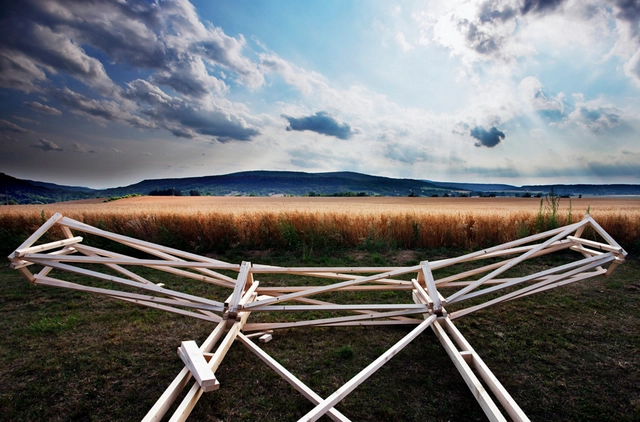
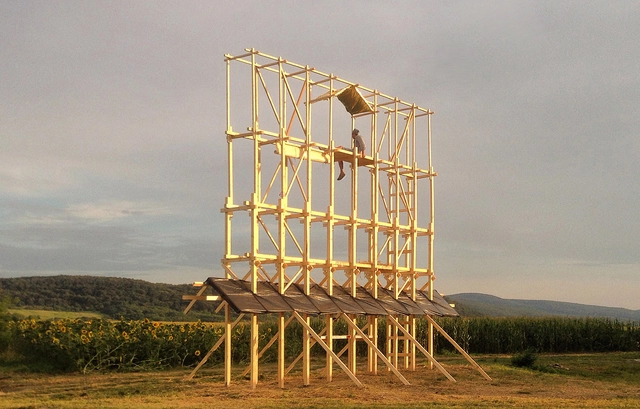
Cross-continental architecture practice KOSMOS Architects have revealed the full design intent for their HelloWood 2016 installation. The wooden structure, dubbed "Thread," subverts the conventional notion of the wall as a divider of space, reinventing it as a new zone of inclusivism and human engagement. Their entire design and construction process was guided by Maslow's hierarchy of human needs, leading to a structure that brings people together and fulfills them in different ways, level by level.
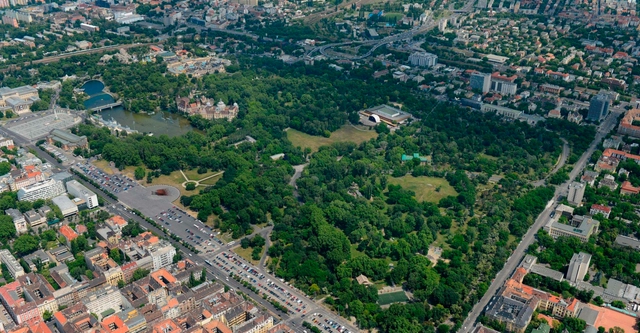
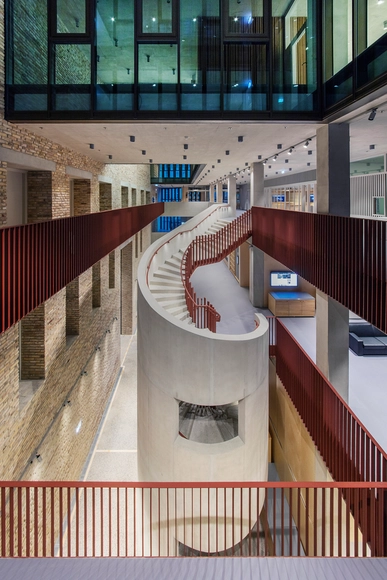
Napur Architect has won the competition to design a new building for the Museum of Ethnography in Budapest. On a site bordering Ötvenhatosok Square and adjacent to City Park, the building is one part of the Liget Budapest Project, aimed at renewing the civic space of the area with renovations to existing structures, rejuvenation of green spaces, and institutional additions. Besides the Ethnography Museum, City Park will be home to the House of Hungarian Music designed by Sou Fujimoto and a New National Gallery designed by SANAA.
Budapest-based Hello Wood has announced an open call for team-leaders to participate in its award-winning summer school from July 14-22, 2016. The eight day Project Village program focuses on envisioning a design for a “new village model,” and then on building the imagined projects. The 2015 program brought together academics and students from more than 30 countries and 25 universities. This year, Project Village is looking for experienced architects, designers and artists to join the team in western Hungary, only two hours away from the capital.
The theme for the 2016 program is “Settling: The Rituals of Arrival,” which will explore the ways communities make themselves feel at home. Participants will be asked to build “a place of arrival, permanence, and connection," exploring in their designs the architectural aspects of settling, what makes a place feel like home, and the roles of hosts and guests.
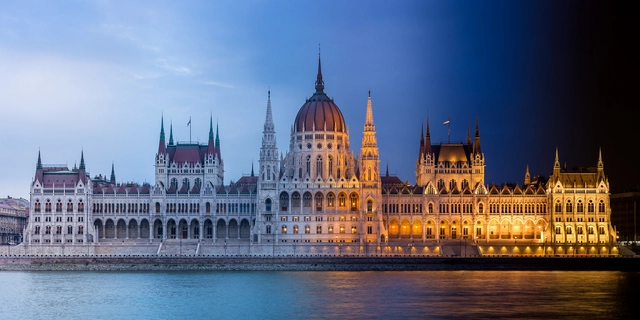
Buda... Pest... two characters separated by the Danube. Day... night... two atmospheres separated by an invisible thread. Budapest, "pearl of Danube", knows how to seduce at any hour, so why choose, when one can enjoy all its charms at the same time?
Exploring the role of lighting in architectural photography, French photographer Greg Florent created “Budapest Daynight” during a two-month stint in Hungary. Taking thousands of photographs, Florent created magical composite photos capturing architectural landmarks in-between the two opposing times of day. Accompanying his gallery of resulting work, he has also produced time-lapses of each of his subjects, illustrating the way that lighting affects the character of a building.
"For the first time since the foundation of the Museum of Ethnography that is, for over 140 years now, it has become possible to permanently place the museum in a building worthy for the collection, to be built specifically for this function. In addition, the construction of the new building of the Museum of Ethnography will solve another more than half a century problem: by relocating the institution, the Kúria (former Ministry of Justice) building, recently housing the museum, can regain its original function," says Liget Budapest.
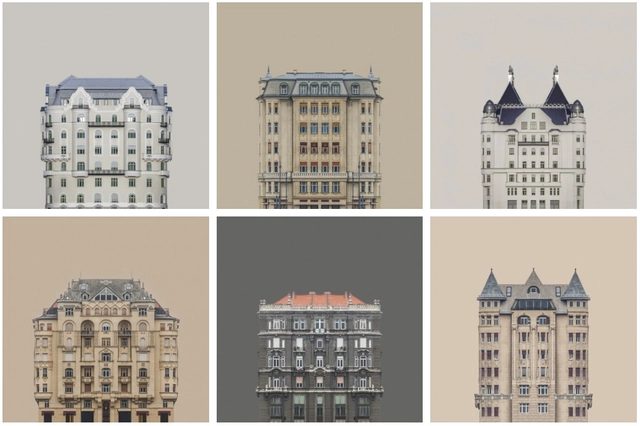
Budapest-born printmaker and photographer Zsolt Hlinka has created Urban Symmetry, a Wes Anderson reminiscent photo series depicting perfectly-symmetrical buildings on the banks of the Danube River. Using partial photos of the buildings, Hlinka creates fictitious compositions through reflections, resulting in new personalities and character in the portraits.
For the third consecutive year, Hello Wood—an international educational platform of design and architecture based in Hungary—have "rethought the Christmas Tree." Their three festive installations, in London, Manchester and Budapest, have been designed to live beyond the holiday season and will be recycled into new structures to help different causes in the New Year. "The role of architecture has changed a lot in the last few years," says Peter Pozsar, co-founder of Hello Wood. "Hello Wood represents this socially responsive architecture."



















.jpg?1464010172&format=webp&width=640&height=580)

.jpg?1464010004 "Courtesy of Napur Architect")
.jpg?1464010345 "Courtesy of Napur Architect")
.jpg?1464010198 "Courtesy of Napur Architect")
.jpg?1464010172)