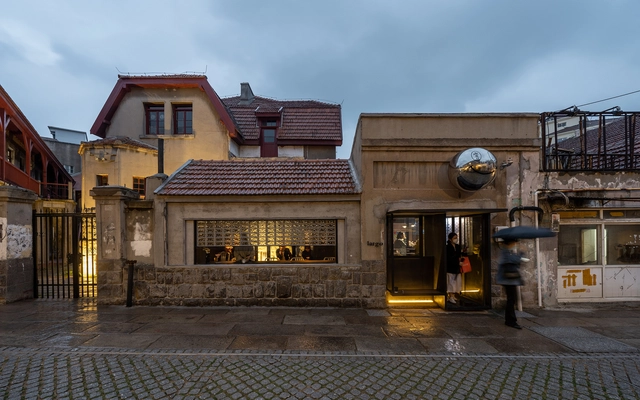
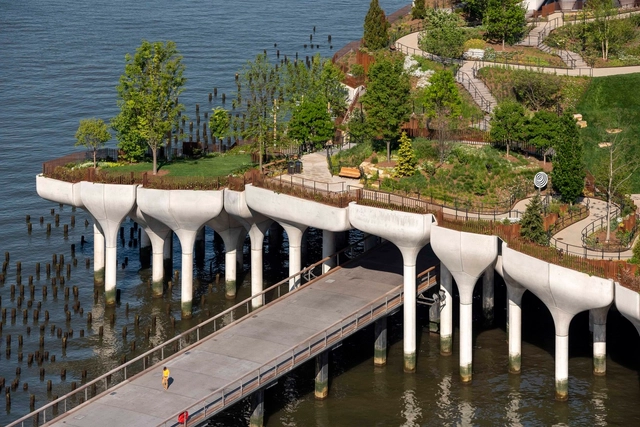
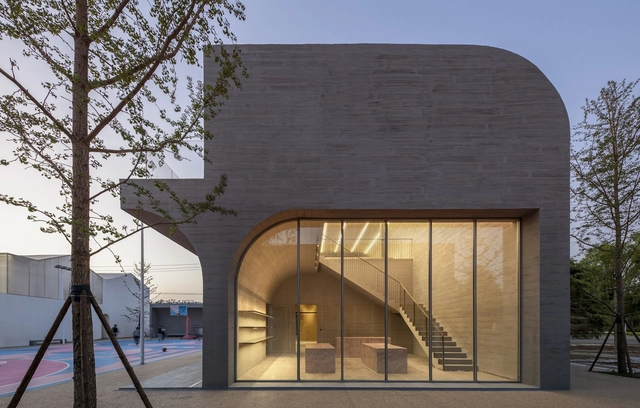
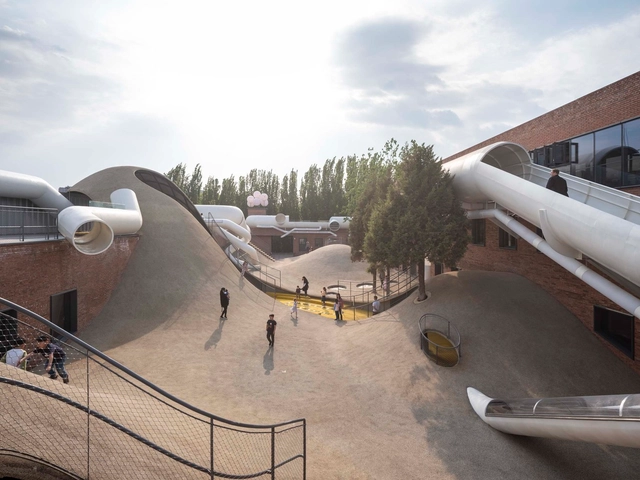
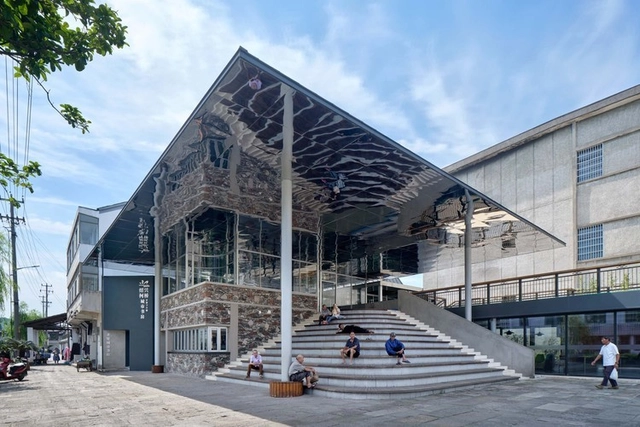
Democracy’s essence is the people's self-government and autonomy based on their own rights, and its characteristics are demonstrated through equality and participation. If democracy means a more equitable way of public life in architecture, then, this way of life is dependent on the homogenization of the building's spatial structure, with open, transparent, and functionally diverse public spaces. It is also possible to argue that the birth, maintenance, and demise of democracy all occurred in public space.
The democratic regime of Athens began in the sixth century B.C. The square became a meeting place, a symbol of architecture's democratic politics. Although people's access to assembly has become more widespread and convenient as technology has advanced, the existence of public space in the city remains critical, representing the spatial demands of citizens' public rights beyond the basic conditions of survival and serving an important spiritual function of expressing democracy. So, how architecture be democratic? How can we realize the public nature of architecture?
Western aesthetics is based on the mathematical analysis of an object's formal structure, using classical beauty laws such as balance, symmetry, and the golden mean. Eastern aesthetics differ in that, as it emphasizes intuitive experience, such as "white space" in traditional Chinese painting, through emotional communication with the "imagery" to produce a certain "Conception." The contrast between reality and emptiness allows the viewer's imagination and feelings to flourish, allowing them to realize "showing the breadth of heaven and earth even in a square inch place."
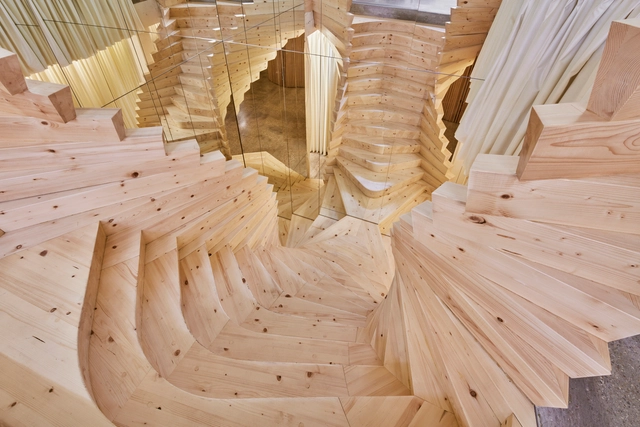
Stairs in architecture are oftentimes a design focal point- the heavyhandedness in creating something that moves us from one level to the next, up and down repeatedly, something so simple and familiar with a twist is what makes the experience of traversing a stair so unique. Our obsession with stairs and the level of illusion that they create in architecture perhaps stems from the way that they’re able to twist the optics and perceptions of space. We understand that they transport us in one direction or another, but can stairs ever be circular? Is it possible to go up and down for eternity?
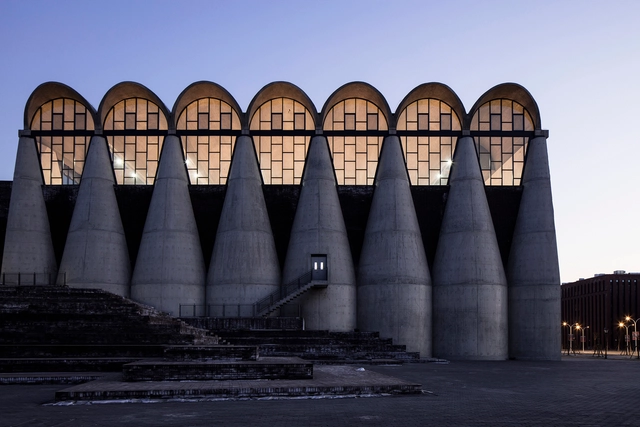
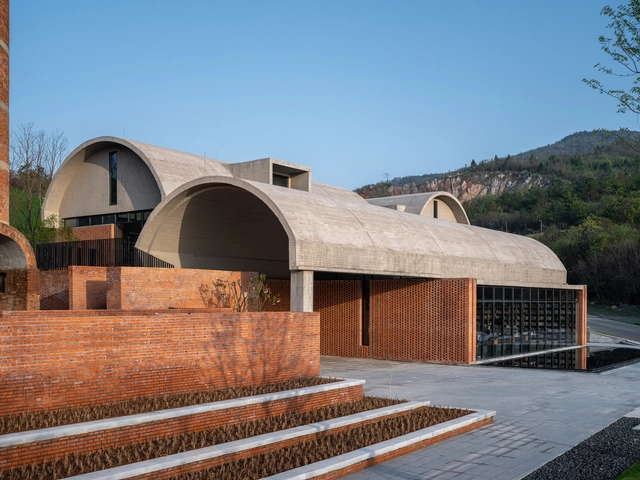
The oldest record of barrel vaults is estimated to date back to 4000 BC. These provided the spans in the Sumerian ziggurat at Nippur in Babylonia, built from fired bricks amalgamated with clay mortar. This type of vault was built as a continuous round arch and became a characteristic architectural element of Roman architecture, later used also in Renaissance architecture.
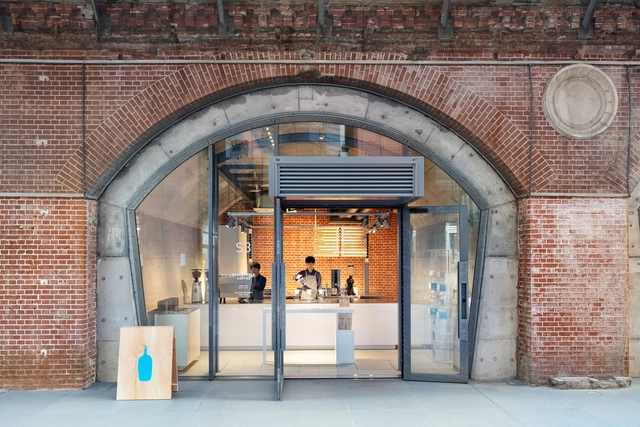
The interior design of a coffee shop can make-or-break an establishment. With an inviting design, you can transform drinking a simple cup of coffee into a wonderful experience. However, when you only have a few square meters and various machines and properties to distribute, finding an efficient configuration is not easy.
https://www.archdaily.com/896529/small-cafe-designs-20-aspirational-examples-in-plan-and-sectionClara Ott
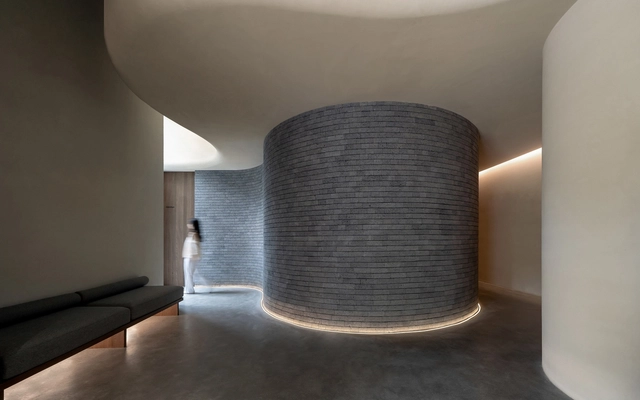
Take a second to imagine a building or a room. Chances are you are envisioning flat rectangular surfaces and straight lines. Whether it be walls, beams or windows, most architectural elements come in standard and extremely practical orthogonal shapes. However, the pandemic has shed light on designs that are not only functional, but also that improve our mood and well-being. In that sense, the power of curved, free-flowing surfaces is unmatched, which explains why they have been making a comeback as a modern design trend. Adopting beautiful nature-inspired shapes, organic curls and bends energize rooms and make users feel good. In fact, neuroscientists have shown that this affection is hard-wired into the brain; in a 2013 study, they found that participants were most likely to consider a space beautiful if it was curvilinear instead of rectilinear. In short, humans love curves.
More than 5000 new projects published throughout 2021 make ArchDaily the largest online architecture library in the world. ArchDaily Curatorial Team researches, contacts offices, prepares, and delivers the built projects in the world on a daily basis, with the objective of providing inspiration, knowledge, and tools to our users who take part in the creation of better built environments.
https://www.archdaily.com/974013/best-architectural-projects-of-2021Clara Ott
Cities we live in today have been built on principles designed decades ago, with prospects of ensuring that they are habitable by everyone. Throughout history, cities have been catalysts of economic growth, serving as focal points for businesses and migration. However, in the last decade, particularly during the last couple of years, the world has witnessed drastic reconfigurations in the way societies work, live, and commute.
Today’s urban fabric highlights two demographic patterns: rapid urbanization and large youth populations. Cities, although growing in scale, have in fact become younger, with nearly four billion of the world’s population under the age of 30 living in urban areas, and by 2030, UN-Habitat expects 60% of urban populations to be under the age of 18. So when it comes to urban planning and the future of cities, it is evident that the youth should be part of the conversation.








.jpg?1649939992&format=webp&width=230&height=230&crop=true)
.jpg?1649940082&format=webp&width=230&height=230&crop=true)
.jpg?1649940111&format=webp&width=230&height=230&crop=true)






_Maureen_M._Evans.jpg?1646840531&format=webp&width=230&height=230&crop=true)






__张超.jpg?1647175379&format=webp&width=230&height=230&crop=true)