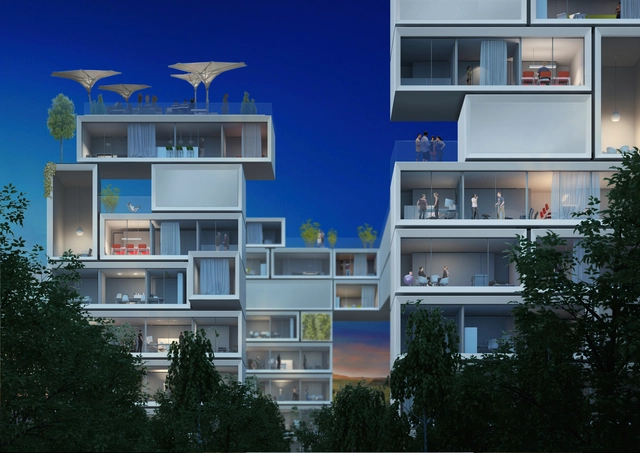
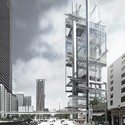
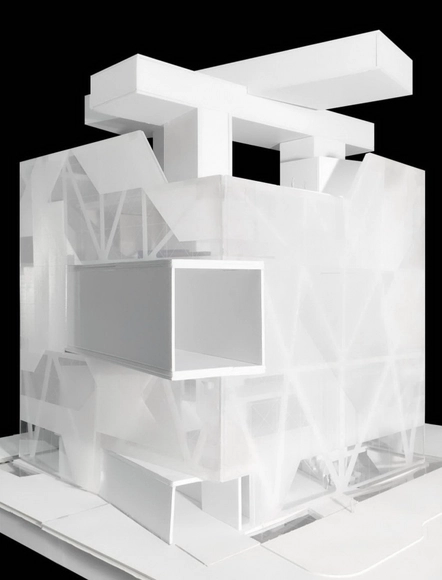
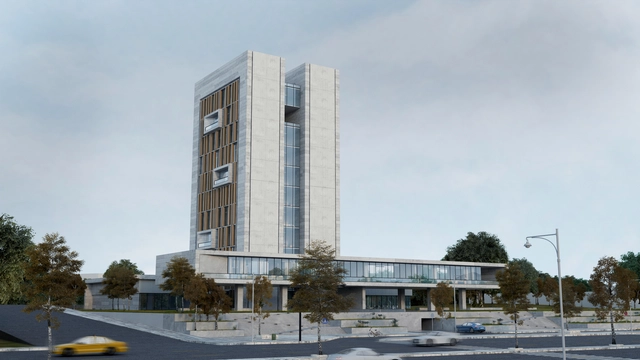
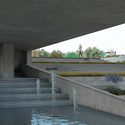
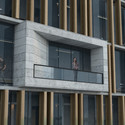
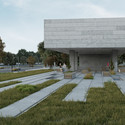
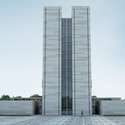
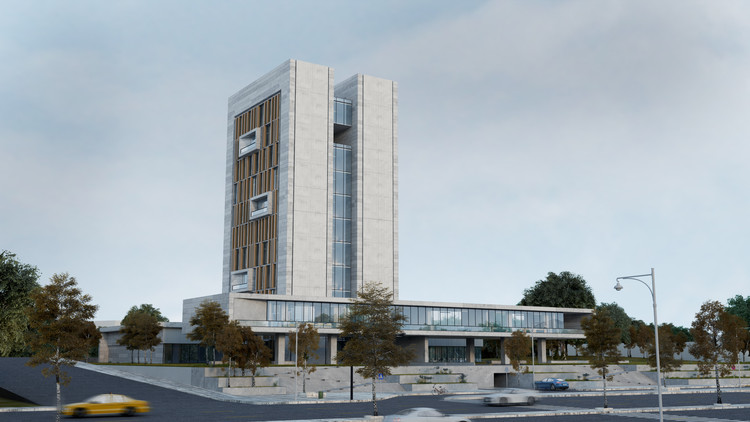
Located in the autonomous Iraqi state of Kurdistan, Vogue Architects have won a competition to construct a new building for the Kurdistan Engineers Union in Sulaymaniyah, Iraq. The mixed-use concrete and glass tower will serve as the new hub for the Engineers Union and will become home to several engineering firms, administrative offices, a fitness centre and public space. Designed to pay homage to the land, the tower was created on principles of holiness, honesty and respect for nature.
“We as a profession have to encourage young architects to understand that the technology they’re using is merely a tool. They have to understand how to build the building that they’re creating, but also understand that this place is going to affect somebody. So what can we do to make it a place that—in a sense—I want to be a part of, that I want to attach to?”
When it comes to sustainable architecture, the focus has historically been on designing buildings to reduce emissions. In recent years though, this focus has expanded to take into account the full life-cycle impact of a building and its components. But is this enough? In this article from ArchitectureBoston's Fall 2015 Issue, originally titled "Old is the new green," Jean Carroon FAIA and Ben Carlson argue that not only are most green buildings not designed with the full life-cycle of their materials in mind, but that even those which are they rely on a payback period that we simply can't afford. The solution? A dose of "radical common sense" in the form of preservation.
“Radical common sense” is the term a fellow preservation architect uses to describe a mindset that values repair over replacement. Why is this radical? Because, while reuse of water bottles and grocery bags is rapidly gaining ground, reuse of buildings and building components is not. And it’s not hard to see why: It is almost always less expensive and easier to replace a whole building and almost any of its elements — doors, windows, light fixtures — than to repair and reuse. Replacement also can offer measurable and consistent quality with product certifications and warranties not available for repaired items. Theoretically, a new building can ensure “high performance” and significantly reduce the environmental impact of building operations while creating healthier spaces. What’s not to like?
Maybe the old saying applies: If it sounds too good to be true, it probably is. We want and need “sustainability.” We want and need buildings, towns, and cities that are not bad for the environment nor the people who live and work in them. But is “new” the solution or the problem?
https://www.archdaily.com/775136/why-old-is-the-new-greenJean Carroon FAIA and Ben Carlson
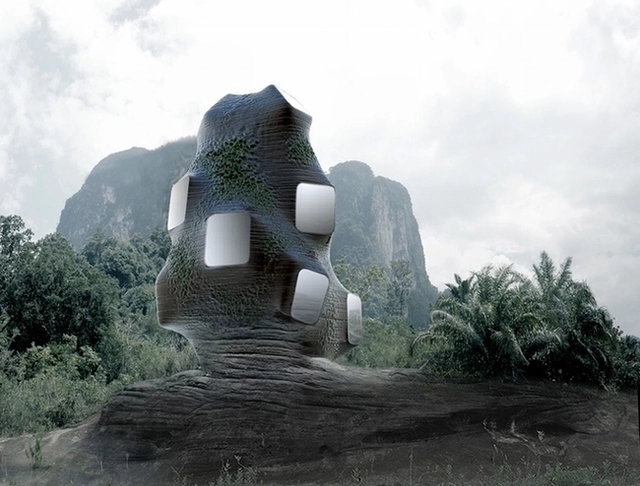
New-Territories/ M4 has launched a Kickstarter campaign to fund MMYST, a hybrid architecture project that combines a hotel with a manufactured habitat for Swiftlets, a bird native to Thailand. Located in Krabi, the building will be used almost exclusively by backers of the project and will be set for removal in 10 years. In order to be realized, the project requires $200,000 in funding before October 25, 2015. Read more about this experimental project after the break.
Architect and designer Neri Oxman, head of the Mediated Matter research group at MIT and developer of the “Material Ecology” approach, has given a TED Talk on design as the intersection of technology and biology. Oxman begins her talk by introducing the juxtaposition of left- and right-brain thinking in the design world, noting that her work seeks to marry the two by making design less about assembly of parts, and more about growth. Learn more about Oxman’s distinct work and views by watching the video above.
Coral Regeneration Platforms. Image Courtesy of Rosa Rogina
The island of Diego Garcia is sometimes called “Fantasy Island” due to its extreme remoteness. But for 5000 of its former inhabitants, who have been exiled due to a US naval base established on the island, life is less of a fantasy. In her graduate thesis at the Royal College of Art, Rosa Rogina explores how an architectural infrastructure could cause a shift in the balance of power crystallized within the politics of the island, enabling the resettlement of the displaced community and reversing the damage done to the environment of the atoll while under military control.
Pro-Form Architects has created Rolled Table, an information booth made of flexible plywood that challenges the standard form of a table. Created for the Water and Land Niigata Art Festival, which has been held every three years since 2009, Rolled Table displays guide books and pamphlets better than an average table due to its distinct curvature and lighting system.
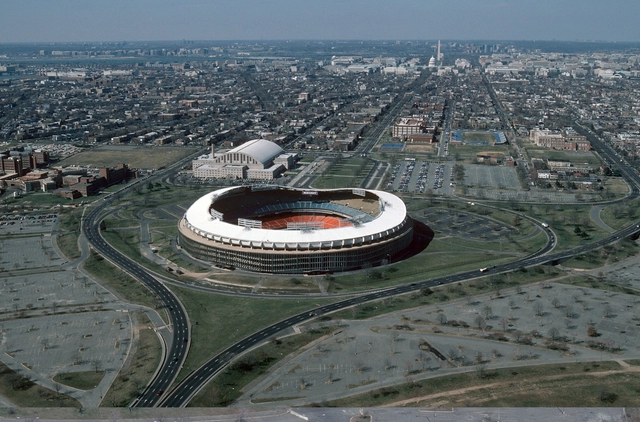
OMA has been selected to redevelop Washington DC's Robert F. Kennedy (RFK) Stadium campus. Lauded by the commissioners for their ability to activate public space, especially along waterfronts, OMA was also recently chosen alongside OLIN to design the city's 11th Street Bridge Park.
“One of the things we realized as we were analyzing the future use of RFK, after talking to a lot of potential users, is that there was no conceptual master plan that can be shared with the community once the ideas are put to paper,” said Max Brown, chairman Events DC - the organization spearheading the project. “We needed someone to help tell a story about what this place could be and options for use and how they’re located.”
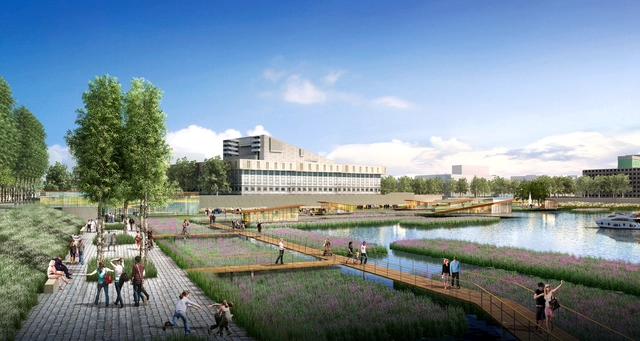
Russian-Chinese consortium Turenscape and MAP architects was announced as winners of a major competition to redevelop the Kaban lake system embankments in Kazan, Russia. Their winning concept, “Elastic band: The Immortal Treasure of Kazan” aims to establish a "continuous system of landscapes along the bank line, which will preserve the cultural and historical memory and become a basement for future stage-by-stage development."
"The water is turning into a real living treasure and heritage of Kazan," said the competition's organizer.
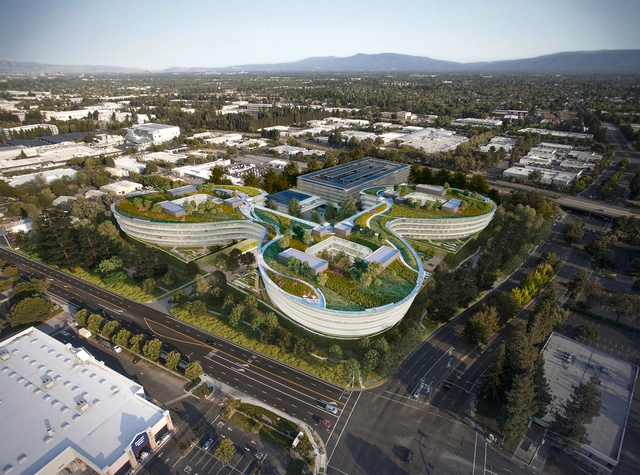
Plans for Apple's newest California "spaceship" has been unveiled. Named after its bordering streets, Central & Wolfe hopes to transform a 1970s office park in Sunnyvale into a "futuristic office campus." The 19 acre site, located just five miles from Apple's main Cupertino campus (currently underway), was designed by HOK and is currently under review.
If built, it will replace nine aging buildings with a clover-like design comprised of three interconnected structures - each rising six stories.
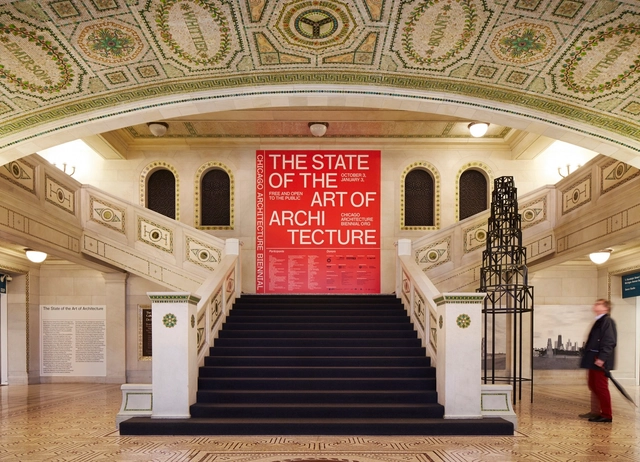
Last week, the Chicago Architecture Biennial opened to over 31,000 visitors and much fanfare, and for good reason - it is the largest architecture event on the continent since the 1893 World's Columbian Exposition, featuring over one hundred exhibitors from over thirty countries. With a theme as ambiguous as "The State of the Art of Architecture," and with the hope of making the biennial, according to directors Joseph Grima and Sarah Herda, "a space for debate, dialog and the production of new ideas," the event was sure to generate equally wide-ranging opinions. Read on to find out what the critics had to say about the Biennial.
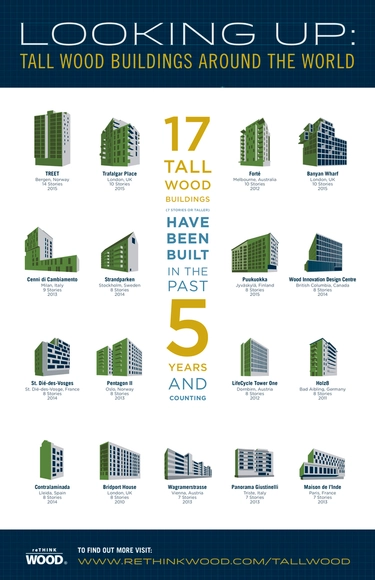
This fall, reThink Wood is heading to Washington D.C. for Greenbuild - the world's largest conference and expo dedicated to green building. If you haven’t registered already, this is your chance to win a freepass to the conference and participate in educational workshops celebrating sustainable architecture.
reThink Wood is offering a full pre-paid pass to the 2015 Greenbuild Conference & Expo ($1,050 value) to one lucky ArchDaily reader. The winner will be invited to meet with architects onsite that are passionate about sustainable design with wood in a variety of structures – including tall wood buildings.
To be entered to win, simply fill in your details in the form at the bottom of this article before Monday, October 19 at 12:00PM EST.
Architect and engineer, Werner Sobek, is urging cities to become emissions-free by the year 2020 – for all cars and buildings to be entirely powered by renewable energy. Sobek shared this goal during his acceptance speech of the Fritz Leonhardt Prize in July 2015, saying that this goal is achievable, but only with the full support of automotive and construction industries. Although seven leading, industrialized nations have agreed to de-carbonization by the end of the century, Sobek believes that that would be too late. Read more about Werner Sobek’s vision of the future after the break.
For this edition of The Urbanist, Monocle 24's weekly "guide to making better cities," Tom Edwards asks: if you want to plan a city, where do you begin? This episode investigates a number of city-wide gestures which can contribute to a better urban environment, from the importance of a well-designed waterfront to what it means to have a strong 'digital strategy'.
"An avid yachtsman," Frank Gehry has designed his first yacht. As Esquire reports, the traditional larch wood sailboat boasts titanium and red accents with windows clad in warped lattice work. "Foggy," as it's named (an acronym for Frank Owen Gehry), was designed for Gehry's friend and developer Richard Cohen. Gehry collaborated with naval architect Germán Frers, who was charged with keeping Gehry's design practical. "Don't let me go too crazy," Gehry told Frers. "The boat has to work."
Here's a story you might recognize: you save up and book a week's holiday for a long-anticipated pilgrimage to your favorite architectural landmark. Finally the day arrives and you take your best camera, with an empty memory card, to make sure that nothing prevents you from getting that one shot - that perfect shot - which you will treasure forever. But when you arrive, that perfect shot is blocked by hundreds of oblivious tourists, wandering around, pointing, or perhaps even doing their best Power Rangers impersonation. You're left with two options: either abandon your souvenir, or spend hours Photoshopping intruders out of your photo.
Soon though, this kind of inconvenience could be a thing of the past. As reported by The Verge, at their MAX conference hosted last night, Adobe demonstrated an experimental project for smartphones known as "Monument Mode" that can remove tourists from a photograph in a few minutes on site, rather than a few hours back home.
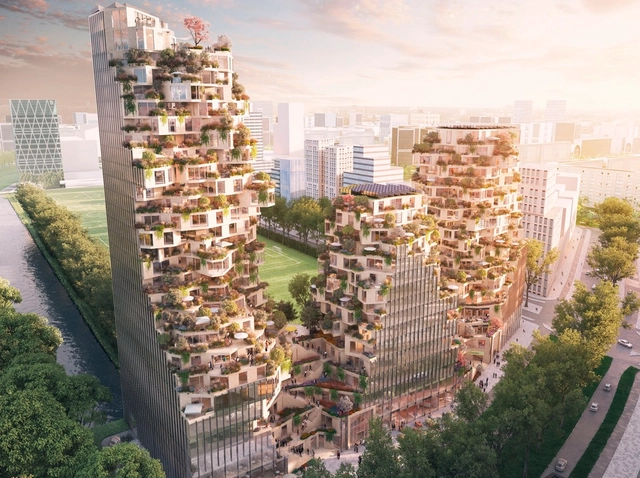
The City of Amsterdam has selected MVRDV and OVG Real Estate to realize a new mixed use development in its Zuidas Business District - "P15 Ravel Plaza." Chosen through an international competition, the design calls for three asymmetrical towers grounded by office and retail, topped with housing and intertwined by an expansive public green space that wraps itself in and around the building.
"This plan effectively increases the attractiveness of Zuidas," said Klaas de Boer, director of Zuidas, Amsterdam City Council.
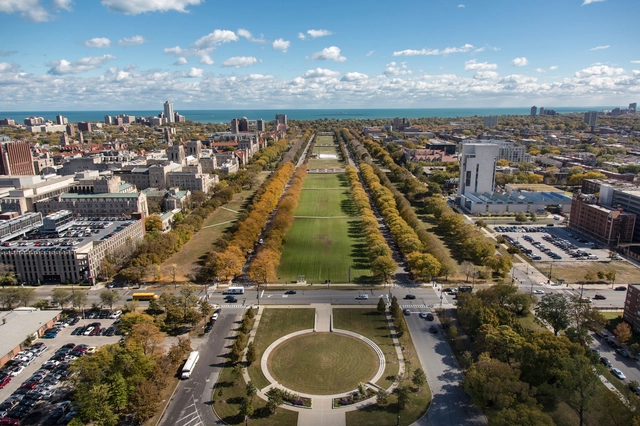
The University of Chicago has selected Diller Scofidio + Renfro (DS+R) to design their David M. Rubenstein Forum, a new facility to host conferences, workshops, lectures, ceremonies and other gatherings. Planned for the University’s Campus South, on the southeast corner of Woodlawn Avenue and 60th Street, the Forum will provide a mix of informal and formal meeting spaces that encourage an "open exchange of ideas."
“As our first building in Chicago, the Rubenstein Forum presents a unique challenge: to imagine a contemporary place of discourse for all of the university’s constituent departments and institutes as well as invited scholars and dignitaries from around the world,” said DS+R founding partner Elizabeth Diller.
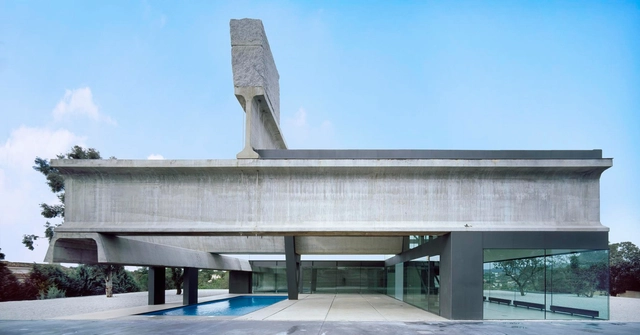
Founded in 2000 by Antón García-Abril and Débora Mesa, Ensamble Studio represents that rare and highly sought-after ideal of 21st century architecture: a firm whose work is as intellectually rigorous as it is visceral and viral, with work that is equally at home in both the 2010 Venice Biennale and on the popular website Viralnova. In this interview - the first installment in his column for ArchDaily "City of Ideas" - Vladimir Belogolovsky visits the studio's founders at their unconventional home, the Hemeroscopium House in Madrid, to talk about their experimental approach to design and their conception of the city of the future.
What is the state of architecture today? What motivates different architects from around the world to improve the conditions of the planet's inhabitants? If you find yourself in the City of Chicago in the next few months, you will be submerged in a discussion of what architecture is, and what it can and should be in the future.
The ArchDaily team spent the end of last week at the opening of the Chicago Architecture Biennial, an anticipated celebration of architecture at a scale previously unseen in North America. Supported in large part by the city of Chicago itself, Mayor Rahm Emanuel expressed that he wanted his city "to be dead center" in a conversation about how architecture can positively impact cities around the world. In response, curators Joseph Grima and Sarah Herda reviewed the work of over 500 architects worldwide and selected over 100 architects from more than 30 countries to "demonstrate that architecture matters at any scale."
Under the title "The State of the Art of Architecture," Grima and Herda looked to the architects themselves to reveal not one theme in particular, but to highlight the built forms, strategies and speculations that emphasize the "agency of the architect." Spread over seven venues (The Chicago Cultural Center, Millennium Park, Stony Island Arts Bank, Graham Foundation, 72 E. Randolph, Water Tower Gallery and IIT), world-renowned, well-known architects exhibit projects alongside up-and-coming instigators. Some of the installations are serious, others are more light-hearted and provocative; on the whole, however, they provide an inviting global snapshot of the challenges facing architecture production today.
https://www.archdaily.com/774876/15-must-see-installations-at-the-chicago-architecture-biennialAD Editorial Team
Participating in the What Can Design Do conference in Amsterdam, Ole Scheeren took time, along with several other creators, to discuss the impact of the working environment. Playfully dubbed, “Pod Sessions,” each talk takes place in De Vorm’s contemporary Pod chair, the PET plastic improving acoustics and signature Dutch felt providing comfort. In his Pod Session, Ole Scheeren, founder of Buro OS and lead designer on the CCTV Building in China, talks about the nature of a transitional workplace, the importance of collaboration, offices as a creative tool and the necessity of having a personal presence in a project. Having participated in projects across the world, Scheeren frequently moves to the site of his latest projects, as was the case with the CCTV Building.
With a week to go until the announcement of the 2015 RIBA Stirling Prize, we're interested to see which project ArchDaily readers would place at the top spot. Six projects are vying for this year's prestigious award, which was won last year by Haworth Tompkins'Everyman Theatre in Liverpool. Following a rigourous system of regional awards (all of which you can see on ArchDaily), the shortlist has been picked from a handful of nationally award-winning projects. The winning scheme will be the one which, in the eyes of the jury, "has made the greatest contribution to British architecture over the past year."
You can see each project in more detail and read the judges' citations here.
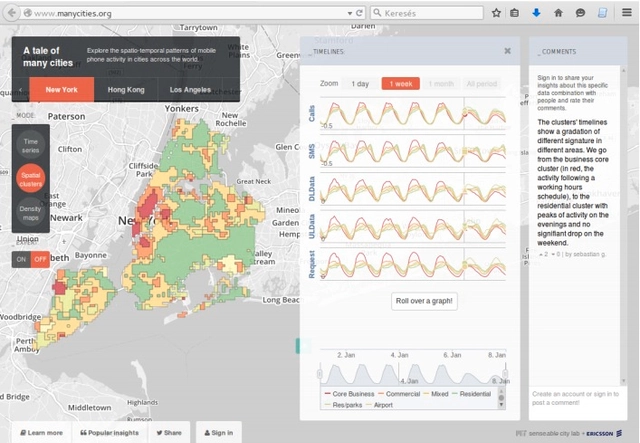
The SENSEable City Laboratory at MIT has developed a new tool with Ericsson to better understand human behavior. "ManyCities" is a new website that "explores the spatio-temporal patterns of mobile phone activity in cities across the world," including London, New York, Los Angeles and Hong Kong. Taking complex data and organizing it in a intuitive way, the application allows users to quickly visualize patterns of human movement within the urban context down to the neighborhood scale. You can imagine how useful a tool like this can be for urban planners or even daily commuters, especially once real time analytics come into play. Take a look at ManyCities yourself, here.
Today in Moscow, Asymptote Architecture unveiled plans for the new Hermitage Modern Contemporary, alongside a 150-meter tower planned for ZiL - the city's oldest industrial area and former Soviet automotive factory. The State Hermitage Museum's newest outpost, the 15-story satellite facility was said to be inspired by El Lissitzky's "Proun" painting, which informed the building's "terraced interior."
“With so much museum work over the years, we’ve dress-rehearsed for the Hermitage,” Hani Rashid of Asymptote told the New York Times back in July. “We’ve done a lot of thinking about how art might be seen in the future, about how the museum building itself can provoke artistic responses.”




.jpg?1444011708&format=webp&width=640&height=580)