

Transform your vision into a reality and optimize your architectural drawings with Lumion
Editor's Choice
How to Create Custom Architectural Drawings
| Sponsored Content
https://www.archdaily.comhttps://www.archdaily.com/catalog/us/products/36782/how-to-create-custom-architectural-drawings-lumion
Why China's Copy-Cats Are Good For Architecture

When we see another Eiffel Tower, idyllic English village, or, most recently, a Zaha Hadid shopping mall, copied in China, our first reaction is to scoff. Heartily. To suggest that it is - once again - evidence of China’s knock-off culture, its disregard for uniqueness, its staggering lack of innovation.
Even I, reporting on the Chinese copy of the Austrian town of Halstatt, fell into the rhetorical trap: “The Chinese are well-known for their penchant for knock-offs, be it brand-name handbags or high-tech gadgets, but this time, they’ve taken it to a whole other level.” Moreover, as Guy Horton has noted, we are keen to describe designers in the West as “emulating,” “imitating,” and “borrowing”; those in the East are almost always “pirating.”
However, when we allow ourselves, even unconsciously, to settle into the role of superior scoffer, we do not just the Chinese, but ourselves, a disservice: first, we fail to recognize the fascinating complexity that lies behind China’s built experimentation with Western ideals; and, what’s more, we fail to look in the mirror at ourselves, and trouble our own unquestioned values and supposed superiority.
In the next few paragraphs, I’d like to do both.
https://www.archdaily.com/357293/why-china-s-copy-cats-are-good-for-architectureVanessa Quirk
The Debate Over Making It Right in the Lower Ninth Ward
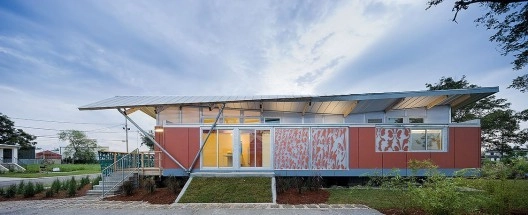
Ever since the New Republic published Lydia DePillis's piece entitled "If you Rebuild it, They Might Not Come" - a criticism of the progress of Brad Pitt's Make It Right Foundation - numerous blogs and journals have been in a uproar, defending Make It Right's efforts at rebuilding the vastly devastated Lower Ninth Ward and presenting a much more forgiving perspective on the progress of the neighborhood since the engineering disaster that exacerbated the effects of Hurricane Katrina in 2005. To date, 86 LEED Platinum homes have been designed and constructed by world-renowned architects including Frank Gehry and Morphosis, at a cost of approximately $24 million. Make It Right has promised to build up to 150 such homes, but DePillis's article points out how amenities in the neighborhood are low and how the number of residents returning to the neighborhood is dwindling. Make It Right has made a commitment and the debate that ensues questions whether it is going far enough in delivering its promise to rebuilding community.
Find out more after the break.
https://www.archdaily.com/356483/the-debate-over-making-it-right-in-the-lower-ninth-wardIrina Vinnitskaya
An Interview with Rocio Romero, Pre-Fab Pioneer

It's not everyday that Peter Goldberger, former New York Times architecture critic, says an architect's work stands out for its "clarity, simplicity, and grace.”
And it's even rarer that Goldberger would choose those words - not for a new museum, chapel, or university building - but for a small pre-fabricated house. However, the pre-fab homes of Rocio Romero are lightyears away from the Sears catalog homes of yore, and more than deserving of the high praise they've garnered.
Romero has been making headlines ever since she introduced the LV house, her line of affordable, modern pre-fabricated homes, over ten years ago. With pre-fab becoming everyday more mainstream, we decided to sit down with Romero to find out what inspired her to enter in the world of pre-fab, what sets her designs apart (and why they have garnered such a fervent following), and what she sees as the future of pre-fabricated design.
Read the interview with Rocio Romero, after the break...





https://www.archdaily.com/356032/pre-fab-s-reigning-queen-rocio-romeroVanessa Quirk
Celebrate National Architecture Week with the AIA

From April 7th through the 13th, the American Institute of Architects (AIA) will be hosting National Architecture Week in an effort to increase public awareness on the role architects play as a force for positive change in our communities and to elevate the public’s appreciation of design.
Similar to previous years’ observances, National Architecture Week will be virtual and composed of daily pinboards on the social networking site, Pinterest, and an Architecture Is Awesome contest on Instagram. The intent is to use the two social networking platforms to showcase architects’ good designs and encourage architecture fans to share their thoughts and engage with like-minded professionals during the week.
Five Ways You can Take Part in National Architecture Week:
https://www.archdaily.com/356455/celebrate-national-architecture-week-with-the-aia-2Karissa Rosenfield
2012 Worldwide City Rankings Reveal Important Regional Trends
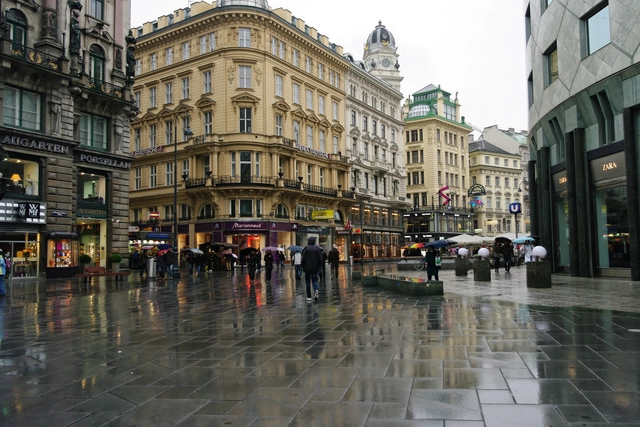
Mercer, a consulting leader that helps other organizations around the world advance the health, wealth and performance of their employees, releases a survey annually that helps multinational companies and other organizations compensate employees when placing them on international assignments. Their survey for the year 2012 evaluates over 221 cities around the world on their quality of living with New York City as the base city and highlights several trends that can add onto what we as designers and urban planners believe makes a city successful and livable.
Read on for the 2012 results.
https://www.archdaily.com/356449/2012-worldwide-city-rankings-reveal-important-regional-trendsBarbara Porada
The New 'Context' in Architecture: Learning From Lebanon
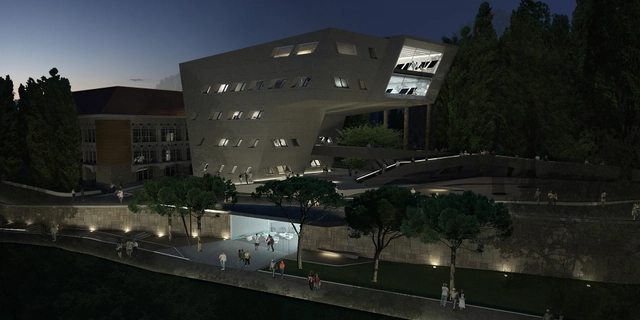
Context in architecture has become a subject bloated with discussion and debate over the years. And, as a matter of fact, it has come to matter very little in its formal and typological sense. Take, for instance, the fluid forms that compose Zaha Hadid’s hundreds of projects around the world, or Frank Gehry’s exploding compositions seen from South America to the unmistakable Guggenheim in Bilbao. The form architecture takes in these cases, and countless others, is in itself a deliberate disregard towards context in its literal sense.
But is this disregard for context a mistake? Observers would often say so, though I would like to disagree. It has become frequent that projects like these, largely formal and not politely accommodating their historic surrounding, actually take greater interest in social urban issues that have a direct impact on the city dwellers. Quite simply, successful architecture today is one that serves society culturally and practically, addressing tangible problems of 21st century cities and dealing with context in a solution-oriented manner, going beyond aesthetics (whose value is only temporary) and into future-invested urbanism. Case-in-point? My hometown: Beirut, Lebanon.





https://www.archdaily.com/355579/the-new-context-in-architecture-learning-from-lebanonRamzi Naja
Foster’s Apple Headquarters Exceeds Budget by $2 Billion

The estimated cost of Apple’s Cupertino City headquarters has escalated from an already hefty price of $3 billion to $5 billion (more than $1,500 per square foot), reportedly pushing back the original completion date to 2016. According to Bloomberg, Apple is working with lead architect Foster & Partners to shave $1 billion from the “ballooning budget”. Most of the cost is seemly due to Steve Job’s “sky-high requirements for fit and finish”, as the tech legend called for the 2.8 million square foot, circular monolith to be clad 40-foot panes of German concave glass, along with its four-story office spaces be lined with museum-quality terrazzo floors and capped with polished concrete ceilings.
Although lambasted for his ambitious plans and “doughnut-shaped” design, Steve Jobs wanted to create a masterpiece that looked as good as it functioned, just like his products. During a 2011 presentation to the Cupertino City Council, Jobs stated, “This is not the cheapest way to build something... there is not a straight piece of glass in this building.” He continued, “We have a shot... at building the best office building in the world. I really do think that architecture students will come here to see it.”
More after the break...
https://www.archdaily.com/355912/foster-s-apple-headquarters-exceeds-budget-by-2-billionKarissa Rosenfield
Robert Venturi and Rem Koolhaas Side with Denise Scott Brown on Pritzker Debate
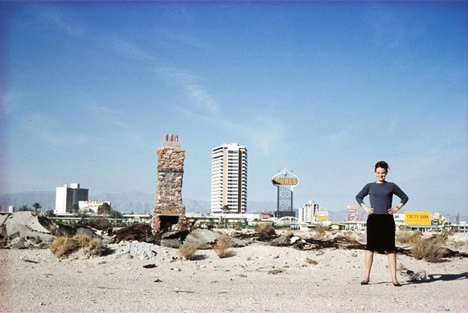
Robert Venturi has joined nearly 4,000 advocates in the call to retrospectively acknowledge Denise Scott Brown as a joint Pritzker Prize laureate, stating: “Denise Scott Brown is my inspiring and equal partner.”
His support was then quickly followed by Rem Koolhaas, who stated: “I totally support this action. The fact that one of the most creative and productive partnerships we have ever seen in architecture was separated rather than celebrated by a prize has been an embarrassing injustice which it would be great to undo.”
More updates after the break...
https://www.archdaily.com/355253/robert-venturi-and-rem-koolhaas-side-with-denise-scott-brown-on-pritzker-debateKarissa Rosenfield
Can Architecture Make Us More Creative?

What do MIT’s Building 20, the Ancient Greek Agora, 18th Century British teahouses, and early 20th century Parisian cafés have in common?
They were some of the most creative spaces in the world.
People who gathered there would interact. People, such as Socrates or Chomsky or Edison, exchanged ideas, argued about morals, and discussed technologies. They participated in an informal discourse driven by passionate involvement.
And these places, although for different reasons, fostered interaction by bringing people together and giving them a place to talk. As Jonah Lehrer put it, “the most creative spaces are those which hurl us together. It is the human friction that makes the sparks.”
The question, then, is how can contemporary architecture foster the same kind of creativity?
To learn more about architecture and its role in creativity and learning, keep reading after the break.
https://www.archdaily.com/353496/can-architecture-make-us-more-creativeJonathan C. Molloy
Four Architects Enlisted to Reimagine Penn Station
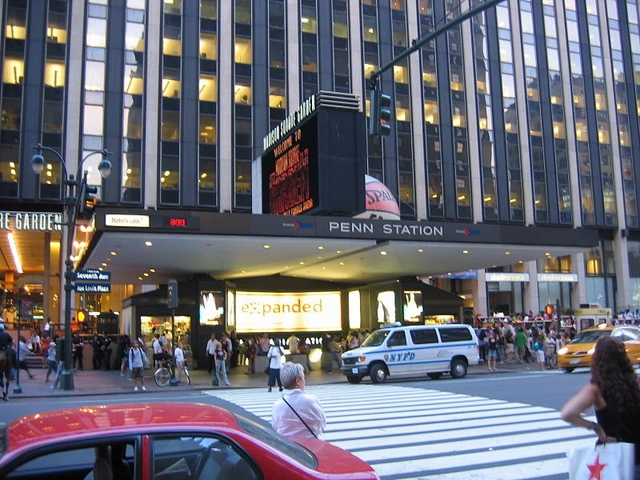
In an effort to “unlock people’s imaginations” about Penn Station and Madison Square Garden, the Municipal Art Society (MAS) of New York has challenged Santiago Calatrava, Diller Scofidio + Renfro, SHoP Architects and SOM to propose four new visions that exemplify the potential of the highly disregarded area.
The challenge comes amidst a heated debate on whether or not the city should restrict Madison Square’s recently expired special permit to 10 years, rather than in perpetuity as the arena’s owners - the Dolan family - has requested. This would allow time for the city to “get it right” and come up with a viable solution for the arena and station that would not only “improve the safety and quality of life for millions of people but also benefit the economy”. Think Kings Cross in London. With a thoughtful mix of public and private investments, the crime-ridden transfor station was transformed into a thriving cultural destination.
More after the break...
https://www.archdaily.com/354761/four-architects-enlisted-to-reimagine-penn-stationKarissa Rosenfield
Chicago On-Track To Break Ground On Elevated Parkway

Chicago is set to be the next U.S. city to park-ify on one of its abandoned rail-lines. First proposed back in 1997, the 2.7 mile, 13-acre Bloomingdale Trail and Park is proposed for a stretch of abandoned railway trestle dating from 1910, which has been lying unused since the turn of the century. And, even though it is already being compared to New-York's High Line, the planners are adamant that the park will be an entirely different animal to its New York cousin.
Read more about Chicago's unique proposal after the break...
https://www.archdaily.com/354677/chicago-on-track-to-break-ground-on-elevated-parkwayNicky Rackard
4 Lessons the UK Should Take from Denmark
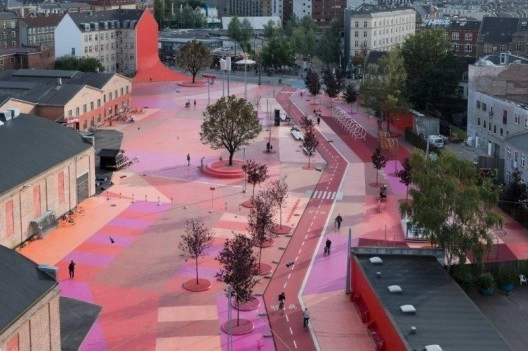
Last week the UK's Culture Minister Ed Vaizey announced that he was commissioning a review of the country's architecture policy, to be led by Sir Terry Farrell along with a number of high profile advisors, including Thomas Heatherwick, Alison Brooks and Alain de Botton. According to Vaizey, the review, expected to be complete by the end of the year, "will be a rallying point for the profession."
In his article in The Guardian, Olly Wainwright rather hopefully questioned: "might this year-long study result in an innovative new piece of legislative guidance – perhaps along the lines of Denmark's architecture policy, introduced in 2007?" While Wainwright somewhat flatly concludes, "somehow, that seems unlikely," there's no doubt that the UK could only stand to gain from learning from Denmark's innovative policy.
So what lessons could the UK (and the world) learn from the Danes? Read on after the break...
https://www.archdaily.com/353578/4-lessons-the-uk-should-take-from-denmarkRory Stott
Without Architects, Smart Cities Just Aren't Smart

Arguably the biggest buzzword in urbanism right now is the 'Smart City'. The idea, although certainly inclusive of eco-friendly practices, has even replaced “sustainability” as the major intent of cities planning for positive future development. Smart City thinking has been used successfully in countries as diverse as Brazil, the US, the UAE, South Korea, and Scotland (Glasgow just won a £24million grant to pioneer new schemes throughout the city).
But what exactly are Smart Cities? What benefit do they bring us? And, more importantly, how can we best implement them to secure our future?
The answer, in my opinion, lies in the hands of architects.
More on the potential of Smart Cities after the break...
https://www.archdaily.com/353281/without-architects-smart-cities-just-aren-t-smartRory Stott
Pritzker Responds To Denise Scott Brown Controversy

An intense gender debate has been making headlines after Denise Scott Brown called for Pritzker to “salute the notion of joint creativity” and retrospectively acknowledge her role in Robert Venturi’s 1991 Pritzker Prize during an AJ Women in Architecture luncheon in late March. Since, nearly 2,000 advocates have passionately rallied in Brown’s support by signing an online petition created by Harvard’s GSD Woman in Design Group. Among the signatures include architects Zaha Hadid, Farshid Moussavi and Hani Rashid, along with MoMA senior curator of architecture and design Paola Antonelli, architecture photographer Iwan Baan, Rice School of Architecture dean Sarah Whiting, and Berkeley College of Environmental Design dean Jennifer Wolch.
Responding to the outrage, Martha Thorne, executive director of Pritzker Prize, promised to “refer this important matter to the current jury at their next meeting”, respectfully pointing out that this presents an “unusual situation” considering each Laureate is chosen annually by a panel of independent jurors who change over the years.
https://www.archdaily.com/353219/pritzker-responds-to-denise-scott-brown-controversyKarissa Rosenfield
Why Architects Must Lead on Sustainable Design
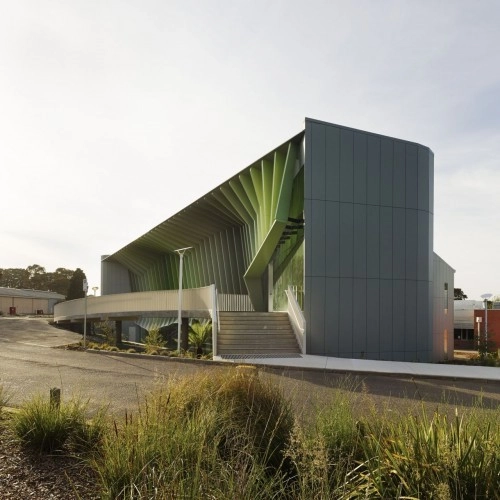
This article, which originally appeared on GreenBiz, is by Lance Hosey, the chief sustainability officer of the global design leader RTKL.
Sustainability leader Hunter Lovins once called the building industry "dynamically conservative — it works hard to stay in the same place."
But old habits cannot fully address new challenges. According to 350.org, fossil fuel corporations currently have in their reserves five times the amount of carbon that, if burned too quickly, may raise atmospheric temperatures to a catastrophic level where Hurricane Sandy-scale storms could become the norm. Quicker, deeper progress is imperative.
Architecture is an essential arena for sustainable innovation. Buildings represent about half the annual energy and emissions in the U.S. and three-quarters of its electricity. With the built environment growing — the U.S. building stock increases by about 3 billion square feet every year — architects have a historic opportunity to transform its impact for the better.
Keep reading to find out the 6 Steps architects can take to transform the profession, after the break...
https://www.archdaily.com/351167/why-architects-must-lead-on-sustainable-designLance Hosey
FBI's Brutalist Hoover Building Faces Serious Makeover

“Originally seen to reflect the democratic attributes of a powerful civic expression - authenticity, honesty, directness, strength - the forceful nature of Brutalist aesthetics eventually came to signify precisely the opposite: hostility, coldness, inhumanity. [...] Separated from its original context and reduced in meaning, Brutalism became an all-too-easy pejorative, a term that suggests these buildings were designed with bad intentions.” - “BRUTAL”/“HEROIC” by Michael Kubo, Chris Grimley and Mark Pasnik
Brutalism, an architectural movement that peaked in the 1960's, inspired the development of countless governmental buildings in Washington DC as well as across the world. Though Brutalism's original intentions may have been good, many believe that the actual manifestation of these buildings was not and consider them to be little more than an eyesore on the District's landscape. One such concrete structure, the FBI's J. Hoover Building, is currently facing possible redevelopment as the government has decided to relocate FBI headquarters and given the private sector the rare opportunity to transform this so-called "monolith" into a new kind of monument.
More on the Hoover Building after the break...
https://www.archdaily.com/352719/fbi-s-brutalist-hoover-building-faces-serious-makeoverBarbara Porada
Architecture by Robots, For Humanity
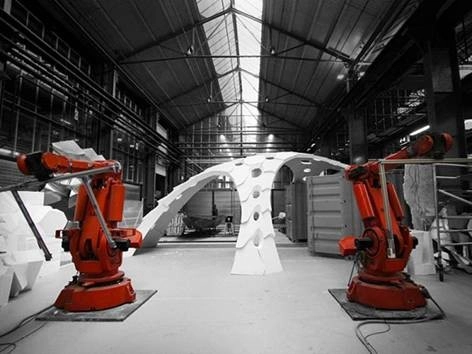
Architecture is quickly adopting the popular technology of robots. Although it is slightly hard to define what “robot” really means, for architecture, it tends to refer to anything from robot arms to CNC mills to 3D printers. Basically, they are programmable, mechanical, and automated instruments that assist in processes of digital fabrication.
So, what might robots mean for architecture? A more precise architecture which could contribute to a more sustainable building life cycle? More innovative design derived from algorithmic processes? A more efficient prefabrication process that could reduce the time and cost of construction?
Probably a mix of all three. But more importantly, what might robots mean for humans? Robotic replacement for the construction worker? Loss of local craftsmanship and construction knowledge? Maybe. But I might reformulate the question. Asking what robots mean for humans implies passivity.
What I ask, then, is what can robots do for humans?
https://www.archdaily.com/347905/architecture-by-robots-for-humanityJonathan C. Molloy
Arup Documentary: Traces of Peter Rice
Peter Rice has been described as both one of the best engineers and architects of the twentieth century. Unhappy with the role that engineers play in designing buildings, Rice dedicated his life to championing brave innovation and poetry through structure in a way that helped bridge the gap between engineering and architecture. His desire to work in tandem with architects, towards a shared vision, made him one of the most in-demand engineers of the twentieth century.
https://www.archdaily.com/352692/arup-documentary-traces-of-peter-riceNicky Rackard