Urban design and landscape firm West 8 has released images of a newly designed sculpture park for Duke University. To be known as Three Valleys Sculpture Park, the 140 acre design will be set within the sprawling Duke Forest, alongside the Olmsted Brothers’ designed Campus Drive, and will help to strengthen the link between Duke’s east and west campuses.
A little over a month since Rotterdam-based practice MVRDV announced a new temporary urban structure—a 180-step staircase, 29 meters tall and 57 meters long—for the heart of city of Rotterdam, the project has been officially opened. Those who ascend the staircase will find a temporary observation deck looking over Rotterdam Centraal, a rooftop bar, and the temporary reopening of the Kriterion cinema that was last active in the 1960s.
Working with Drexel University and master developer Brandywine Realty Trust, SHoP and West 8 will transform 14-acres of existing underutilized land with 6.5-acres of public open space to create a collaborative mixed-use neighborhood in Philadelphia’s University City submarket. Schuylkill Yards will feature a mix of 24/7 entrepreneurial spaces, educational facilities and research laboratories, corporate offices, residential and retail spaces, hospitality and cultural venues, as well as a robust public realm network that connects the existing neighborhoods with the adjacent Amtrak 30th Street Station.
Situated next to the third-busiest passenger rail station in the country, Schuylkill Yards will be connected to Philadelphia’s international airport and major cities along the Northeast corridor, making it a major innovation hub on the East Coast.
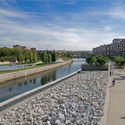
“The decision to award Madrid Río the Green Prize in Urban Design was motivated by the jury’s desire to highlight the potential for thoughtfully planned and carefully executed mobility infrastructures to transform a city and its region,” commented jury chair Rahul Mehrotra, Professor of Urban Design and Planning at Harvard GSD. “The extent to which the project harnesses the deployment of new infrastructures as an opportunity to repair and regenerate the city through carefully articulated design interventions is particularly valuable within the context of contemporary urbanization globally.”
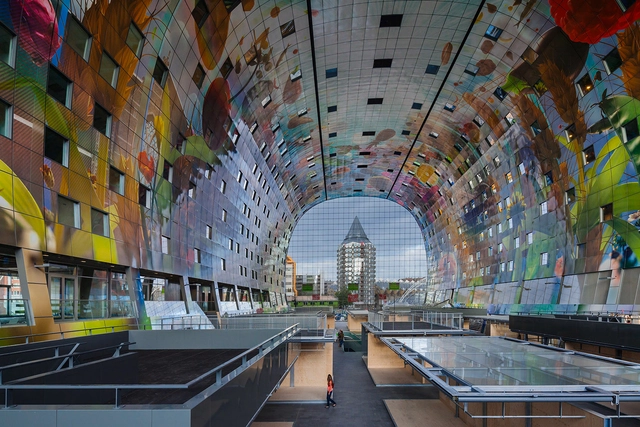
In 2000 Bart Lootsma released Superdutch, a bestselling opus on the mythology of Dutch architecture and its thought leaders, which provided a glimpse into the enduring humanist approach to design that has earned global praise for the country's architects. In the book, Lootsma profiled a handful of Dutch firms including UNStudio, West 8 and MVRDV. Fifteen years later, students from Canada's Simon Fraser University formed a collective called Groep Drie to continue the conversation. From Herman Hertzberger to Ben van Berkel, Groep Drie sat down with The Netherlands' most innovative designers to talk urbanism, spiritualism, color, and more.
Read on to find out what The Netherlands' leading architects had to say.
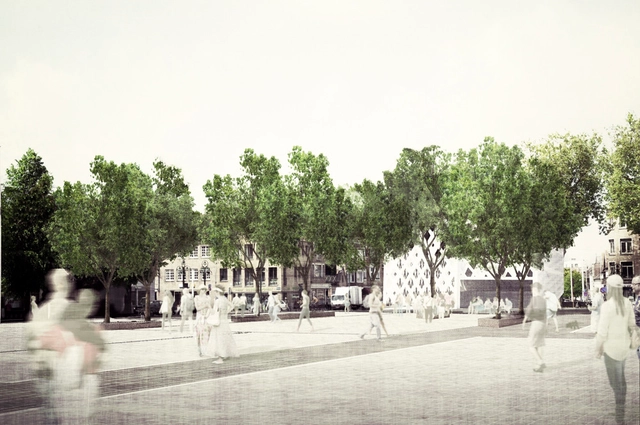
The 8,500-square-meter historic square has remained unchanged for the past 30 years, and the Council felt that an update was duly needed. In January, five out of 20 designs were shortlisted, and on June 16, the winner was chosen at a presentation before a jury of City Council representatives and external experts.
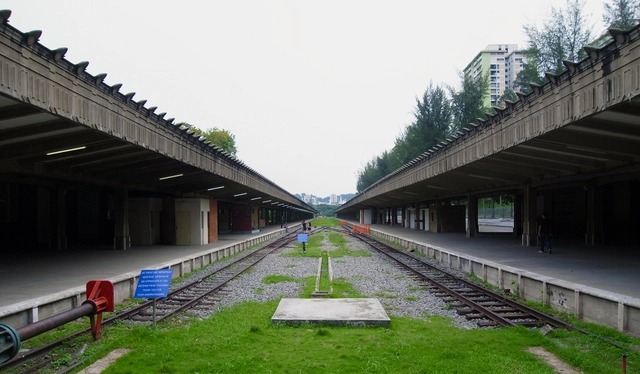
MVRDV, OMA and DP Architects are among five shortlisted teams competing to design the Singapore Rail Corridor. Spanning the island south to north, from the Tanjong Pagar Railway Station to the Woodlands Checkpoint, the corridor is the site of Singapore’s previous rail link to Malaysia. With this competition, the Singapore government hopes to develop a feasible plan to transform the 24 kilometer stretch into a public greenway that connects four important urban nodes: Buona Vista, the Bukit Timah Railway Station area, the former Bukit Timah Fire Station, and Kranji.
“The expanse of the corridor running through the centre of the entire country presents an unprecedented opportunity to develop a new typology of landscape with transformative effects for the country as a whole. This is a project that has the potential to improve quality of life for generations to come," says OMA Partner Michael Kokora.
64 teams responded to the government's call for ideas, and now only five have been selected to move onto the competition's second stage. These five teams are...
SHoP Architects and West 8 have teamed up with developer Michael Simkins to propose a new 10-acre "Innovation District" in Miami's Park West neighborhood. If approved, the four-block area would foster the "growth of creative technology industries" within the city and provide "world-class urban amenities" to the surrounding communities.
"True innovation today requires the very thing that cities, at their best, have always provided: creative proximity. Even as it continues its rapid development, the city of Miami does not currently offer significant urban environments that meet the necessary criteria," said SHoP in a press release.
In 2014 renowned Dutch politician Neelie Kroes, then a commissioner for the European Union, stated that coding should be taught in elementary school in the Netherlands, arguing that “Coding is the reading and writing of the future” and that if the Dutch didn’t incorporate it into their education system it would fall behind school systems in other countries. The reactions to both Kroes’ statement and Michael Kilkelly's article "5 Reasons Architects Should Learn To Code" were quite similar. Those already capable of writing code agreed; many who have never even seen, let alone written any script responded negatively. Many reactions to Micheal Kilkelly's article covered the same ideas: “There's no time!” “Coding is not designing!” Or just plain, “No!”
"The vision for the area will result in a welcoming gateway to the Toronto Islands – one of the City's most unique and cherished parks – with amenities and infrastructure to support the approximately 1.3 million visitors who use the ferry each year," said competition organizers, Waterfront Toronto and the City of Toronto in a press release.
After forty years of social upheaval, Cali, Colombia is refocusing its attention on urban planning and revitalization. A steadily stabilizing economy has led to investment in the renewal of the public realm and transportation systems. Working to promote Cali's natural heritage, West 8 has teamed up with the Municipality of Cali to design the Rio Cali Park as part ofan initiative called "A Dream to Cross a River." The project aims to integrate a safe, well-connected public space with a thriving urban center.
Fentress will be working with Arquitectonica and West 8 on a significantly scaled-down masterplan that will include the renovation of the 500,000-square-foot exhibition hall and 200,000-square-feet of existing meeting space, as well as a new 80,000-square-foot ballroom and outdoor event space.
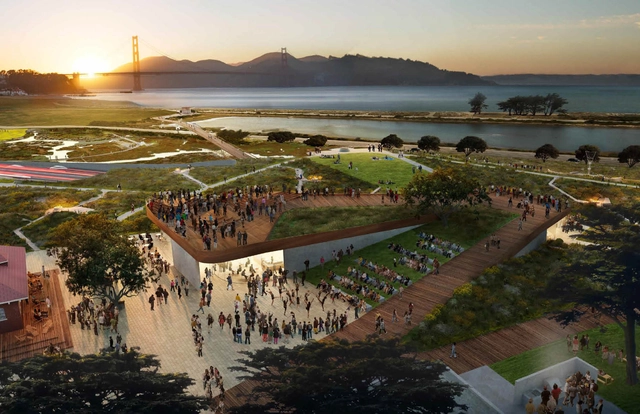
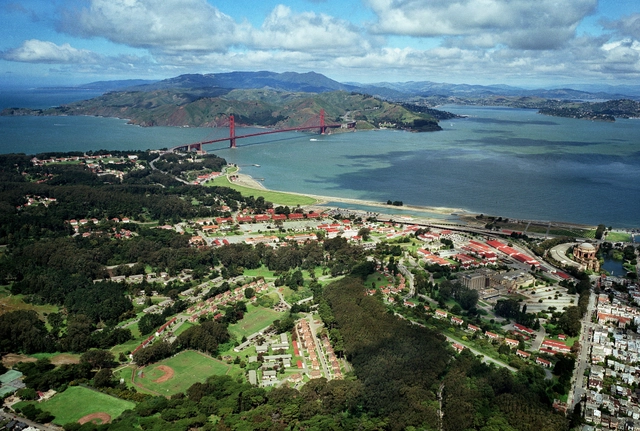
Last week, the five teams competing for the Presidio Parkland project in San Francisco unveiled their proposals in a public meeting at the project site. The parkland, made possible by the replacement of an elevated highway by a new tunnel, will command stunning views of the San Francisco bay, including views of the Golden Gate bridge.
"This is a once-in-a lifetime opportunity to create and design new parklands," Executive Director of the Presidio Trust Craig said. "We are extremely pleased with the caliber of the work of the five design teams and look forward to hearing the public’s feedback on these early concepts."
Competing for the prestigious project are James Corner Field Operations, OLIN with Olson Kundig Architects, Snøhetta with Hood Design Studio, West 8, and CMG Landscape Architecture. A winner will be announced in January.
The Mesa City Center redesign project aims to develop an 18 acre site in the city’s downtown and enhance the urbanization of the area. When complete, the city center will be transformed into a public space with both programmed and passive space that can be used for informal gatherings as well as events. “The signature public space will be a key element in the activation of the downtown core and will be a catalyst for high intensity redevelopment surrounding City Center with a variety of uses that activate the public space,” the competition website states.
Read on after the break for descriptions and images from the architects of their design proposals…
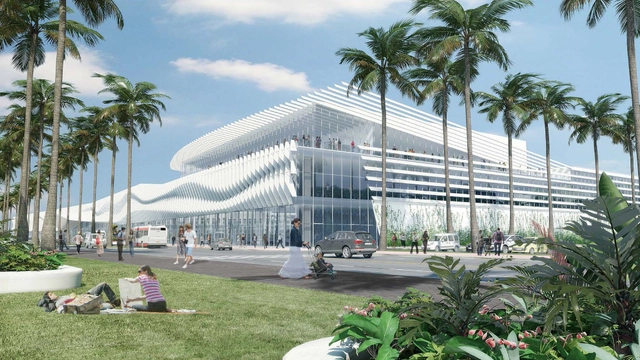
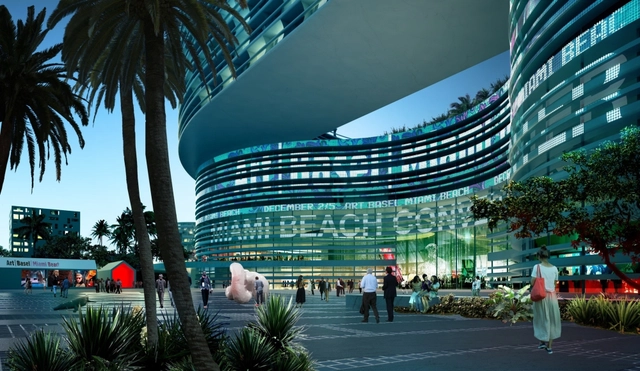
Following the controversial decision to scrap plans by OMA earlier this year, Miami Beach officials have selected Arquitectonica for the redesign of the Miami Beach Convention Center. In a significant scaling-down of OMA's $1 billion masterplan, the new scheme calls for the existing center to be kept and renovated to 'Class A' standards, along with the addition of a new ballroom, meeting space and rooftop parking. The center's existing parking lot will be converted into a 6.5 acre public park, designed by landscape firm West 8.
More on the Convention Center Controversy after the break
San Francisco’s Presidio Trust isn’t giving up. After rejecting three shortlisted schemes earlier this year that envisioned a “cultural institution of distinction” for the underdeveloped Crissy Field, the Trust has now invited five new teams to envision “kid-friendly” plans for a 13 acre portion of the site.
The five teams, which include James Corner Field Operations, Olson Kundig Architects and Snøhetta, are expected to present their ideas publicly in just three months. A winner will not be selected, though each team will receive $25,000 for their efforts. However, the Trust will be inclined to work with one of the teams should their concepts “dazzle” the audience.
A complete list of the five teams and more project information, after the break...
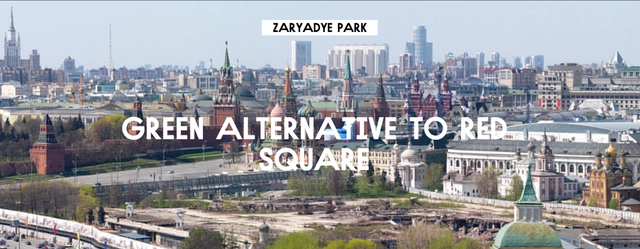
In the 20th century, it was going to be the site of the world's tallest skyscraper, but it became the world's largest hotel. In 2006, the hotel was replaced with a fence, the largest advertising space in all of Europe, enclosing acres of undeveloped, highly valuable land. In 2014, it will become Moscow's first - and most important - park in over 50 years.


.jpg?1466175054&format=webp&width=640&height=580)
.jpg?1463424218&format=webp&width=640&height=580)