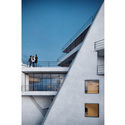
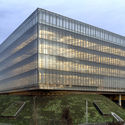
The office building typology has been evolving towards more fluid, spatially diverse and flexible designs in order to accommodate the needs of new generations of workers and business models. This week's curated selection of Unbuilt Architecture focuses on office projects, commercial and administrative buildings submitted by the ArchDaily Community, showcasing how architects worldwide envision working environments and their contribution to the urban environment.
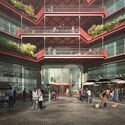
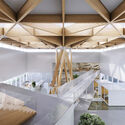
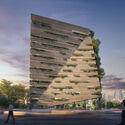
From the retrofit of an outdated office building in London to a commercial and administrative project shaped like an architectural promenade in Iran or an interplay of mass and void within an office building in Turkey, the following projects showcase some of the ideas shaping the office typology. These preoccupations include the necessity to update the existing building stock, an increased indoor-outdoor connection, or a move away from the generic office floor plan.
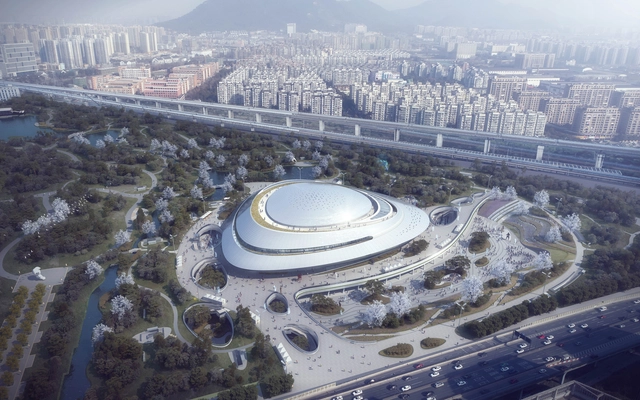
Hangzhou E-sports Ecological Park and E-sports Stadium. Image Courtesy of CSADI
This week’s curated selection of Best Unbuilt Architecture highlights competition-winning projects submitted by the ArchDaily Community. From art museums to memorials, this article explores cultural functions and commercial spaces, and presents projects submitted to us from all over the world.
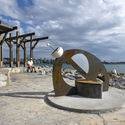
Featuring commercial spaces that honor the historic architectures of Ukraine and Romania, and a public plaza inspired by the topography between the coastal line and the urban square of Usküdar, this roundup explores how architects have designed monumental structures that cater to the needs of the public while respecting the surrounding topography. This round up also includes a collection of competition-winning proposals in Spain, China, Thailand, India, Israel, Iran, Kosovo, and Hungary, each responding to different contexts, spatial needs, and geographies.
Office buildings are known for being utilitarian, efficient, and rigid. While this typology has earned a reputation for adopting rectilinear grids and open layouts, modern designs have begun exploring new alternatives for the contemporary workplace. Moving beyond standard work rooms, meeting spaces, and support zones, these projects are reimagining the relationships between envelope and program. This is a larger movement towards rethinking the formal and spatial characteristics of where we work. While this trend is being explored globally, cities have begun embracing new office designs at a larger scale.
Designed by Kohn Pedersen Fox Associates (KPF), the Ziraat Bank Headquarters towers in Istanbul have topped out. The project is expected to become the centerpiece of the new Istanbul International Financial Centre (IIFF), and will incorporate the bank’s headquarters, commercial office spaces, retail spaces on the ground floor, and underground parking.
The 17th Venice Architecture Biennale is currently unfolding, revealing a wide range of answers to the question "How will we live together". With 60 national pavilions, numerous contributions of invited architects from all around the world and several collateral events, this year's edition restates the Biennale's role as a platform for inquiry, exploration, and disruptive thinking in architecture. Curator Hashim Sarkis' original statement called upon architects "to imagine spaces in which we can generously live together." Recent circumstances have made the question even more relevant, prompting a holistic re-evaluation of how the world as a collective can face changes and challenges of an unprecedented scale from the disrupting role of technology, to inequality, mass migration and climate change. The following national contributions reflect on "how will we live together" amidst climate change, exploring ideas for a more sustainable future.
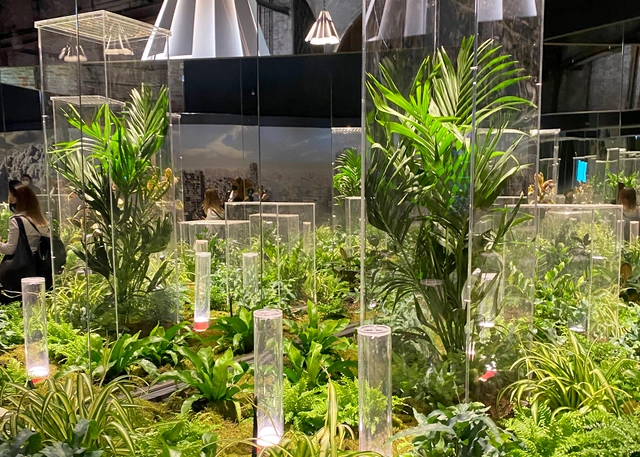
Titled "Architecture as Measure", the Turkish pavilion at the 17th International Architecture Exhibition – La Biennale di Venezia, seeks to explore what and how architecture can contribute to the environment in the light of the current climate crisis, beyond technological dependence. Curated by Neyran Turan, the pavilion will be on display at the country's long-term venue, the Sale d’Armi, Arsenale from May 22nd to November 21st, 2021.
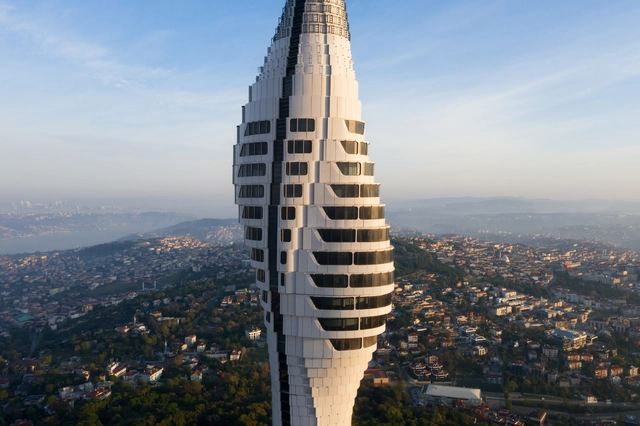
Melike Altınışık Architects - MAA has just revealed more details and interior images of Istanbul's futuristic 369 meter-tall TV and Radio Tower. Photographed by London-based architectural photography studio NAARO, the new landmark structure has started its main telecommunication functions in November 2020. It is expected to open its doors to public use in late spring 2021.
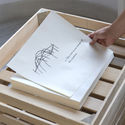
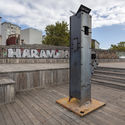
With an on-going digital and physical evolution, the 5th Istanbul Design Biennialtook a new approach. “Rather than focusing on the presentation of final results in a compressed period of time and space”, the global circumstances created the opportunity to present new projects on a longer period of time and in expanded spaces, offering not an exhibition but “a digital and research program with a series of permanent interventions in the city.”
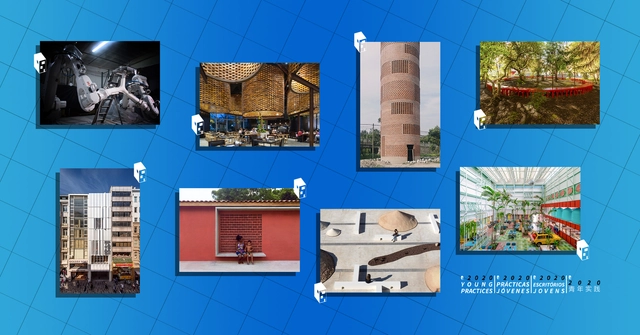
ArchDaily is proud to announce the 2020 Young Practices selection. This premier edition highlights emerging offices that are providing innovative approaches, proposals, and solutions to some of the main challenges Humankind is facing right now. From climate crisis to racial and gender issues. From technological disruption to social cohesion. These challenges are shaping the evolution of architecture, leading the discipline towards a new society and a new economy.
Chosen from over 350 submissions from 72 countries and 215 cities, all over the world, the selected firms reflect the sequential changes architecture has been navigating through over the last twenty years, with the rise and latter consolidation of new technologies, tools, formats, topics, scales, and interdisciplinary approaches.
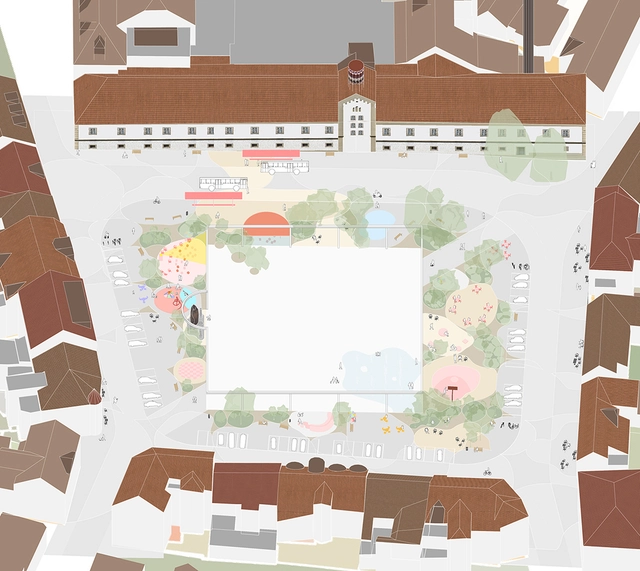
Zbraslav Square . Image Courtesy of Architects for Urbanity
Recognizing the importance of international contests in pushing forward inventive concepts and design, ArchDaily has put together a curated selection of Best Unbuilt Architecture featuring competition entries from around the globe. Submitted by our readers, these projects include winning proposals, honorable mentions, and recognized admissions.
In this week’s article, urban interventions take the lead with multiple square designs and infrastructural elements. On the cultural level, projects underlined include Museums in Iran and Norway, a National Concert hall in Lithuania, and a Mosque in Turkey. For the civic category, the functions highlighted comprise a new city hall for a South Korean district and an Indian community development center for at-risk women. Finally, other programs involve a rural school in Haiti, a tourist center in China, and a housing complex in Prague.
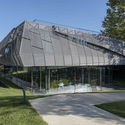
Salon has created a new type of campus building, bringing together education and industry. Located between two buildings of the Yıldız Technical University in Istanbul, the textile academy and a teaching block, Ecotone includes learning, flexible co-working, and meeting spaces.
Gathering the best-unbuilt architecture from our readers' submissions, this curated collection features conventional, original and innovative functions. With projects from all over the world, this roundup is a conceptual discovery of different architectural approaches.
Art takes center stage in this week’s article with a different kind of museum for Burning Man, a futuristic art center in Slovakia, a museum dedicated to writing, and the Chinimachin Museum, inspired by the urban fabric of the city of Bayburt in Turkey. Moreover, the editorial showcases integrated houses, a redevelopment of a city block in London and mixed-use projects in Ukraine and Poland. New highlighted functions include a concrete lighthouse in Greece, a retirement complex in the Rocky Mountains of Lebanon, and a thermal hotel and spa in Cappadocia.
Focusing on competition entries, this week’s curated selection of the best-unbuilt architecture from our readers' submissions, highlights projects from across the globe, presented part of international contests. Some are winners, some are not but all of the featured schemes have an intriguing conceptual approach, and a different story to tell.
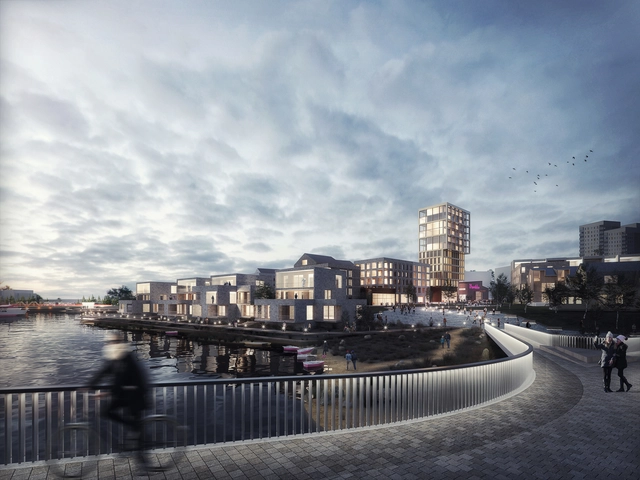
Tackling diverse programming, the entries include an urban public housing proposal in South Korea, the Dianju Village Library in China and a new Future-Oriented Neighborhood in Finland combining urban and sustainable living. Moreover, the article showcases rare and unconventional functions like a hospital for psychiatry & neurological diseases in Turkey and an intervention on a famed Oscar Niemeyer site.
Every day we receive hundreds of submission forms from our readers, who want to share their work on our platform. Known for our interest in young talent, we encourage people to communicate their ideas, projects, and views on architecture. In order to share more of our readers’ work, we have rounded up in this first article the winning competition entries from the unbuilt section.
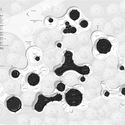
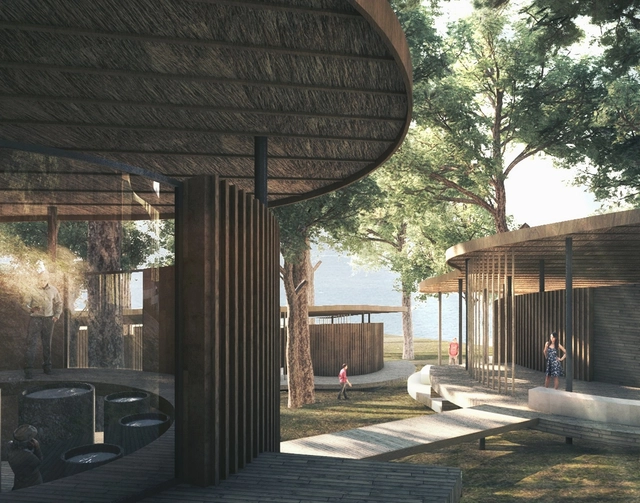
The National Architectural Competition for the Research, Rescue, and Rehabilitation Center for the Sea Turtles in Iztuzu Beach, organized by the Ministry of Environment and Urbanisation of Turkey, selects KÂAT Architects to design the environmentally sensitive facility.
KÂAT Architects has won first prize in the national competition to design a new wildlife research and rehabilitation center for Iztuzu Beach in Turkey. Created to help protect one of the rarest natural ecosystems in the world, the competition was organized by the the Ministry of Environment and Urbanization of Turkey. The project aims to be an environmentally sensitive facility that will help ensure the cyclic continuity of the natural and cultural resources of Iztuzu Beach.
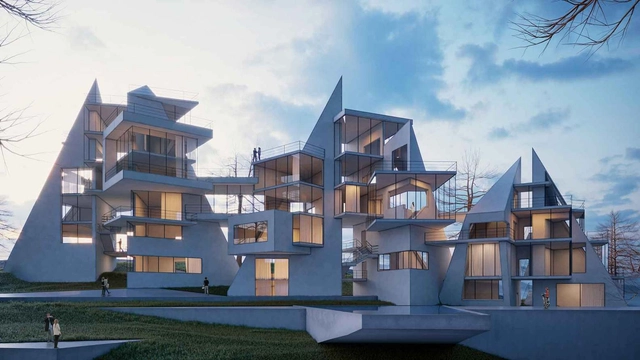
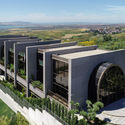
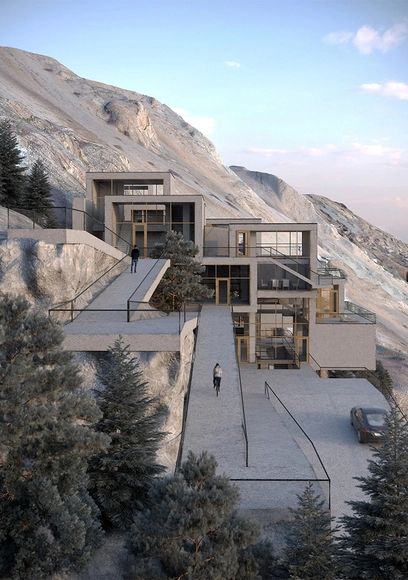
Planned to be built in one of the most exquisite spots of Alanya, Turkey, the Vertical Villa Project is a complex geometric composition of glass, concrete, and landscape, with a great scenery of the green mountain range and distant coastline.
The architecture team developed the project based on an analysis of the social interaction and atmosphere found in the city of Alanya. The team combined different individual units, and applied the sloped roof system found in the city's typical residential architecture.







_Tom_Spall.jpg?1625127535&format=webp&width=640&height=580)
_Tom_Spall.jpg?1625127535 "© Tom Spall")
_Tom_Spall.jpg?1625127547 "© Tom Spall")
_Tom_Spall.jpg?1625127574 "© Tom Spall")
_Tom_Spall.jpg?1625127574 "© Tom Spall")
_Tom_Spall.jpg?1625127535)
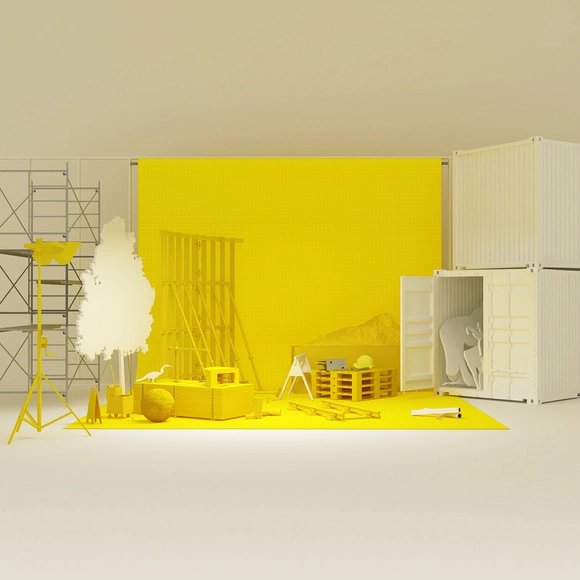




.jpg?1609931383&format=webp&width=640&height=580)
.jpg?1609924103 "theOtherForest. Image © Kayhan Kaygusuz")
.jpg?1609931383)


.jpg?1579802262&format=webp&width=640&height=580)


.jpg?1579802262)
.jpg?1576843118&format=webp&width=640&height=580)
.jpg?1576843076 "Courtesy of KÂAT Architects")
.jpg?1576843118)
.jpg?1575391307 "Courtesy of KÂAT Architects")
.jpg?1575391477 "Courtesy of KÂAT Architects")
.jpg?1575391392 "Courtesy of KÂAT Architects")

.jpg?1575311092 "© Marc Goodwin")
.jpg?1575310961 "© Marc Goodwin")

.jpg?1575310983 "© Marc Goodwin")