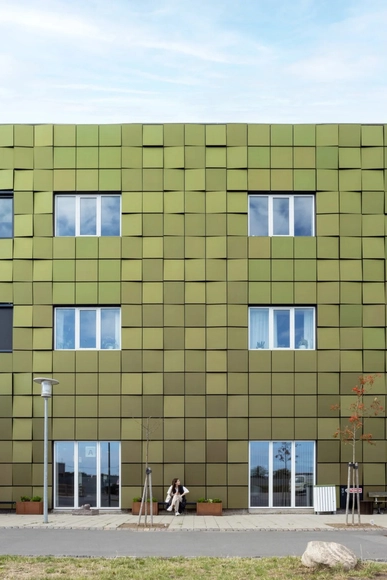
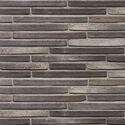
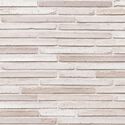
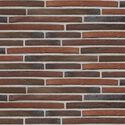
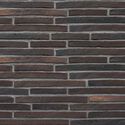
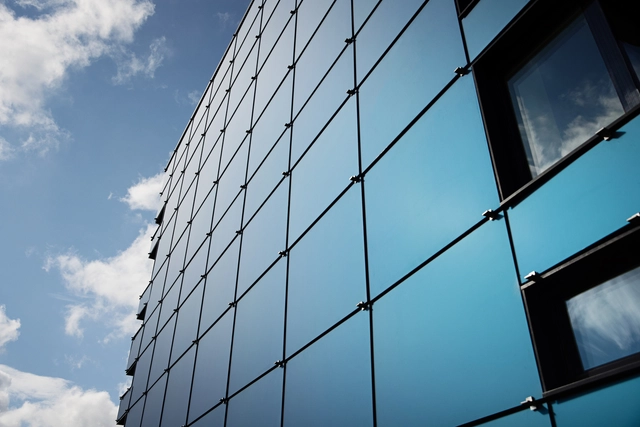
Traditionally relegated to roofs, photovoltaic (PV) panels tend to have a uniform appearance: large black or dark blue rectangular pieces of shiny glass with metal frames. Partly because dark colors better harvest sunlight to be turned into electricity, but also because silicon –the primary material used in most high-efficiency photovoltaic panels– tends to be dark in its crystalline form. Fortunately, there are now technologies to control luster, color and finish that provide aesthetic variety while maintaining high efficiency. SolarLab and other manufacturers are redefining conventional solar panels, introducing design flexibility and material qualities that allow architects to take advantage of large facade surfaces to generate renewable energy without compromising architecturally.
Moving towards modernity implies questioning established concepts. Today, we are witnessing several projects and approaches in architecture that explore alternatives to energy-intensive building systems, materials, and technologies commonly used in today's construction. These projects, far from adopting approaches that reject technology, seek to promote conscious architectural practices. They aim to go back to basics through passive strategies, using natural materials and a contextual understanding to develop sustainable architecture.
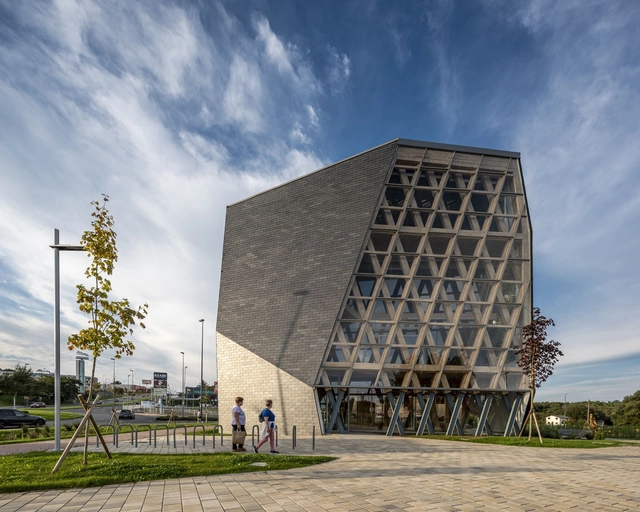
To boost sustainable architecture, it is crucial to have building models and materials that become recognizable icons in their immediate context, thus setting a precedent for the development of future proposals. One such example can be found in Spain, with the "Impulso Verde" project carried out in the city of Lugo which stands out for its construction model based on passive strategies and regional materials. In this project, using natural slate as cladding for the ventilated facade system and employing local resources in the structure was essential for the building's ecological footprint. Additionally, these elements strengthen the building's identity by connecting it to the surrounding landscape.
https://www.archdaily.com/1010187/sustainable-building-models-an-eco-friendly-structure-in-natural-slate-within-a-multi-ecological-neighborhoodEnrique Tovar
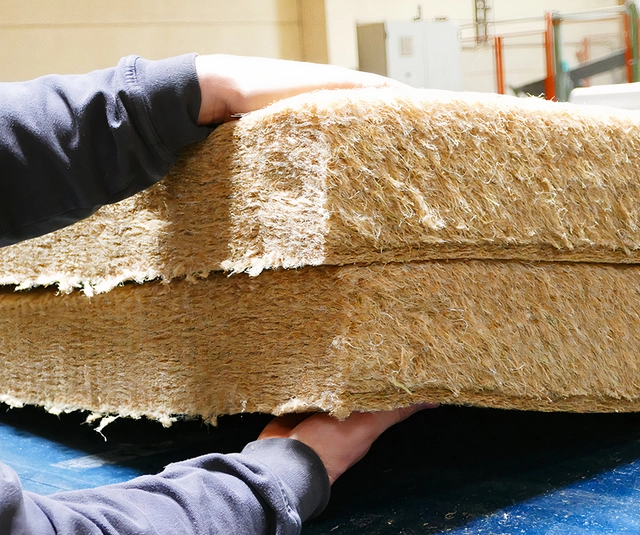
What insulation materials are needed to meet the challenges facing the modern built environment, including how to create a more sustainable future? What if some of them are already available? Kingspan’s dedicated innovation center, IKON, hosted a panel of experts to discuss some of the key issues and explore solutions. Michael Bol, an architect and Concepting Director at Buro Kade, Benjamin Constant, Director of Development and Partnerships at Neo-Eco Partner, and Sandra Del Bove, Kingspan Group Head of Innovation, each brought a different perspective and shared their experiences of these crucial issues.
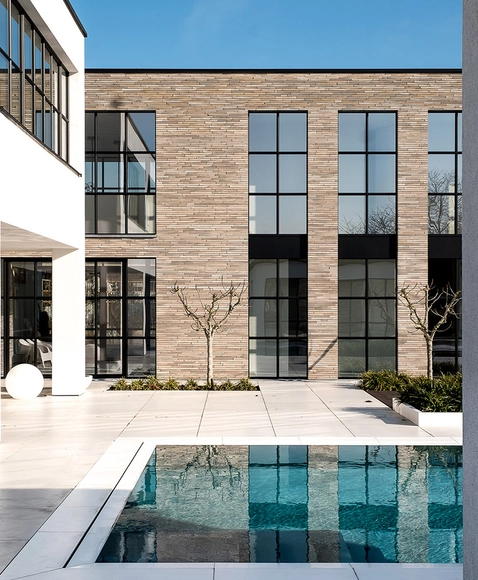
Villa Groot, Belgium / Lemaire & Longeval. Image Courtesy of Randers Tegl
Bricks are versatile and long-lasting building materials that combine technical and aesthetic qualities. In a variety of shapes, dimensions, textures, and colors –depending on the manufacturing process and type of clay– incorporating bricks into architecture creates dynamic facades and structures. From traditional to modern styles, these versatile elements can be arranged in different patterns and easily integrated with other building materials, enabling diverse architectural expressions. In addition to these qualities, the use of bricks in contemporary architecture is distinguished by experimenting with placement, orientation, and material textures, as well as embracing minimalistic design principles focused on simple and clean lines.
Among the different types of bricks, designing with a linear or elongated style involves playing with horizontal and vertical arrangements –or a combination of both– creating modular patterns for a rhythmic and harmonious visual appeal. Following this format, Randers Tegl has developed the Ultima waterstruck brick collection, which integrates craftsmanship, high-quality materials, and timeless appeal. By analyzing various projects, we showcase how the aesthetics of linear bricks are applied in contemporary architecture.
The Choctaw Casino and Resort expansion in Durant, OK, USA, completed in 2021, included enlarging the casino, adding 1,000 hotel rooms, conference areas, shops, and other amenities. The entire undertaking was accomplished in just 2.5 years, with an impressive 350,000 square feet of tile installed within a mere six months. The core focus of the project was to waterproof approximately 1,200 showers to ensure their longevity. The combination of high-quality installation systems, thorough training, effective communication, and collaboration were pivotal in achieving alignment on project goals and execution.
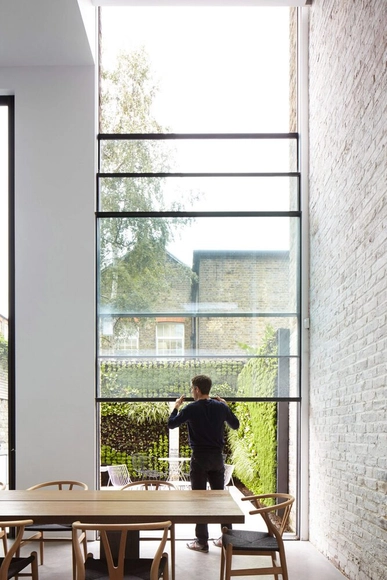
When it comes to windows, we can see how much the industry's technology has evolved over time. While the first versions of windows were small and not very transparent, today we can find large sheets of glass that blur the boundaries between the inside and outside, and can create virtually translucent façades. And this doesn't have to be limited to fixed glass. These days, we can use huge glazed surfaces that can be easily handled, thanks to a great deal of research and experimentation by manufacturers to improve components and raw materials. To create a large frame, for example, larger furnaces are needed for tempering, and strict technical control is required, demanding precision and high-quality standards, along with structural bonding using modified silicones and silyl-based polymers.
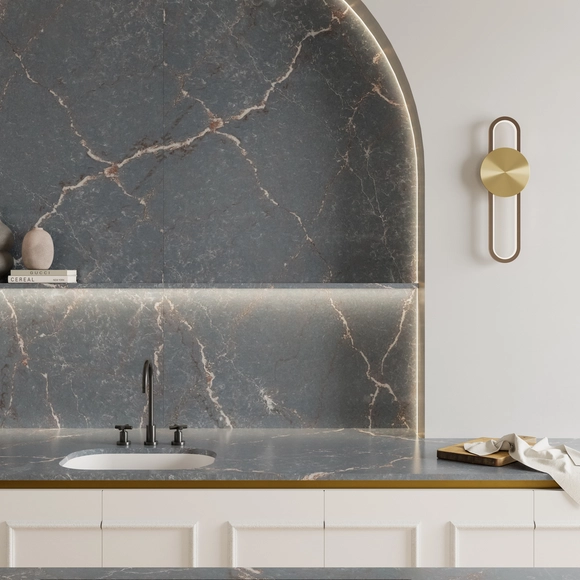
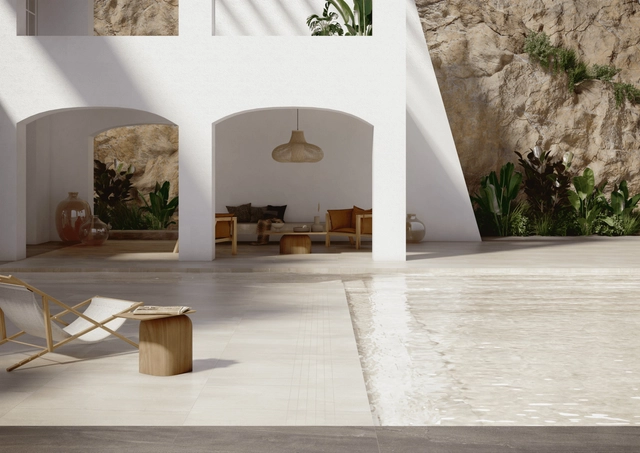
Whether through small samples of materials or a digital collage, a moodboard is a valuable project tool for architects and designers; an inspiration board with colors and elements to guide choices. The objective is to use this as an inspirational tool for upcoming projects, in order to define backgrounds, predominant textures, and standout details. To this end, surfaces play a fundamental role in defining a space and setting the tone of the space, just like a piece of music, where all the other elements may or may not match the harmony of the chosen palette.
In charming Oberneukirchen, located in the Austrian countryside, architect Walter Kräutler and artist Sofie Thorsen have come together to transform the interior of the neo-Gothic village church in episode 10 of Opening up.
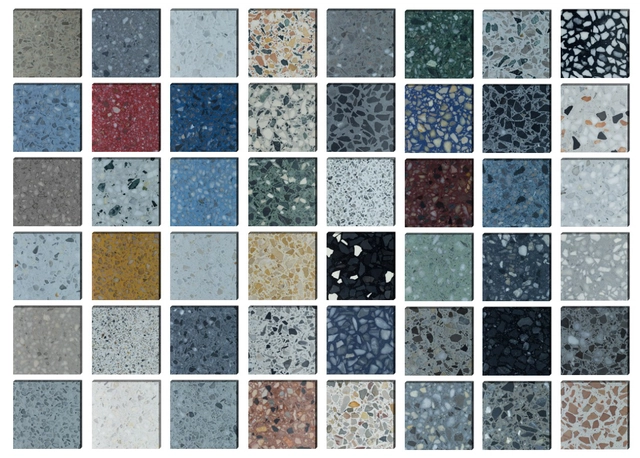
Initially conceived as a way to use fragments from marble construction waste, terrazzo is a material widely used around the world, with its modern roots dating back centuries to Venice, Italy. Its aesthetic is unmistakable, characterized by mottled patterns and a wide range of colors poured onto the floor. It is not surprising that this material is widely appreciated by architects in various types of projects due to its unique appearance. A notable example of the use of terrazzo is the Guggenheim Museum in New York, designed by Frank Lloyd Wright. Upon discovering it during one of his trips, Wright recognized that thanks to its aesthetic appeal and versatility, it would endure as the museum's interior finish.
The evolution of construction materials has transformed terrazzo from the traditional mixture used by Wright, which included concrete as a binder, to a version that incorporates an epoxy matrix, enhancing its iconic aesthetic and integrating additional technical capabilities. Today, Terrazzo & Marble empowers contemporary designers to create distinctive patterns and vibrant color palettes that seamlessly align with the context of modern architecture. This is accomplished through four leading principles that guide architects in specifying epoxy terrazzo.
https://www.archdaily.com/1009577/mottled-and-timeless-why-do-architects-and-designers-specify-epoxy-terrazzoEnrique Tovar
Solar Facades on Det Grønne Hus. Image Courtesy of SolarLab
Renovations involve design processes that transform, refurbish and enhance architectural elements. From gentle aesthetic changes to structural additions, building renovation can improve functionality, safety, and energy efficiency. By integrating new technologies, contemporary strategies are giving new life to existing buildings, propelling already-built projects into the future.
Through their energy-efficient, durable, and bespoke solutions, SolarLab leverages architectural heritage by introducing custom energy-producing facades to existing buildings. By seamlessly combining technologies with design freedom, these solar facades adapt to each project’s style while acting as rain screens with a long, maintenance-free service life. Moreover, by producing sustainable electricity, integrating this system into refurbishment projects contributes to the building’s day-to-day operations, effectively reducing its environmental impact.
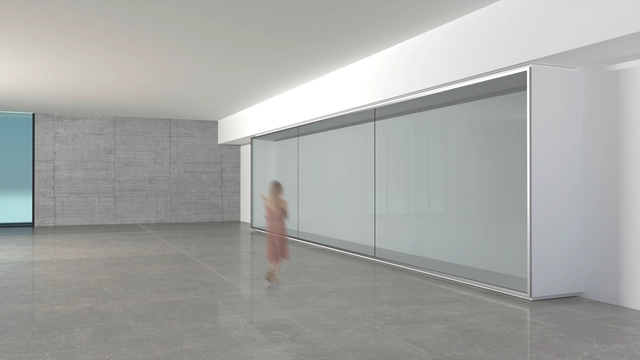
Some of the most memorable and moving exhibitions are the ones that simplify their staging, illuminating objects and narratives while pulling focus from everything else. A stark but meticulous –and above all modern– presentation is the goal of the museum curator. The process of installation shouldn’t be laborious. The fingerprint of the architect shouldn’t be visible. The eye of the visitor wants to see unbroken silhouettes of couture garments, archaeological treasures, and sculptures. Exhibitions tell stories, and the design of each show is the medium. The presentation must be crisp, clear, and light. A sense of perfection elevates the uniqueness of a collection of objects; barely apparent joins, lines and an overall feeling of transparency make that achievable.
https://www.archdaily.com/1009976/elevating-contemporary-exhibition-design-with-sliding-glass-panel-systemsMark C. O'Flaherty
IE School of Architecture and Design is launching the fourth edition of their MBArch Entrepreneurship Challenge 2023 IV Edition. For optimistic and young entrepreneurial professionals with less than 15 years of experience, the challenge is geared toward those who have identified a relevant problem in their industry and would like the chance to solve it.
As has been widely reported, the construction industry is responsible for approximately 40% of all global carbon emissions. This is an enormous issue, and there is no single solution.
It is in this context that Codesign has proudly partnered with 2050 Materials to launch an early-stage Carbon Calculator. This simple tool takes the building data from Codesign's building model and combines it with user-selected properties to calculate the carbon impact of the design.
The International Prize for Architectural Restoration “Fassa Bortolo Domus Restoration and Preservation” was established for the purpose of rewarding and promoting architectural restoration works that have managed to best interpret the preservation principles including through the use of contemporary forms of expression. It was conceived and promoted in 2010 by Fassa S.r.l., owner of the Fassa Bortolo brand, and by the Ferrara University, Department of Architecture.
When we conceive an architectural project, it is crucial to transcend mere aesthetics and consider all aspects of our material decisions. The spaces where we live, work, and interact should not only be visually pleasing but also contribute to our safety and comfort. What if, in addition, they could improve air quality and reduce the amount of pathogens on surfaces? This is why the selection of materials plays a fundamental role, and architects and specifiers need to strive to acquire as much knowledge as possible about the materials and systems they incorporate into their projects.
Within the shifts in architectural movements and styles, furniture design has also evolved throughout the years, transitioning from elaborate curvy lines and opulent materials to simple and functional layouts, and back again, in constant movement. As it continues to evolve, contemporary furniture design is often influenced by technological advances, exploring digital fabrication and user-centered design, while also responding to sustainable strategies. These innovations have elevated custom furniture design, crafting unique pieces tailored to individual needs, preferences, and space specifications.
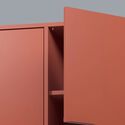
With the ability to adapt to each user, bespoke furniture design creates unique pieces crafted to meet individual needs, preferences, and space specifications. Delving into augmented reality (AR) and virtual reality (VR), Tylko creates customized, long-lasting, and sustainable solutions for sideboards, wall storage, bookcases, wardrobes and TV stands. Analyzing their tech-forward approach to creating endless possibilities of made-to-measure furniture, we showcase their design process experience, along with their intuitive online configurator and augmented reality app.
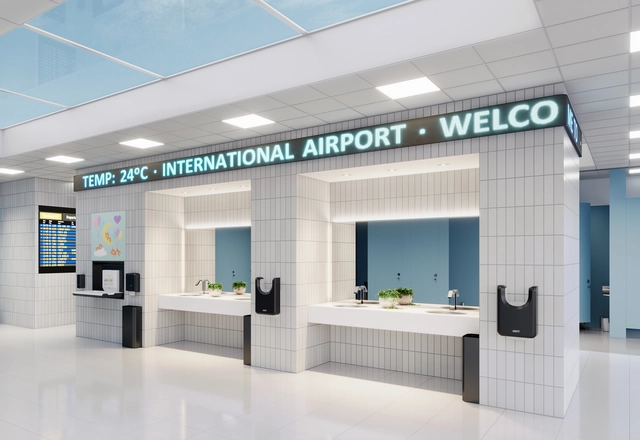
Although considered common practice today, the concept of hand hygiene was not initially deeply ingrained in society. It wasn't until 1847 when the Hungarian physician Ignaz Semmelweis, supported by scientific evidence, proposed that hand washing was a hygienic measure with a direct impact on people's health. From this point on, the rest is history. Hand hygiene has become a widespread practice, ranging from washing to drying, accompanied by various accessories that play specific roles in the process.
In contemporary environments, especially in the context of collective well-being, public restrooms have become a focal point. This shift in focus is, in part, a response to the post-pandemic emphasis on hygiene and the role of restroom accessories in these settings. Among the accessories available, hand dryers have garnered significant importance, even transcending their primary function. In light of this, Mediclinics has innovated by introducing a new hand dryer concept that places a strong emphasis on enhancing the user experience while offering innovative restroom equipment with a distinctive U-shaped design.
https://www.archdaily.com/1009500/hands-in-to-hands-through-a-new-generation-of-hygienic-and-aesthetic-hand-dryersEnrique Tovar
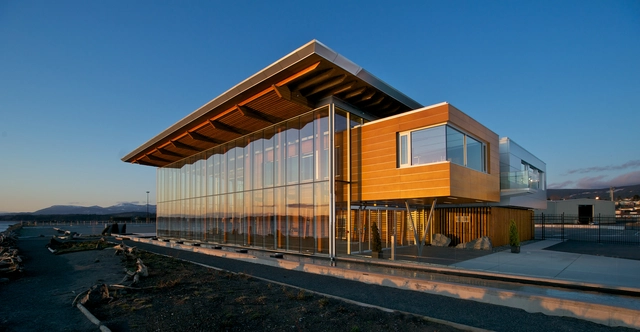
Nanaimo Cruise Ship Terminal. Image Courtesy of Checkwitch Poiron Architects & HA Photography
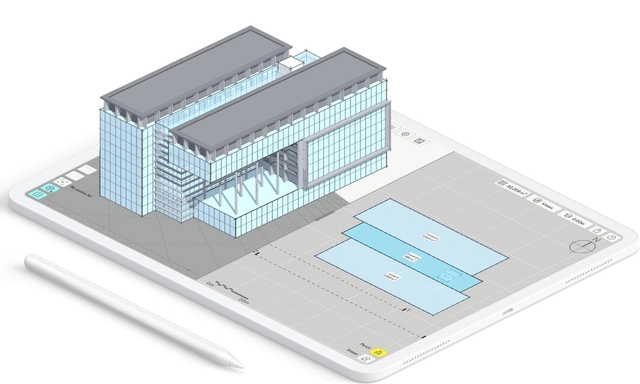
Design confidence is crucial to the team at Checkwitch Poiron Architects. If they can be confident in their design, then it becomes much easier to advocate for it with clients. The team builds that confidence with flexible software and cultural awareness.