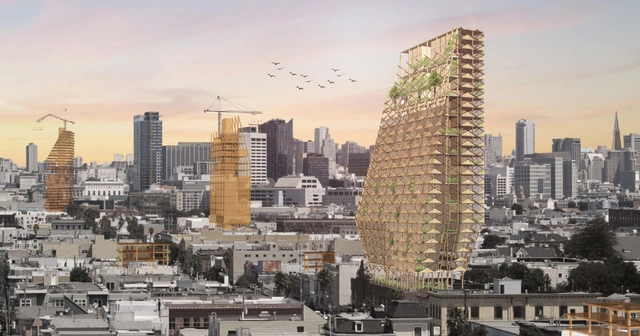
The potential for mass timber to become the dominant material of future sustainable cities has also gained traction in the United States throughout 2018. Evolving codes and the increasing availability of mass timber is inspiring firms, universities, and state legislators to research and invest in ambitious projects across the country.
https://www.archdaily.com/905601/4-projects-that-show-mass-timber-is-the-future-of-american-citiesNiall Patrick Walsh
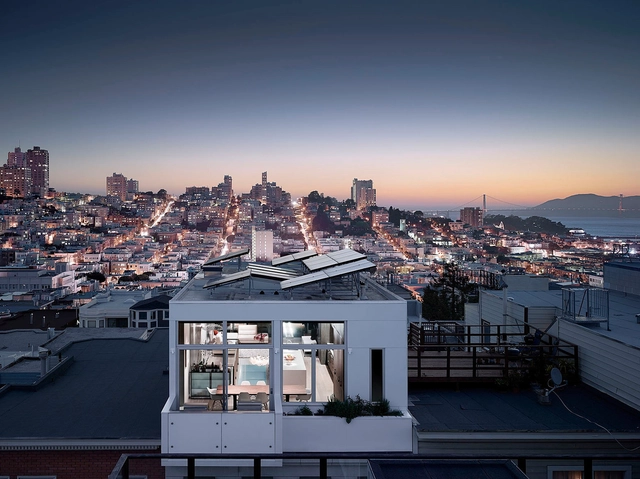
San Francisco is a city defined by its relationship to housing. Since the 90s it has faced an affordable housing shortage, and now, has some of the highest rents of any major US city. As planners and policy makers work to move beyond the city's past and find new paths forward, architects and designers are testing out diverse housing models. From dense residential towers to multi-unit developments, modern housing aims to strike a balance between economy and urbanity.
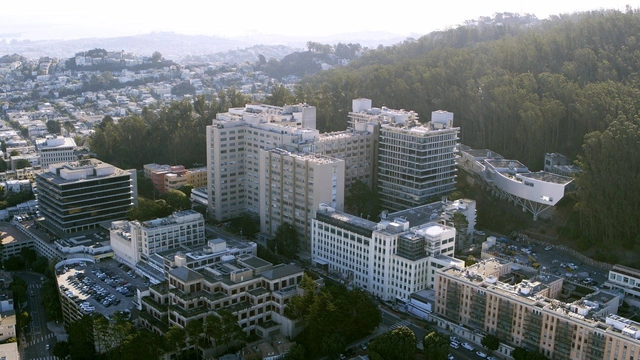
The world-renowned academic medical centre The University of California San Francisco has selected Snohetta and HGA to design the new Parnassus Research and Academic Building (PRAB). As part of a larger plan to renovate and expand the medical campus, the project will replace the 1917 UC Hall, creating a more collaborative research environment while also providing the city of San Francisco with an attractive public space.
As part of the Dogpatch mixed-use waterfront development, Foster + Partner'sPower Station extension has finally broken ground. The master plan will create multiple new residential, commercial, and recreational spaces, honoring its industrial past and reconnecting the community with the San Francisco Bay waterfront. The architecture firm's 2-building proposal provides the neighborhood with an ideal urban framework to help create a vibrant, healthy, and inclusive community.
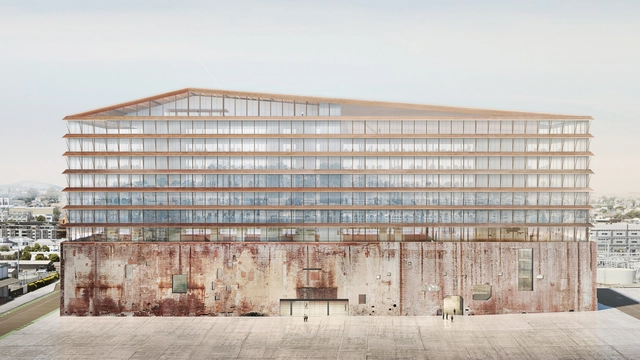
Construction work began for Herzog & de Meuron’s transformation of a former power plant building in San Fransico into a mixed-use project. Designed in collaboration with California-based practice Adamson Associates, the adaptive reuse of iconic Station A is part of the Portrero Power Station project, the redevelopment of a 29-acre industrial site into an extension of the Dogpatch neighbourhood. Herzog & de Meuron’s design retains and repurposes various features of the industrial building while adding a lightweight, steel-framed structure on top, thus giving new life to one of San Francisco’s landmarks.
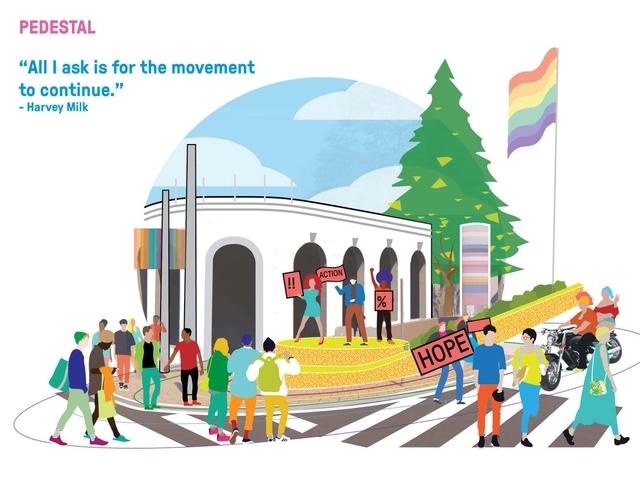
Courtesy of Friends of Harvey Milk Plaza & SWA Group
Matt Hickman reports on San Francisco's latest inclusive memorial, for the Architect's Newspaper, designed by SWA, a firm that operates two Bay Area studios (San Francisco and Sausalito) as well as offices in Texas, Southern California, New York City, and Shanghai. Selected by FHMP from a shortlist of four firms that submitted proposals, out of 17 invited offices, SWA shared their winning conceptual design for the memorial at Harvey Milk Plaza.
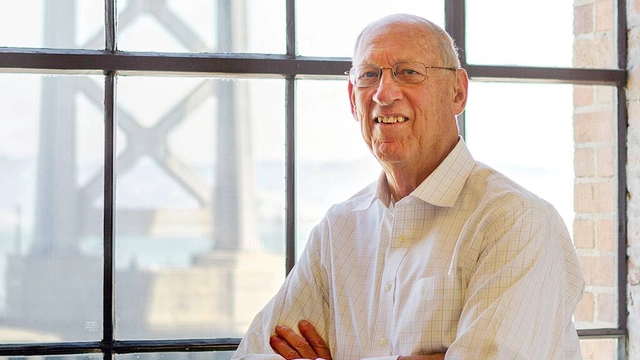
Art Gensler, the founder of one of the largest architecture businesses in the world, Gensler, has passed away at 85, as reported by the company’s Instagram Account. The architect and businessman founded Gensler back in 1965, in San Francisco, and in his 65 years of career, he managed to turn his practice into one of the leading worldwide firms with 50 locations across Asia, Europe, Australia, the Middle East, and the Americas.
Manufacturers: AutoDesk, Gaggenau, ASN Natural Stone, Aquascape, Arc Wood & Timber, +13Bosch, Carlo Mollino, Iron Dog Fabrication, Inc, Jason Gaidmore table, Jason Giuntoli Custom Furniture, Lindsey Adelman, MRCW Design Build, Maidenstone, Marco Fine Furniture, Northstar Woodworks, Ronnie Genotti, Whirlpool, Wolf/Subzero-13
Few places have embraced sustainable design practices like California. Experiencing dramatic droughts, wildfires and environmental issues, the state has started to create new policies and initiatives to promote environmentally-conscious design solutions. From eco-districts and water management strategies to net-zero building projects, the Golden State is making strides to reshape its future. Forming long-term visions and procedures through the lens of physical resource consumption, California is working to better integrate its economic development plans with sustainable building methods.
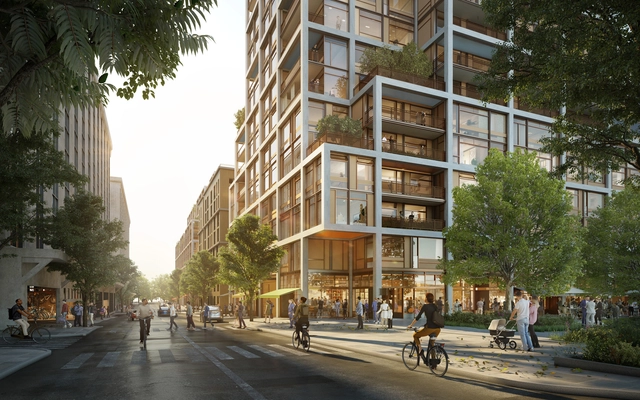
Construction has begun on MVRDV’s new 23-story mixed-use tproject at Mission Rock in San Francisco. One of four buildings in a multi-phase masterplan, the tower was designed alongside work by Studio Gang, Henning Larsen, and WORKac. The Mission Rock masterplan aims to turn 28 acres into a new neighborhood for San Francisco residents and visitors. The projects are made to connect to China Basin Park.
Building more equitable futures begins with community. For international practice Woods Bagot, the firm's three US studios are now each run by women, and their combined leadership is creating more inclusive and dynamic designs that rethink past traditions. Each Director has taken the reins before the global pandemic was underway, and now the trio is working to rethink how the practice can address diverse challenges in New York, San Francisco and Los Angeles.
Heatherwick Studio has designed the Cove, a new waterfront experience for San Francisco. Seeking to activate and improve the beachfront, “while future-proofing the historic district and the City against the risks of earthquakes and climate change”, the Cove will put in place a next-generation, high-performance waterfront community that uniquely identifies with San Francisco.
Our cities, vulnerable by nature and design, have generated the biggest challenge that humankind has to face. With the vast majority of the population expected to settle in urban agglomerations, rapid urbanization is going to raise the issue of adaptability with future social, environmental, technological and economic transformations.
In fact, the main problematic of the decade questions how our cities will cope with fast-changing factors. It also looks into the main aspects to consider in order to ensure long-term growth. In this article, we highlight major points that help future-proof our cities and create a livable, inclusive and competitive fabric that adapts to any unexpected future transformation.











_.jpg?1616653343&format=webp&width=640&height=580)
.jpg?1616653614 "© Richard Barnes")
.jpg?1616654167 "© Richard Barnes")
.jpg?1616653703 "© Richard Barnes")
.jpg?1616654121 "© Richard Barnes")
_.jpg?1616653343)
.jpg?1614564416&format=webp&width=640&height=580)








.jpg?1600849698&format=webp&width=640&height=580)


.jpg?1600849698)