The Royal Institute of British Architects (RIBA) has published a report which it hopes will influence government policy writers in time for the general election next year. The report outlines the RIBA's stance on a wide variety of architectural issues, from planning policy, to school building, to designing healthy cities.
The report hopes to build on the recommendations made by the Farrell Review, which among many other things recommended the appointment of a chief architect to advise the government, as well as an overhaul of the current planning system. However, in one sense the RIBA report goes further than the Farrell Report by saying that the government should implement a defined architecture policy, pointing to the success of such policies in countries such as Denmark.
Read on after the break for more on the report's recommendations
The results of the Royal Institute of British Architects (RIBA) Future Trends Survey for May show that the Workload Index among UK practices was slightly down in comparison to April (from +35 to +33) with the recovery in confidence levels remaining consistently "very strong" across the country. Although last month's survey showed London as the region with the brightest outlook, confidence levels reported by architects in Wales and the West topped the index with a balance figure of +49. Workload forecasts in the private sector, public sector and community sector have all significantly increased.
The Royal Institute of British Architects (RIBA) has dropped their controversial proposal to ban the Israeli Association of United Architects (IAUA) from the umbrella organization the International Union of Architects (UIA). Intended as a sanction against the IAUA for failing to "resist projects on illegally-occupied land," supporters of the proposal had hoped it would be discussed at the UIA World Congress in Durban in August, however the UIA has confirmed that it will not include the motion as it is beyond their 'political scope'.
From this list of National winners, the RIBA will select the shortlist for the RIBA Stirling Prize, which will be revealed next month. See the full list of winners after the break.
The number of unemployed architects in the UK has fallen to its lowest level since before the financial crisis, according to the Office of National Statistics. This is based on the number of architects claiming Jobseekers' Allowance, which fell to just 310 in May, a figure that has almost halved since May 2013 when 615 architects were claiming.
These statistics are backed up by observations revealed by the RIBA Future Trends Survey for May, released later this month, which reportedly shows a 10% increase in workload among UK practices.
More on the recovery of UK architecture after the break
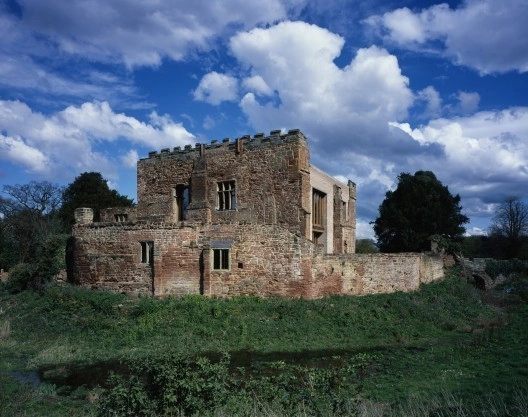
The annual RIBA Stirling Prize is set to regain its £20,000 cash prize following a year of no prize money in which Witherford Watson Mann scooped the accolade for Astley Castle. Considered to be the UK’s most prestigious architecture award, the Stirling Prize is presented annually to the “building that has made the greatest contribution to the evolution of architecture in the past year”. Brockton Capital have agreed to support the prize for the next three years starting from 2015, after which the prize will be known as the RIBA Brockton Stirling Prize. The lack of prize money in 2013 raised questions about the significance of the award.
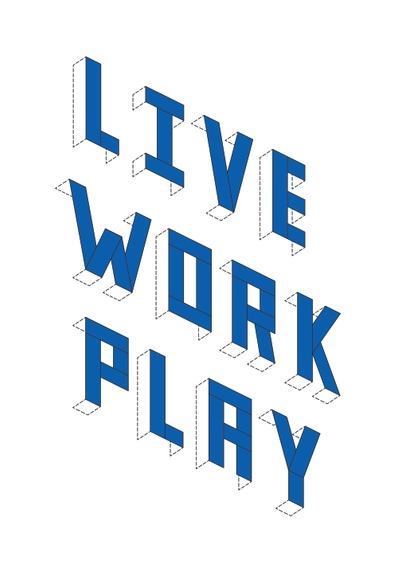
Live Work Play, an exhibition organised as part of the Hampshire Festival of Architecture 2014 (UK), showcases over 100 projects from "within the country, the UK, and beyond." Featuring a range of "thoughtful, robust, elegant and ingenious designs", the show will include designs from local practices such as PAD Studio, Design Engine, AR Design Studio, Design ACB and John Pardey Architects. The exhibition will be open seven days a week between the 14th June and the 16th July. Find out more from RIBA Hampshire.
The results of the Royal Institute of British Architects (RIBA) Future Trends Survey for April show that confidence among UK practices remains high at a Workload Index of +35, the same as in March. The positive figures came from across the board, with practices of all sizes and from all regions of the UK predicting increased workloads in the near future. However, after last months' survey showed Scotland as the region with the brightest outlook, the balance of power has shifted back to London, where architects reported the highest index of +45.
Charles Palmer’s Cycling Megacities proposal. Image Courtesy of RIBA
Sheffield University School of Architecture student, Charles Palmer, has been announced as the winner of the 2015 RIBA Norman Foster Traveling Scholarship for his proposal Cycling Megacities. Palmer will use his £6,000 scholarship to fund a study tour of four "megacities" in developing countries: Mexico City, Mexico; Lagos, Nigeria; Dhaka, Bangladesh, and Shenzhen, China. Focusing primarily on bicycle advocacy and urban design, the tour will examine the manner in which socio-political forces impact urban public space, and explore the bicycle as a means of transportation accessible to all social classes.
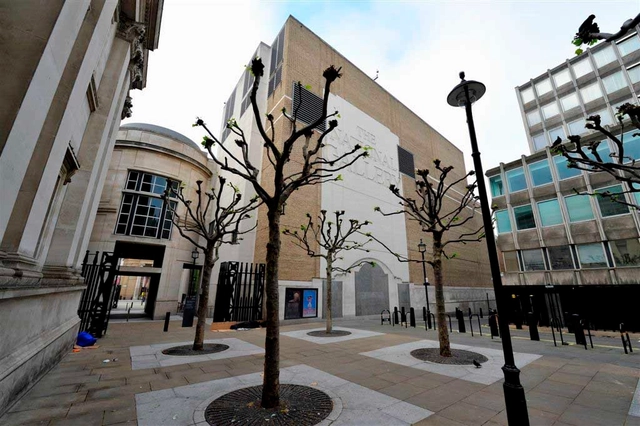
To mark the 30th anniversary of Prince Charles' famous "Carbuncle Speech", last week the RIBA held a discussion focusing on the speech's impact on British architecture. The speech in which the prince protested the design of a proposed extension to the National Gallery has been seen by some as expanding the debate around architectural quality, but the panelists on the night disagreed with this view: Owen Hatherley said "The idea he broadened the debate is curious. He shut it down." Similarly, Charlie Luxton commented "He turned the debate from one of quality to one of style – and architecture suffered." You can read more of the panelists' views on BD Online.
The New York chapter of the AIA has officially voiced its objection to a proposal by the RIBA to suspend the Israeli Association of United Architects (IAUA) from the International Union of Architects (UIA). A letter drafted by AIANY President Lance Jay Brown and Chief Executive Rick Bell, and unanimously approved by AIANY's board of directors, states that "the UIA's stated goal is to unite the architects of the world without any form of discrimination", and refers to the proposal to suspend the IAUA as "directly antithetical to the purpose of the much appreciated umbrella organization".
The original proposal by the RIBA, adopted on March 19th, condemns the IAUA for its failure to "resist projects on illegally-occupied land" in the West Bank and Gaza, and calls on the UIA to suspend the body until it "acts to resist these illegal projects, and observes international law, and the UIA Accords and Resolution 13."
Read on for more on the controversial backstory to the RIBA's motion
The winners of the 2014 RIBA London Awards were announced in a ceremony last night. The awards recognize the RIBA London Architect of the year and 2014 RIBA Emerging Architect of the Year (Haworth Tompkins and RCKa, respectively) as well as a host of project awards which join other regional awards to make up the longlist for the 2014 RIBA Stirling Prize.
The RIBA has found that many UK practices rely too heavily on a single sector, or even a single client, putting them at risk should work in that sector suddenly dry up. These statistics are among the findings of the RIBA's annual Business Benchmarking Survey, the only mandatory survey of all chartered practices in the UK.
The benchmarking survey estimates that a maximum of 40% of a practice's income can safely come from a single sector, but it found that 60% of practices with 20-50 staff and 54% of practices with over 50 staff failed to meet this rule of thumb. Furthermore the survey found that 90% of practices with fewer than 20 staff relied on just a single client for over 40% of their income.
Read on after the break for more results of the RIBA Business Benchmarking Survey
The Royal Institute of British Architects' (RIBA) latest Future Trends Survey indicates a small drop from February's index, "down to +35 from its all-time high of +41." Despite this, "confidence levels about an improvement in future workloads for architects remain very solid." All types of practice size, ranging from those with fewer than 10 employees to those with over 50 staff, are "reporting positive balance figures." The strongest future workload forecasts came from Scotland and the North of England, suggesting that "the recovery in confidence levels is now widespread across the UK and has spread beyond London and the South East."
RIBA has announced the first round of RIBA Regional Award winners, all of which will be considered for the RIBA national awards. From the list, Mecanoo's Library of Birmingham takes center stage, as the artisan-inspired structure received a number of awards, including the West Midlands Building of the Year and Emerging Architect. Check out the complete list, after the break...
The latest Future Trends Survey, published by the Royal Institute of British Architects (RIBA), indicates an "all-time high" for architects' workload with "confidence levels about future workloads continuing to rise." The February report shows +41 in the Future Trends Workload Index, up from +35 in January, with the highest balance figures coming from London (+54) and Scotland (+60). The optimistic report suggests that there "still appears to be significant spare capacity within the profession," noting that many practices actually under-employed in the last month.