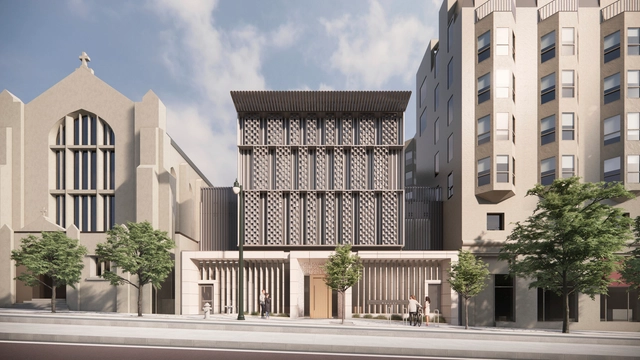
Designed by Skidmore, Owings & Merrill (SOM), the new American Buddhist Cultural Society Temple, also known as the San Bao Temple, has broken ground in San Francisco, California. Located on Van Ness Avenue, the new six-story facility will include a community center, a Buddhist shrine, and a meditation room on the upper levels, along with three levels of private dormitories for visiting monastics and volunteers. In the center of the building, a light-filled atrium offers additional amenities, such as a public art gallery, bookstore, teahouse, and community gathering hall. The temple is expected to open by the end of 2024.
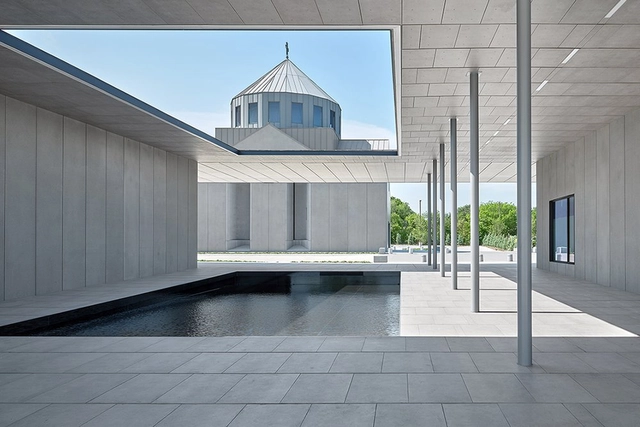
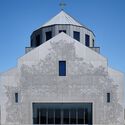
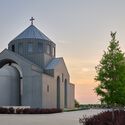
David Hotson (b. 1959) founded his New York City-based practice David Hotson Architect in 1991. His projects – houses, loft residences, penthouse apartments, and galleries – are known for their remarkable spatial and visual complexity. His Church of Saint Sarkis in Carrollton, Texas is especially distinguished for the luminous and sculptural qualities of its interior space as well as the exterior grade high-resolution digital printing on its west façade. Earlier this year this appealing work won the US Building of the Year award by World-Architects.com. Hotson obtained his Bachelor of Environmental Design from the University of Waterloo in Ontario, Canada, and earned his Master of Architecture in 1987 at Yale.
In the following interview with David Hotson, we discussed the architect’s design process, focusing on making concave spatial voids legible and primary, being inspired by Byzantine architecture and his favorite building ever built, what structure he considers the most important work of contemporary architecture, what makes his award-winning Church of Saint Sarkis special, and the use of space and light as the essential tools in creating architecture as a figural void and ultimately an art form.
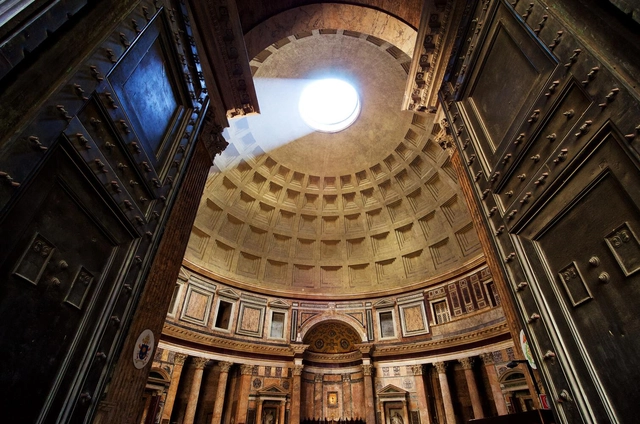
The significance of daylight in volumes of space exceeds its function of illumination. Light is a creative tool manipulated by architects to infuse a space with a metaphysical spirit, influencing the emotional states of its occupants. Having a phenomenological effect on the human psyche, light and shadow have been played with to invoke a sense of divinity and spirituality into the character of religious buildings. The interplay between architecture and light is a powerful one, shaping a deeper experience of spirituality.
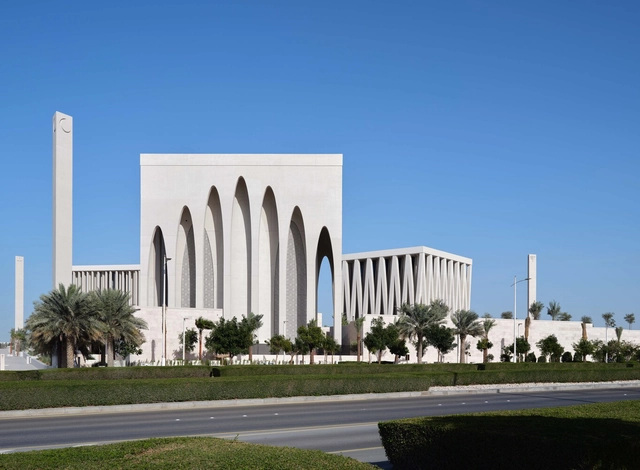
Abrahamic Family House, overview. Image Courtesy of Adjaye Associates
Designed by Adjaye Associates, the Abrahamic Family House is a landmark project located in the Saadiyat Cultural District in Abu Dhabi, the capital of the United Arab Emirates. The center encompasses three separate houses of worship: a mosque, a church, and a synagogue, along with spaces for gathering and dialogue. First announced in 2019 following an international competition, the interfaith complex was officially inaugurated and opened to worshippers on 16th February 2023. Access to the forum and guided tours will be available to visitors from 1 March 2023.
After two weeks of voting in our 14th edition of the Building of the Year Awards, our readers have narrowed down over 4,500 projects to just 75 finalists across 15 categories, casting over 100,000 votes. This year's awards celebrate the very best in design, innovation, and sustainability from around the globe, with the shortlist featuring an exceptional range of projects, from a house in a favela to cutting-edge cultural centers and innovative public spaces that are sure to impress. As a crowdsourced award, we are proud to say that your selections are a true reflection of the state of architecture, and this year's finalists are no exception.
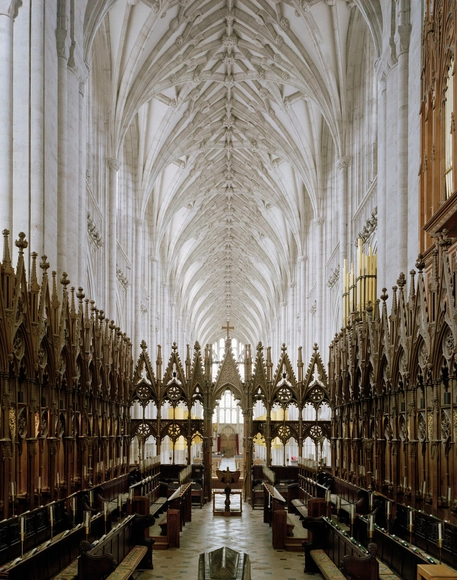
Using only natural light to document English cathedrals can turn into a logistical and technical challenge. However, Peter Marlow's photography has resulted in a remarkable series of iconic spiritual sites whose contemplative atmosphere is rarely accessible to others. Looking east with the camera towards the nave as the dawn light streamed through the main window opens a purist and mystical perspective to the time when these sacred structures were erected.
What is good architecture? More than two thousand years ago, Vitruvius would have answered that good architecture is that which contemplates three basic principles: firmitas (firmness), utilitas (utility), and venustas (beauty), as he described in his treatise De Architectura, and probably no one would have questioned it. Today, this broad question is capable of eliciting hundreds of answers, all personal and subjective, which have to do with the experience of each person.
The Chapel of St. Ignatius in Seattle, designed by Steven Holl Architects, has been honored by the American Institute of Architects (AIA) with its Twenty-five Year Award. AIA’s award is conferred on a building that has set a precedent, stood the test of time for 25 to 35 years and continues to set standards of excellence for its architectural design and significance. The Chapel of St. Ignatius finished in 1997, reflects the ideal of the Jesuit practice, a religious order of the Catholic Church, in which no single method of worship is prescribed. Instead, the sect recognizes that “different methods helped different people.” That idea is reflected in the Chapel of St. Ignatius, Seattle University’s main chapel, where differences in light unify to support the worship and ritual needs of the university community.
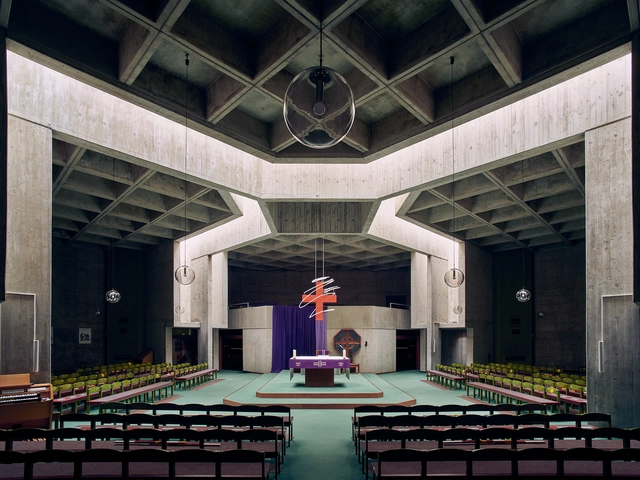
If one were asked to picture a Catholic Church, the first image to come to mind would probably resemble a medieval gothic cathedral with buttresses, pointed arches, and a spire pointing toward the sky. On second thought, many more styles could easily be identified as catholic architecture: the simple yet grandiose structures of the Romanesque or maybe the ornate styles of Baroque and Rococo. An image more difficult to associate with sacred architecture is that of Modernism. The Roman Catholic Church is a particularly conservative establishment. Modernism, on the other hand, is revolutionary; it is rational, functional, and technical; it rejects ornaments and embraces innovation. Surprisingly, in the years after the end of the Second World War, places of worship defied expectations. Blocks of concrete, raw materials, angular shapes, and exposed structures have all been employed to break from tradition and create churches that barely resemble a church. This article will explore Modernist mid-century Church architecture with the support of images from Jamie McGregor Smith.
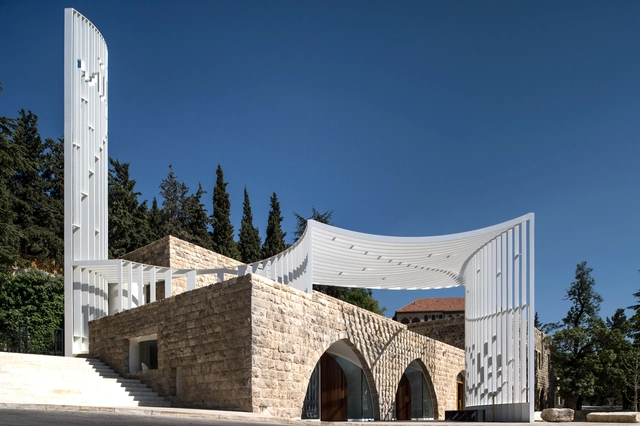
Amir Shakib Arslan Mosque / L.E.FT Architects. Image Courtesy of Abdullatif Alfozan Award for Mosque Architecture
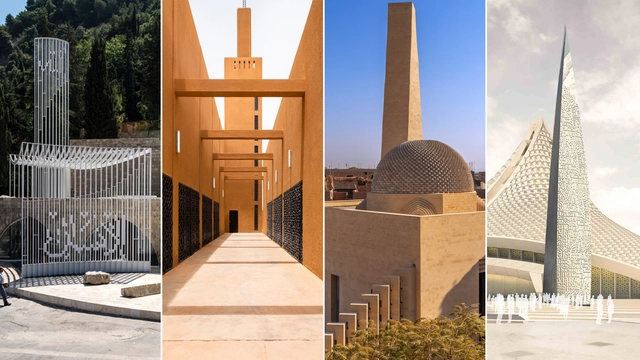
The Abdullatif Alfozan Award for Mosque Architecture has honored seven awarded mosques in its third cycle under the theme "Mosque architecture in the twenty-first century", evaluating their unique architectural concepts as well its connectivity with local communities.
https://www.archdaily.com/974298/projects-in-saudi-arabia-lebanon-and-indonesia-among-the-winners-of-the-iii-abdullatif-alfozan-award-for-mosque-architectureArchDaily Team
It is easy to show cool images of adaptive reuse. The contrast of living history and control over it makes for dynamic visuals. But there is a deeper meaning to adaptive reuse. Architecture embodies humanity and humanity changes, so our buildings change.
Islamic architecture has long been acknowledged as one of the most significant and influential typologies that translates the religion's core teachings and beliefs into structures. One of the most striking characteristics of architecture in the Islamic world is the focus on interior spaces. Whether it is a methodical organization of interior layouts to make use of natural light and ventilation, or the intricate detailing of ornamentation through carvings and paintings, the contrast between exterior and interior is palpable. However, one particular architectural feature defies the norms of modest facades, and stands as a strong visual statement of the presence of Islam. The minaret's distinctive structure strengthened its presence as a focal point, guiding people towards the religion's holiest space. In this article we will explore the reason behind the use of minarets and how its function has evolved culturally and architecturally.
Courtesy of OMA New York, Photography by Jason O’Rear
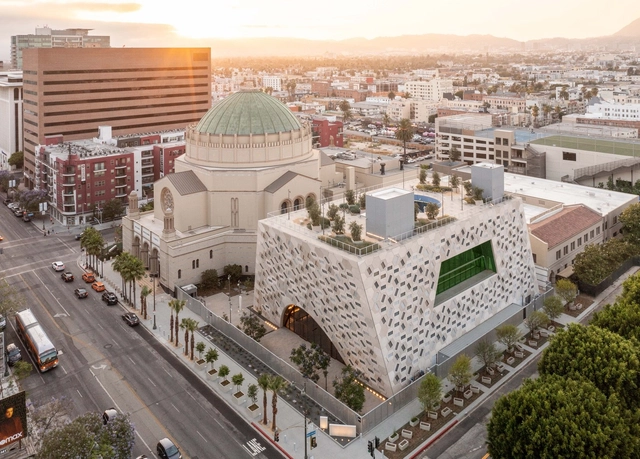
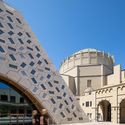
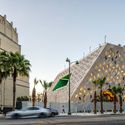
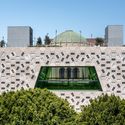
OMA / Shohei Shigematsu has completed its Audrey Irmas Pavilion at Wilshire Boulevard Temple, the firm’s first commission from a religious institution and first cultural building in California. Expected to open in January 2022, “the new 55,000 square foot Pavilion is a response to the Wilshire Boulevard Temple’s vision for its campus to create a much-needed space to convene”.
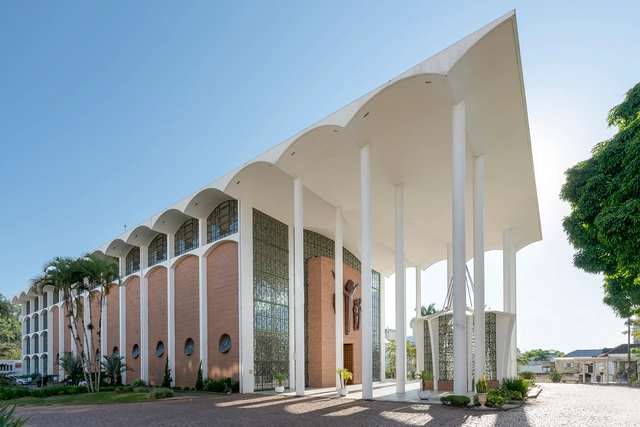
In the hilly landscape of Blumenau, a city located in the state of Santa Catarina, in southern Brazil, stands a gem of modern religious architecture by Gottfried Böhm, who recently passed away at the age of 101: the Mother Church of São Paulo Apóstolo, built from 1953 to 1963.
The São Paulo Apóstolo Church was built before the São Luiz Gonzaga Church in Brusque - two religious temples designed by Böhm with the office he inherited from his father, the architect Dominikus Böhm (1880-1955).
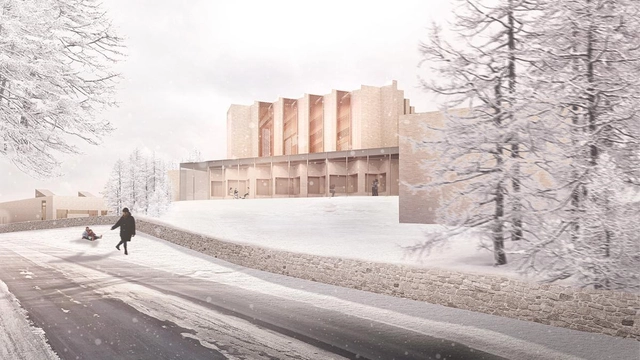
Henning Larsen has won a competition to design Højvangen Church, the first church to be built in SkanderborgParish in over 500 years. The new intervention, set to be completed and inaugurated by December 2024, will be a new public gathering point in the growing residential area of Højvangen in Skanderborg, Denmark.














.jpg?1656484624&format=webp&width=640&height=580)
.jpg?1656484650 "© Paul Warchol Photography")
.jpg?1656484668 "© Paul Warchol Photography")
.jpg?1656484634 "© Paul Warchol Photography")
.jpg?1656484624)