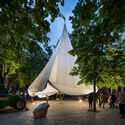
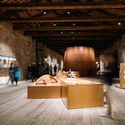
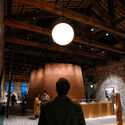
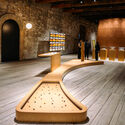
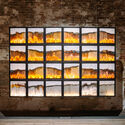
Austrian Pavilion at Expo Osaka 2025. Image Courtesy of Expo Austria
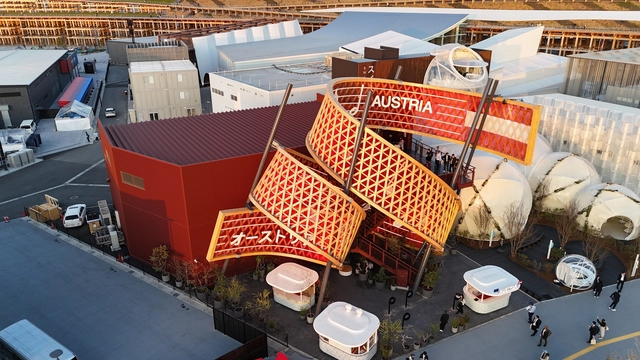
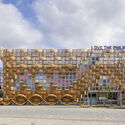
BWM Designers & Architects has just completed the design for the Austrian Pavilion at Expo Osaka 2025. Titled "Austria. Composing the Future," the pavilion reimagines the expo's theme, "Designing Future Society for Our Lives," through a music lens, suggesting a future that is not only designed but also composed. In collaboration with facts and fiction, the pavilion and exhibition embark on a journey through Austria's musical heritage and witness its transition into the future. The 900 square meters pavilion is located between the pavilions of Switzerland and Ukraine in the section "Empowering Lives."
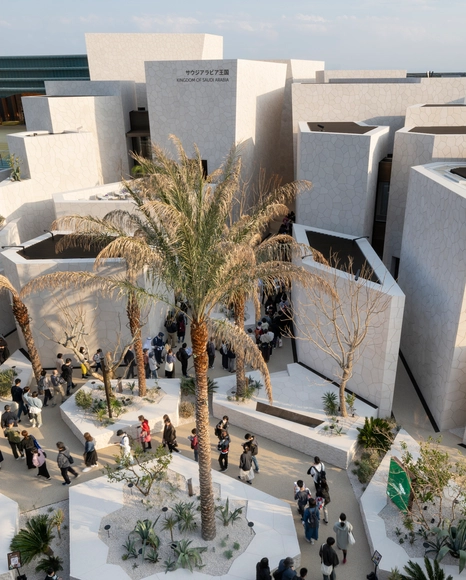
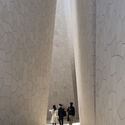
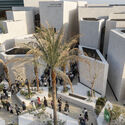
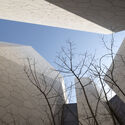
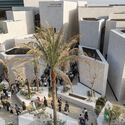
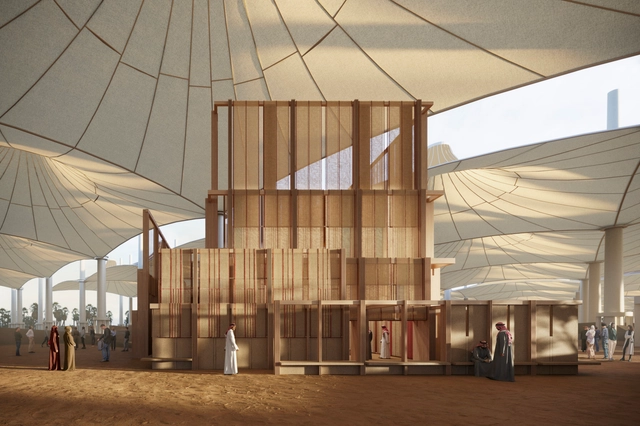
The national pavilion of the Kingdom of Saudi Arabia welcomes its first visitors at Expo 2025 Osaka. The latest photographs showcase Foster + Partners's design, aiming to create a spatial experience that evokes the character of Saudi Arabian towns and cities. Positioned at the Yumeshima waterfront, the pavilion offers visitors an engaging journey of discovery through the 'village' of meandering streets that alternate spaces of quiet reflection with venues for performances and cultural experiences.
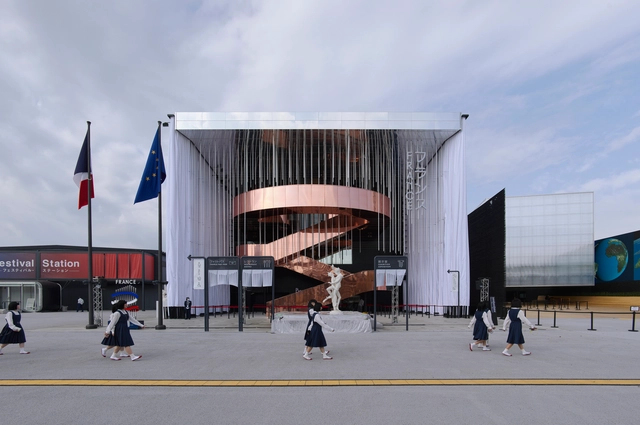
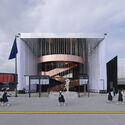
French architecture studio Coldefy and Italian architecture practice CRA-Carlo Ratti Associati have completed the 'Theatre of Life,' the project selected as France's national pavilion at Expo Osaka 2025, and welcomes visitors until 13 October. The pavilion welcomes both natural and artificial habitats, aiming to illustrate how design can connect human and non-human worlds while showcasing France's contribution to culture and the natural environment. In the exhibition, the visitors are invited to explore France's multiple ecosystems and rediscover a connection to nature.
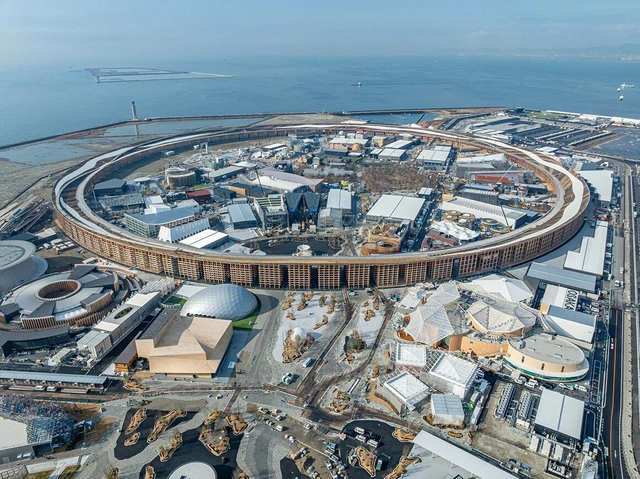
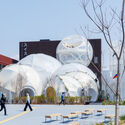
Expo 2025 Osaka has officially opened on April 13, 2025, at Yumeshima, Osaka. Under the overarching theme "Designing Future Society for Our Lives," the Expo set out to explore three pivotal subthemes: Saving Lives, Empowering Lives, and Connecting Lives. These themes aim to unite architectural and design enthusiasts by demonstrating how cutting-edge technology and innovative solutions can address global challenges, foster dialogue inspire collective action.
Public spaces are more than just physical voids in the urban fabric—they are stages for social interaction, cultural expression, and collective memory. In times of social fragmentation and environmental stress, these spaces can serve as catalysts for healing, offering safe environments where communities can reconnect. Through thoughtful design and participatory processes, public space interventions can rebuild trust, promote mental well-being, and foster a renewed sense of belonging among community members.
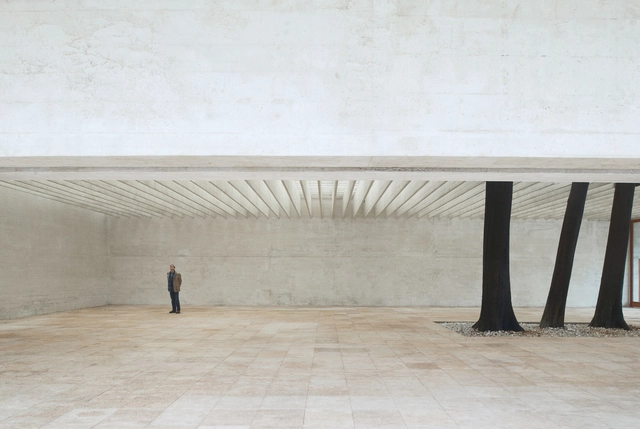
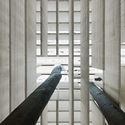
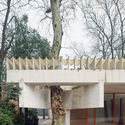
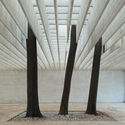
As a result of the ideas competition organized by the governments of Sweden, Finland, and Norway in 1958, Sverre Fehn's Nordic Pavilion won first prize, becoming one of the most significant works of his career and one of the most outstanding Scandinavian architectural achievements during the mid-20th century. Designed to create a space at the Venice Biennale for the biennial exhibitions of these countries, Fehn's proposal addressed several key architectural challenges—ranging from its integration with the site and incorporation of pre-existing elements to the handling of physical boundaries and uniform natural lighting. His design explored the interaction between architecture and trees, the flexibility in the exhibition space, the filtering of light, the connection between interior and exterior, the concept of movement through space, and the display of artworks.
Videos
Courtesy of Katia Sei Fong, Ken Sei Fong, Luis Sei Fong
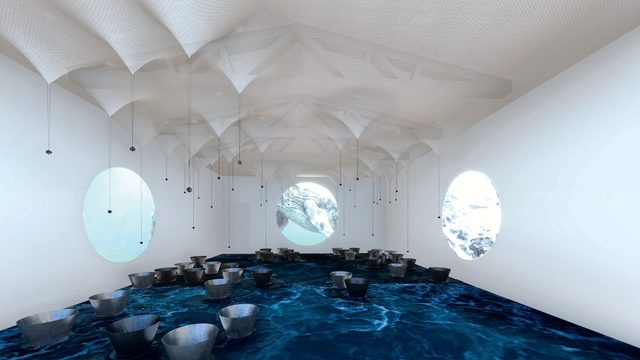
The national exhibition of Uruguay at the 2025 Venice Architecture Biennale, titled "53.86% Uruguay, Land of Water," explores the intrinsic relationship between architecture, territory, and water. Curated by architects Katia Sei Fong and Ken Sei Fong, along with visual artist Luis Sei Fong, the exhibition proposes that we may be entering the age of water, the "Hydrocene", and that the way humanity manages and conserves this resource will shape its future. In this context, the project highlights that Uruguay's maritime territory (53.86%) is larger than its land territory. Water, therefore, is not only a natural resource but a fundamental element of the country's history and culture, essential to its development.
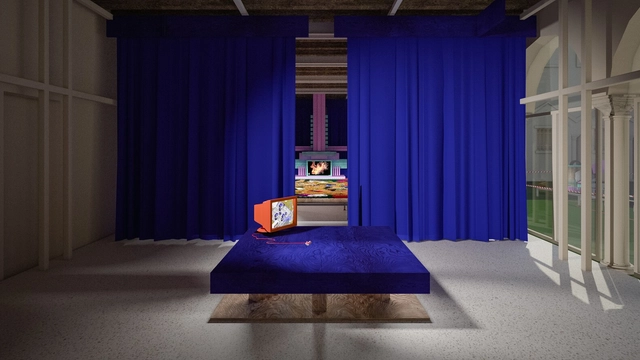
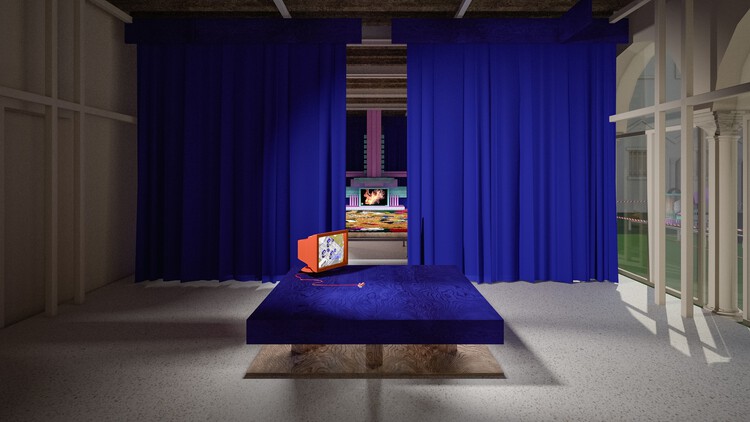
The Bulgarian contribution to the 2025 Venice Architecture Biennale is an experimental installation titled Pseudonature, situated at the intersection of nature and technology, reality and simulation. Curated by architect and designer Iassen Markov, the project explores the future of sustainability in a world where natural processes are increasingly mediated by artificial intelligence and human intervention. The exhibition features an outdoor installation that exposes technological and climate paradoxes and an interior space designed as a reimagined traditional Bulgarian room. Outside, physical interventions disrupt natural balances, highlighting the fragile interplay between technology and the environment. Inside, the space shifts to a setting for contemplation, where restoring equilibrium becomes a collective and introspective challenge.
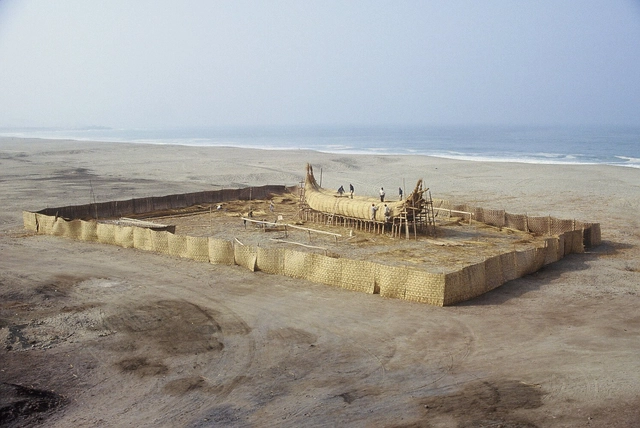
"Living Scaffolding" is the name of the proposal selected to represent Peru at the 19th International Architecture Exhibition – La Biennale di Venezia. Curated by architects Alex Hudtwalcker, Sebastián Cillóniz, and Gianfranco Morales, along with historian José Ignacio Beteta, the exhibition tells the story of a totora reed raft that, in 1988, embarked on a sea journey to other ports in South America and Polynesia. Its unprecedented expedition began on the Peruvian coast south of Lima and lasted 54 days at sea. The raft was the result of a collective, handcrafted effort and a significant structural challenge. The exhibition aims to highlight the importance of ancestral knowledge in addressing such challenges, celebrate materials essential to Peruvian cultural heritage, and expose the value of collective intelligence.
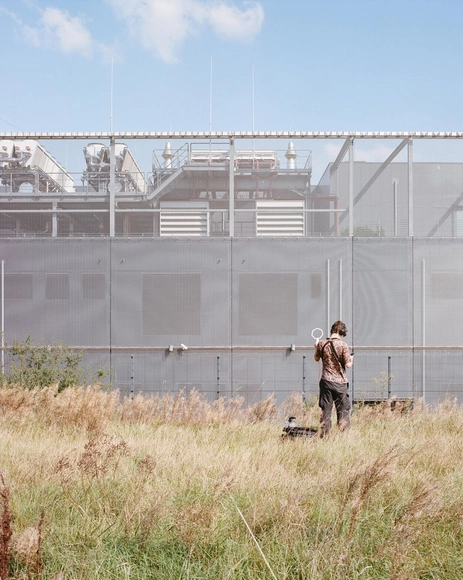
The Luxembourg pavilion at the 19th Venice Architecture Biennale will offer visitors an experience focused entirely on sound. Sonic Investigations, curated by architects Valentin Bansac, Mike Fritsch, and Alice Loumeau, is an immersive invitation to shift focus from the visual to the sonic. The sound installation, located in the Arsenale's Sale d'Armi, is based on a practical and theoretical investigation that re-examines the country's territory through field recordings capturing a range of sounds from biological, geological, and anthropogenic sources woven into the landscape. The installation creates an embodied experience of space, emphasizing the value of sensorial approaches in spatial practices and exploring the question: How can we reveal the entangled character of specific contemporary situations in Luxembourg?
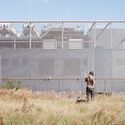
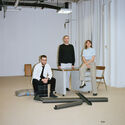
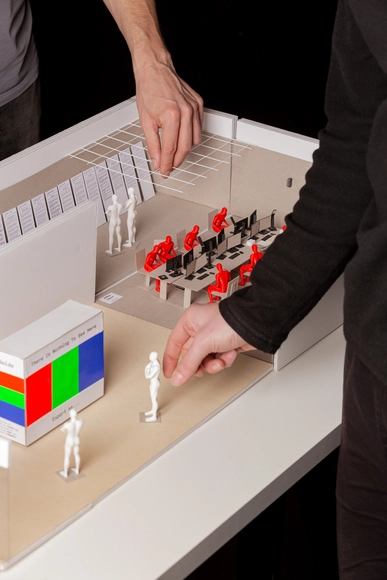
"There Is Nothing to See Here" is the title of the exhibition hosted in the Hungarian Pavilion at the Venice Architecture Biennale 2025. Since 2015, the Ludwig Museum of Contemporary Art has managed and organized both the temporary exhibition and the building. This year, it presents an alternative vision for the future of the profession. Curated by creative director and assistant professor Márton Pintér, in collaboration with Ingrid Manhertz, András Graf, and Júlia Böröndy, founder of the platform Women in Architecture (WIA), the exhibition will showcase the work of 12 architecture professionals who apply their expertise in fields beyond the profession.
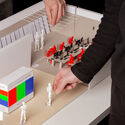
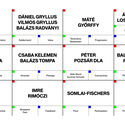
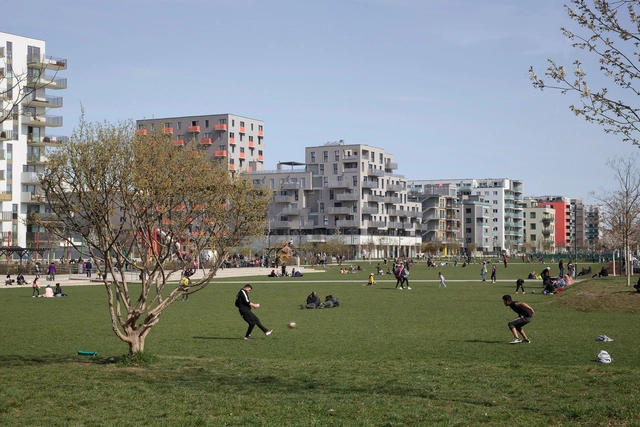
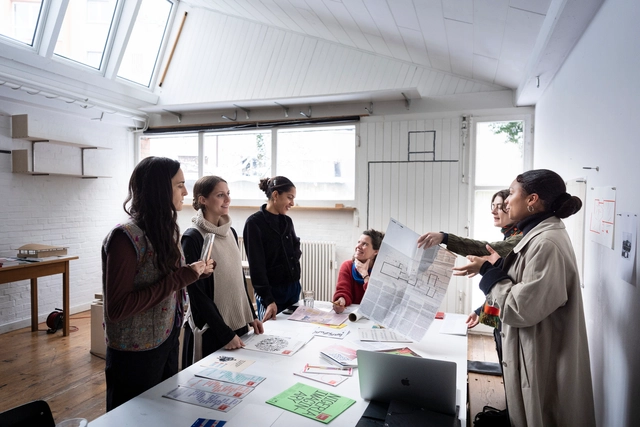
What defines good housing and a good living environment? What political framework is needed to create them? How can we design socially equitable, affordable housing? And what strategies lead to the best results? These are the questions guiding Lorenzo Romito, Sabine Pollak, and Michael Obrist's proposal for the Austrian Pavilion at the Venice Architecture Biennale 2025. The building, designed by Josef Hoffmann and inaugurated in 1934, will become an interactive space with the opening of the "Agency for Better Living", an exhibition dedicated to exploring the new political dimension of the fundamental right to housing. The proposal takes as its starting point a comparison of social housing models in Vienna and Rome, creating a space for sharing ideas on better living for all.
The Swiss Arts Council Pro Helvetia, represented by Sandi Paucic and Rachele Giudici Legittimo, has announced that the Swiss Pavilion at the Venice Architecture Biennale 2025 will host the exhibition "The final form is determined by the architect on site," curated by Elena Chiavi, Kathrin Füglister, Amy Perkins, Axelle Stiefel, and Myriam Uzor. This all-female team poses the question: What if Lisbeth Sachs, rather than Bruno Giacometti, had designed the Swiss Pavilion? The exhibition will explore this question by reviving one of the iconic works of Lisbeth Sachs, one of the first registered female architects in Switzerland and a contemporary of Giacometti.
2025 promises to be a landmark in architecture, heralding a vibrant renaissance of creativity and exploration. As societies confront challenges such as climate change, rapid urbanization, and technological evolution, architecture is both a mirror to these dynamics and a compass pointing toward a sustainable and inclusive future. This year's architectural calendar offers abundant opportunities to celebrate the discipline's transformative power — from boundary-pushing festivals to thought-provoking exhibitions that explore pressing cultural and environmental narratives.
From well-established biennials to inaugural gatherings, including the World Architecture Festival 2025, Desert X Al Ula, and the COP Climate Conference, the 2025 calendar highlights themes such as sustainability, heritage, and community. These events underscore architecture's unique ability to shape a better future, addressing global challenges while honoring cultural diversity and design ingenuity.
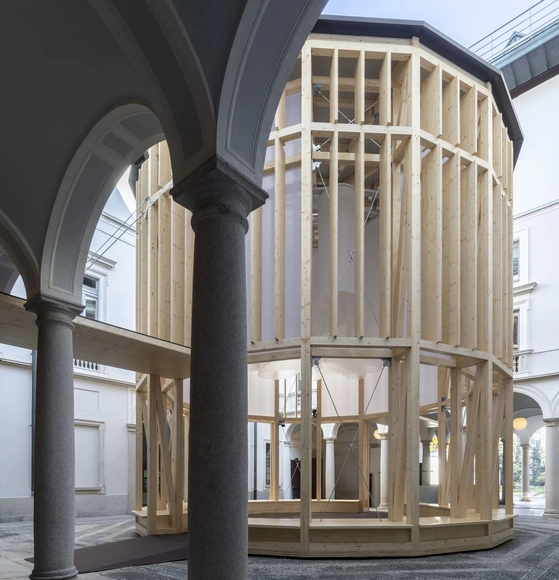
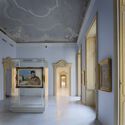
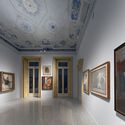
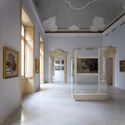
Mario Cucinella Architects (MCA) has reimagined the architectural design of Palazzo Citterio in Milan, Italy, integrating historical and contemporary elements to create a dynamic cultural space. As part of the Grande Brera initiative, which seeks to unify key cultural institutions such as the Pinacoteca di Brera and the Braidense National Library, the palazzo now stands as a hub for modern and contemporary art. Ultimately, the project aims to reestablish Palazzo Citterio as a significant cultural and social landmark, fostering community engagement and interaction.
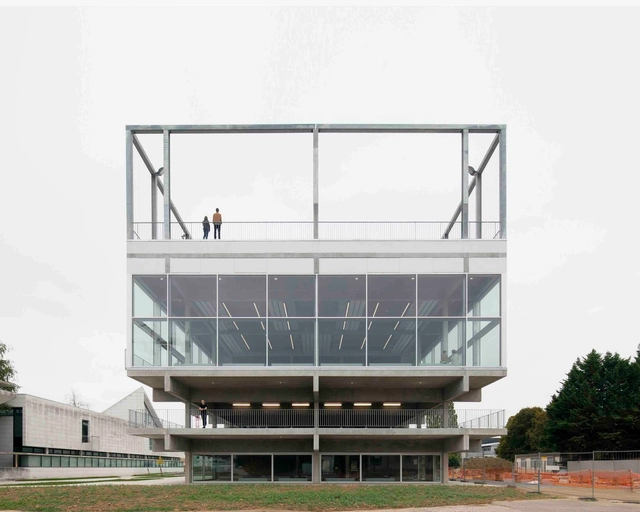
The architecture of Studio Muoto is one that encompasses endless definitions of what architecture should be, but most importantly, of what architecture can become. The scope of work of the Paris-based practice founded in 2003 by Gilles Delalex and Yves Moreau includes projects in the fields of architecture, exhibition design, urban planning, teaching, and research. All of this has led to an architecture of minimal structures that age gracefully, an architecture that evolves and adapts with time, and that is sustainable economically and environmentally.
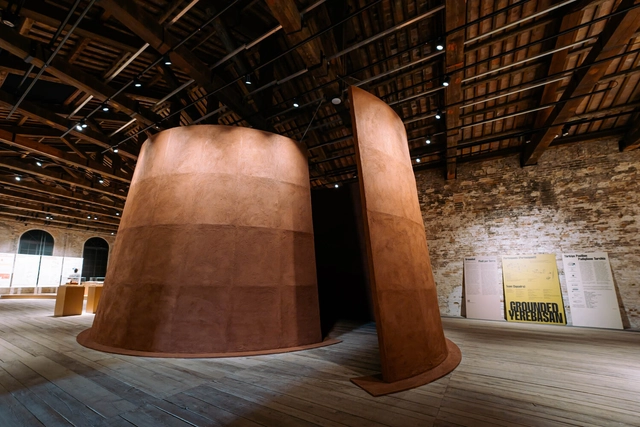
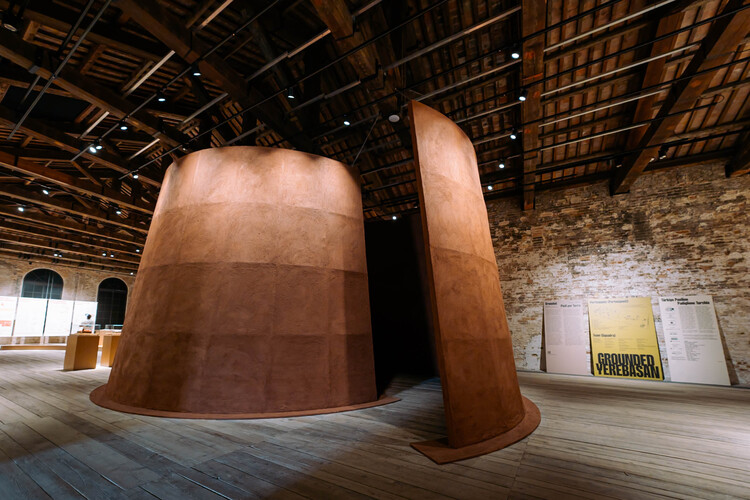
Commissioned by the Istanbul Foundation for Culture and Arts (İKSV), the Türkiye Pavilion presents the exhibition titled "Grounded" at the 19th International Architecture Exhibition of La Biennale di Venezia in 2025. Curated by Ceren Erdem and Bilge Kalfa, the project explores soil as a medium that carries both ecological and cultural memory, presenting it as an active ecosystem with the capacity to store and transmit information. Based on research, the project uncovers new possibilities that integrate diverse artistic and interdisciplinary perspectives. Curators invite visitors to reconsider their relationship with nature and to engage with the complexity and significance of the ground beneath their feet. The exhibition features contributions from 10 individual participants and 10 collaborative teams, alongside a selection of works chosen through an open call.
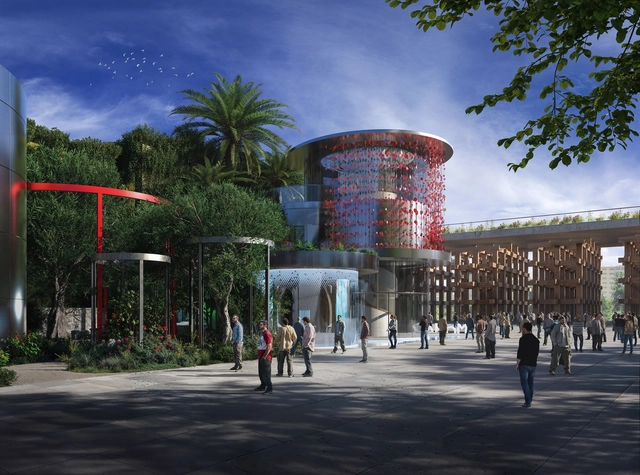
The MonacoPavilion at Expo 2025 Osaka explores the fusion of Mediterranean and Japanese landscapes, creating a unique cultural dialogue through architecture and landscape design. The pavilion's design, centered around a harmonious blend of Mediterranean and Japanese garden elements, embodies Monaco's global initiatives and its commitment to environmental stewardship. Reflecting the Expo's theme, "Take Care of Wonder," the pavilion invites visitors to experience a captivating and serene environment that celebrates both nature and culture.