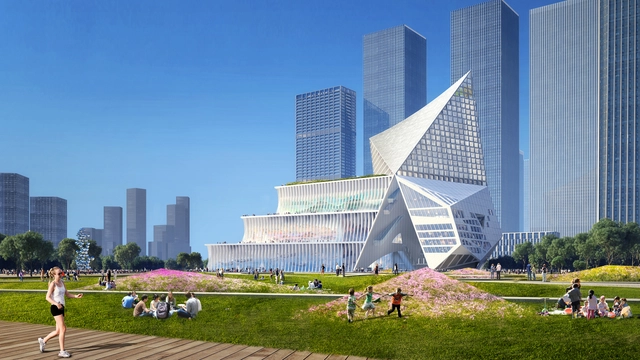
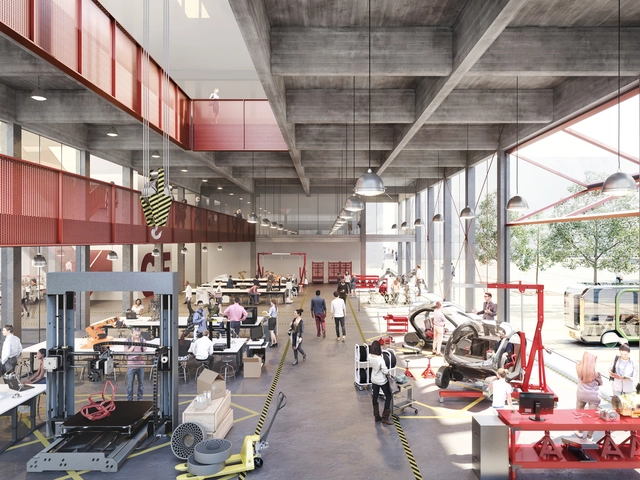
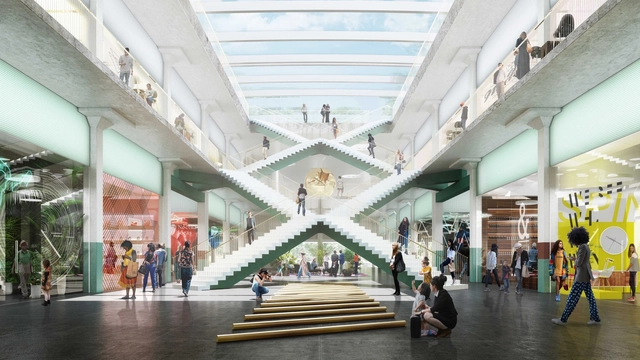
OMA / Iyad Alsaka have unveiled their design for a major educational masterplan in Dubai. Designed for the Government of Dubai Knowledge Fund, on a site located in the centre of Dubai International Academic City (DIAC), the scheme aims to be the world’s largest free zone dedicated to higher education.
https://www.archdaily.com/928700/oma-unveil-major-education-masterplan-in-dubaiNiall Patrick Walsh
With the extensive list of acclaimed alumni of his firm, OMA, it is not a stretch to call Rem Koolhaas (born 17 November 1944) the godfather of contemporary architecture. Equal parts theorist and designer, over his 40-year career Koolhaas has revolutionized the way architects look at program and interaction of space, and today continues to design buildings that push the capabilities of architecture to new places.
The challenges associated with the provision of adequate and affordable housing around the world demand that architects respond with original solutions that challenge traditional building forms, typologies and methods of delivery.
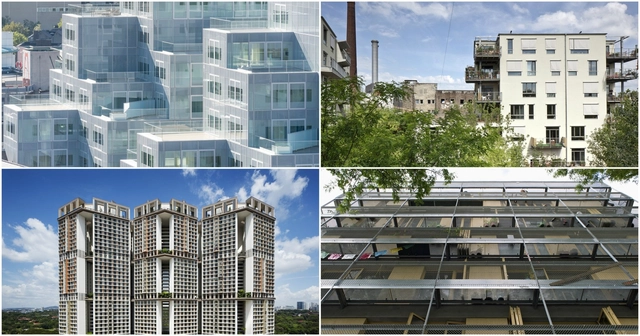
PLANE–SITE brought together the architects of four inventive housing projects. These projects represent a diversity of approaches to similar housing challenges across radically different global contexts. From the redensification of European urban centers to the rapid urbanization of the tropical Asian megacity, these radical housing models challenged existing paradigms in order to advance resident well-being as their principle design concern. In contrast to Schumacher’s divisive speech, the panel illustrated projects that were deliberately designed to promote community life and social interaction between residents – and in some cases also with other citizens in spaces that blur the line between public and private.
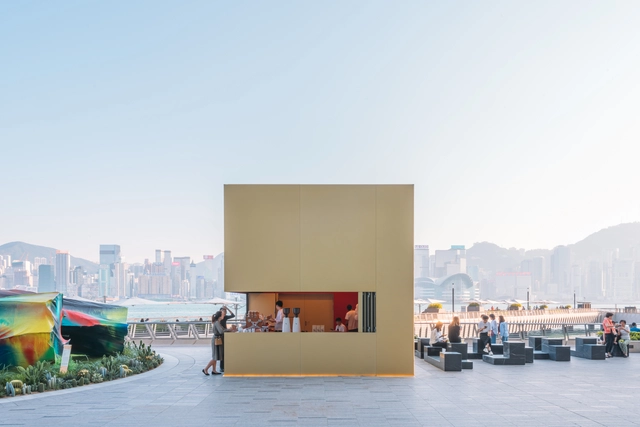
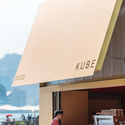
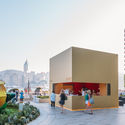
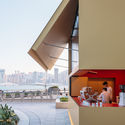
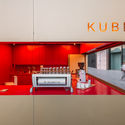
OMA revealed the KUBE, an installation located in front of the main entrance of K11 MUSEA, on Hong Kong’s waterfront. The multi-functional installation creates an urban landmark, amidst the dense skyline of the city, through very simple yet engaging geometry.
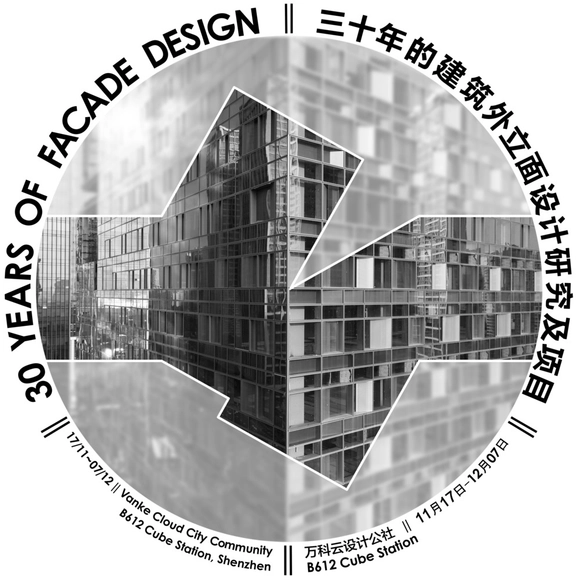
VS-A is a facade designing company that celebrates in Shenzhen it's 30th anniversary with an exhibition and 2 conferences. The first conference coincides with the opening of the exhibition, and will question what is the international approach, if there is any, with Partners from OMA, Steven Holl Architects, AREP and Jacques FERRIER.
Led by Iyad Alsaka, Reinier de Graaf, Jad Semaan, and Adrianne Fisher, OMA’s proposal was selected as the winning entry for a residential project on Kuwait City’s waterfront. In collaboration with local partner Kuwait-based consultant Pace, The Wafra tower will be OMA's first venture in the country upon its completion.
OMA's proposal won the competition for the new KaDeWe department store and hotel in Vienna’s Museumsquartier. Led by Ellen van Loon, Ippolito Pestellini Laparelli, and Laurence Bolhaar, the project will be OMA’s first venture in Vienna, upon its completion.
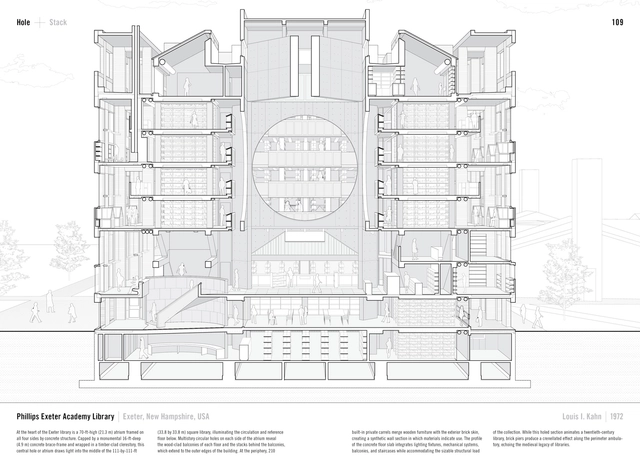
Phillips Exeter Academy Library by Louis I. Kahn (1972). Published in Manual of Section by Paul Lewis, Marc Tsurumaki, and David J. Lewis published by Princeton Architectural Press (2016). Image Courtesy of LTL Architects
For Paul Lewis, Marc Tsurumaki and David J. Lewis, the section “is often understood as a reductive drawing type, produced at the end of the design process to depict structural and material conditions in service of the construction contract.” A definition that will be familiar to most of those who have studied or worked in architecture at some point. We often think primarily of the plan, for it allows us to embrace the programmatic expectations of a project and provide a summary of the various functions required. In the modern age, digital modelling software programs offer ever more possibilities when it comes to creating complex three dimensional objects, making the section even more of an afterthought.
With theirManual of Section(2016), the three founding partners of LTL architects engage with section as an essential tool of architectural design, and let’s admit it, this reading might change your mind on the topic. For the co-authors, “thinking and designing through section requires the building of a discourse about section, recognizing it as a site of intervention.” Perhaps, indeed, we need to understand the capabilities of section drawings both to use them more efficiently and to enjoy doing so.
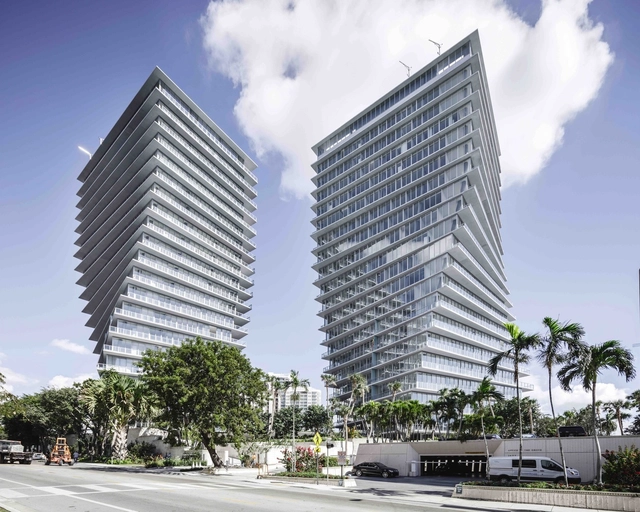
In the last decade, Miami has progressively transformed into a mecca of architecture and design. While the city’s tropical persona is most often associated with Art Deco, Miami offers a wide range of architectural styles from Mediterranean Revival to Miami Modern and everything in between. Over the years, the city has welcomed a some of the world’s leading talent including Pritzker Prize winners like “Queen of the Curves” Zaha Hadid, French visionary Jean Nouvel, Swiss duo Herzog & de Meuron, Frank Gehry and more – who have all left a lasting impression on Miami through their work. Whether visiting Miami Beach’s Art Deco district or the quaint, village-like Coconut Grove neighborhood, visitors can discover an array of awe-inspiring architecture no matter where their travels take them.
OMA has won the competition to design a new international financial center in Shenzhen, China. Called the IFEC, the project combines large scale conference facilities with a 400-room hotel and public programs. Located at the waterfront of Qianhai, the New District in the Pearl River Delta, the IFEC was designed to be a beacon for ships sailing along the 21st-century maritime silk road.
For its 9th edition, the Moscow Urban Forum continues to consolidate as one of the world’s most relevant urban conferences, bringing together a diverse group of architects, urbanists, city mayors, government officials, economists, developers, academics, citizens, and professionals from diverse fields and nationalities.
While Pierre de Meuron’s main keynote puts focus on ongoing developments in the city of Moscow, by showcasing the ambitious scheme to redevelop the Badaevskiy Brewery, the lectures and presentations acknowledged the diverse areas that shape the city, including topics such as mental health, lifestyle of the millennial generation, evolution of work, or delivery platforms. The evolution of the role of the architect was present, with a growing number of professionals now working on startups in the tech, infrastructure, real estate, construction, and mobility sectors, the new city makers.
Courtesy of Malcolm Reading Consultants / Hawkins\Brown
Five finalist teams have been selected in the MK:U International Design Competition to create alternative masterplan visions for a proposed new model university in the United Kingdom. The proposed new university, will focus on digital economy skills and practical, business-oriented courses; it also plans to offer fast-track two-year degrees. MK:U, a partnership between MKC and Cranfield University, will use the new University Quarter and the wider city as a ‘living lab’ to test out new concepts and ideas while inspiring students and citizens.
OMA Partner Jason Long has designed a new redevelopment of the historic Barbara Jordan Post Office in downtown Houston. Dubbed POST Houston, the 550,000 sf project will be re-used as a mixed-use cultural and commercial hub. Created for Lovett Commercial, the redevelopment rethinks the post building that was in use by the US government from 1936-2014. The new design aims to reinvigorate the city’s north downtown neighborhoods.
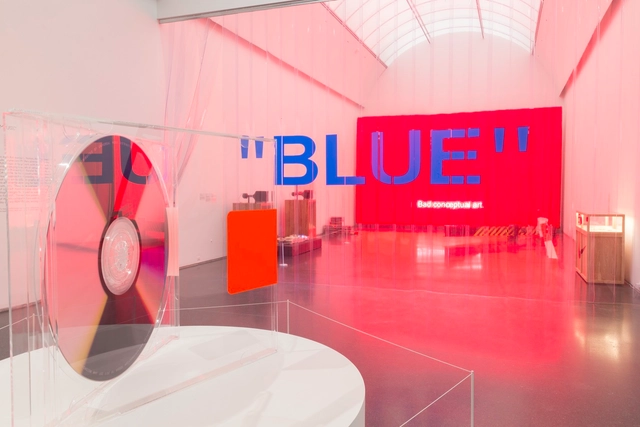
The Museum of Contemporary Art Chicago is presenting an exhibition devoted to the work of the ultra-modern, genre-bending artist and designer Virgil Abloh. Titled “Virgil Abloh: Figures of Speech” the immersive space has been curated by the Museum's Chief Curator Michael Darling, and Samir Bantal, a director at OMA’s research wing, focusing on the creative process and collaborative work of Abloh who is redefining fashion, art, and design.
Videos
Viper Room - Morphosis. Image Courtesy of Kilograph
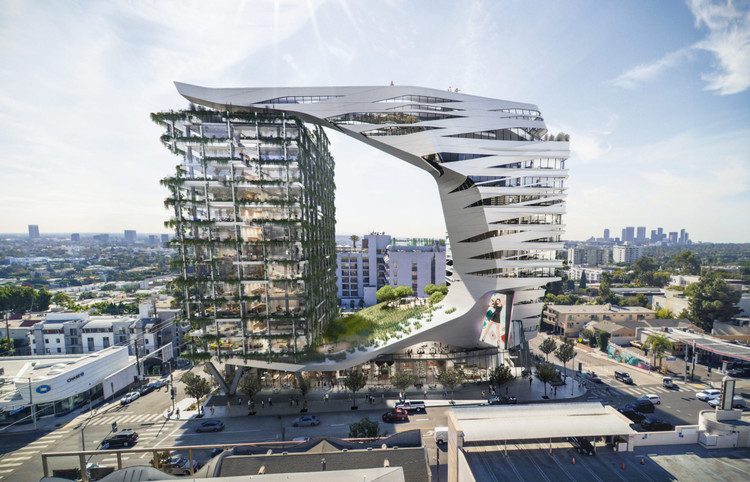
Architecture is defined by stories. It’s through visualization and communication of ideas that we construct new environments. Trained as an architect, Keely Colcleugh is a designer with a range of experience across the fields of architecture, graphic design, film, and visualization. In 2009, she founded Kilograph with a desire to combine leading edge visualization techniques with animation, interactive design, graphics, and branding. Now Keely is the CEO of a growing creative agency with offices in Los Angeles and Spain.
In an exclusive interview with ArchDaily, Keely talks about her transition to communication design, her love for Los Angeles, and how the art of visualization continues to evolve.
From the Publisher: The book presents the first historical analysis of the productive tension between the city and the architectural form. It introduces 20th-century theories to construct a historical context from which a new architecture-city relationship emerged. The book provides a conceptual framework to understand this relationship and comes to the conclusion that urbanization may be filled with potential, i.e. be a Good Metropolis.


_OMA.jpg?1574164282&format=webp&width=640&height=580)



_OMA.jpg?1571676595&format=webp&width=640&height=580)
_OMA.jpg?1571677954 "Courtesy of OMA")
_OMA.jpg?1571684132 "Courtesy of OMA")
_OMA.jpg?1571683555 "Courtesy of OMA")
_OMA.jpg?1571674872 "Courtesy of OMA")
_OMA.jpg?1571676595)
_OMA.jpg?1570009419&format=webp&width=640&height=580)
_OMA.jpg?1570009583 "Courtesy of OMA")
_OMA.jpg?1570010089 "Courtesy of OMA")
_OMA.jpg?1570010492 "Courtesy of OMA")
_OMA.jpg?1570009989 "Courtesy of OMA")
_OMA.jpg?1570009419)


_HI_RES_(5)_copy.jpg?1565259186 "© Robin Hill. ImagePark Grove / OMA | Shohei Shigematsu")


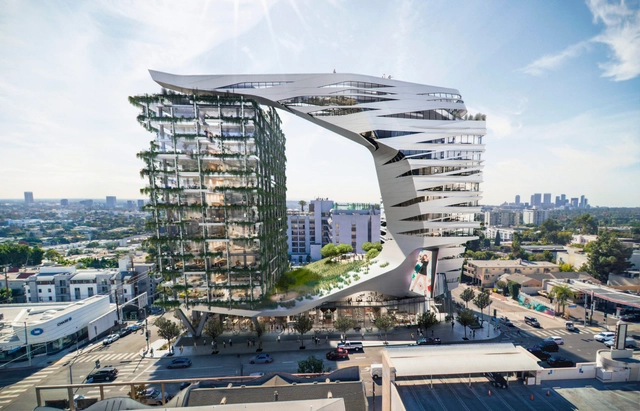
.jpg?1565259275 "Courtesy of Herzog & de Meuron. Image1111 Lincoln Road / Herzog & de Meuron")