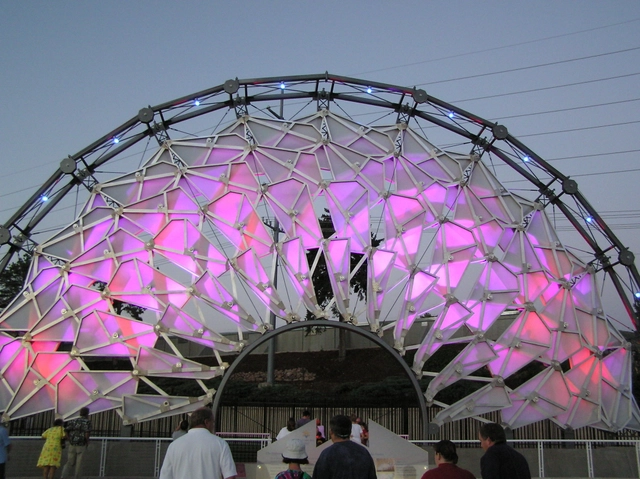
Pernilla Ohrstedt worked on Coca-Cola's 'Beat Box' Pavilion at the London 2012 Olympics. Image via Flickr CC. Used under Creative Commons
In their quest to find the best emerging young designers in the world, Metropolis Magazine reached out to critics, curators and other industry leaders to get their picks for the most promising young professionals in the worlds of architecture, art, graphic design and product design. The results feature a trend towards interdisciplinary and collaborative work. Particular highlights are Pernilla Ohrstedt, selected by John Cary of Public Interest Design; Elliott Hedman, selected by President of IDEO Tim Brown and Alexandra Daisy Ginsberg selected by Paola Antonelli of MoMA. You can view all the selections here.
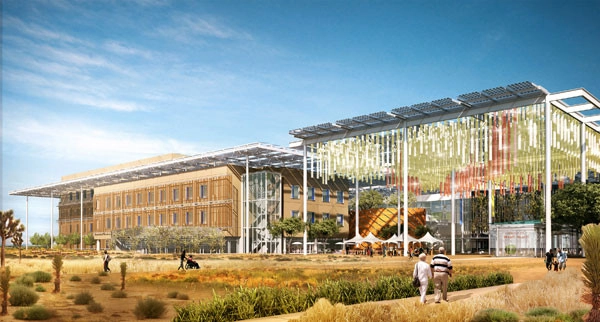
A render from Aditazz's entry to the Small Hospital, Big Idea competition. Image Courtesy of Aditazz
This article, originally posted in Metropolis Magazine as "Derek Parker's Third Act," tells the story of Aditazz, a Silicon Valley design startup founded by Deepak Aatresh, an entrepreneur with a background in silicon chip manufacturing. Now in collaboration with Derek Parker, a renowned veteran with six decades of experience in healthcare design, the pair could be set to revolutionize the way that hospitals are designed and built.
In June 2011, Derek Parker boarded a plane at San Francisco International Airport. The veteran health-care architect was headed to San Diego to deliver the most improbable presentation of his illustrious, six-decade-long career. For six months, he had worked as a consultant with a Silicon Valley design start-up called Aditazz. Shortly after Parker signed on, the new company had entered Small Hospital, Big Idea—a design competition launched by Kaiser Permanente. The first round, in which the firms remained anonymous, drew more than 400 entries. Eight of the nine shortlisted firms invited to San Diego were industry heavyweights. The ninth, to everyone’s surprise, was the unknown Aditazz.
In this article, originally published in Metropolis Magazine as "A Time-Out," Carl Robinson reminisces about the architecture of the Ho Chi Minh City he remembers from the 1960s and discusses how the urban landscape has changed in subsequent years. As Vietnam grapples with economic downturn, he asks, how might the city to develop?
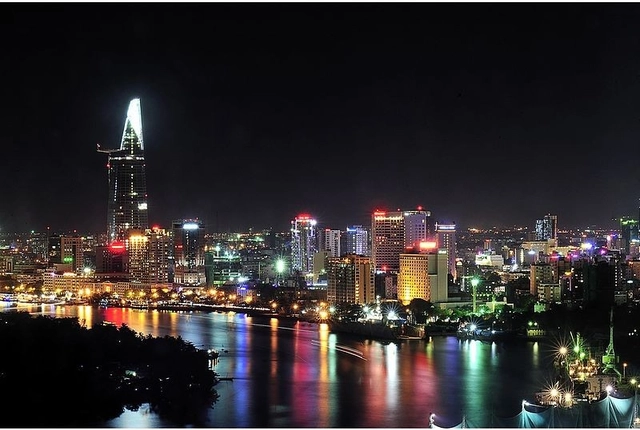
Over the past 15 years, as Vietnam finally left its long years of war behind, the former capital of South Vietnam—Saigon—became the country’s economic powerhouse. Until fairly recently, Ho Chi Minh City (HCMC) was a boomtown. Even before touching down at its busy international airport, I see new buildings rising up through the sprawling and tightly packed suburbs, splayed across the city’s surrounding delta landscape and muddy meandering rivers.
Off in the distance along the wide Saigon River, where the spires of the city’s French Colonial Roman Catholic cathedral once dominated downtown, an impressive silhouette of high-rises reach to the tropical sky. The city’s twenty-first-century feel continues through its sweeping new terminal (designed by GWA) and then down a wide boulevard past contemporary office buildings and shops. Eventually I reach the intimate tree-lined streets of old Saigon, the residential quarter created by the French more than 150 years ago.
https://www.archdaily.com/429027/could-ho-chi-minh-city-s-architecture-be-saved-by-its-economic-rutKatherine Allen
Many would consider Greg Lynn the leader of computer-aided design in architecture - but Lynn himself begs to differ. He and the Canadian Centre for Architecture recently collaborated on "Archaeology of the Digital," the first in a series of exhibitions that will showcase the work of the earliest adopters of digital techniques in architecture. The exhibit, which opened on May 7, focuses on work by Frank Gehry, Peter Eisenman, Chuck Hoberman, and Shoei Yoh. In this interview, originally published in Metropolis Magazine as "Computer Control," Avinash Rajagopal speaks with Greg Lynn about some of the projects and the inspiration behind the exhibit itself.
With 90 offices in 60 countries, Arup Engineering, the firm behind many of the world's best known buildings, seems to be everywhere. But it isn't just their immense range that makes Arup so popular with architects - it's their audacious, adventurous attitude towards their work. Ian Volner's profile "The Sky's the Limit," originally published in Metropolis Magazine, explores the firm and what makes them tick.
One of the vexations that comes with attempting to explain the operations of Arup—the 67-year-old, 10,000-plus employee global engineering giant—is trying to find another, similar company to compare it to. “Certainly there are other firms in the same space,” says Arup Americas chairman Mahadev Raman, name-checking a few full-service design- engineering practices like AECOM and Büro Happold. But as far as true peer companies go, Arup is almost in a class of its own: When it partners with architects on open competitions, the firm frequently ends up vying against itself, and has to resort to intra-office firewalls to separate the various teams at work on different contending proposals.
What sets Arup apart isn’t so much the range of things it can do; other firms, like British builders WSP Group, offer more in the way of construction management, and can see a project through to completion in a way that Arup can’t. But if Arup has seemingly become the go-to office for the most structurally and logistically complex projects of our time, it may be simply because the firm is prepared to take risks that other companies—some of them more commercially minded and arguably more disciplined—won’t.
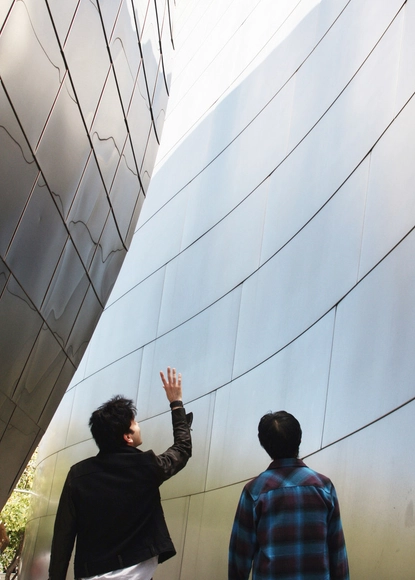
Iman Ansari with Edwin Chan at Walt Disney Music Hall. Image Courtesy of an-onymous.com
In this article, which originally appeared in Metropolis Magazine’s Point of View Blog as “Q&A: Edwin Chan,” Iman Ansari interviews Edwin Chan, a design partner at Frank Gehry architects for 25 years, about Gehry and the many significant cultural and institutional projects he worked on before starting his own practice, EC3.
Iman Ansari: When we look at the work of Frank Gehry or Thom Mayne, as LA architects, there is a certain symbolic relationship to the city evident in the work: the industrial character of these buildings and elements of the highway or automobile culture that tie the architecture to the larger urban infrastructure, the scale of the projects, as well as the conscious use of materials such as metal, glass or concrete. But as freestanding machine-like objects sitting at the heart of the city these buildings also embody certain ideals and values that are uniquely American, such as individualism, and freedom of expression. In your opinion how is Frank Gehry's work tied to Los Angeles or the American culture?
Edwin Chan: Absolutely. I think Frank's work definitely has DNA of LA as a city. We talk about the idea of a democratic city a lot, and coincidentally Hillary Clinton mentioned that in her speech recently saying: “We need a new architecture for this new world, more Frank Gehry than formal Greek,” because it's the expression of democracy. In that sense you could think about the building embodying certain type of values that are manifested architecturally.
In this article, originally published in Metropolis Magazine's Point of View blog as "The Real Problem with China's Ghost Towns" , author Peter Calthorpe explains the problems of these cities, predicts their grim future, and explores how the thoughtful planning behind the city of Chenggong could provide a more sustainable alternative.
We’ve all seen the reports on “ghost town” developments in China, showing acres of empty high-rise apartments and vacant shopping malls. These barren towns seem particularly ironic in a country planning to move 250 million people from the countryside to cities in the next 20 years. But this massive, unprecedented demand has been distorted by a number of factors unique to China. Flawed financial incentives for cities and developers, along with the poor phasing of services, amenities, and jobs create most of the problems. In addition, China’s emerging middle class is very comfortable (perhaps too comfortable) investing in real estate, so people often buy apartments in incomplete communities but don't move in, expecting that values will rise, or that they will live there someday. The result is a string of large, empty developments that remain speculative investments rather than real homes and communities. [See-through buildings are the worry now, but the real problems may come when they are full.]
While it’s hard to get data on vacancy levels in China, there are certainly many anecdotal examples across the country. An all-too-typical example is Chenggong, the new town planned for 1.5 million just outside of Kunming in the west. This freshly minted city boasts the growing Yunnan University, currently with 170,000 students and faculty; a new government center; and an emerging light industrial area. Under construction are the city’s new high-speed rail station and two metro lines connecting the historic city center.