After the first series of photographs revealing Madrid's architectural geometries, Joel Filipe shared his work with us again; this time the Into the Fog series. In these photographs, Filipe presents, through a layer of mist, well-known projects featuring the skyline of the Spanish capital.
Madrid is unfathomable. If the city itself is immense, it´s examples of interesting architecture are overwhelming. For over a half a century, Madrid has been an experimental laboratory for modern and contemporary architecture in Spain. With numerous examples of innovative and experimental architecture, as well as many failures, few of which are valued and recognized. This selection seeks to show archetypal examples of architecture that have transcended time; it does not intend to be an exhaustive list of the city´s architectural works. Many will think that the list lacks important buildings and personally, I couldn´t agree more. That is perhaps the beauty of Madrid: there is a diversity of opinion, there are thousands of sites to see, the city surprises you with every step you take.
On Thursday, July 29th, the Estadio Wanda Metropolitano's roof was officially completed. This new stadium, a renovation of the old Peineta athletics stadium, is the new home ground of Spanish football club Atlético Madrid.
In this video, FCC Construcción captures the intense work on the roof which was designed and constructed by engineers Schlaich Bergermann Partner. The milestone marks four months of intense work since the installation of the first of the 96 PTFE radial panels at the north end of the stadium.
The municipality of Madrid´s Area of Sustainable Urban Development, in collaboration with the Official College of Architects of Madrid, has announced a design competition to remodel eleven public plazas in the outskirts of the Spanish capital city as an urban regeneration strategy for the city´s periphery.
As part of the strategic plan, Regenerate Madrid, the competition, “Plaz-er”, seeks to “contribute to the creation of an upgrading program for the civic plazas located on the city´s periphery, understood as representative spaces with a singular and identifying character for the local areas population that should be reinforced through the new project."
https://www.archdaily.com/876179/madrid-announces-design-competition-to-remodel-11-of-the-citys-public-squaresArchDaily Team
Architects from all nations are trained to develop their expertise in these issues and have demonstrated a high professional level, making important contributions in research projects, winning competitions or taking leadership roles in the most relevant architecture firms.
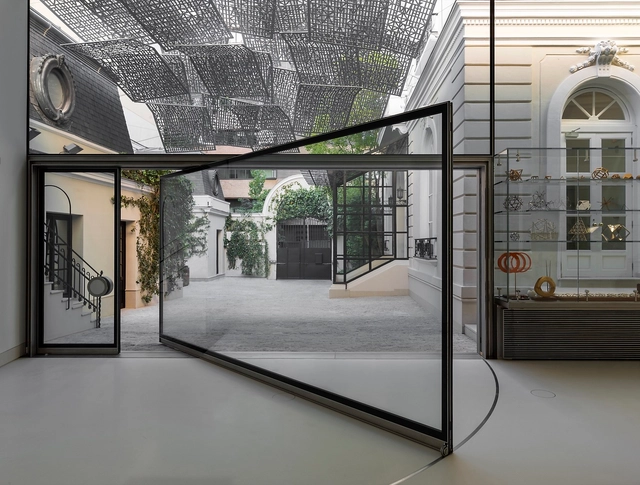
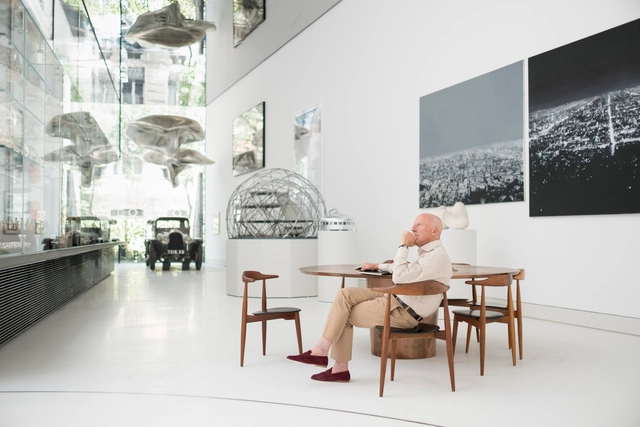
Earlier this month, the Norman Foster Foundation opened its doors in central Madrid. Inhabiting in an old residential palace, and having undergone extensive renovation works since, the Foundation have also constructed their own contemporary courtyard pavilion. Housing a treasure trove of artefacts from Lord Foster's personal collection, the structure—which is shaped like the wing of an aircraft—also exhibits a newly restored 1927 Avions Voisin C7 originally owned by Le Corbusier.
Last month the Norman Foster Foundation, created to promote "interdisciplinary thinking and research to help up-and-coming architects, designers and urbanists to anticipate the future," coincided the opening of its new Madrid-based headquarters with an international conference. Future is Now pulled together a broad collection of professionals—including Sir Jonathan Ive, Marc Newson, Olafur Eliasson, Maya Lin, Alejandro Aravena, and Luis Fernández-Galian—who addressed an audience of 1,800 (including 1,100 students) in the Spanish capital's Royal Theater.
Watch the conference in its entirety, or read a summary, after the break.
https://www.archdaily.com/873070/norman-foster-foundation-includes-aravena-ive-2017-future-is-now-conference-madrid-spainAD Editorial Team
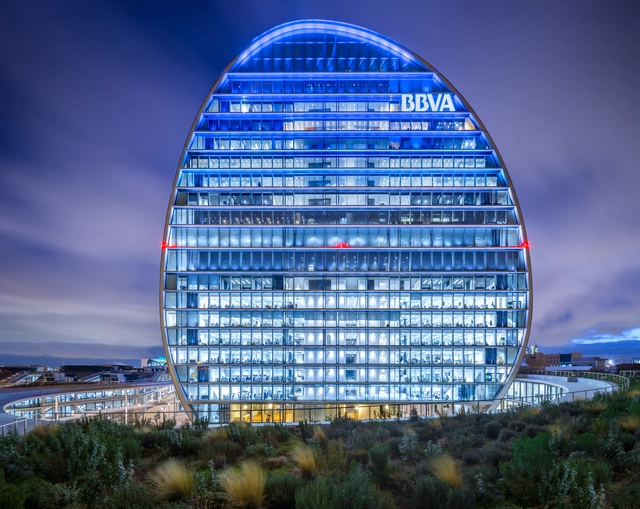
Completed in 2015 at the northern periphery of Madrid, the BBVA Headquarters by Herzog & de Meuron employs a complex network of passages, courtyards, and gardens to create a new corporate campus for the Spanish banking giant. Responding to local climatic needs, the building is recognized for its custom undulating brise-soleil along its facade and pebble-like central tower.
In this photoset, photographer Rubén P. Bescós turns his lens toward the new institutional landmark, capturing the building within its urban context.
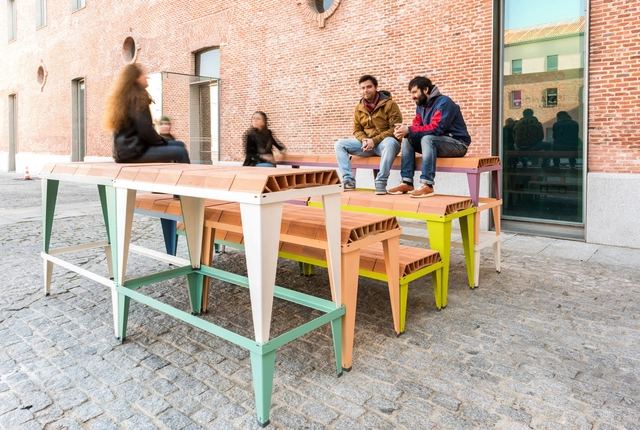
In 1855 the German machinery manufacturer Carl Schlickeysen issued the patent he had recently created, the "Universal Patent Brickmaking machine", the first machine created to manufacture bricks by extrusión as an industrial process.
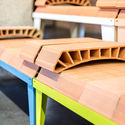
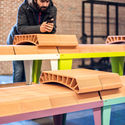
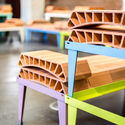
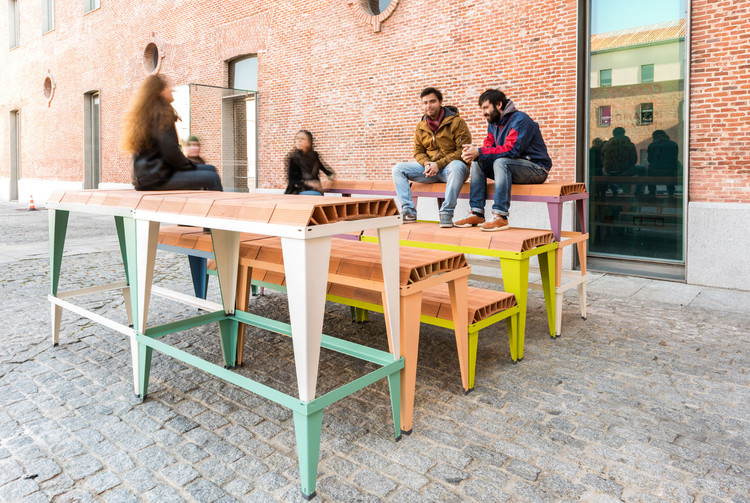
SCHLICKEYSEN is a modular furniture system based on two types of modular metal supports and standard-sized ceramic curved vaults. All kinds of settings can be configured from the combination of these three elements; picnic tables, continuous benches, grandstands, topographies, and many more typologies can be achieved by just stacking the metal supports and using the ceramic vaults as a horizontal supporting surface.
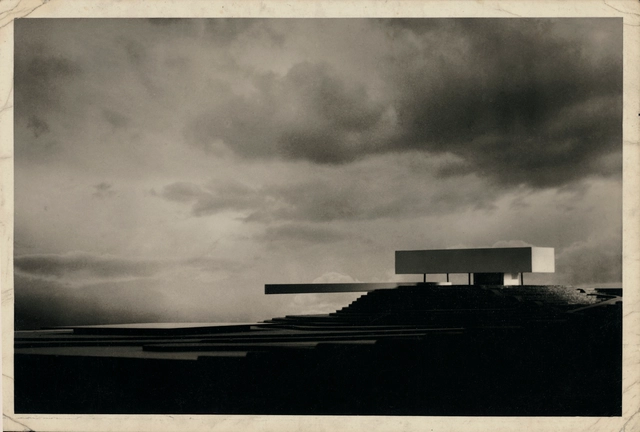
138 images, 14 albums, 20 magazines, 13 original models and one projection are part of Modeling for the Camera: Photography of architectural models in Spain, 1925-1970, the current exhibition of the ICO Museum in Madrid, curated by Iñaki Bergera, PhD of Architecture from the University of Navarra.
The exhibition is tied to the book of the same name that was published in 2016, edited by La Fábrica and the Ministry of Public Works (Spain). In times when 3D visualization software has popularized, accelerated and perfected the rendering industry, both materials choose to value the legacy of architectural model photography in the 20th century.
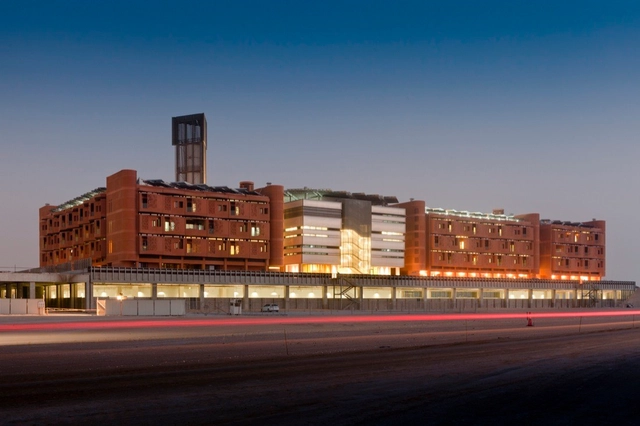
Masdar Institure. Image Courtesy of Foster + Partners
The Norman Foster Foundation has announced plans for its new Madrid-based headquarters to be opened in June this year, whose inauguration will be marked by the first session of the global forum Future is Now, addressing future social, economic and design concerns architecture will face. With the intersection of art, technology, and design, the Foundation facilitates multifaceted thinking and discourse among architects and designers. The opening of its new headquarters is a vital step in “establishing a world-class archive and inaugurating an international program of research, education, and interdisciplinary projects.”
According to the Foundation, “the decision to establish the Foundation as an independent entity, separate from the architectural practice of Foster + Partners, grew out of the perceived need for a permanent physical space that could house the Archive and study center, receive students and graduates, and present programs and projects."
https://www.archdaily.com/868821/norman-foster-foundations-madrid-headquarters-to-inaugurate-with-global-forum-in-juneOsman Bari
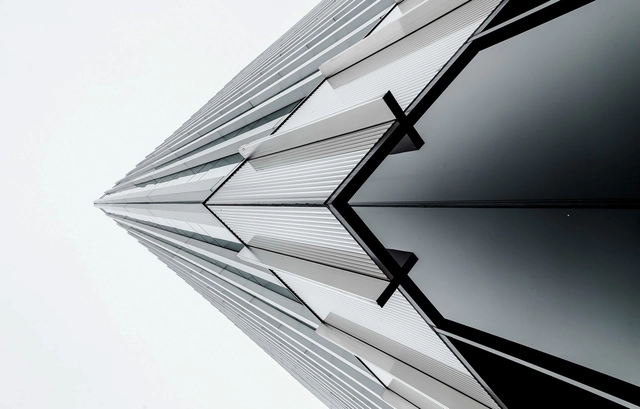
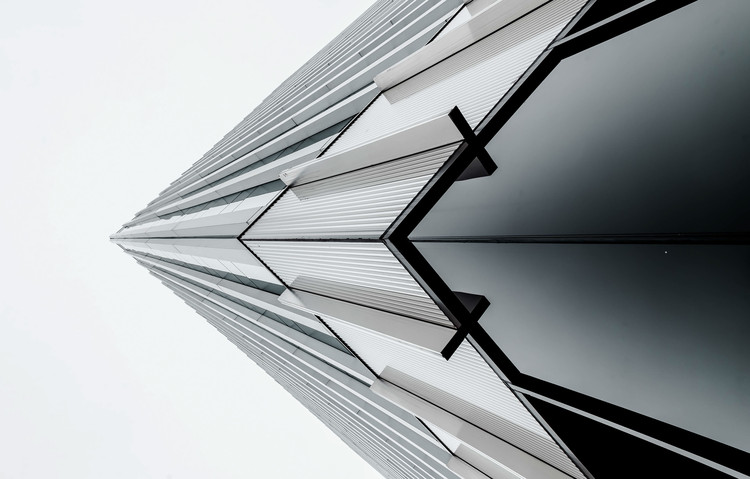
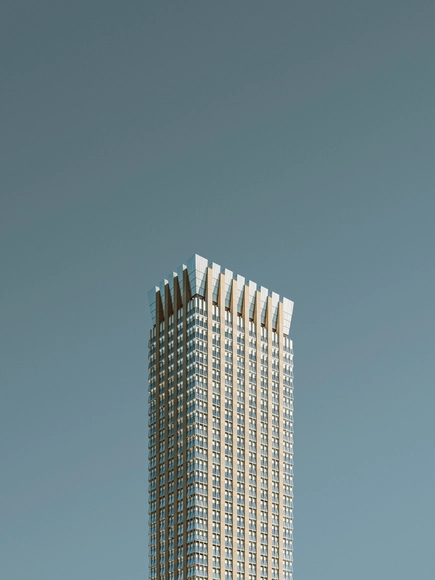
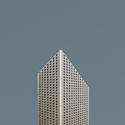
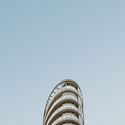
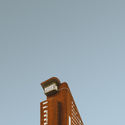
Florian W. Mueller's Singularity series is, in the photographer's own words, "just the building – reduced to the max." These deceptively simple shots of the summits of skyscrapers from around Europe and North America, each set against in infinite gradient of sky, are symbols of architecture's effort to reach ever higher in evermore unique ways. For Mueller, who is based in Cologne, they are an attempt at abstraction. In isolation—and especially when viewed together—they are remarkably revealing as studies of form and façade.
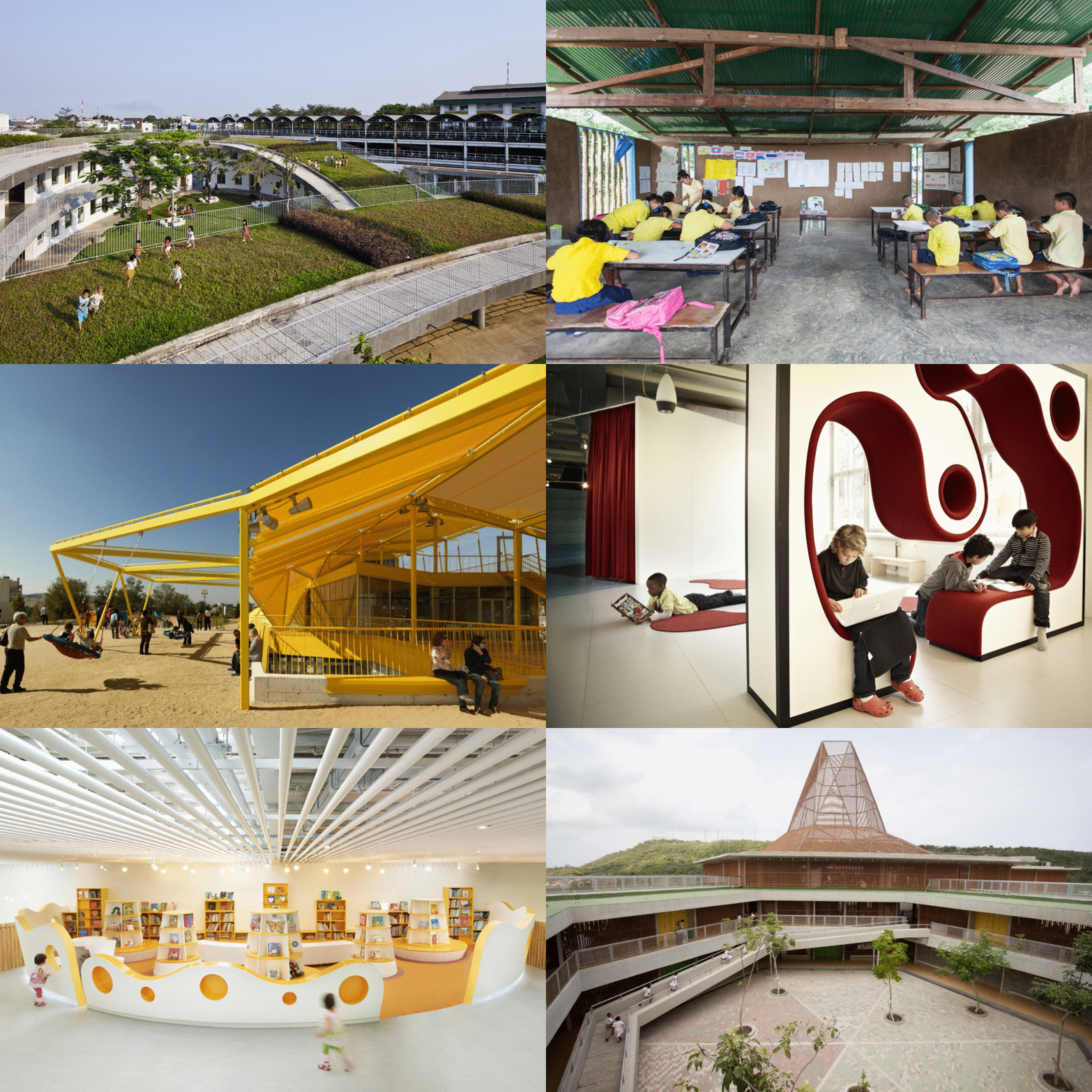
If we think about how the educational system worked in the past, we can quickly see that both the teaching style in schools as well as the school’s infrastructure were very different from the current system. The educational model of the twentieth century could be defined as being similar to the "spatial model of prisons, with no interest in stimulating a comprehensive, flexible and versatile education."
However, we are now at a time when social, economic and technological developments have created a more global society and where information and learning are becoming more affordable. This radical change has transformed the societies in which we live, leaving the current educational model based on a rigid and unidirectional teaching obsolete.
As such, there are schools that have not only broken the mold of traditional teaching but have formed new educational standards, exploring new paradigms and opening up new possibilities within the design of educational spaces. Since architecture and educational models often reflect the ideology of a society, how is the school of 21st century defined?
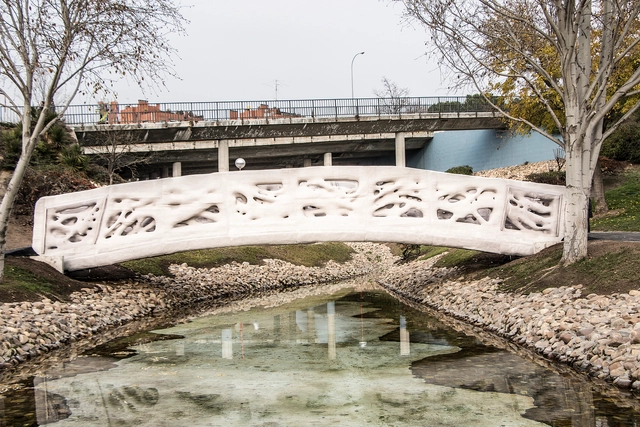
The first 3D printed pedestrian bridge in the world opened to the public on December 14 in Madrid. Led by the Institute of Advanced Architecture of Catalonia (IAAC) in a process that took a year and a half from its conception, the structure crosses a stream in Castilla-La Mancha Park in Alcobendas, Madrid.
Although similar initiatives have already been announced in the Netherlands, this is the first to have finished construction. The structure is printed in micro-reinforced concrete, and measures 12 meters in length and 1.75 meters wide.






















.jpg?1473841941 "Vittra Telefonplan / Rosan Bosch. Image")