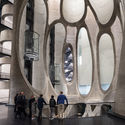
Design and the City is a podcast by reSITE, raising questions and proposing solutions for the city of the future. In the first episode, Thomas Heatherwick founder of Heatherwick Studios discusses the notion of Designing on a Human Scale, describes his conceptual approach and introduces his latest venture in the heart of historic Prague. Joining the interview is ArchDaily editor, Christele Harrouk.
Design and the City is a podcast by reSITE about how we can use design to make cities more livable and lovable. Every week, a new episode will be released featuring speakers that explore the future of our cities, like Thomas Heatherwick from Heatherwick Studios, Chris Precht from Studio Precht, Leona Lynen from Haus der Statistik and Yosuke Hayano from MAD Architects among others.
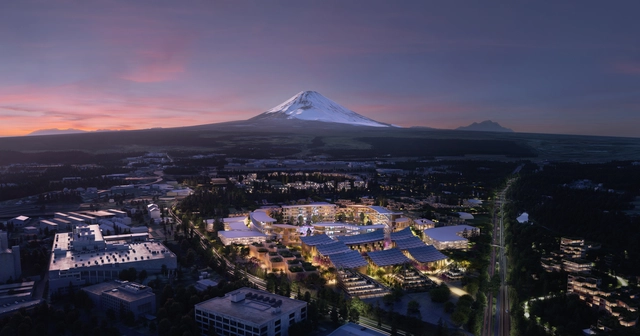
BIG unveiled its latest intervention, the Toyota Woven City, the company's first venture in Japan. Nestled at the foothills of Mt. Fuji, the project, in collaboration with Toyota Motor Corporation, is the world’s first urban incubator pushing forward the development and progress of mobility.
Helen Taylor of Woods Bagot and Rachel Cooper of Arup Associates team up to explore how deep basements may be the future of the city as density and population growth result in the need to dig deep as well as build high. Using their current joint project as a case study, they share their experience of building the deepest habitable basement in London and among the deepest in the world. Set to open in 2020, The Londoner will offer 350 rooms, multiple restaurants and lounges, a rooftop bar and underground spa with swimming pool, Odeon cinema, and a 1,000-capacity ballroom. At over 35 meters deep and containing a large percentage of the FOH floor area, the basement presented several challenges that required innovative architectural and engineering solutions from both teams, which are presented in the following interviews with Helen and Rachel.
Lukasz Platkowski, Principal and Design Leader at GENSLER, presents his vision on how the world of work undergoes a tectonic shift, due to advancements in technology such as artificial intelligence and job automation, which are disrupting the already known and tested working models. Our new lifestyles, needs and expectations are shaping the way we work, and this is overwriting the boundaries between workstyle and lifestyle.
Commisionned by Grupo Karim's, and designed by Stefano Boeri Architetti, the first Smart Forest City in Mexico will focus on innovation and environmental quality. The city balances green and built spaces, and is completely food and energy self-sufficient.
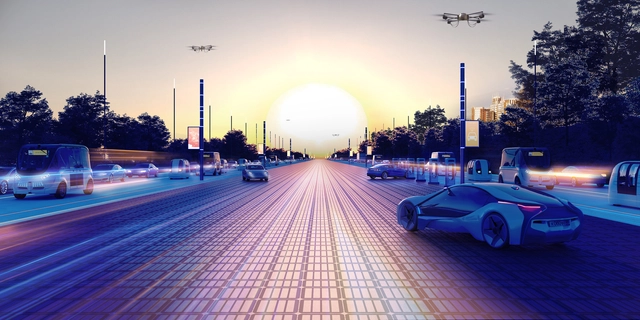
Carlo Ratti Associati has unveiled their vision for the urban highways of Paris in 2050. Reinventing the city’s infamous Boulevard Périphérique ring road, the firm’s “New Deal” explores the potential for urban highways to be flexible spaces for living, playing and farming.
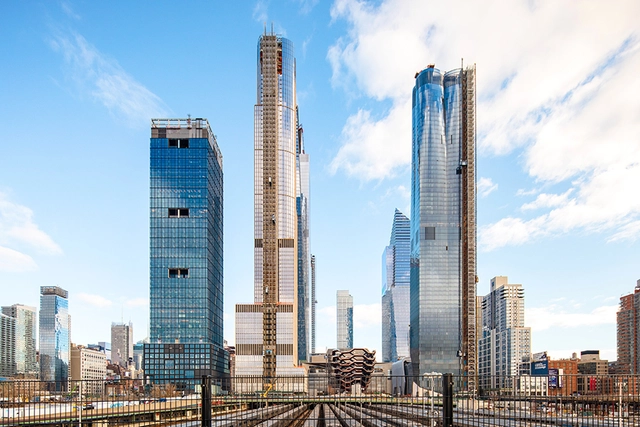
There’s something striking about the command center of America’s largest private real estate development, Hudson Yards, in that it’s actually pretty boring. The room—technically known as the Energy Control Center, or ECC for short—contains two long desks crammed with desktop computers, a few TV monitors plastered to the wall, and a corkboard lined with employee badges. The ceiling is paneled; the lighting, fluorescent. However, New York’s Hudson Yards was once billed as the country’s first “quantified community”: A network of sensors would collect data on air quality, noise levels, temperature, and pedestrian traffic. This would create a feedback loop for the developers, helping them monitor and improve quality of life. So where is the NASA-like mission control? Data collection and advanced infrastructure will still drive parts of Hudson Yards’ operations, but not (yet) as first advertised.
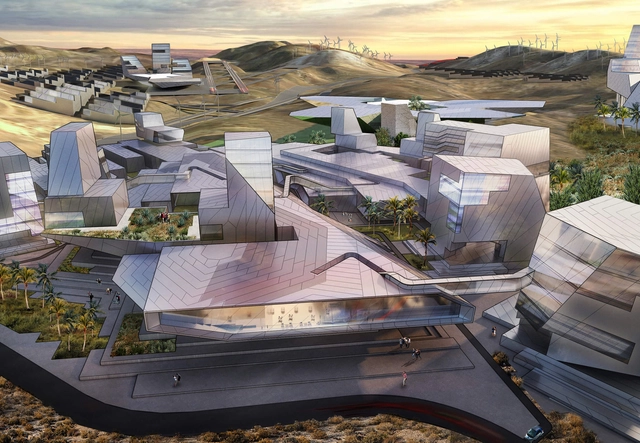
In a world increasingly obsessed with the potential of Blockchain (the decentralized technology behind Bitcoin), lawyer and cryptocurrency millionaire Jeffrey Berns has purchased an enormous 67,000-acre plot of the Nevada desert near Reno envisioned as an “experimental community” revolving around the technology.


TomasPrinc-400.jpg?1580894143&format=webp&width=640&height=580)


TomasPrinc-221.jpg?1580898318 "© Tomas Princ")
TomasPrinc-400.jpg?1580894143)


.jpg?1572274326&format=webp&width=640&height=580)
.jpg?1572274134 "Courtesy of The Big Picture")

.jpg?1572271629 "Courtesy of Stefano Boeri Architetti")
.jpg?1572274101 "Courtesy of The Big Picture")
.jpg?1572274326)