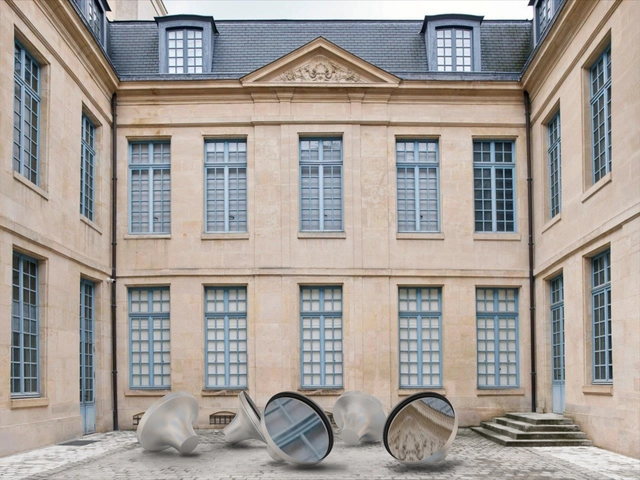
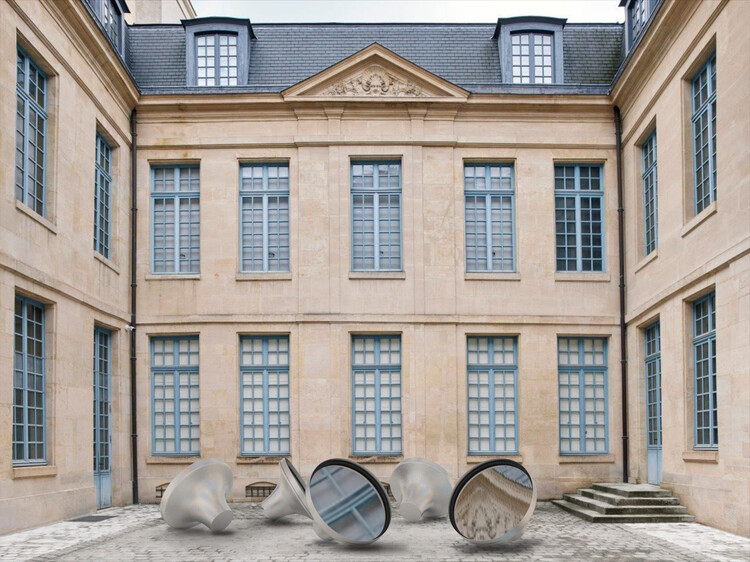
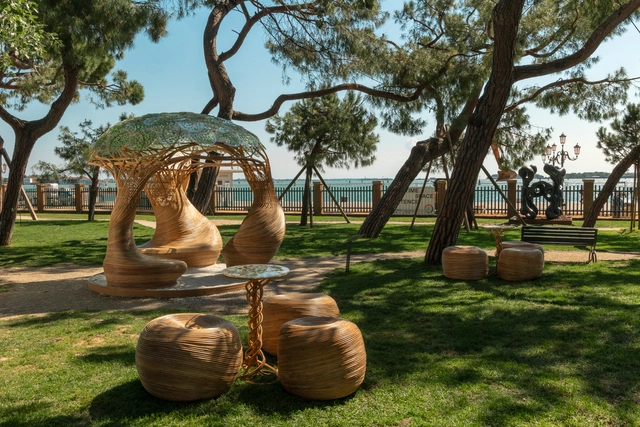
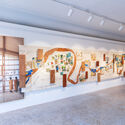
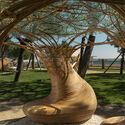
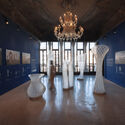
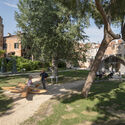
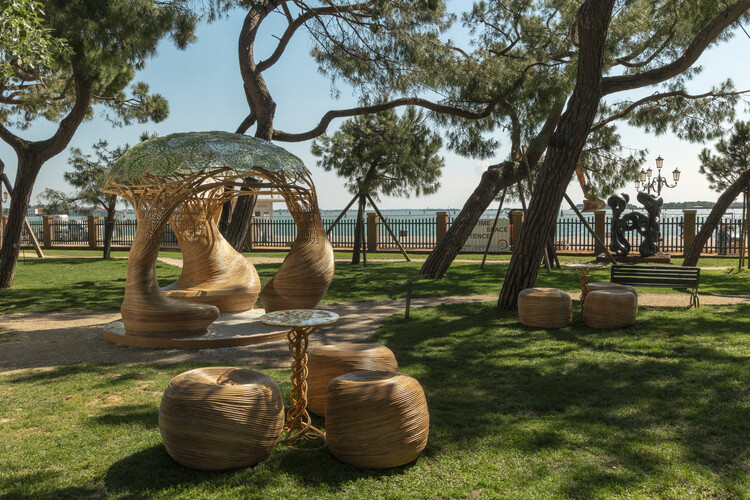
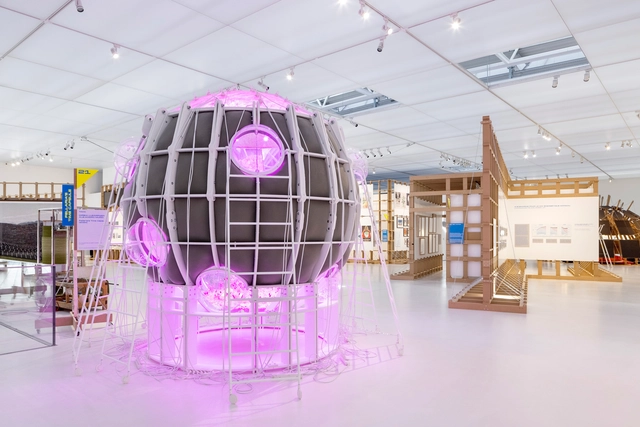
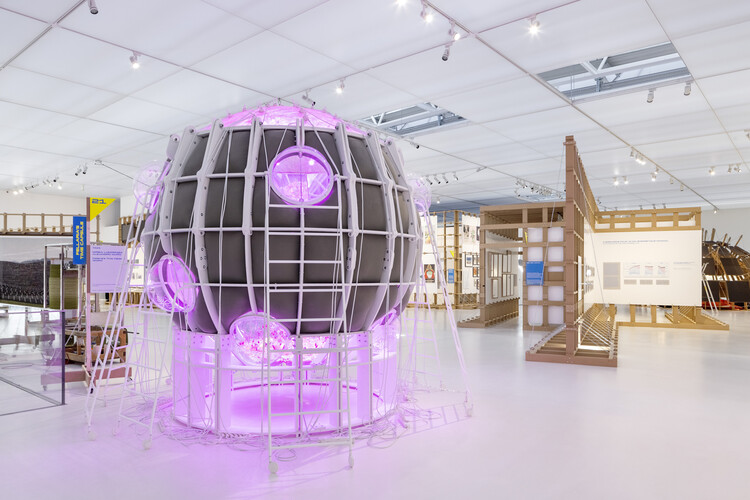
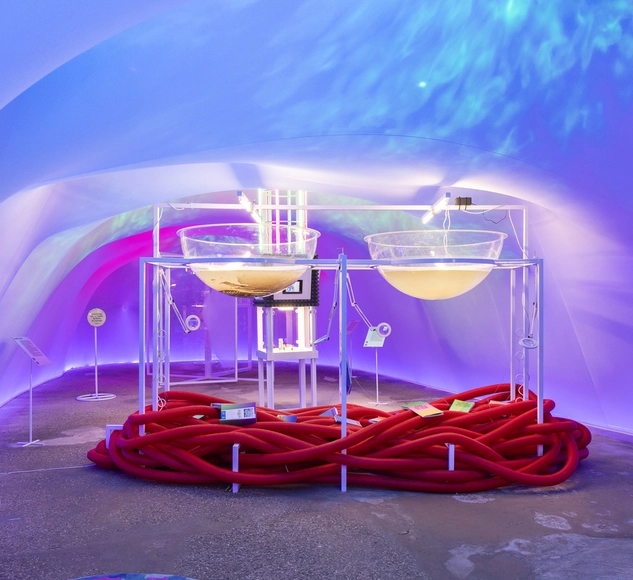
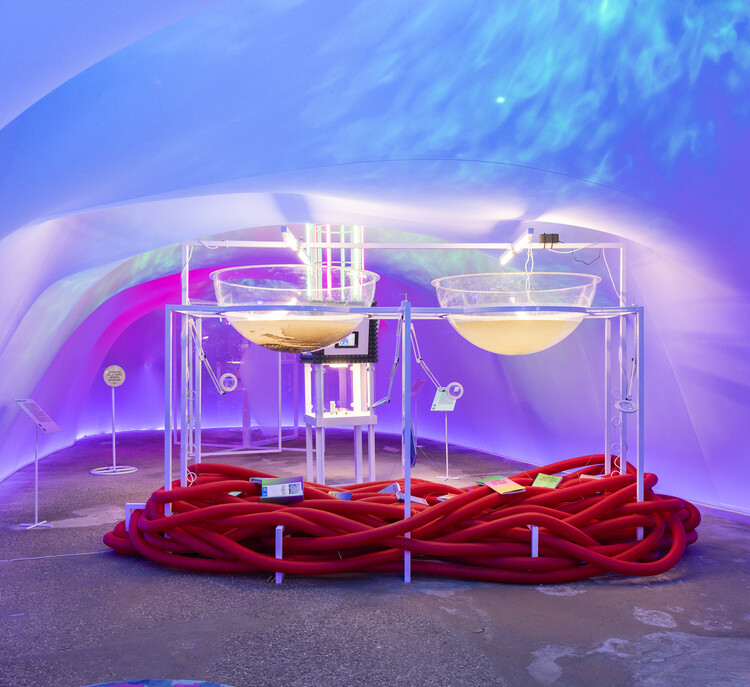
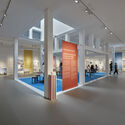
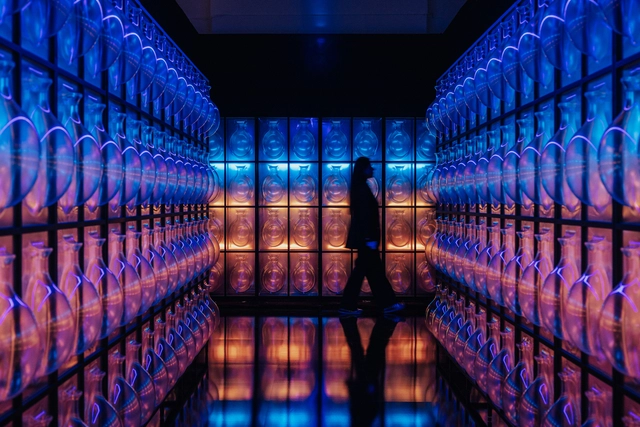
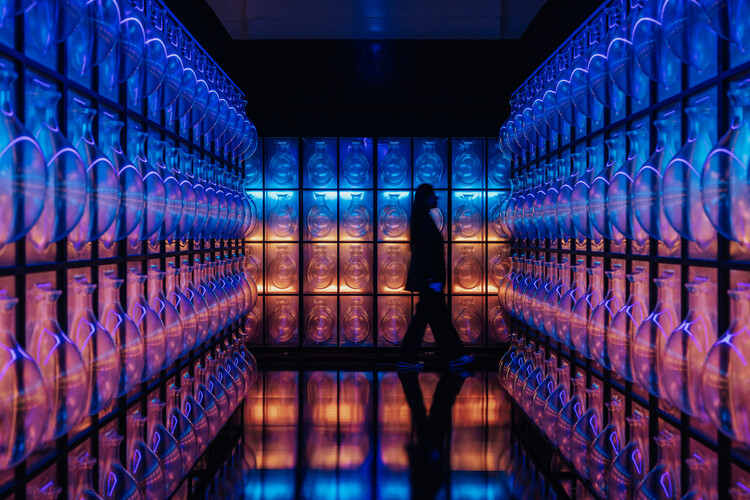
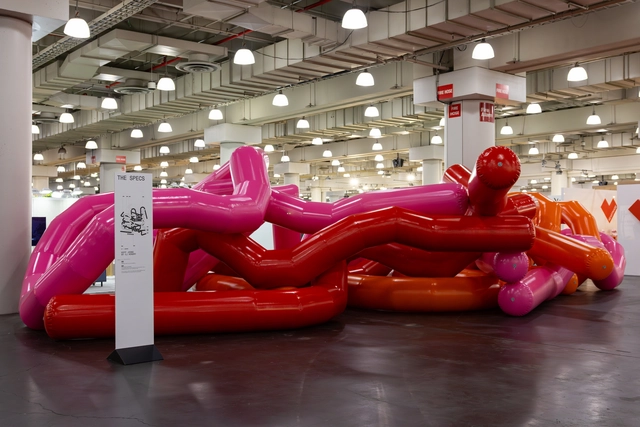
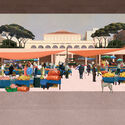
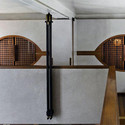
"Spinning Around" installation by Sophia Taillet. Musée de la Chasse et de la Nature, 4–13 September 2025. Image Courtesy of Maison & Objet
This year, the Maison&Objet interior design trade fair and the city-wide celebration Paris Design Week joined forces to highlight emerging designers, bring renewed value to French métiers d'art, and temporarily transform heritage landmarks with contemporary design visions. Both events began on September 4, turning Paris into a city-wide design festival. Galleries, showrooms, and concept stores opened their doors, while renowned landmarks became venues for designers from more than 30 countries. The abundance and diversity of the program have drawn comparisons to Milan Design Week, while giving Paris a distinct platform on the global design calendar. This article presents a selection of installations and exhibitions of architectural interest that emerge from the synergy between the two initiatives.
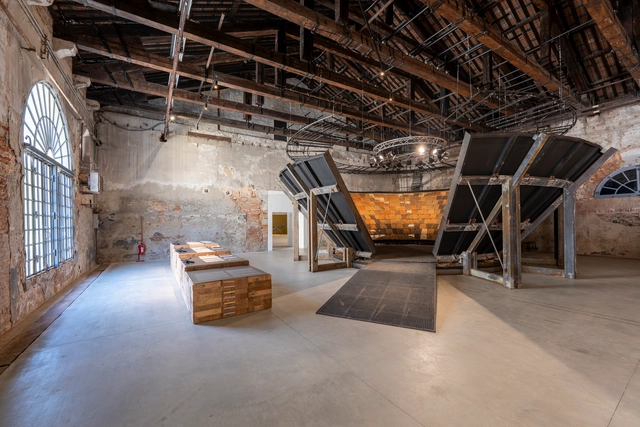
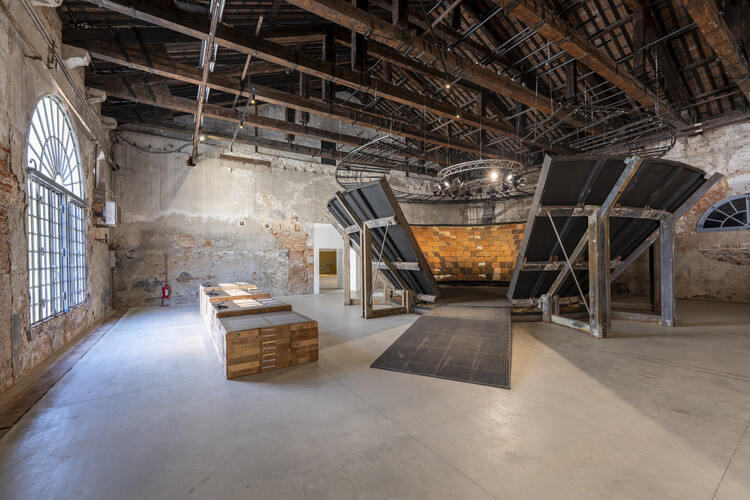
The Philippines' Pavilion at the 19th International Architecture Exhibition – La Biennale di Venezia presents Soil-beings (Lamánlupa), an exhibition curated by artistic director Renan Laru-an. Through interdisciplinary collaborations, the Pavilion brings together architects, technical experts, indigenous leaders, artists, policymakers, and local communities to explore the cultural, ecological, and technological dimensions of soil. Its objective is to challenge conventional architectural paradigms by shifting the focus from structure to soil, not as a passive material, but as a living force with agency, history, and power.
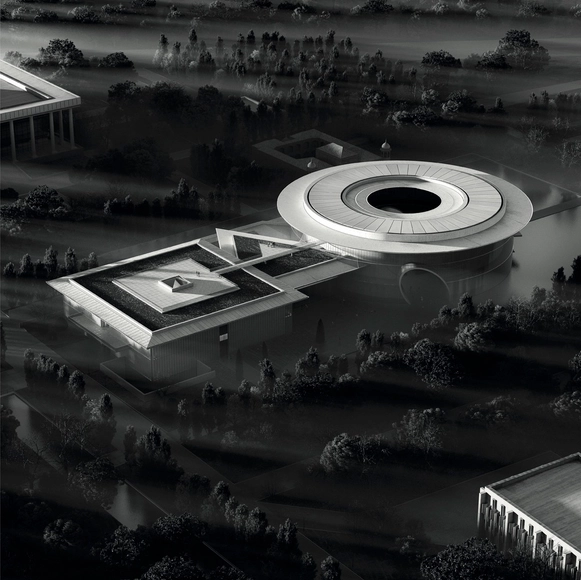
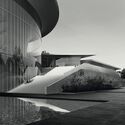
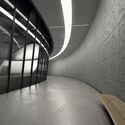
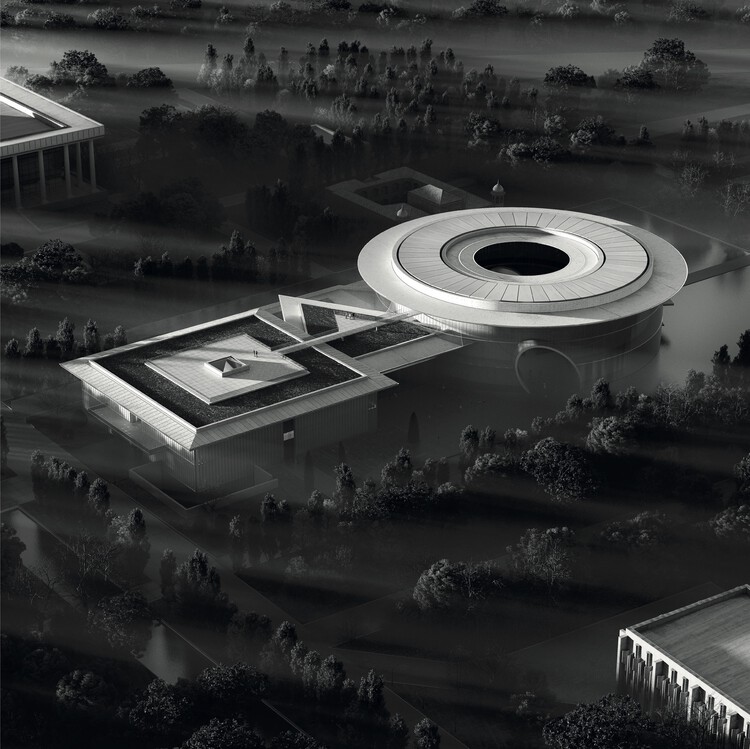
National Museum of Uzbekistan, Render by Tadao Ando Architect & Associates. Image Courtesy of The Uzbekistan Art and Culture Development Foundation
The Uzbekistan Art and Culture Development Foundation (ACDF) has announced the groundbreaking of the National Museum of Uzbekistan, designed by Japanese architect Tadao Ando. Marking Ando's first major project in Central Asia, the museum is envisioned as both an architectural and culturallandmark in Tashkent. Planned to open in March 2028, the building reflects Ando's minimalist architectural language, integrating references to Uzbekistan's heritage with his characteristic use of geometry, natural light, and spatial clarity.
The 2025 edition of the European Cultural Centre's (ECC) Time Space Existenceexhibition in Venice is guided by the mandate to "Repair, Regenerate, and Reuse." Aiming to move beyond surface-level solutions and overused terminology, the exhibition showcases a cohort of practitioners who interpret architecture as an active agent of repair. The most compelling works presented in Venice demonstrate that "repair" is a multifaceted practice, operating across material, social, and historical registers. The varied approaches showcase a shift in the role of the architect, from a master builder and designer of physical objects, to that of a mender, able to combine technology, community, and material intelligence to restore narratives and build stronger cultural systems.
Soleil·s, the second edition of the Solar Biennale, is currently open at mudac, the Museum of Contemporary Design and Applied Arts in Lausanne, Switzerland. Following the first edition hosted at Het Nieuwe Instituut in Rotterdam in 2022, this exhibition explores how design can drive the adoption of solar innovations toward a sun-powered future. The event is initiated by The Solar Movement, founded by designers Marjan van Aubel and Pauline van Dongen, an initiative dedicated to making solar energy the default power source by combining design, technology, and advocacy. This year's exhibition is curated by mudac and offers an immersive experience featuring new and existing projects by TAKK, ecoLogicStudio, Olafur Elíasson, and Andreas Gursky.
As part of the collateral events of the 2025 Venice Architecture Biennale, the Institut Ramon Llull presents the project "Water Parliaments: Projective Ecosocial Architectures", bringing together the waters of Lleida, Girona, Tarragona, Barcelona, Valencia, the Balearic Islands, and beyond to address the water crisis as an interconnected ecosocial, cultural, and political issue. Framing architecture as a tool for critical speculation and collective action, the project advocates for the imagining of future scenarios grounded in coexistence—interweaving the human and non-human, the natural and artificial, the technological and vernacular, the global and the local.
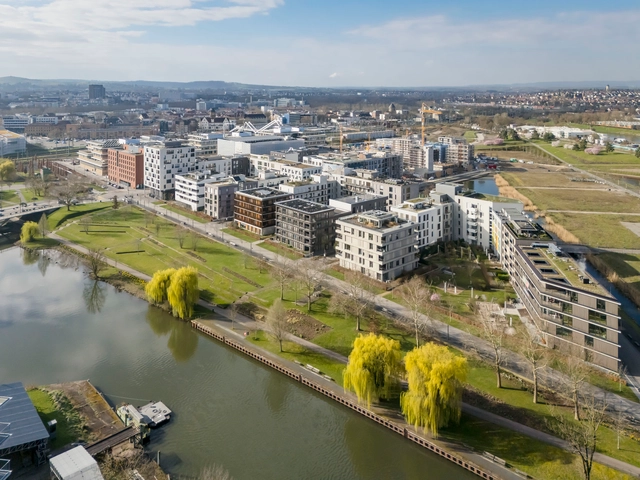
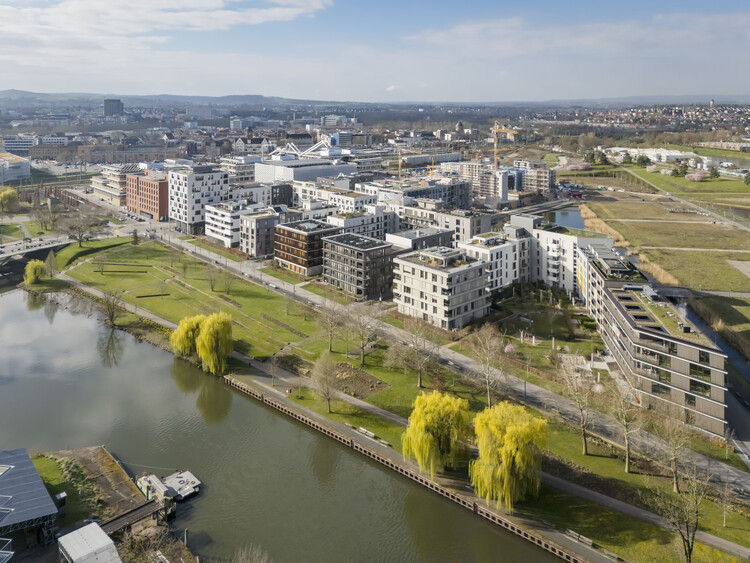
The Deutsches Architekturmuseum (DAM) in Frankfurt has opened a new exhibition titled Building Cities Today?, examining the complexities of developing new urbanneighborhoods in Germany. Running from June 28 to November 2, 2025, the exhibition brings together nine projects that reflect diverse approaches to newurban planning, with a focus on sustainability, social integration, and long-term adaptability. Referencing the legacy of the "Neues Frankfurt" housing program of the 1920s, the exhibition opens with the Römerstadt estate, one of Germany's early experiments in functional and standardized housing. From there, it transitions to eight urban developments from the 1990s to the 2020s, presenting case studies that include HafenCity in Hamburg, Bahnstadt in Heidelberg, Neckarbogen in Heilbronn, City of Wood in Bad Aibling, and Messestadt Riem in Munich.
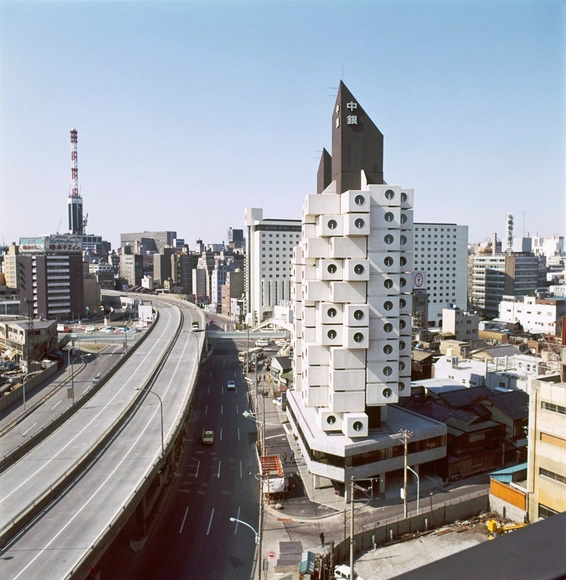
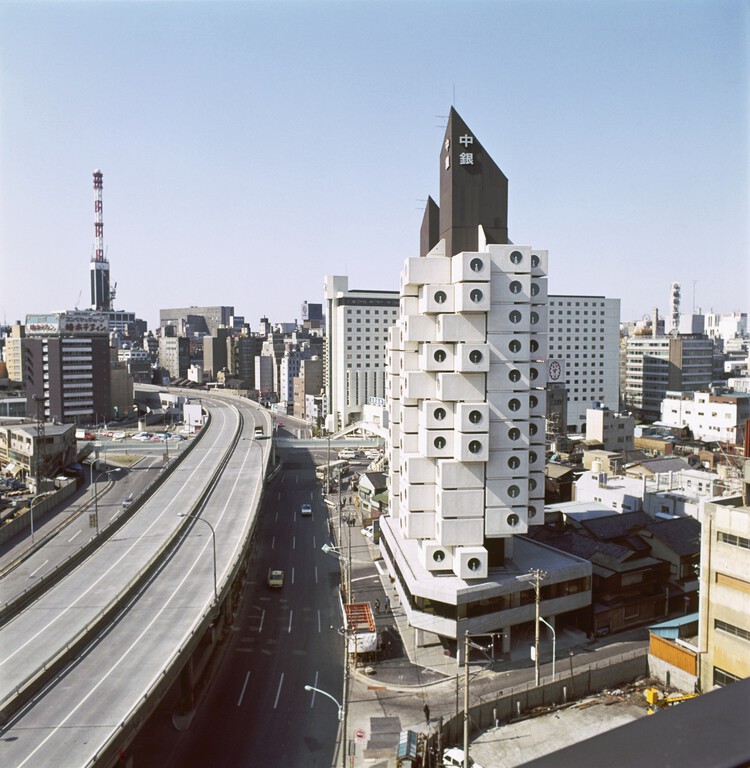
The Museum of Modern Art (MoMA) in New York is hosting an exhibition dedicated to Japanese architect Kisho Kurokawa's Nakagin Capsule Tower from July 10, 2025, through July 12, 2026. Titled The Many Lives of the Nakagin Capsule Tower, the exhibition offers a retrospective on the building's 50-year lifespan. Constructed in Tokyo's Ginza district in 1972 and dismantled in 2022, the tower is presented through contextual materials, original drawings, archival recordings, and a fully restored capsule. The exhibition invites reflection on how cities address aging buildings and the rapid transformation of urban areas. The diverse materials documenting the tower's continuous evolution over five decades encourage viewers to consider how architecture might endure by taking on new roles and functions beyond its original purpose.
Studio Gang is an architecture and urban design practice founded in 1997 by Jeanne Gang and based in Chicago, with additional offices in New York, San Francisco, and Paris. Comprised of over 100 professionals, including architects, designers, and planners, the studio is known for its research-driven approach to design. On Friday, July 11, the Aedes Architecture Forum in Berlin will inaugurate an exhibition on Studio Gang's work, organized in collaboration with AW Architektur & Wohnen magazine. Titled Studio Gang: The Art of Architectural Grafting, the exhibition explores the studio's design methodology through six recent projects.
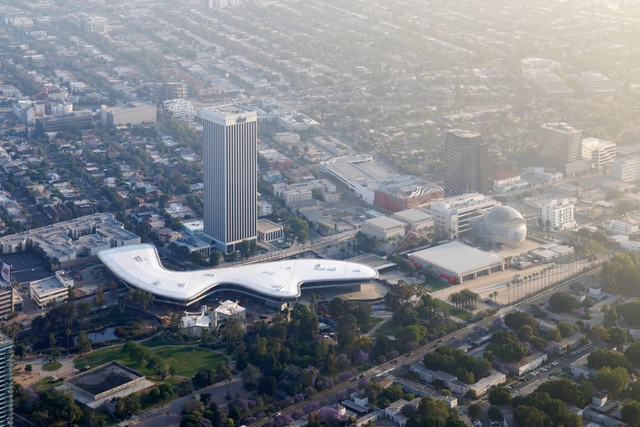
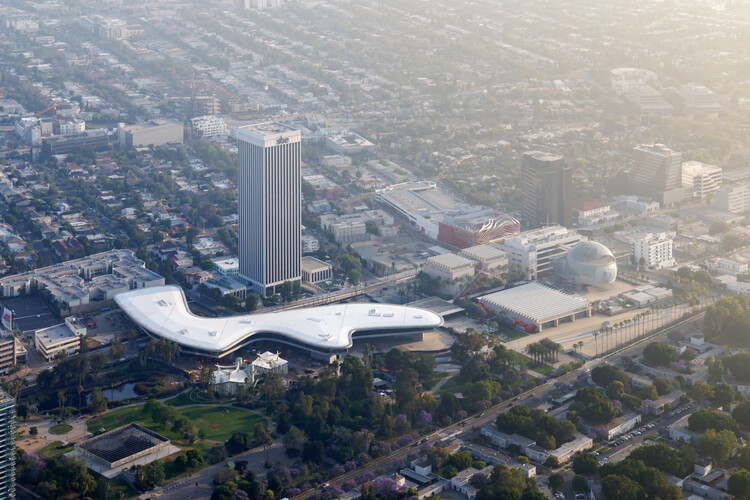
The first photographs of the long-anticipated David Geffen Galleries at the Los Angeles County Museum of Art (LACMA) have been unveiled, captured by architectural photographerIwan Baan. Designed by Pritzker Prize-winning architect Peter Zumthor, in collaboration with Skidmore, Owings & Merrill, the building marks the culmination of a process spanning more than two decades. The museum recently offered an exclusive preview of the building in its raw architectural state, ahead of the installation of artworks. Major construction was completed at the end of 2024, and portions of the lower levels are already accessible to visitors. The galleries are scheduled to officially open in April 2026, when they will house LACMA's permanent collection.
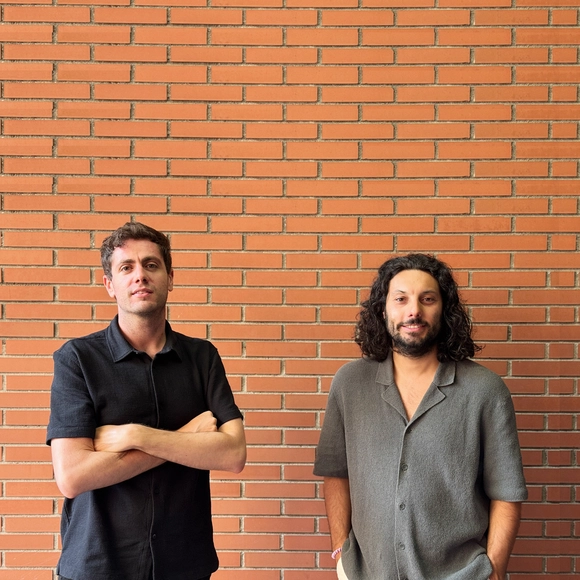
Miguel Ramón López y Ander Bados Sesma, comisarios de la XVII Bienal Española de Arquitectura y Urbanismo. Image Courtesy of XVII Bienal Española de Arquitectura y Urbanismo
The seventeenth edition of the Spanish Biennial of Architecture and Urbanism (BEAU) will take place in December 2025. The event consists of an exhibition hosted in a former thermal power station repurposed as a cultural center in Ponferrada, in northeastern Spain. This edition will be curated by architects Ander Bados Sesma, from Atelier Ander Bados, and Miguel Ramón López, a Ponferrada native and architect at Estudio Lamela, under the curatorial proposal titled flujos comun.es ("common flows"). Their curatorial proposal responds to the theme of the open call: Architecture as a Policy for Change, an invitation to reflect on the role of the discipline in processes of social, economic, and environmental transformation. Within this framework, flujos comun.es presents a critical perspective on the challenges associated with hyperconnectivity. The call for proposals and project submissions is currently open, and will be until the end of July, depending on the category.
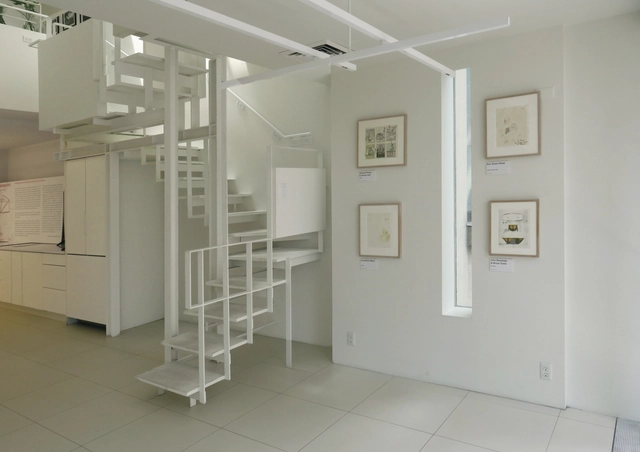
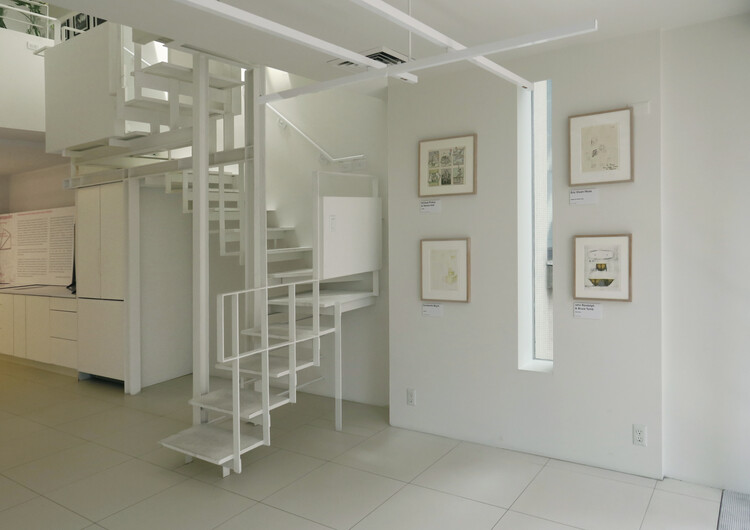
The fifth edition of the London Design Biennale is taking place at Somerset House from 5 to 29 June 2025. The theme of this year's edition is "Surface Reflections," an invitation to explore "the dynamic interplay between internal experience and external influence." The curatorial proposal, set by British artist and designer Samuel Ross, encourages a focus on the underlying layers of the objects, systems, and spaces that shape our daily lives. The Biennale exhibition is a journey through 35 pavilions by countries, institutional design teams, and curators, presenting soundscapes, immersive experiences, and performances, as well as sculptural and evocative objects. To confront contemporary global challenges, topics include identity, memory, innovation, technology, craftsmanship, ecology, and belonging.
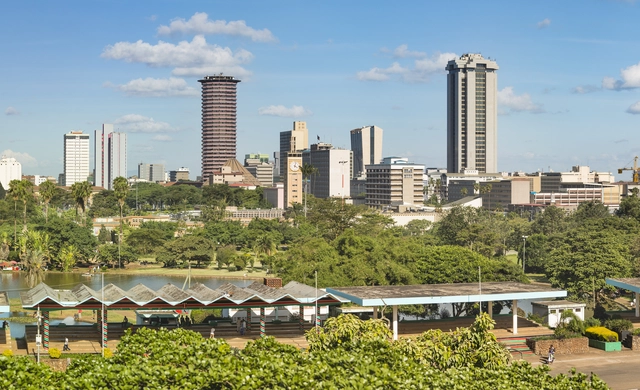
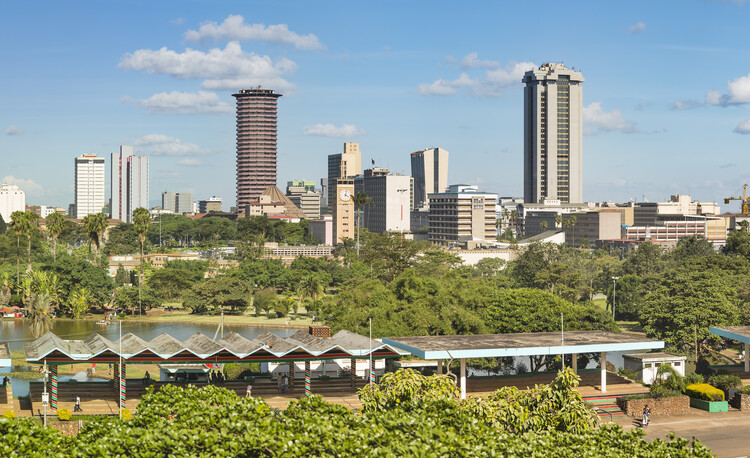
A Pan-African Biennale of Architecture is planned for 2026 in Nairobi, Kenya. According to the curator, it "represents an unprecedented opportunity to reclaim Africa's architectural narrative, reasserting the continent's role as a global leader in urban resilience, sustainability, and cultural expression."
Omar Degan, the curator in partnership with the Architectural Association of Kenya, is a practicing architect, professor, and teacher. He leads an architecture office known as DO Architecture Group, which was established between Italy and Somalia—two places deeply connected to his identity. His work focuses on what he describes as "fragile contexts" around the world, including areas affected by natural disasters, refugee camps, slum upgrades, and underserved neighborhoods.
With a balance of emerging talent and established brands, this year's edition of the International Contemporary Furniture Fair fostered meaningful connections, commercial momentum and critical dialogue across the global design community.
Returning to the Javits Center this May, the 2025 edition of the International Contemporary Furniture Fair (ICFF) brought together over 400 design brands from 35 countries, reinforcing its role as a central meeting point for contemporary design in North America. Spanning residential, commercial and hospitality sectors, the fair attracted more than 13,000 attendees and maintained strong engagement across the board — despite ongoing market volatility and tariff pressures.
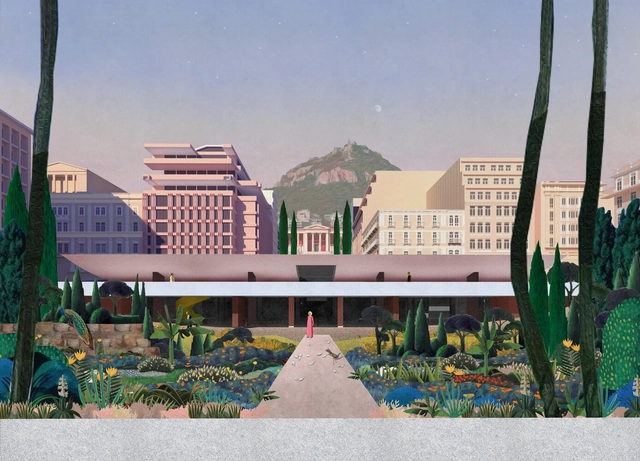
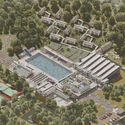
Brave New Axis by Spyridon Loukidis, Markos Georgios Sakellion, Georgios Thalassinos from National Technical University of Athens, Greece. EUmies Awards Young Talent winner. Image Courtesy of Fundació Mies van der Rohe
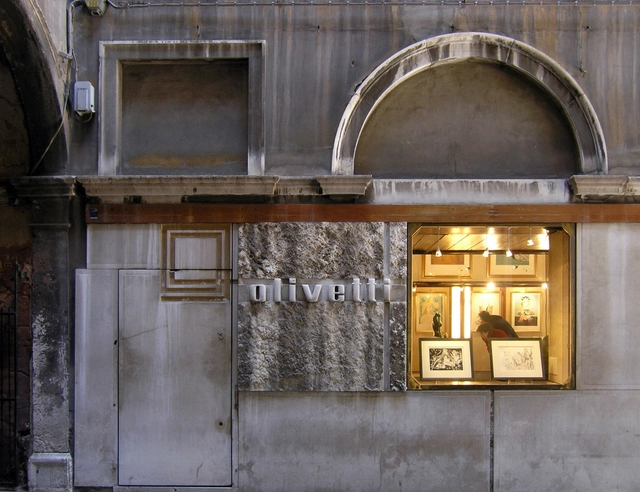
Tucked discreetly beneath the colonnade of Saint Mark's Square in Venice, Carlo Scarpa's Olivetti Showroom exerts a quiet yet unmistakable presence. Though often overshadowed by the grandeur of nearby landmarks—St. Mark's Basilica, the Clocktower, the Loggetta, and the Procuratie Vecchie—it attracts a particular kind of visitor: those who seek out one of Scarpa's architectural gems hidden in plain sight. Modest in scale but rich in detail, the showroom is meticulously maintained by FAI (Fondo Ambiente Italiano), the National Trust for Italy.