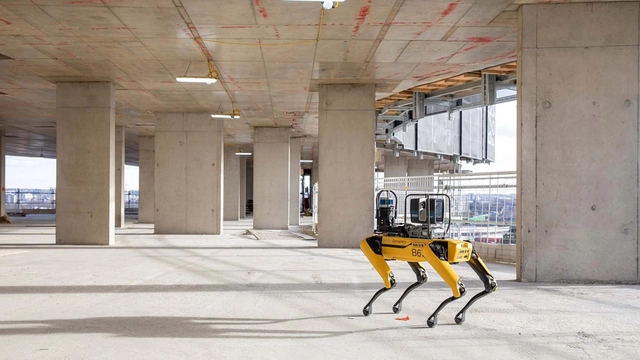
Spot on a Foster+Partners construction site. Image Courtesy of Foster+Partners
For several years, the construction sector has been facing a labour shortage, generating a growing interest in automation. The health crisis has only exacerbated the trend, prompting automation companies to turn their focus from car manufacturing to the construction industry, for which automation is expected to grow up to 30% within the next few years. The following explores present capabilities and future possibilities of automation within the construction process, its integration within the mainstream practice and the impact on design.
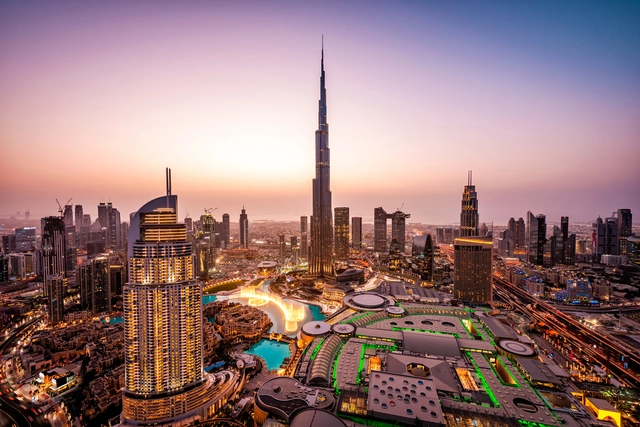
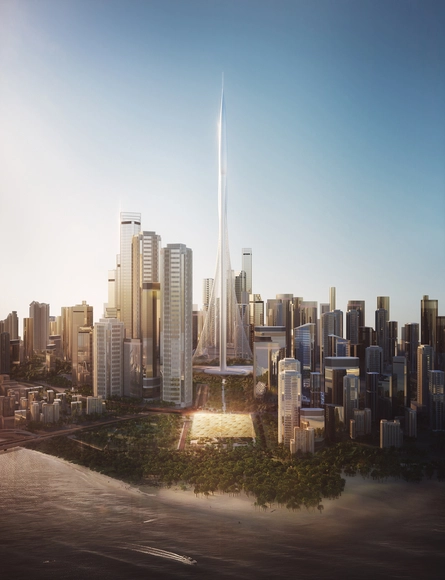
The Dubai Crown Prince has issued a Resolution to form a Supreme Committee for the Urban Planning of Dubai. The decision aims to regulate, ensure, and implement all the required deliverables of the Dubai 2040 Urban Master Plan, to make Dubai the "best city in the world to live in". The urban planning sector will overlook all major infrastructure and urban projects, as well as focus on addressing matters of housing and regulations of the real estate sector to improve the wellbeing of the city's residents.
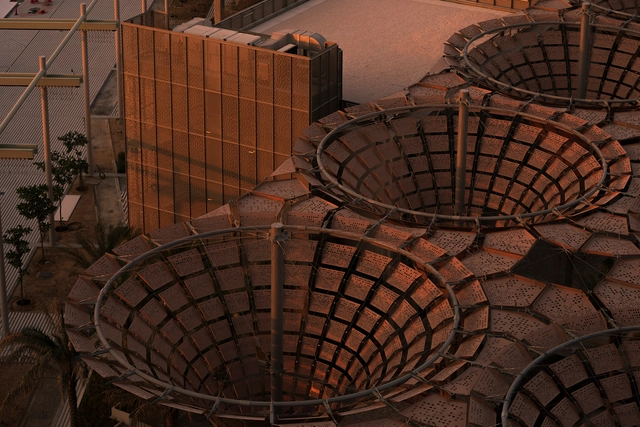
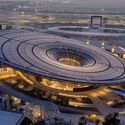
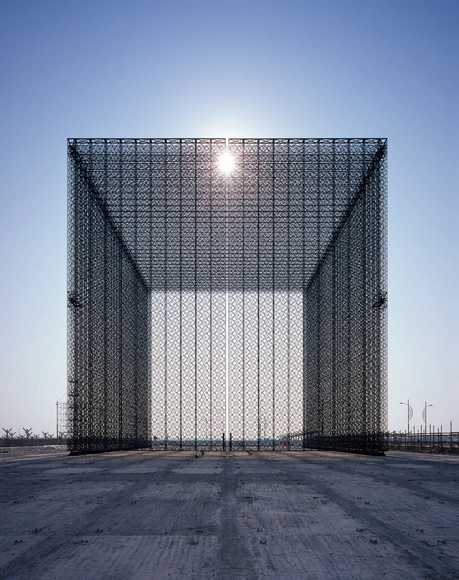
With less than half a year to go until the opening, Expo 2020 Dubai released a series of images of the venues hosting the event, which intends to bring together 192 national pavilions, as well as businesses and educational institutions. As the program was delayed for a year due to the coronavirus pandemic, the world expo site is mainly complete, awaiting its opening on October 1st.
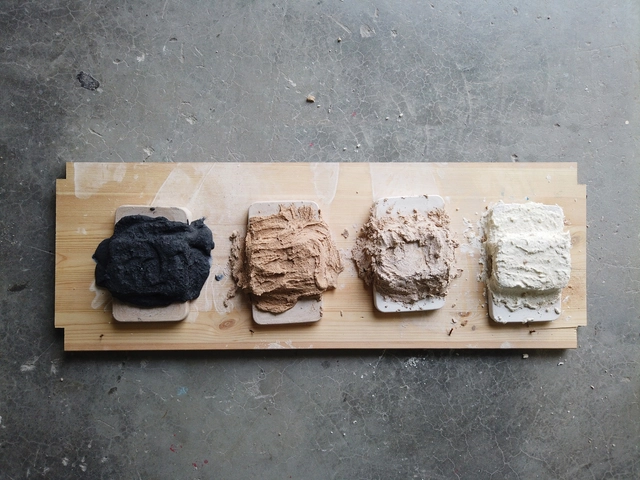
Wael Al Awar and Kenichi Teramoto, both principals of Dubai-based Waiwai design, have been appointed as the curators for the National Pavilion of the UAE at the 2021 Venice Biennale. Entitled Wetland, the exhibition presents an experimental solution to the critical environmental impact of the construction industry. The intervention will present a large-scale prototype structure created from an innovative, environmentally friendly cement made of recycled industrial waste brine. The exhibitionwill open to the public at the 17th International Architecture Exhibition of the Venice Biennale from Saturday, May 22nd to Sunday, November 21st, 2021.
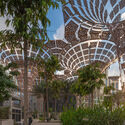
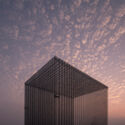
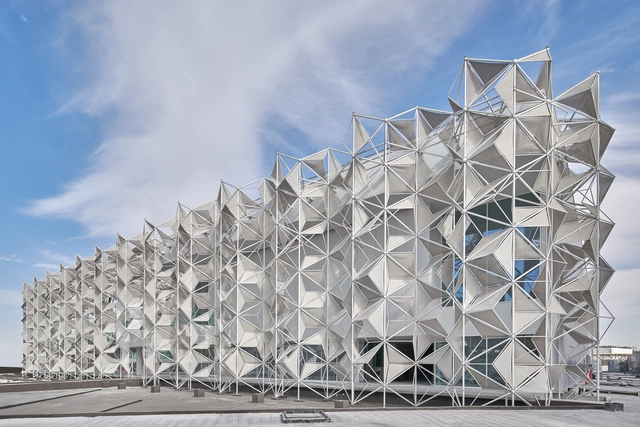
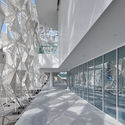
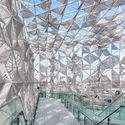
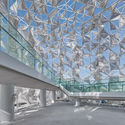
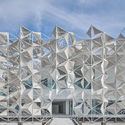
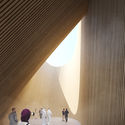
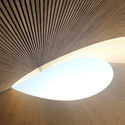
Centred around the theme of connection, Japan's Pavilion for Expo 2020 Dubai unfolds a geometrical 3D lattice inspired by the commonalities of traditional Japanese and Arabic patterns. Designed by Yuko Nagayama and Associates, the project uncovers through different architectural means the cultural similarities between Japan and the Middle East.
Extreme weather and conditions call for contextual architectural approaches. From sandy deserts to cold, icy climates, how we build is intimately tied to location. Drawing from diverse project sites around the world, architects and designers create proposals that construct and organize new ways to live, work and play. These unbuilt projects rethink traditional forms while addressing a wide range of landscape conditions.
This week’s curated selection of the Best Unbuilt Architecture focuses on diverse typologies in hot and cold climates around the world. Drawn from an array of firms and local contexts, they represent proposals submitted by the ArchDaily Community. They explore everything from generative design through a desert shelter in Siwa and a cave dwelling in China to a coastal development in Spain and a series of igloo habitats for penguins in Antarctica.
Scale dramatically shapes how we experience architecture and the built environment. Whether looking at buildings by volume, square area or height, the larger a project gets, the greater our perception changes. Monumental projects tell incredible stories of spatial experience, programming and design. Towering above us and around us, these large-scale works become landmarks in rural and urban contexts.
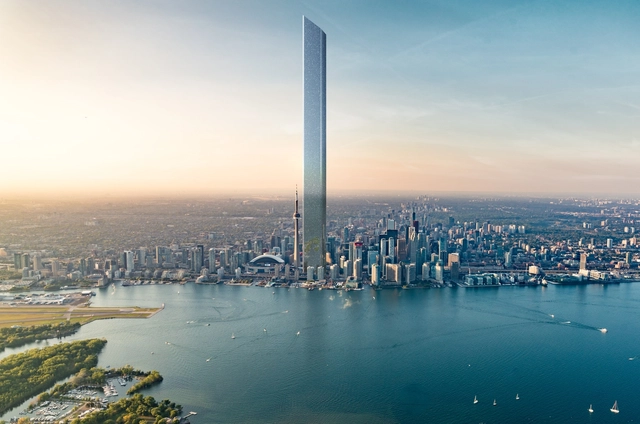
This week’s curated selection of the Best Unbuilt Architecture focuses on large-scale architecture located around the world. Drawn from an array of firms and local contexts, they represent proposals submitted by our readers. They showcase a wide array of approaches to designing at larger and larger scales, from an expansive arena in Vienna and a lush memorial in Singapore to the world's tallest tower designed to draw attention to poverty in Toronto.
Dubai Design Week has announced the winning design for the 2020 Abwab Pavilion. This year’s commission has been awarded to Iraqi designer Hozan Zangana for his proposal Fata Morgana which features a series of seating components and seven pillars that symbolize each of the Emirates. The Design Week theme centers on redefining and reimagining the way we live and interact with public spaces under new realities.
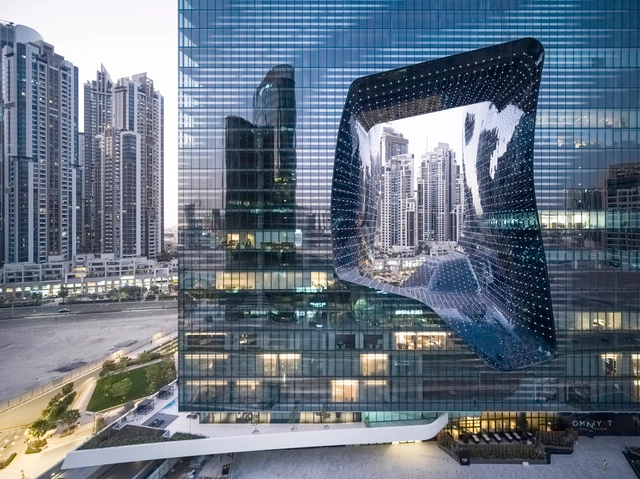
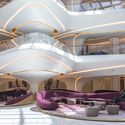
The recently opened Opus building by Zaha Hadid Architects brings an interplay of solid and void, fluidity and orthogonality to the Dubai cityscape. New images by award-winning photographer Laurian Ghinitoiu capture the project’s sculptural silhouette, the studio’s distinct architectural signature.
Expo 2020 Dubai has been postponed and will be held from 1 October 2021 to 31 March 2022. The decision has been declared after the two-thirds majority of the votes was surpassed within a week of voting, opening on 24 April.
P&T Architects and Engineers have designed a free zone development, “dedicated to the growing e-commerce market in the Middle East”. Entitled Dubai CommerCity, the award-winning project puts in place three main clusters spread over 530,000 square meters: business, logistics, and social.
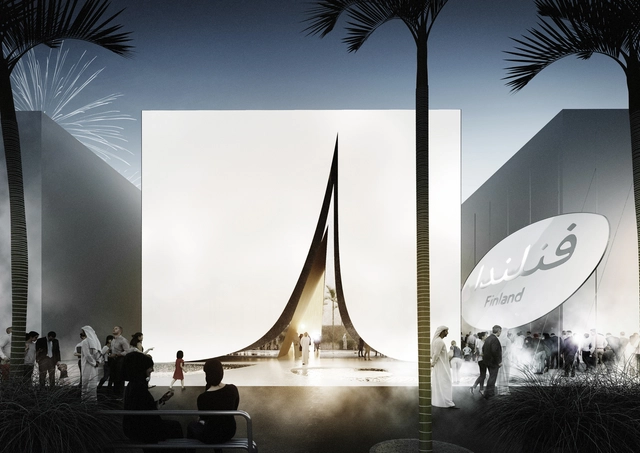
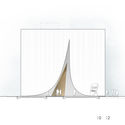
The FinlandPavilion for Expo Dubai 2020 draws inspiration from Finnish nature, design, and innovation. Imagined by JKMM Architects, the project also takes on elements from the local context, with tent-like features.
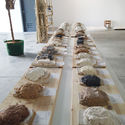
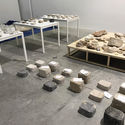
I recently viewed a public art commission at Dubai's foremost cultural district - Alserkal Avenue: it was an installation by an artist collective - METASITU, who had transformed a warehouse on the Avenue previously known as Nadi Al Quoz, into a 21st-century ruin. The work titled: 'we were building sand castles_but the wind blew them away', was inspired by the perennial demolitions that have become an integral part of contemporary placemaking around the world. Through this piece of work, METASITU reflects on the extractive city-building processes, while contextualising them within different human and ecological timelines. The long-term vision of the artists was to deconstruct the building and return its constituent materials to their ‘original state’. Later this year, they plan to further deconstruct the installation into a public landscaped environment.
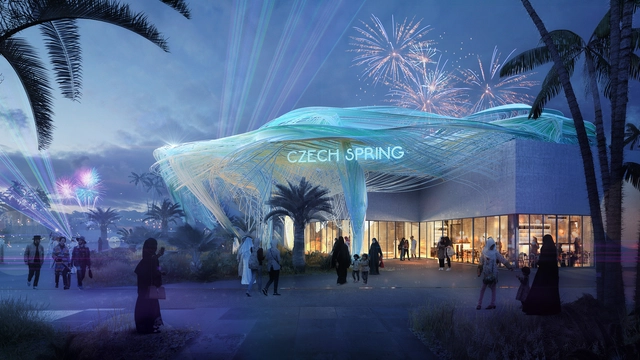
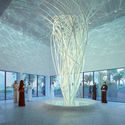
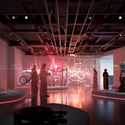
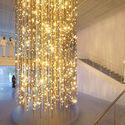
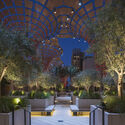
Located in the sustainability zone of EXPO 2020 Dubai, the Czech pavilion, designed by Formosa AA and R/FRM, is an invitation for discovery. Raising questions concerning desert cultivation, it integrates and exposes the S.A.W.E.R. system cultivation plant. Visible technologies form the main formal and visual components of the pavilion.









.jpg?1612411982 "Courtesy of Sajjad Navidi")
















.jpg?1588147105&format=webp&width=640&height=580)
.jpg?1588147126 "Courtesy of P&T Architects and Engineers")
.jpg?1588147079 "Courtesy of P&T Architects and Engineers")
.jpg?1588147146 "Courtesy of P&T Architects and Engineers")
.jpg?1588147038 "Courtesy of P&T Architects and Engineers")
.jpg?1588147105)


10.jpg?1587641554&format=webp&width=640&height=580)
7.jpg?1587641448 "© Ismail Noor")
4.jpg?1587641493 "© Ismail Noor")
2.jpg?1587641529 "© Ismail Noor")
11.jpg?1587641544 "© Ismail Noor")
10.jpg?1587641554)