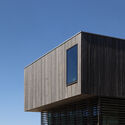
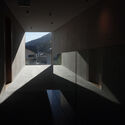
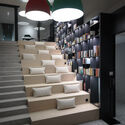
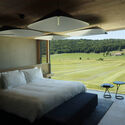
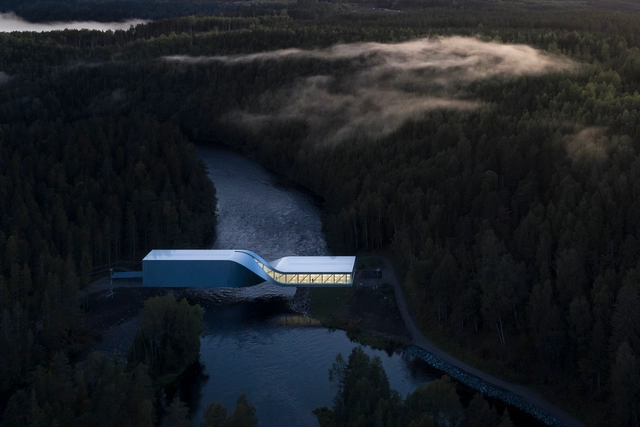
In a recent photo series, Paul Clemence turns his lens toward Bjarke Ingels Group's (BIG) Hôtel des Horlogers, located in the Swiss Village of Le Brassus in Switzerland. Previously known as Hôtel de France, which opened in 1857, Audemars Piguet reimagined the project. BIG, an international studio known for avant-garde architecture and experimentation, continues to see this claim to its end through the design of a compact structure made up of five floors, with its rooms connected in a single zig-zag path. Designed in collaboration with the Swiss design firm, CCHE, a futuristic structural form featuring layers of long ramps was assembled for Audemars Piguet's vision of a luxury hotel.
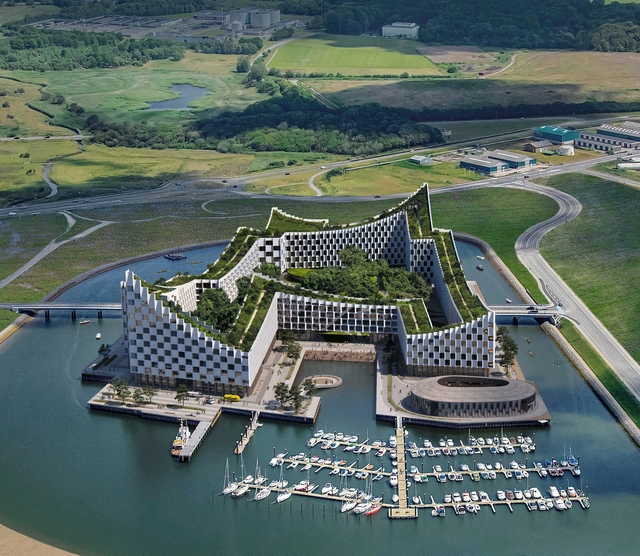
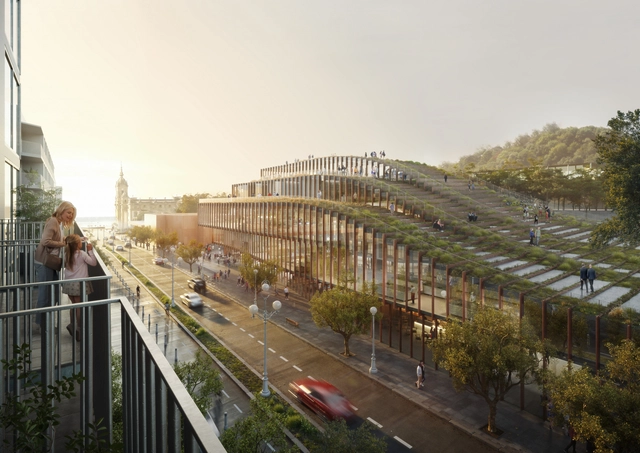
Bjarke Ingels Group has unveiled the vision for the Masterplan Esbjerg Strand, which will form the framework for a campus environment that aims to bring a new approach to education. The Education Esbjerg project will accommodate an innovative educational platform that rethinks the traditional education system in the country. BIG’s concept is to recreate an entire city in one building. Education and development will create a frame of life for the new communities, while the island will welcome a varied array of functions to create a sustainable, human-centered ecosystem.
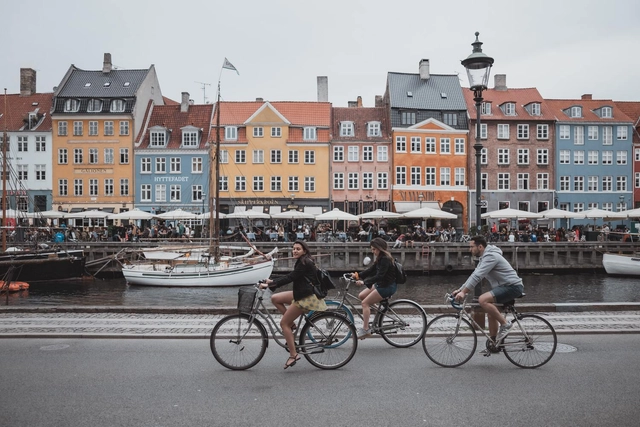
According to the World Happiness Report, Denmark has continually topped the survey of happiest countries for years. Copenhagen, the capital of Denmark, is known for its brightly colored waterfront buildings and radical contemporary architecture, both reflecting the joyful ethos of the city. The maritime metropolis is an urban designer’s favorite case study with its carbon-neutral infrastructure, pedestrian and bike-friendliness, and thriving public realm.Danish designers have cracked the code to build happier cities, leaving plenty of models to learn from.
Alphabet of light by BIG x Artemide. Image Courtesy of Artemide
Following two years of delays and cancellations, this year's Milan Design Week saw thousands of designers, artists, and craftsmen put their skills on display and present different solutions for the future of manufacturing, interior design, materials, and the environment. As every year, renowned architects also took part of the week-long event, using products, furniture pieces, and installations to share their professional angle and answer some of the biggest questions of the practice, showcasing how it can contribute to the betterment of the environment and society as a whole.
Focusing on sustainability and environmental awareness with respect to furniture production, this year's architectural contributions at Salone del Mobile saw innovative takes on “inclusive” design.
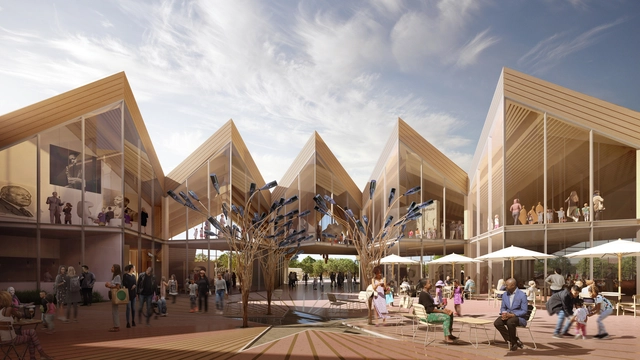
BIG-Bjarke Ingels Group alongside the architect-of-record, African American-owned design firm, KAI Enterprises, have unveiled their design of a new Texas-based museum dedicated to preserving the history of Juneteenth and the legacy of freedom. Located in the historic southside of Fort Worth, Texas, one of the area's most underserved communities, the National Juneteenth Museum will serve as a focal point for education, preservation, and celebration of Juneteenth nationally and globally, hosting exhibitions and events about the significance of African American freedom. The new 50,00 sq.ft. building will include immersive galleries, a business incubator, food hall for local vendors, Black Box flex space, and a theater, and is expected to break ground in 2023.
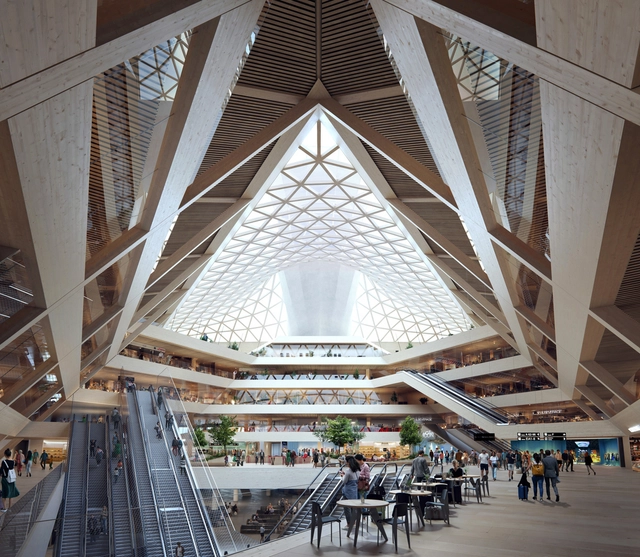
Dock A, the largest dock of the Zurich Airport, was the subject of international competition. BIG forms the winning team as design lead with HOK as aviation architect, 10:8 architects, engineer Buro Happold, timber experts Pirmin Jung, and aviation consultant NACO. Their design proposal centers on passenger experience and movement through the airport. A pared-back material palette reveals the loadbearing system of the building: V-shaped timber columns provide both a structural function and a distinctive identity true to its place and era, according to the jury.
Architecture, with all its practitioners, academics, and theorists, have long been exploring utopic ideas with hopes of turning them into something concrete for the sake of a better world. But as the world heads towards an even greater polarization than it currently has, the architecture practice found itself having to adapt to the current systems of the planet, constrained by its ever-growing conditions. Slowly, practitioners realized that utopia can not truly be seen as the ideal solution, and needed to be readapted or morphed with other concepts for it to actually work. DETAIL's latest monograph BIG. Architecture and Construction Details / BIG. Architektur und Baudetails, a rapport between BIG’s imaginative, unbuilt utopias and functional, built architecture, explores 20 projects from the firm's workshop.
Selected among five invited architects including OMA, Snøhetta, 3XN, and Toyo Ito & Associates., the BIG-designed building for the Basque Culinary Center, is a new food tech hub located in San Sebastian, Spain. TheGastronomy Open Ecosystem (GOe) is in fact a 9,000 m2 project that seeks to push forward the art and science of gastronomic innovation, bringing together food start-ups, researchers, and chefs. Currently in progress, the building will focus on the development of alternative proteins, agricultural robotics, the prevention of food waste, and much more.
BIG (1st place) - Exterior view. Image Courtesy of Mozses
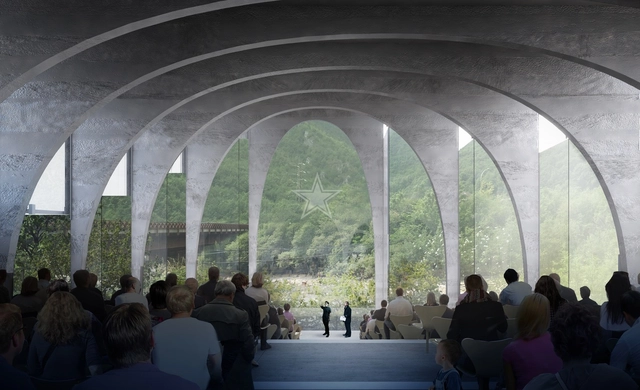
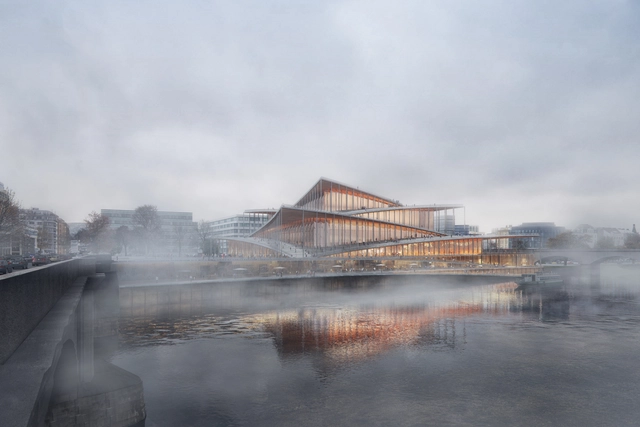
The City of Prague announced the international competition results for the design of the Vltava Philharmonic Hall. The winning project is designed by Danish studio Bjarke Ingels Group – BIG. The new concert hall aims to become a focal point for the city and reinforce Prague's reputation as a European cultural capital. The proposed volume of the new Philharmonic Hall presents a recognizable image while also being well integrated into the complex topography of the Vltava riverbank. Visitors are invited to follow the meandering series of plazas connected by sloping roofs that take them from the riverbank to the rooftop, promising views of the historic city center of Prague. Spanish architecture practice Barozzi Veiga collaborated with local office Atelier M1 and won second place. Bevk Perović Arhitekti and Petr Hájek Architekti won third and fourth place, respectively, while Snøhetta's proposal was declared the fifth winner.
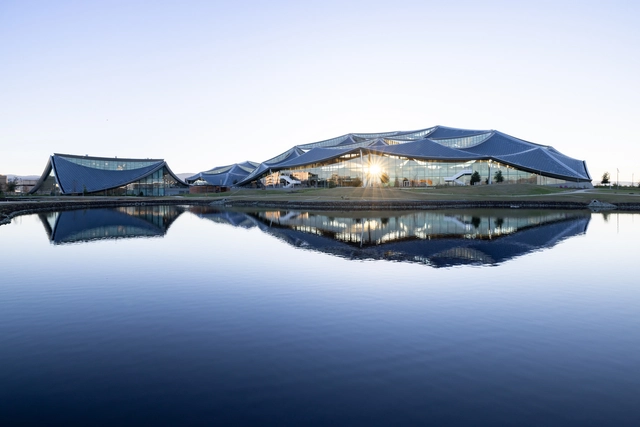
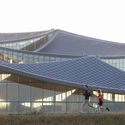
Google’s first ground-up campus, designed by BIG - Bjarke Ingels Group and Heatherwick Studios in collaboration with Google’s design and engineering teams, opened in Silicon Valley. The campus’ mission is to create a human-centric design for the future of Google’s workplace and set new global sustainability standards for construction and office design. The site aims to operate entirely on carbon-free energy by 2030; it integrates the most extensive geothermal pile system in North America and is net-water positive. The campus also includes 17 acres of high-value natural areas, including wet meadows, woodlands, and marsh.
UN-Habitat and blue tech firm OCEANIX unveiled the design of the world’s first prototype for a sustainable floating city, to be hosted by Busan. The project is intended to provide a scalable framework of development for coastal cities facing land shortages and rising sea levels. With a population of 3.4 million people, Busan is the second-largest city in the Republic of Korea and, at the same time, one of the most important maritime cities, making it a suitable environment for deploying the floating city prototype.
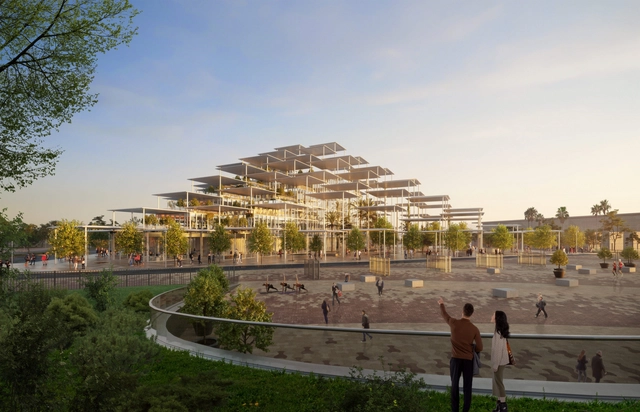
Bjarke Ingels Group, along with Argenia Ingeniería y Arquitectura, Buro Happold, and HCP Arquitectos y Urbanistas, have received the first prize in an international multidisciplinary competition for the design of the new Joint Research Center Site Headquarters in Seville, Spain. A "cloud of pergolas" inspired by the shaded plazas and streets of Sevilla will shelter the entire JRC site, plaza, garden, and the building underneath, supported by a series of columns covered with photovoltaics that contribute positively to the building’s operational footprint.
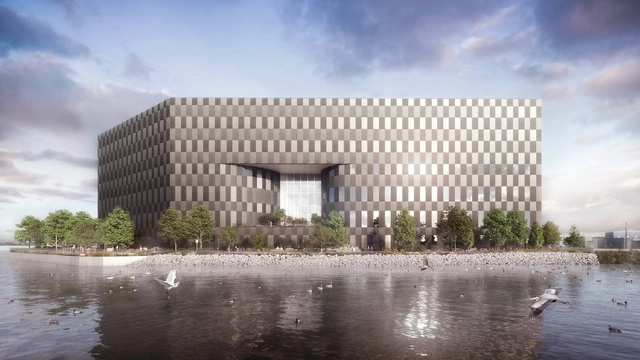
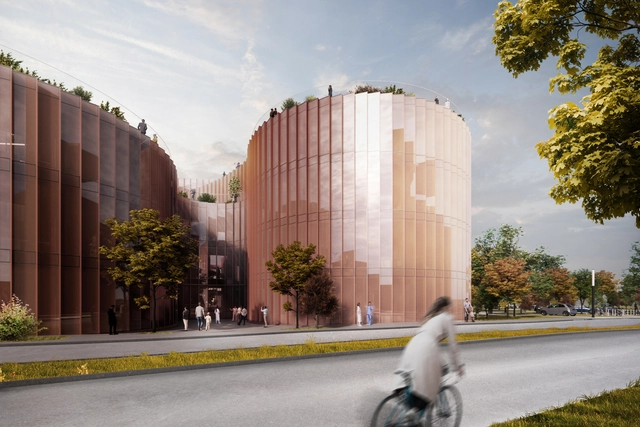
Bjarke Ingels Group has unveiled the design of a new Neuroscience Center building that will bring together psychiatry and neuroscience under one roof, combining research and treatment of physical and mental brain diseases, spinal cord, and nervous systems. The 20,000 sqm facility, which will be a part of the Aarhus University Hospital in Denmark, translates the "gyrification of the human brain" in a spatially-efficient structure that creates synergies between the different disciplines within the hospital.
BIG revealed the design for a treetop hotel room wrapped in 350 bird houses created for the Treehotel in Lapland, Sweden. Designed in collaboration with ornithologist Ulf Ohman, the 34 square-metre Biosphere room seeks to enhance the surrounding biosphere by providing a habitat for local birds while allowing guests to be immersed in the surrounding forest. The project is the latest addition to the hotel's series of individually designed rooms created by some of Scandinavia's most renowned architects, such as Snøhetta, Rintala Eggerstsson, and Tham & Videgard.
Kiev, Ukraine / Statue of Berehynia on the top of Independence Monument on the Maidan Nezalezhnosti. Image via Shutterstock
On the 24th of February 2022, Russia launched a large-scale invasion of Ukraine. Set to become Europe’s largest refugee crisis and armed conflict in this century, so far, this war has mobilized people across the world in order to exert pressure on authorities and put a stop to the armed hostilities. Individuals, as well as institutions in the architectural field, have taken part in these acts of solidarity, issuing statements, condemning actions, and even halting their work in Russia. From the UIA to MVRDV to Russian Institutions such as Strelka, the architecture world is denouncing the acts of violence and supporting an immediate cease of fire.
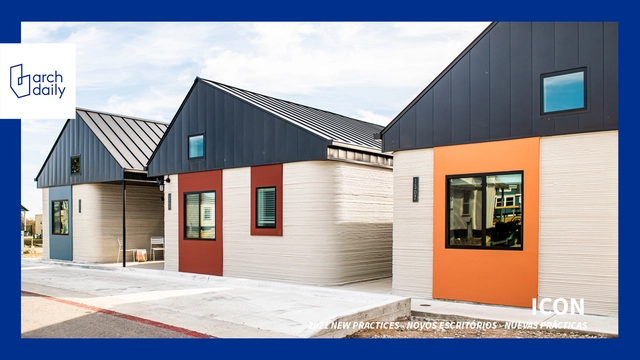
Founded in late 2017, named one of the "Most Innovative Companies in the World" in 2020, and selected as ArchDaily's Best New Practices of 2021, ICON is a construction company that pushed the boundaries of technology, developing tools to advance humanity including robotics, software, and building materials. Relatively young, the Texas-based start-up has been delivering 3D-printed homes across the US and Mexico, trying to address global housing challenges while also developing construction systems to support future exploration of the Moon, with partners BIG and NASA.
Featured on Times' Next 100, as one of the 100 emerging leaders who are shaping the future, Jason Ballard, CEO and Co-Founder of ICON spoke to ArchDaily about the inception of the company, worldwide housing challenges, his ever-evolving 3D printing technology, and process, his partnership with BIG, and the future of the construction field on earth and in space.
BIG's Wildflower Production Studio has received its building permit from the Department of Buildings (DOB), indicating that the project’s construction will now commence. In late 2019, American actor, producer, and director Robert De Niro’s Wildflower Development Group and BIG revealed the first images of their 650,000 square foot (approx. 60,400 sqm) production studio design proposal, located in the Astoria neighborhood of northwest Queens, New York. Once complete, the project is set to become the first vertical commercial film, television, and creative studio in the world.
As the new year kicks off, we're taking a look ahead to the projects we're most looking forward to in 2022. With a mix of cultural and commercial programs, the designs are located across five continents, with many under construction for multiple years. Designed across a wide range of scales, they represent a mix of interconnected landscapes, museums, and new skyscrapers.









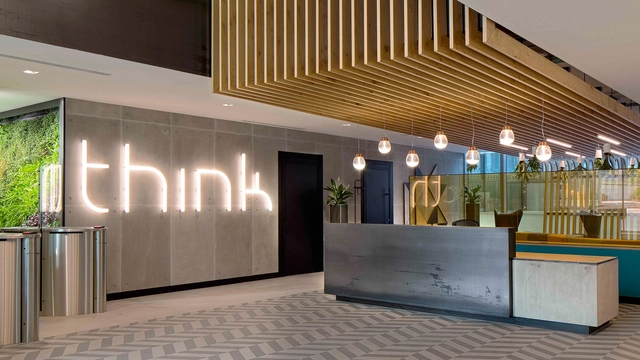
.jpg?1656316588 "MVRDV x Delta Light. Image © Valerie Clarysse")
.jpg?1656315984 "Node+ by UNStudio. Image Courtesy of UNStudio")
.jpg?1656315920 "Soliscape by UNStudio. Image Courtesy of UNStudio")
.jpg?1656315918 "Soliscape by UNStudio. Image Courtesy of UNStudio")



.jpg?1656053150 "Courtesy of BIG")




















.jpg?1647508251 "Courtesy of BIG - Bjark Ingels Group")
.jpg?1647508241 "Courtesy of BIG - Bjark Ingels Group")