Fast Company has announced who they believe to be the most innovative practices in architecture for 2015. Topping this list is the online remodeling community Houzz, the BIG powerhouse and David Benjamin’s The Living. See the complete list, after the break, and let us know who you believe is the world’s most innovative firms in the comment section below.
Circle the globe in 800-feet at the National Building Museum’s latest exhibition HOT TO COLD. BIG - Bjarke Ingels Group’s first North American exhibition, HOT TO COLD takes viewers on an “odyssey of architectural adaptation” from the “hottest to the coldest parts of our planet to explore how BIG’s designs are shaped by their cultural and climatic contexts.”
More than 60 architectural models of BIG’s most recent projects, including 20 premiering for the first time, are being suspended from the second floor of the museum’s historic Great Hall. Each project is interpreted through Iwan Baan's "masterful" photography, films by Ila Bêka and Louise Lemoine, and the Grammy Award-winning graphic artist Stefan Sagmeister’s design for the accompanying catalog by Taschen.
In 2013, Bjarke Ingels Groupcame first in Paris' Europa City competition, an 800,000 square meter cultural and recreational facility on the far North-Eastern outskirts of the city. In an attempt to explain the design of this huge project, filmmakers Squint/Opera have enlisted the help of Bjarke Ingels and a green screen to describe the project - Minority Report style - with a combination of live action and futuristic video effects. In a second video, a detailed walkthrough of the building enlists both 2D and 3D graphics "to capture the excitement and energy of this unique centre." Read on after the break for both videos.
Four projects have been selected by the American Institute of Architects’ (AIA) for honorably expanding the role of the architect beyond the building and into the realms of urban design, regional and city planning, and community development. These projects will be honored with the AIA’s Institute Honor Awards for Regional and Urban Design at the 2015 National Convention and Design Exposition in Atlanta. See the winners, after the break.
The current state of architectural design incorporates many contemporary ideas of what defines unique geometry. With the advent of strong computer software at the early 21st century, an expected level of experimentation has overtaken our profession and our academic realms to explore purposeful architecture through various techniques, delivering meaningful buildings that each exhibit a message of cultural relevancy.
These new movements are not distinct stylistic trends, but modes of approaching concept design. They often combine with each other, or with stylistic movements, to create complete designs. Outlined within this essay are five movements, each with varying degrees of success creating purposeful buildings: Diagramism, Neo-Brutalism, Revitism, Scriptism, and Subdivisionism.
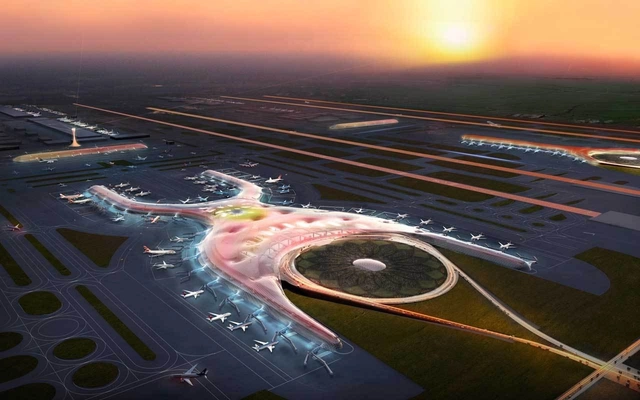
Foster + Partners and FR-EE - Fernando Romero EnterprisE’s winning scheme for the Mexico City Airport expansion (click to learn more). Image Courtesy of DBOX for Foster + Partners
A global survey conducted by BD has deemed Foster + Partners to be world’s “most admired architect" for the ninth consecutive year. The London-based practice, led by Norman Foster, is the 16th largest practice in the world. Foster + Partners’ ranking was undeniable, as the survey revealed a significant seven percent lead over runner-up contender, Herzog & de Meuron.
“To be voted most admired practice by our peers is a great honor,” said Norman Foster. “It is a huge tribute to our talented and hard-working teams with their myriad skills and disciplines, both in our many studios around the world and our base in London, all working towards the common goal of bringing innovative design solutions to create a better built environment.”
See who else topped the list as the world’s “most admired,” after the break.
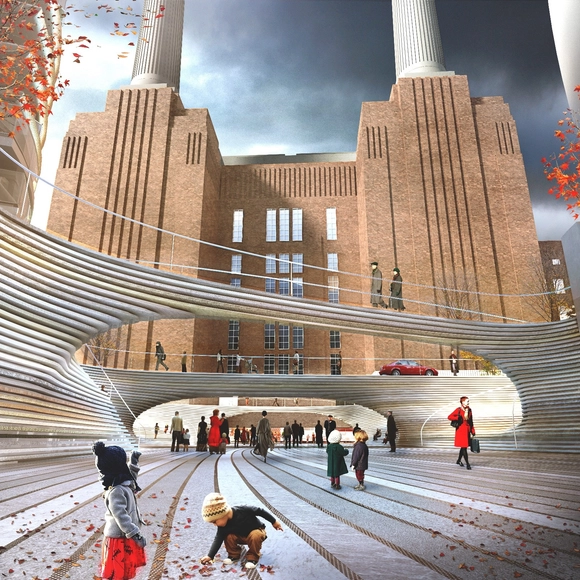
Courtesy of Battersea Power Station Development Company
BIG has unveiled the design for their addition to the development at Battersea Power Station, a public square that will link the power station itself with the Electric Boulevard development designed by Norman Foster and Frank Gehry. Called Malaysia Square after the Malaysian development consortium behind the plans, the design features cascading steps that link the main public space at the lower level with the entrance to the power station above. The split-level design also provides for two pedestrian bridges and a road bridge that cross above the "urban canyon" of the public square.
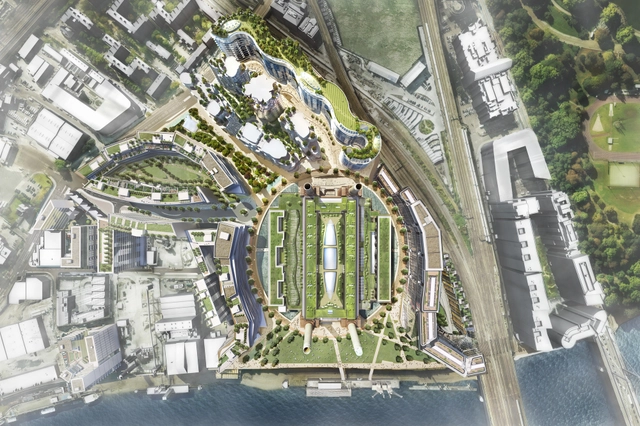
Masterplan. Image Courtesy of Battersea Power Station
BIG is set to make its UK debut. As reported by the Architect’s Journal, the Danish practice has been selected from an international shortlist to design a public square for Battersea Power Station. Though no formal announcement has been made, the “Malaysia Square” scheme will be a key element in the Wilkinson Eyre-designed masterplan, serving as the development’s “front door.” It will connect the masterplan’s first three phases, just south of the listed landmark, which include Frank Gehry and Foster + Partners’ proposed “Electric Boulevard.”
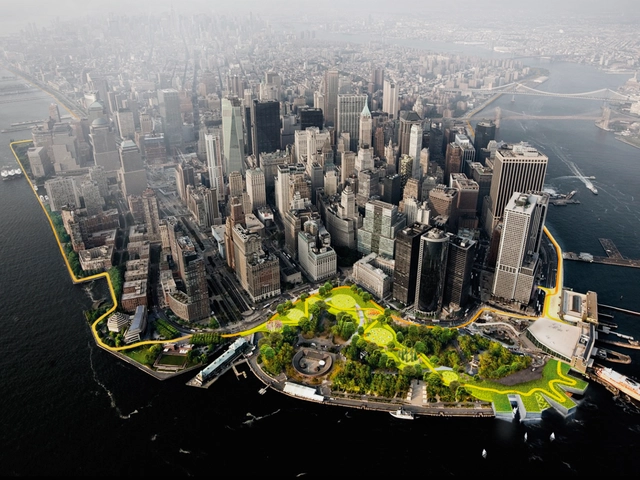
This past month at WIRED by Design, Bjarke Ingels gave a rundown of his most ambitious projects, highlighting one underlining theme: BIG’s mission to “create social infrastructure for resilient cities.” From their Manhattan “BIG U” storm proofing plan, recently awarded $400 million in federal funds, to their “ski slope” waste-to-energy plant currently underway in Copenhagen, the Danish practice is undoubtedly fulfilling their mission in a BIG and infectious way.
This year’s festival is taking place from October 1-3, featuring three days of talks, key-note speakers- including Rocco Yim and Richard Rogers - and networking opportunities. With “Architects and the City” as the overarching theme for this year’s main conference sessions, the festival will focus on the contributions architects can make to cities and how they affect – and are affected by – politics, infrastructure, planning communities and technology.
Click here to view the full shortlist and here for day 1 winners. And read on after the break for the full list of WAF day 2 category winners.
The Holcim Foundation has announced the Winners of the Holcim Awards 2014 for North America, the award which recognizes the most innovative and advanced sustainable construction designs. Among the winners are BIG and The Living, with designs which the jury stated showed "sophisticated and multi-disciplinary responses to the challenges facing the building and construction industry."
The ten recognized projects share over $300,000 in prize money, with the top three projects overall going on to be considered for the global Holcim Awards awards, to be selected in 2015.
Read on after the break for the full list of winners
Referring to his work as “promiscuous hybrids,” Bjarke Ingels details his vision of “worldcraft” where architecture harnesses the desires, knowledge and technology of its people to transform surreal dreams into reality.
After producing major revisions on a previously rejected design, BIG have had their second design rejected for the Kimball Art Center in Park City, Utah. City Hall rejected the design on the basis of appearance, arguing that it did not relate to the historic city centre "aesthetically, visually or historically." The second design by BIG marked a complete departure from the original that was selected as the winner of an architectural contest hosted by the Kimball Art Center.
BIG's LEGO House is now under construction, following a one of a kind foundation laying ceremony featuring - what else - supersized lego bricks. Bjarke Ingels himself was in attendance to lay one of the foundation bricks. Constructed in LEGO's hometown of Billund, Denmark, the LEGO House will be a 12,000 square metre "hands-on minds-on experience centre."
More on the LEGO House, and the foundation laying ceremony, after the break
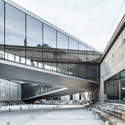
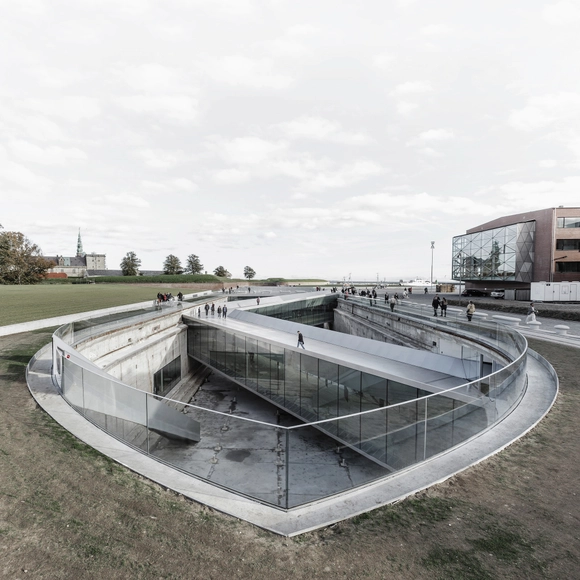
With a voluminous portfolio and a bold, light-hearted persona, Bjarke Ingels is among the most respected young architects of the era. Now, as he enters his forties, this article from Icon looks at one of his longest-running projects: The Danish National Maritime Museum. Exploring the development of this project from competition winning proposal in 2006 to completion last year, it discusses some of BIG’s more daring decisions for the museum’s design, as well as Ingels’ development as an architect on the international stage.
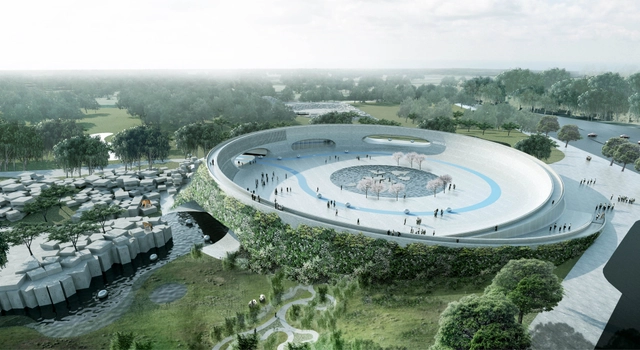
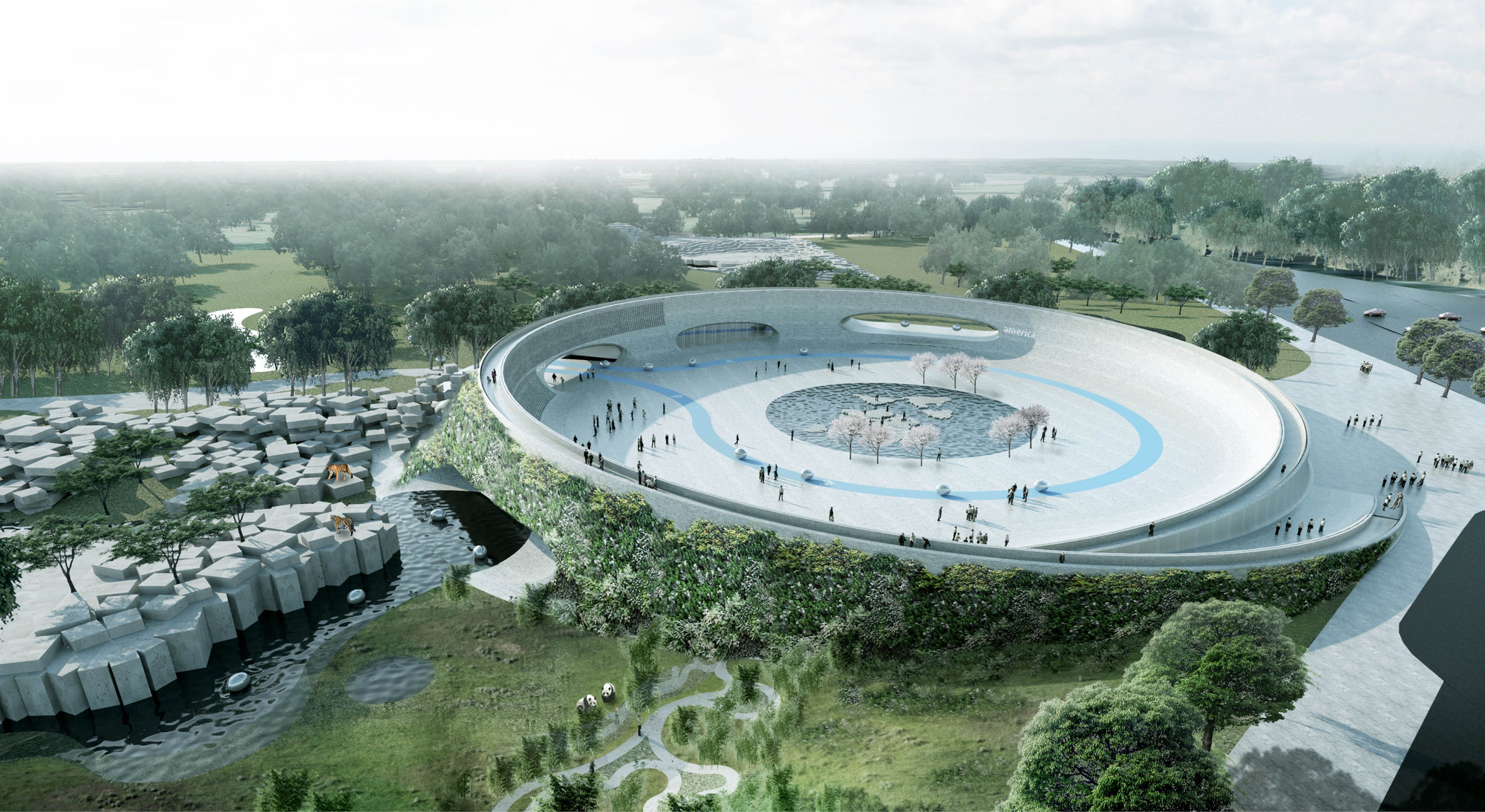
Danish architects BIG (Bjarke Ingels Group) have just released ambitious designs for a zoo in Givskud, Denmark. It's a project that provides an intriguing opportunity for, as BIG explains, the creation of a space with "the best possible and freest possible environment for the animals’ lives and relationships with each other and visitors." The firm has been working for the past two years to make Zootopia what the Danish press is calling "the world's most advanced zoo." According to Givskud Zoo's director Richard Østerballe, the park's transformation will benefit greatly from BIG's fresh approach to design--one that has been characterized by the integration of nature and natural elements into cutting-edge, innovative architecture.
The project will attempt to "integrate and hide buildings" within the landscape. Upon entering the zoo, visitors can either enter a large central square or climb the "building-landscape," allowing them to get a general overview of the layout of the park. From this central element, visitors can access different areas of the zoo. A 4km hiking trail connects the different areas (which represent the continents of Africa, America and Asia).
The first phase is expected to be completed in 2019 to coincide with the park's 50th anniversary.
Read on for more images and BIG's project statement.


.jpg?1422556516&format=webp&width=640&height=580)
.jpg?1422556566 "© Matt Carbone")


.jpg?1422556516)
.jpg?1420836447&format=webp&width=640&height=580)
.jpg?1420836358 "© BIG")


.jpg?1420836447)