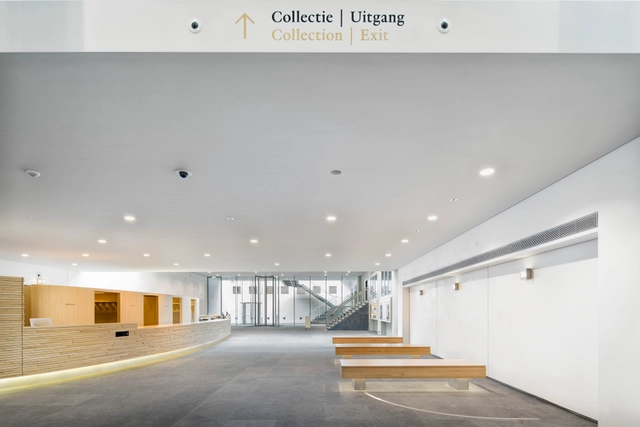
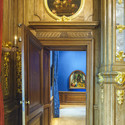
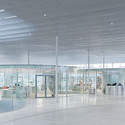
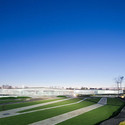
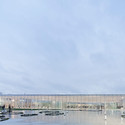
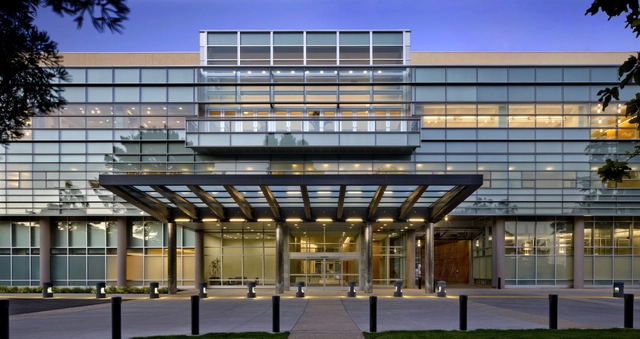
The Mauritshuis, a Dutch 17th century city palace in The Hague, will reopen this week following a large scale renovation and extension designed by Hans van Heeswijk with servicing and fire engineering undertaken by Arup. Similar to Amsterdam'sRijksmuseum, which reopened after a ten year restoration and remodelling in 2013, the Mauritshuis Royal Picture Gallery exhibits one of the finest collections of Dutch Golden Age paintings including Johannes Vermeer's Girl With a Pearl Earring. Alongside a large scale renovation, Hans van Heeswijk have also extended the galleries with new exhibition spaces, an auditorium and educational spaces.
Architects have been experimenting with the potential of building envelopes for years. Now, Arup has an interesting, Zumtobel Group Award-nominated proposal: the Solarleaf bioreactor. Developed in collaboration with SSC Strategic Science Consult GmbH and Colt International GmbH, this thin, 2.5 x .07 meter panel, when attached to the exterior of a building, is capable of generating biofuel - in the form of algae - for the production of hot water. More efficient than electricity and more sustainable than wood, algae is ideal kindling for producing heat, especially since it can be grown on-site. Moreover, the water in which the algae grows also collects solar energy, providing an additional supply of heat. More details on this sustainable innovation, after the break.
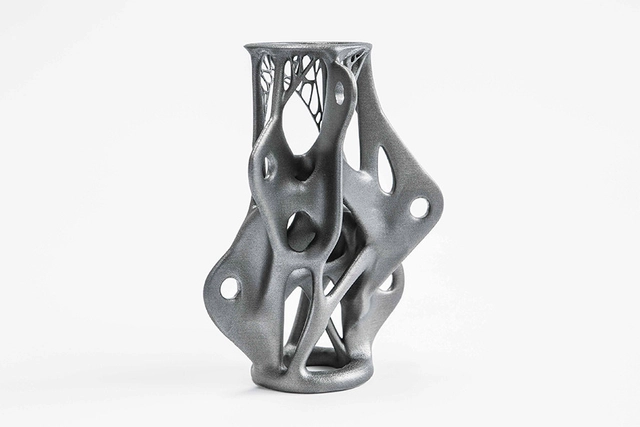
A team lead by Arup has developed a method of designing and 3D Printing steel joints which will significantly reduce the time and cost needed to make complex nodes in tensile structures. Their research is being touted as "a whole new direction for the use of additive manufacturing" which provides a way of taking 3D printing "firmly into the realm of real-world, hard hat construction."
Aside from creating more elegant components which express the forces within each individual joint - as you can see in the above photo - the innovation could potentially reduce costs, cut waste and slash the carbon footprint of the construction sector.
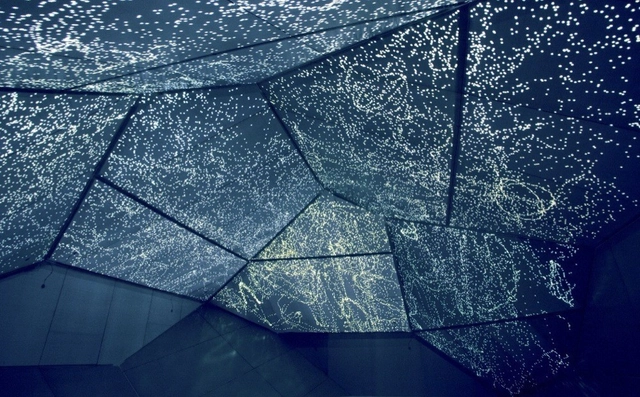
The syn chron space by Carsten Nicolai was designed to combine experiences of sound and light. Image Courtesy of artcentron.com
In this interesting article in the New York Times, Allison Arieff highlights the often unconsidered importance of sound in architecture (outside of theaters and museums at least). She profiles the work of Acoustic Engineers at ARUP who have begun to work inschools and hospitals, taking into account the effects poor sound environments can have on us in our everyday lives. You can read the full article here.
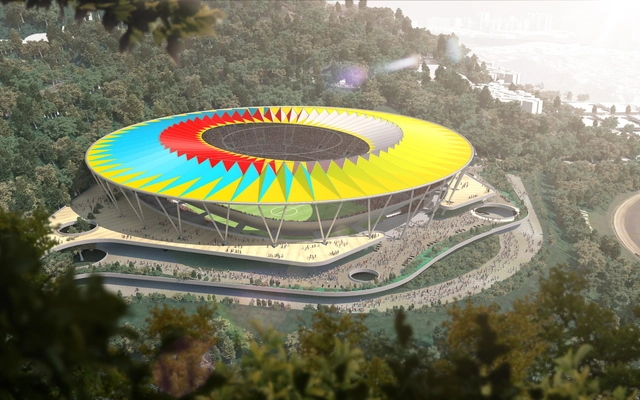
Following our recent news that confirmed Rogers Stirk Harbour + Partners (RSHP) will oversee the design and construction of two new stadiums within Caracas' Hugo Chavez Park, details have emerged regarding the Estadio Nacional de Fútbol de Venezuela. Designed by RSHP, in collaboration with Arup and Schlaich Bergermann und Partners, the project will be the practice’s first ever football stadium.
Most architects are familiar with the work of Iwan Baan, the eminent photographer who has documented some of the most famous buildings of our time. But what you may not know is that Baan had not originally intended to photograph architecture. Had it not been for a chance meeting with Rem Koolhaas, things may have turned out quite differently.
In the video above, Baan speaks with ERCO at the Louvre Lens, a SANAA-designed offshoot of the Paris Louvre located in a small mining town in the north of France. As he traipses around the museum's campus, he speaks about everything from his approach to photography (one that is less wrapped up in architecture than you might think) to the importance and transformative properties of light .
View from Pier. Image Courtesy of White Arkitekter
Stockholm-based White Arkitekter, along with partners ARUP and Gensler, has been announced as the winner of the two-phase “For a Resilient Rockaway” (FAR ROC) design competition in New York. Selected from a shortlist of four and an international pool of 117, White Arkitekter’s “untraditional” proposal aims to transform an 80-acre shoreline site in the Rockaways into a resilient and affordable community through a series of small interventions that can be tested, adjusted, or redesigned overtime during the development process.
In the last few decades, rapid advances in both medical and consumer technologies have created revolutionary possibilities for every aspect of healthcare, from prevention to diagnosis to treatment and beyond. From DNA-based preventative care to digital appointments with doctors thousands of miles away, the future holds enormous potential for improving longevity and quality of life for people around the world.
These dynamics present significant challenges for designers working to shape a built environment that will meet healthcare needs both today and in the future. We spoke with Arup experts from around the globe — Phil Nedin, who heads the firm’s global healthcare business from London; Bill Scrantom, the Los Angeles-based healthcare leader for North and South America; and Katie Wood, who recently relocated from Australia to Toronto to build the Canadian practice — to learn more.
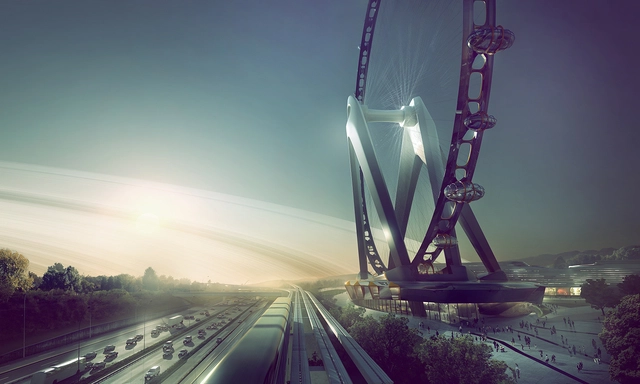
Consider a social-networking experience that combines real-time amusement with an awareness of your surroundings. Dutch architecture firm, UNStudio, together with Ferris Wheel Investment of Japan, have laid out a colossal vision that expects to attract millions of visitors to a mixed-use retail, food and beverage center anchored by an architecturally-iconic observation wheel, Nippon Moon. The concept utilizes a user's smart phone or tablet, extending the rider's experience far beyond the moment they physically enter one of the 32 single or double-decker capsules.
https://www.archdaily.com/424526/unstudio-envisions-giant-observation-wheel-in-japanJose Luis Gabriel Cruz
BIG, WHR and Arup have been shortlisted alongside two other design teams to participate in the second phase of the design competition for what will be Denmark’s largest hospital. The 124,000 square meter facility, known as the Nyt Hospital Nordsjælland, is planned to be built north of Copenhagen.
According to the jury, “BIG’s ideas, together with the large green spaces and green surfaces, mean that we really can talk about a healing hospital in the best possible interpretation of the concept.”
We will keep you updated as details of the other shortlisted teams emerge.
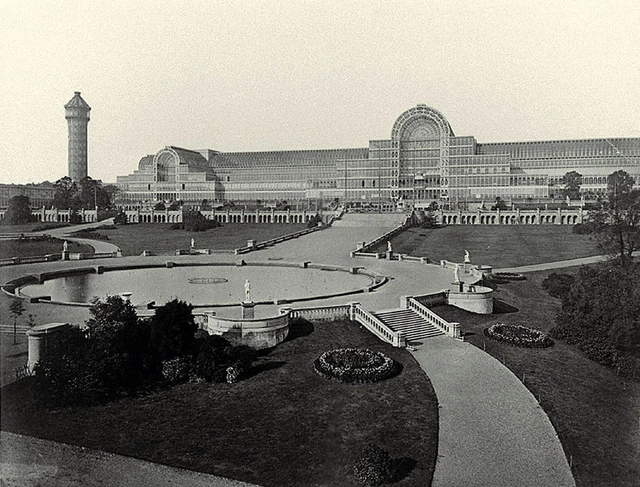
Shanghai-based developer ZhongRong Holdings is working with Arup on an ambitious proposal to reconstruct Joseph Paxton’s Crystal Palace in London. Originally built to house the Great Exhibition of 1851, the 80,000 square-meter cast iron and glass structure was relocated from Hyde Park to south-east London in 1854 where it was ultimately destroyed by fire in 1936.
Peter Rice has been described as both one of the best engineers and architects of the twentieth century. Unhappy with the role that engineers play in designing buildings, Rice dedicated his life to championing brave innovation and poetry through structure in a way that helped bridge the gap between engineering and architecture. His desire to work in tandem with architects, towards a shared vision, made him one of the most in-demand engineers of the twentieth century.
Light matters, a monthly column on light and space, is written by Thomas Schielke. Based in Germany, he is fascinated by architectural lighting, has published numerous articles and co-authored the book „Light Perspectives“.
Today we have permanent media façade installations worldwide that call for attention. With size, tempo, colour and brightness they stand up as individuals within the urban nightscape. Many of them send out their luminous messages in a broadcast mode. For this reason, neighbours, on occasion, demand an intense dialogue with regard to content and form of the media façade, especially as it’s often unclear whether light installations are architecture or advertisement.
However, in the same way a good book requires a storyteller, media facades demand curators to arrange exciting stories that fit into the site and suit the client. The following four examples show how media facades reflect the story of the buildings themselves - see them all, after the break...
BIQ - the world's first algae powered building - is set to be completed in Germany later this month. Built for the International Building Exhibition (IBA) in Hamburg, this zero-carbon apartment complex will sport a bright green facade-cum-algae farm, while its interior proposes a radical new theory on how we will live in the near future.
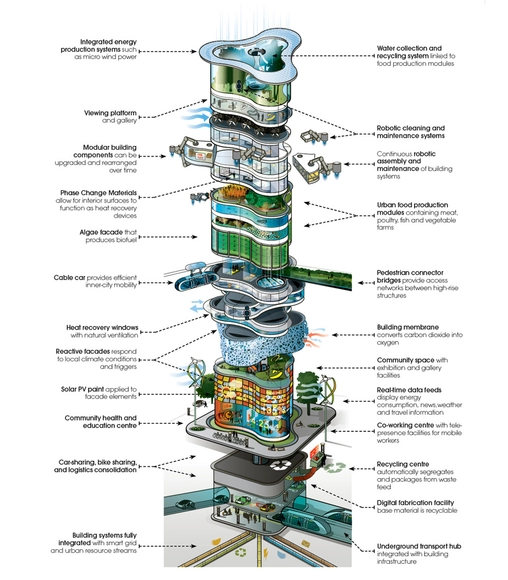
It is estimated that by 2050, 75 percent of the worlds - then 9 billion strong - population will live in cities. Urban Sprawl is already problematic and planners are faced with new challenges as they aim to build towards the sky rather than the horizon. In addition, cities are increasingly faced with climate change, resource scarcity, rising energy costs, and the possibility of future natural or man-made disasters. In response to these issues, Arup has proposed their vision of an urban building and city of the future.
In their proposal, titled “It’s Alive!”, they imagine an urban ecosystem of connected ‘living’ buildings, that not only create space, but also craft the environment. According to Arup, buildings of the future will not only produce energy and food, but will also provide its occupants with clean air and water.
In contrast to the other buildings in the Töölönlahti District of Helsinki, an essential component of the design by PAR and Arup for the Central Library involved creating a public space at the top of the library—visually connecting Töölönlahti to Senate Square and the city at large. The library is organized by six intersecting axes that afford spectacular vistas while creating a variety of spatial configurations for the library’s program. With it’s six floor levels each pointing toward a celebrated landmark, the Central Library becomes a symbolic center for city. More images and architects’ description after the break.
Located in Trafalgar Square in London, the BE OPEN Sound Portal focuses on an experience that would be all about the sound. Designed by Arup, they thought it would be great if people could really concentrate on sound in Trafalgar Square, which would take people away form hustle and bustle into a space where they can concentrate and immerse themselves in sound. The original idea was that they would be able to take people away from London to another place, to hear the sound of a melting glacier or an acoustic model of the big bang. The plan is effectively two concentric circles: the inner circle for the sound and the outer circle forms the entrances. Both pieces mask the background noise. They are shells to shield the noise. More images and architects’ description after the break.