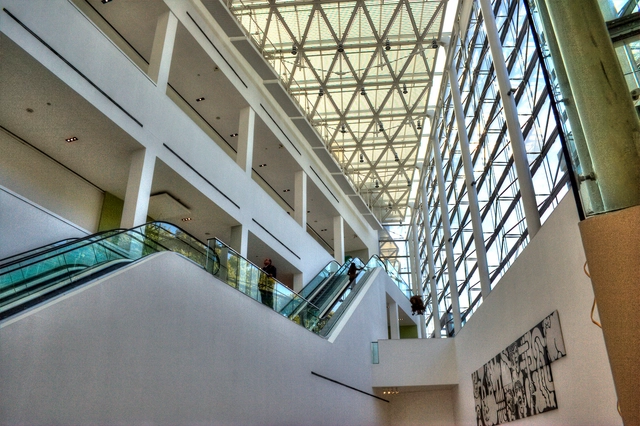
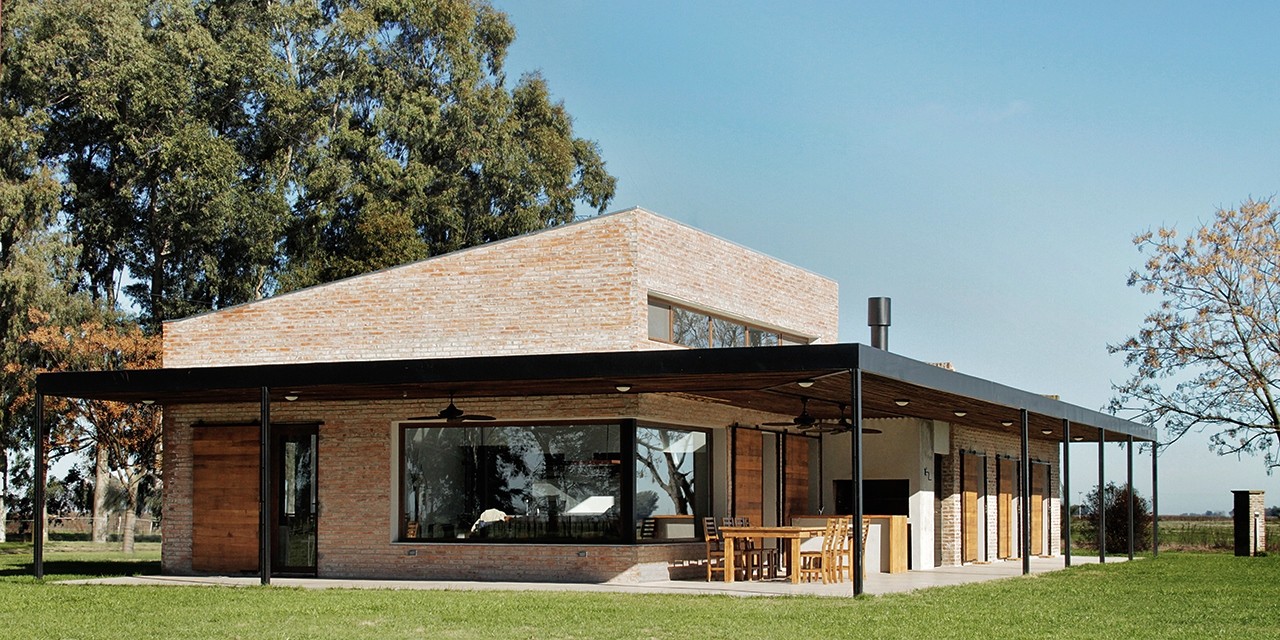
Over the last couple of years, terraces have become an important part of urban life, acting as a refuge, a space for enjoyment and gathering, for contemplation or as an outdoor workspace. As a result of periods of confinement around the beginning of the Covid-19 pandemic, these outdoor spaces where people can exercise, connect with nature, study or work, have become particularly popular with those living in large cities.
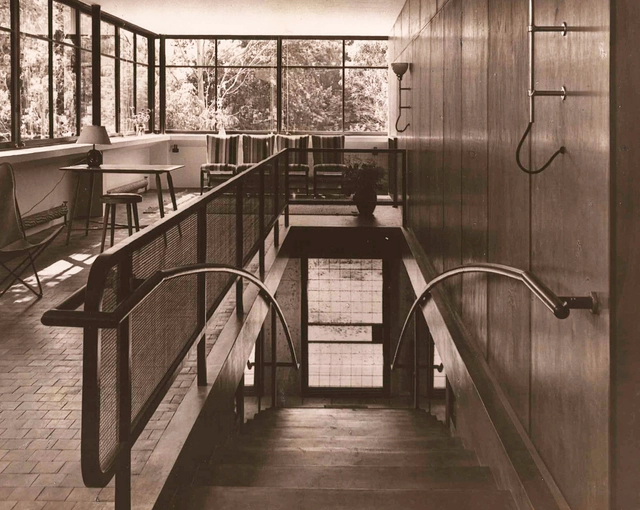
It was designed and built between 1943 and 1946 by Amancio Williams and Delfina Galvez Bunge over the Las Chacras Stream in the city of Mar del Plata. It eventually became known as "The House on the River" or "The Bridge House". However, it ceased to have a stream, and thus to be a bridge, in 1957 when the watercourse on which it rested was interrupted for sanitation reasons. It was used as a radio station between 1970 and 1977, but the last military dictatorship in Argentina ended up shutting it down. It remained closed, maintained by its owner until their death in 1991. Studied by all, but cared for by none. It suffered two major fires, in 2004 and 2008. Abandoned during the whole succession process, it was recovered by the Municipality of General Pueyrredón in 2012.
Whether applied as cladding to steel or timber frame structures or to structures built by traditional means, sheet metal offers an array of advantages as a building material, thanks to its low cost, ease of maintenance, and versatility.
As Francis D. K. Ching explains in his book Architectural Graphics, unlike the traditional, two-dimensional orthographic drawings used to represent layouts, sections, and floorplans, which only allow a project to be glimpsed through a series of fragmented images, axonometries, or axonometric projections, offer unique, simultaneous three-dimensional views of a project with all the depth and spatiality of tried and true technical illustrations.
The distribution of natural light, improved ventilation, and the propensity to connect living spaces with the outdoors while maintaining the privacy of the inhabitants have made courtyards a go-to in architectural design around the world over the centuries.
Courtyards are characterized as outdoor or semi-outdoor spaces that are enclosed within the walls of a house or building.
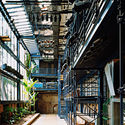
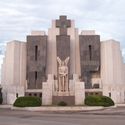
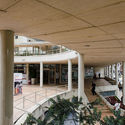
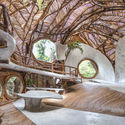
We know you're an architecture aficionado and that your passion takes you places that inspire and awe. Even though a visit to the classic tourist sites can result in an amazing trip, visiting lesser-known places can make for an unforgettable experience. It is because of this passion for parts unknown that we have compiled this list of some of Latin America's hidden architecture gems for you to consider as you plan your next trip.
As part of our 2018 Venice Architecture Biennale coverage, we present the completed Argentinian Pavilion. Below, the curatorial team describes the exhibition in their own words.
Horizontal Vertigo, Argentinian Pavilion at the Venice Biennale 2018, delves into the notions of humanity and democratic spirit as proposed by Freespace, by establishing a cross-cutting dialog between geography, place, and architecture.
The exhibition, curated by the architects Javier Mendiondo, Pablo Anzilutti, Francisco Garrido and Federico Cairoli, is an invitation to rethink our territory as a collective construction and discover architecture in its capacity to convey unexpected generosity in every project.
via Wikipedia User: HalloweenHJB Licensed Under CC BY-SA 3.0
Even in the age of instant information, museums enthrall us. Lining the tourist guidebooks of cities across the world, art museums are a must-see destination for visitors and locals alike. However, as our methods of communication and archiving change, driven by science and innovation, historic institutions such as art museums must keep up.
In cities around the world, art museums are redefining themselves to respond to the contemporary, experimental demands of the 21st-century. In Buenos Aires, the architecture of art museums showcases a diverse catalog of form, materiality and atmosphere, blending the instant, flexible demands of the modern age with a historic role of archiving some of humanity's most evocative works.
Below, we paint a picture of Buenos Aires' diverse art museums, showcasing the changing nature of exhibition architecture in one of the world’s most energetic cities.








.jpg?1527355326&format=webp&width=640&height=580)