The discipline of architecture has undergone considerable change, primarily driven by advancements in the application of technology. Architects, long viewed as the futurists of the constructed world, are now utilizing progressive techniques and resources and expanding the use cases of technologies such as Augmented Reality (AR) and Virtual Reality (VR). This transition extends beyond professional practices into architectural education, bringing opportunities to redefine the approach of architects toward their craft.
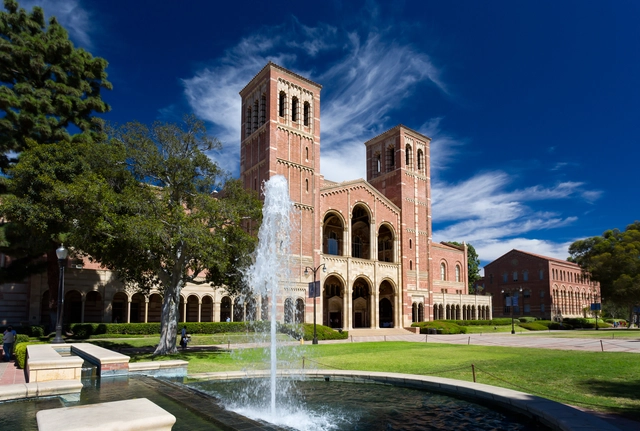
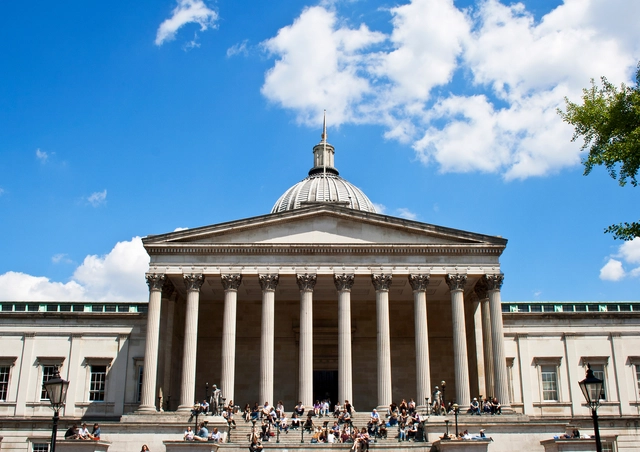
LOS ANGELES, CA/USA, Royce Hall on the campus of UCLA. Royce Hall is one of four original buildings on UCLA's Westwood campus.. Image via Shutterstock | Ken Wolter
The annual BAM ranking of International Master’s Programs in Architecture aims to assist architects and students in identifying the top international Master’s programs globally. Assessing programs from various leading architecture schools, it evaluates degrees through a comparative approach developed by a panel of 15 professors and international experts. For this edition, different Architecture and Built Environment programs have been selected to be part of the BAM Ranking 2023, and 18 Universities worldwide were featured in the 2023 edition of the BAM Ranking.
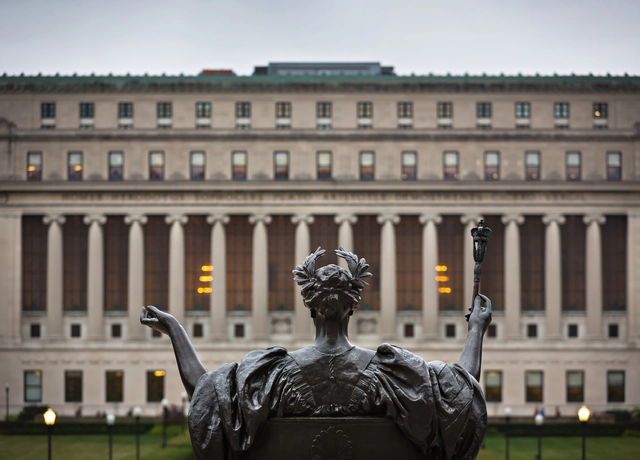
Similar to the past few years, Harvard University, Columbia University, and Universidad Politécnica de Madrid maintained their position at the top of the ranking. MIT has made the list with two programs, one focused on urbanism and the other on design. Moreover, Tsinghua University in Beijing, China, made the list with their English Program for Master in Architecture. The ranking also features TUDelft (Netherlands), TUM (Munich), and TUBerlin (Berlin) in Europe.
QS- Quacquarelli Symonds World University Rankings just announced the 2023 top universities to study Architecture and the Built Environment. The index rates over 1,400 schools and covers a total of 54 disciplines, grouped into five broad subject areas, based on five indicators "to effectively reflect their performance, taking into account academic reputation, employer reputation, and faculty research".
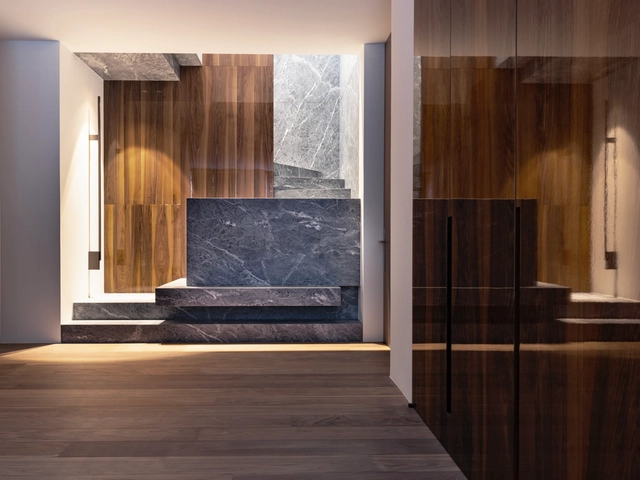
Penthouse Tuymans - Arocha. Image Courtesy of Glenn Sestig
Whether an apartment building, house, storefront, office interior, or restaurant, Glenn Sestig’s architecture consistently reveals itself in tidy fragments of robust and determinately monumental geometry that tends to evoke urban qualities. His austere facades, colonnades, stair landings, and even reception desks and shelf displays appear to be quite hefty and substantial. And, in fact, every project, be it a small boutique or gallery, starts with rigorous planning – visual primary and secondary axes get established, circulation flow is laid out, and major anchors are identified before the architect moves on to addressing the appropriate materials, surfaces, and details. Every space is architecture first; its program and appearance will fit into it.
In order to help architects and students to get to know the best International Master’s available in the world, BAM’s annual ranking compares and evaluates programs, from the best schools of architecture, through a comparative and objective methodology, developed by 13 international experts. For the 2022 edition, different Master’s Degree Programs from the recent QS Ranking – Architecture / Built Environmenthave been selected to take part in BAM’s Ranking.
Similar to previous years, in 2022, Harvard and Columbia maintained their leading positions in first and second place. MIT made a comeback to the list with two master's programs, in the fourth position, the Master of Science in Architecture Studies in Urbanism (SMArch Urbanism), and in the sixth position, the Master of Science in Architecture Studies in Design (SMArchS Design). Universidad Politécnica de Madrid and ETH Zurich were both ranked third, offering the best master’s program in Europe. Pontificia Universidad Católica in Chile occupied the 18th position, presenting a top master's degree in South America, followed closely in the 20th position by the Universidade de São Paulo.
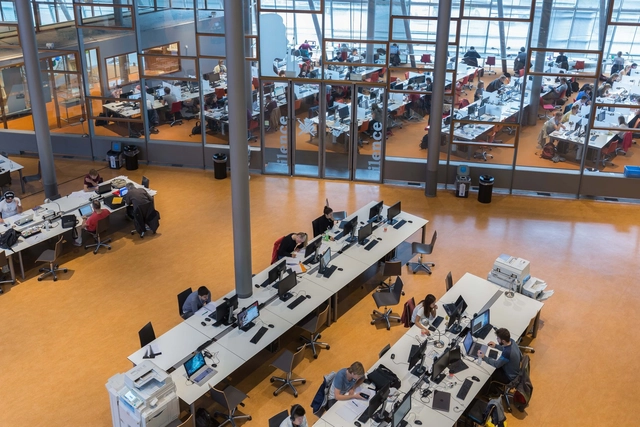
DELFT, THE NETHERLANDS - AUGUST 19, 2017: Students at work in the Library of the Technical University Delft, The Netherlands. Image via Shutterstock/ by T.W. van Urk
Delft University of Technology in the Netherlands took the second place while UCL, in the United Kingdom, came third. ETH Zurich, Harvard, and the National University of Singapore (NUS) maintained fourth, fifth, and sixth place. The Manchester School of Architecture was upgraded to seventh position this year, moving the University of California, Berkeley (UCB) to eighth place and the Tsinghua University in Beijing, China to the ninth. Politecnico di Milano, in Italy, remains a non-mover at 10.
Like other professions, Architecture and Urbanism often revolves around its own language. What may seem like a basic term for professionals in the field, can often sound completely strange or meaningless to those starting their studies or who are curious about the field. For this reason, we created a small glossary with some words that are important to expand your vocabulary and contribute to a future discussion about your project.
https://www.archdaily.com/977606/vocabulary-of-basic-architecture-termsEquipe ArchDaily Brasil
Questioning the new now, especially with the new challenges of Covid-19, around the world, cities are advocating for structural change and collective action. Berlin questions, an annual, multi-day conference and a platform for transdisciplinary dialogue, in its 2021 edition “Metropolis: The New Now”, tackled the immediate present, creating a place for debate. Dedicated to local solutions to global challenges, the event took on a hybrid format, at various locations in Berlin and online, resembling the world we live in.
ArchDaily had the chance to meet up with Lesley Lokko, architect, academic, and novelist at Berlin Questions, to discuss her talk “Africa as the lab for the future”, her visions for the future of architecture education and the future of big cities on a social, cultural and urban level.
Although architecture itself is universal, the day-to-day practice still varies across the world, influenced by a wide range of factors, from the professional requirements and responsibilities of an architect, the local environment, history and building customs, to local priorities and challenges. In a hyper-connected world, where architecture seems to become more uniform, how do local contexts and characteristics shape the built environment? This article taps into the commonalities and the variations within the architecture profession.
The ninth edition of the National Council of Architectural Registration Boards’ (NCARB) annual report has been released, in the midst of new challenges due to the COVID-19 pandemic, highlighting major information about the architecture profession in 2019. Focusing on different parameters, such as licensing, education, experience, and demographics, the study explores the evolution and transformation of the field, encompassing also findings on equity, diversity, and inclusion.
Labor gives rise to design. As the aggregate of physical and mental effort used in the creation of goods and services, labor is tied to both what we create and our process. In a field shaped by production, architecture and design depend on labor from a broad range of professionals. But as workers increasingly put in longer hours and traditional measures of security change, questions of labor practices have arisen amid broader conditions of contemporary work culture.
Architecture school. You’ve heard the myths - the legends of all-nighters and innovation, of unmatched workaholism and love for the profession. Perhaps you know what you want – to solve the great urbanization problem, to create the next sustainable wonder-gadget, or maybe just to start your own firm and show the architectural world how it’s done. Maybe you have no idea what you want to do, drawn to architecture by the romance, the larger-than-life scale. Maybe you’re an artist who wants a job when they graduate. A hometown hero, you’re about to be thrown into a classroom of the best, possibly for the first time in your life. You’ll be surrounded by the brightest in engineering, problem solving, writing, drawing and a host of other skills. Anxious and excited, you stand ready at the doors of architectural education, hungry for innovation and ready to share and learn from others. Stepping inside that first day, you prepare yourself for the best - and most difficult times of your life so far.
To prepare you for the strange beast that is architecture school, shed light on what is fact and fiction, and give you some peace of mind, we at ArchDaily have prepared a list of advice for all incoming architecture students. There is no other education in the world quite like an architectural one, and we hope that this list can help prepare you for its unique wonders and challenges. The advice below is meant to ease the transition into school as much as possible – but be warned, nothing can compare to experiencing the real deal. Read them all after the break.
We’ve already talked about this. You’re preparing your final project (or thesis project). You’ve gone over everything in your head a thousand times; the presentation to the panel, your project, your model, your memory, your words. You go ahead with it, but think you'll be lousy. Then you think just the opposite, you will be successful and it will all be worth it. Then everything repeats itself and you want to call it quits. You don’t know when this roller coaster is going to end.
Until the day arrives. You present your project. Explain your ideas. The committee asks you questions. You answer. You realize you know more than you thought you did and that none of the scenarios you imaged over the past year got even close to what really happened in the exam. The committee whisper amongst themselves. The presentation ends and they ask you to leave for a while. Outside you wait an eternity, the minutes crawling slowly. Come in, please. The commission recites a brief introduction and you can’t tell whether you were right or wrong. The commission gets to the point.
You passed! Congratulations, you are now their new colleague and they all congratulate you on your achievement. The joy washes over you despite the fatigue that you’ve dragging around with you. The adrenaline stops pumping. You spend weeks or months taking a much-deserved break. You begin to wonder: Now what?
The university, the institution that molded you into a professional (perhaps even more so than you would have liked), hands you the diploma and now you face the job market for the first time (that is if you haven’t worked before). Before leaving and defining your own markers for personal success (success is no longer measured with grades or academic evaluations), we share 9 lessons to face the world now that you're an architect.
This November, RIBA launched a national school program devoted to providing children between the ages of 4-18 access to architecture programs. This will be the UK’s first nationwide architecture program. The instructors, formally known as Architecture Ambassadors, are volunteer architecture professionals donating their time to partnering schools at which students participate free of charge.
Before launching the nationwide program, RIBA conducted a pilot version - gaging interest and success from students, school administrators, and ambassadors. The pilot phase visited over 200 schools in England and 18,000 students. Each school’s architectural workshop was highly individualized to the community and location, adding a personal aspect to the student’s introduction to the vast field of architecture. These tangible projects investigated local areas, assessing their needs, issues that affect the community, and their hopes for the future.
The beginning of the fall semester is quickly approaching, and prospective architecture students are gearing up for the beginning of their future careers. While the next step may seem daunting, the first year of your architecture education helps set the pace for the remaining four to five years. So it's important to get started on the right foot.
Architecture studios are notorious for long nights, intensive model-making and desks overflowing with trace paper and parti diagrams. But there is one important aspect of studio life that is too often neglected: the student-professor relationship.
Read on for the four steps to start investing in this unique relationship to set yourself up for success.
When learning about architecture, there is no replacement for practical experience: seeing how materials can be joined together, how structural elements respond to the stresses placed upon them, or how construction techniques can alter the finished project. For this reason, it is a good idea to give students a chance for some hands-on experience building real structures—something that, due to budgetary constraints and the academic culture of many architecture schools, has sadly been uncommon in the past.
However, in recent years, this culture has started to shift, with increasing numbers of architecture schools finding ways for students to be involved in construction projects, from small, temporary interventions and pavilions, to larger permanent buildings. In order to show the excellent work that can be done in an educational context, for the fourth timeArchDaily is calling on students and professors to submit the design-build projects they have completed in the past year. As always, we're teaming up with allofArchDailyen Español,ArchDaily Brasil, and ArchDaily China, in the hope that we can present the best work from students worldwide to a worldwide audience. Read on to find out how you can take part.
This summer a brand new class of eager architectural hopefuls are preparing to start their lives in design at architecture schools around the world. Entering a studio environment for the first time brings an exciting set of new creative challenges, but this thrilling new world of architecture can often be tough to anticipate for those who have yet to begin their journey — leaving newcomers feeling unprepared and nervous on their first day.







.jpg?1598300039&format=webp&width=640&height=580)

.jpg?1440422234&format=webp&width=640&height=580)


.jpg?1440422234)