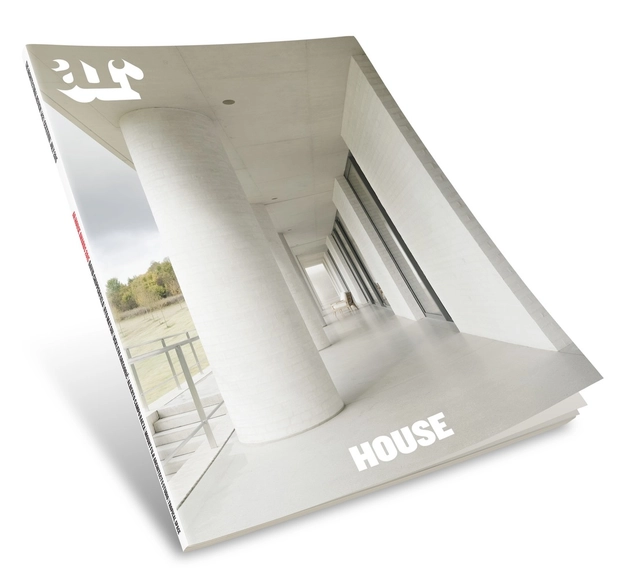
ArchDaily is continuing our partnership with The Architectural Review, bringing you short introductions to the themes of the magazine’s monthly editions. In this introduction to the July 2015 issue, AR editor Christine Murray takes on "the most pressing issue of our time," the global housing crisis, asking "why don’t we shelter the homeless in empty housing? This crisis seems nonsensical when the postwar housing crisis was solved so efficiently."
The architect-designed home is a desirable commodity, that Modernist minimalist bungalow, all steel and glass with a large sofa, the Case Study House complete with swimming pool, MacBook Air and stunning view.
But there was once a different kind of architect-designed home, for people in need of shelter, not investments – and it’s sorely required now. Housing is the most pressing issue of our time, with one in every 122 people in the world either a refugee, internally displaced or seeking asylum – a record high, according to a UN report. Yet cash-strapped states do nothing, build nothing. They stand eyes averted, hands in their pockets.
Farnsworth House, the temple of domestic modernism designed by Mies van der Rohe as a weekend retreat for a Chicago doctor, is one of the most paradoxical houses of the 20th century. A perfectionist mirage, it floats like a pavilion in a park, but its history has been beset by plagues, floods and feuds. As the second installment of a series of three modernist classics presented by Archilogic, we’ve modeled the Farnsworth house so that you can see if—in spite of its austere reputation—it can be lived in after all. In this model you can explore the spatial arrangement of the house, and refurnish it with Eames chairs, deck it out with your IKEA favorites, or booby-trap it with children’s toys.
https://www.archdaily.com/770612/a-virtual-look-into-mies-van-der-rohes-farnsworth-houseAdam Jasper & David Tran, Archilogic
La Paz, the historic de-facto capital of Bolivia, is widely renowned for its incredible setting, colonial architecture, and cultural buildings. El Alto, on the other hand, is not. It was, in fact, La Paz's rather dismal satellite city, all low rise brick and commuting. Yet El Alto has become the centre of an entirely new, independently evolved architectural style that is rapidly catching on across South America.
What do Ice Cube, the members of Pink Floyd, and Seal have in common with fashion icon Tom Ford and former president Thomas Jefferson? They all studied architecture. Perhaps a representation of the diversity of talents in architecture studios, household names like Samuel L. Jackson and Courteney Cox found their footing as students of architecture prior to reaching success in other fields.
We've put together a list of some of the most unexpected names gracing the yearbooks of architecture schools from around the world, including the likes of Queen Noor of Jordan and George Takei of Star Trek fame. Discover "Weird Al" Yankovic's true (architectural) passions after the break.
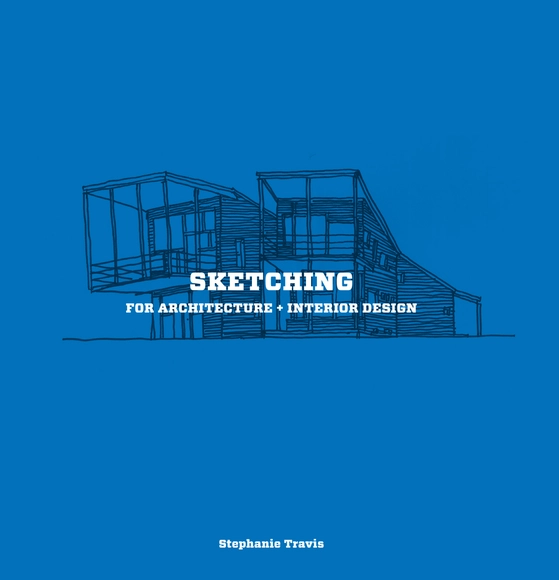
The following is an excerpt from the introduction of Stephanie Travis' book Sketching for Architecture & Interior Design. The book features over 45 sketching and drawing exercises across three chapters (Furniture + Lighting, Interiors, Architecture). Below we feature sample exercises for sketching transitional spaces, building materials and foreground + background. We're also giving away copies for two lucky readers, so read on to find out how to enter!
Drawing is truly a tool for seeing. To draw an object, interior, or building, you have to look at the subject in a new way. You are forced to pause and scrutinize, as drawing requires another way of thinking, shifting into a deeper realm that encompasses elements such as shape, form, texture, rhythm, composition, and light. When you have developed your drawing skills, the finer details of a space—key features that you may not previously have noticed—will be revealed to you. Freehand drawing allows viewers to see in a way they never have before. The sketching process is a means of expanding your creativity and awakening your senses.
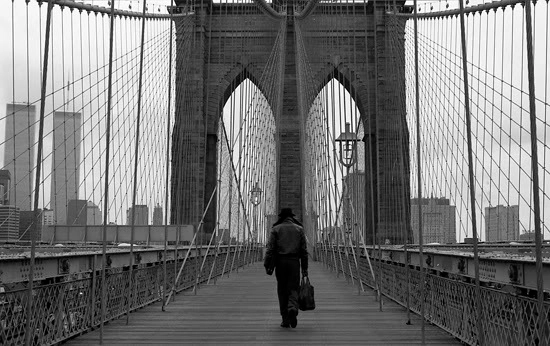
Grégoire Alessandrini’s blog “New York City 1990’s” contains an enormous collection of images taken between 1991 and 1998 that artfully depict New York. The website is a snapshot of New York in the 1990s, capturing the spirit of the era with photographs of New York’s architecture that could only exist at that time. As politics and public sentiment have changed, the city has changed with it, and much of the New York Alessandrini captured no longer exists.
To document just how much New York has changed in the past 25 years, we have curated a selection of Alessandrini’s images and set each photograph next to a Google Street View window corresponding to the photographer’s location at the time. In the photographs where Alessandrini observes from an elevated vantage point, the Street View images are as close as possible to the photographer’s location.
Read on after the break to see the images of New York’s dynamic change from the 1990s to 2015.
ArchDaily is continuing our partnership with The Architectural Review, bringing you short introductions to the themes of the magazine’s monthly editions. In this introduction to the June 2015 issue, The AR's editor Christine Murray addresses the question:"has architecture lost its social conscience?" According to Murray, "the question has become an arthritis; a dull ache that improves or worsens depending on the weather."
For some, the social purpose of architecture is associated with the idealism of youth, to be shed like a snakeskin as the responsibilities of age take over. But there is still plenty of teeth gnashing and hand wringing. Even if architects are powerless to shape the economic and political context of their work, a building is still a place where people gather. A social purpose, whether for a school or an office tower, is still the driver of its design. And yet, when the paperwork and construction are done, the bureaucracy surmounted, the fees paid (or not), and a building is finally complete, it’s the people we strip away. When architecture is published and the critic’s verdict given, it’s the messiness of life we edit out.
This article is part of ArchDaily Essentials, a series of articles which give you an overview of architecture's most important topics by connecting together some of our best articles from the past. To find out more about ArchDaily Essentials, click here; or discover all of our articles in the series here.
https://www.archdaily.com/769341/ad-essentials-smart-citiesAD Editorial Team
This article is part of ArchDaily Essentials, a series of articles which give you an overview of architecture's most important topics by connecting together some of our best articles from the past. To find out more about ArchDaily Essentials, click here; or discover all of our articles in the series here.
https://www.archdaily.com/769338/ad-essentials-3d-printingAD Editorial Team
This article is part of ArchDaily Essentials, a series of articles which give you an overview of architecture's most important topics by connecting together some of our best articles from the past. To find out more about ArchDaily Essentials, click here; or discover all of our articles in the series here.
https://www.archdaily.com/768810/ad-essentials-chinaAD Editorial Team
This article is part of ArchDaily Essentials, a series of articles which give you an overview of architecture's most important topics by connecting together some of our best articles from the past. To find out more about ArchDaily Essentials, click here; or discover all of our articles in the series here.
By the mid point of the twentieth century, the clean lines of the International Style and the stripped utilitarianism of functionalism were becoming increasingly common in American and European cities. Created out of a wholesale rethink of core modernist values, Postmodern architecture came as part of a philosophical shift that was just as all-encompassing as the Modernism it sought to replace; aiming to revive historical or traditional ideas and bring a more contextual approach to design. A critical elite who never really left modernism often condemned postmodernism as tacky, regressive or pandering to popular opinion; but after something of a resurgence of modernism in recent years, what’s the value of postmodernism to contemporary thinking?
https://www.archdaily.com/769368/ad-essentials-postmodernismAD Editorial Team
This article is part of ArchDaily Essentials, a series of articles which give you an overview of architecture's most important topics by connecting together some of our best articles from the past. To find out more about ArchDaily Essentials, click here; or discover all of our articles in the series here.
The world that Modernism was born from is no longer a world that we recognize, yet Modernism - as a style and a philosophy - still dominates so much of architectural discourse today. At its brightest the movement's original utopian ideals still shine through, and the appreciation for simplicity and material still forms a hold on the popular consciousness of much of the world. But after nearly a century since the founding of the Bauhaus, the Chicago Tribune Competition, and the publication of Le Corbusier's Vers Un Architecture, many of the most basic principles of Modernism have come into question, and its most controversial contributions are being re-evaluated. How can we understand Modernism now, and how should we use it?
https://www.archdaily.com/769340/ad-essentials-modernismAD Editorial Team
This article is part of ArchDaily Essentials, a series of articles which give you an overview of architecture's most important topics by connecting together some of our best articles from the past. To find out more about ArchDaily Essentials, click here; or discover all of our articles in the series here.
When the term “sustainability” is brought up in architectural discourse, everyone seems to have a different opinion on the matter. Sustainability is wrought with controversy politically, economically, socially and pedagogically, and while the definition has shifted over time, many new branches of design have developed from sustainability with the aim of driving progressive and innovative change in the world. But what exactly is sustainability, and how do we encounter it in the architectural world?
https://www.archdaily.com/769365/ad-essentials-sustainabilityAD Editorial Team
Since it was founded in 2008, ArchDaily has gotten pretty big. At over 18,000 projects and over 33,000 total articles (to date), the number of pages, images and words that collectively form the ArchDaily website is mind-boggling. In our newsroom you'll often hear references to "the iceberg" - in other words, what you see on the homepage is just a fraction of ArchDaily, while the rest lurks beneath the surface, waiting to be discovered. As editors, one of our biggest challenges is to help you discover it.
We already have a few methods in place to enable this: on our Facebook page we often post older articles or projects that have proven to be popular in the past, and one of the biggest benefits of our recent platform upgrade has been a new, multifaceted search for projects that allows you, for example, to look for "Brick Houses in the United States by Frank Lloyd Wright" and narrow 18,000 projects down to just three.
This week, we're launching a series of articles that we hope will do something similar for some of our most informative and thought-provoking news and editorial articles: ArchDaily Essentials.
inTACT Sketchpad for the visually impaired. Image via Dwell Magazine, Courtesy of Don Fogg
Seven years after waking up without sight, San Francisco-based architect Chris Downey is helping to revolutionize the built environment with interactive technologies optimized for the blind. One of the world's leading blind architects, Downey intrinsically understands the issues facing blind and visually impaired people worldwide. As a consultant to a variety of organizations serving to advance universal access, Downey has played an integral role in the development and integration of new, non-invasive technologies designed to assist the blind.
In a recent article in Dwell, Downey illustrates the various technologies currently being tested and implemented in San Francisco - a city notorious for its topographical challenges to differently abled residents. See four takeaways from Dwell's interview with Downey on how technology can help bridge the gap between architecture and universal access after the break.
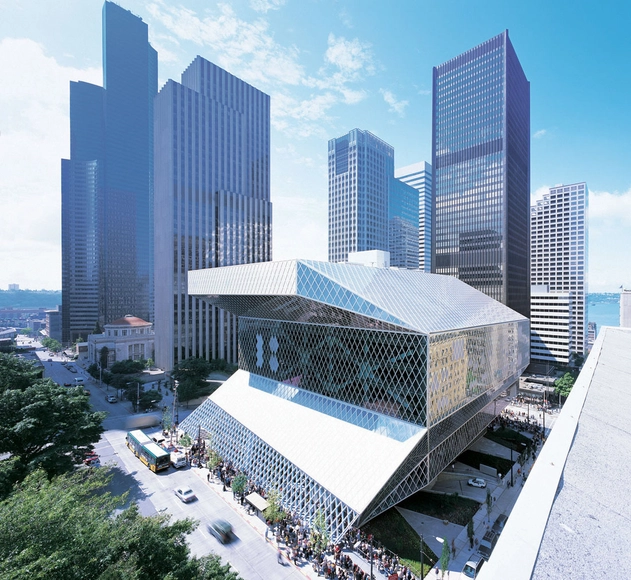
Bjarke Ingels worked on the Seattle Central Library during his time at OMA. Image Courtesy OMA
The world of architecture is small. So small in fact, that Rem Koolhaas has been credited with the creation of over forty practices worldwide, led by the likes of Zaha Hadid and Bjarke Ingels. Dubbed “Baby Rems” by Metropolis Magazine, this Koolhaas effect is hardly an isolated pattern, with manifestations far beyond the walls of OMA. The phenomenon has dominated the world of architecture, assisted by the prevalence and increasing necessity of internships for burgeoning architects.
In a recent article for Curbed, Patrick Sisson dug into the storied history of internships to uncover some unexpected connections between the world's most prolific architects. With the help of Sisson's list, we've compiled a record of the humble beginnings of the household names of architecture. Where did Frank Gehry get his start? Find out after the break.
Emporis, a German company that collects and distributes information on construction and the built environment, has released a ranking of the world’s 100 most visually impactful skylines, using statistical analysis to address a topic often made frustratingly subjective by civic pride.
To create the rankings, Emporis used data from its archives to determine the number of high-rise buildings in the cities it studied, and applied a points system that gave each building a numerical value determined by the number of floors it has. To standardize their ranking process, the points system ignores spires and other ornament, and does not include television or antenna towers, masts, bridges, or similar architecture.
Of the top 10 most impactful skylines, seven are in Asia, while North and South America combined have the other three. Notably, cities filled with rich architectural history fail to make the list, or fall surprisingly low in the rankings; London is number 44, Paris is ranked 66, and Rome does not make the cut.
To see the top ten skylines, read on after the break, and click here to see Emporis' complete list.
As every architect knows by now, the profession has a problem with its work culture. Incubated in universities and perpetuated once graduates reach practice, the tendency to overwork is currently the subject of much discussion - but while there may be hints that change is afoot, it's unlikely to take place overnight. In the meantime, what can a stressed-out architect do to reduce their work hours to something more reasonable? Originally published by ArchSmarter, this post explores how to become a more effective architect - allowing you to win back some of that lost time by maximizing efficiency and minimizing unnecessary work.
“What’s that smudge in the middle of your drawing? Is that part of your concept?” the juror asked me.
“Um... ” I replied as I squinted at the drawing. “I think that’s from my nose. I haven’t slept in like... two days. I konked out while I was coloring,” I answered sheepishly.
“Good for you,” the juror said. “Nothing like an all-nighter to make you feel alive. It’s good practice for when you’re out working in the real world.”