1. ArchDaily
  2. Editor's Choice

Editor's Choice

The Evolution of Radical Urbanism: What Does the Future Hold for Our Cities?

Subscriber Access | 

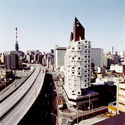
Earlier today in Shenzhen the 6th Bi-City Biennale of Urbanism/Architecture (UABB) opened its doors to public. Under the overall theme "Re-Living the City," curators Alfredo Brillembourg and Hubert Klumpner of Urban Think Tank headed up the "Radical Urbanism" exhibit in the main venue. Brillembourg and Klumpner invited the exhibition participants to show how we can learn from ad-hoc and "bottom-up" initiatives for alternative urban solutions. In the following essay - originally printed in the UABB 2015 catalogue - the curators call for us to "rethink how we can operate within the city, learn from its emerging intelligence and shap[e] its outcomes to radical and tactical ends."

The notion of a radical urbanism draws us unavoidably into the realm of the political. Imagining a more equitable and sustainable future involves an implicit critique of the spatial and societal conditions produced by prevailing urban logics.[1] As such, we are not only reminded of Le Corbusier’s famous ultimatum, “architecture or revolution,” but its generational echo in Buckminster Fuller’s more catastrophic pronouncement, “utopia or oblivion.”[2] Both were zero-sum scenarios born of overt social disjuncture, whether the deprivations and tensions of the interwar period, or the escalating conflicts and ecological anxiety of the late 1960s. While the wave of experimental "post utopian" practices that emerged in the early 1970s positioned themselves explicitly in opposition to perceived failures of the modern movement, these disparate groups shared a belief – however disenchanted – with their predecessors in the idea that radical difference was possible, as well as a conviction that a break was necessary.
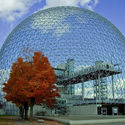
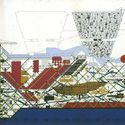
The Evolution of Radical Urbanism: What Does the Future Hold for Our Cities? - Image 1 of 4The Evolution of Radical Urbanism: What Does the Future Hold for Our Cities? - Image 2 of 4The Evolution of Radical Urbanism: What Does the Future Hold for Our Cities? - Image 3 of 4The Evolution of Radical Urbanism: What Does the Future Hold for Our Cities? - Image 4 of 4The Evolution of Radical Urbanism: What Does the Future Hold for Our Cities? - More Images+ 4

Beginning Your Career in Architecture: 3 Candid Pieces of Advice for Emerging Professionals

Subscriber Access | 
Beginning Your Career in Architecture: 3 Candid Pieces of Advice for Emerging Professionals - Image 1 of 4
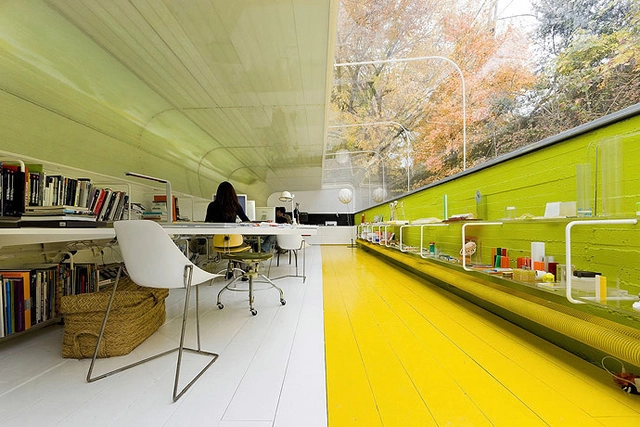
The offices of BIG. Image Courtesy of BIG-Bjarke Ingels Group

Last year Kevin J Singh, an Associate Professor of Architecture in the School of Design at Louisiana Tech University, adapted one of his lectures giving advice to students as they embark upon a new career into an article. That article, titled "21 Rules for a Successful Life in Architecture" and published on ArchDaily in September 2014, was a runaway success, becoming our second most-read post of 2014 and among our most visited articles of all time.

As a result of his article's success, this year Singh has taken his 21 rules as a framework for a new ebook, "Beginning Your Career in Architecture: Candid Advice for Emerging Professionals." The ebook not only elaborates on the 21 rules from the original article, but also offers questions to the reader that lead to actionable goals, giving them the nudge they need to start out on the right track. In the following excerpts from the book, Singh addresses voicing your opinions, finding - or rather creating - the role that suits your skills, and making the world a better place.

Denise Scott Brown and Robert Venturi Win 2016 AIA Gold Medal

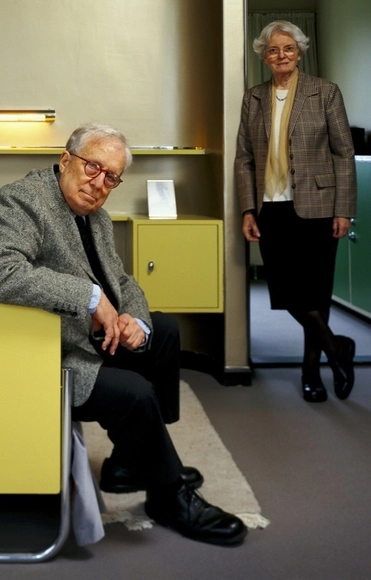
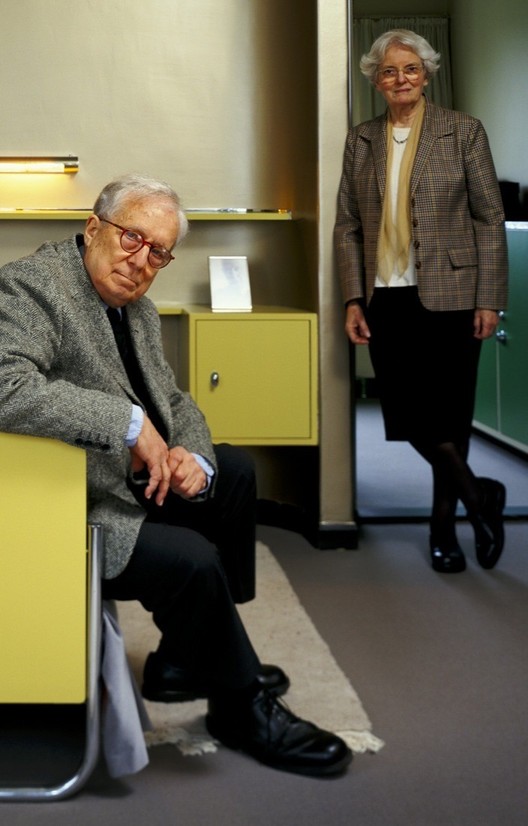
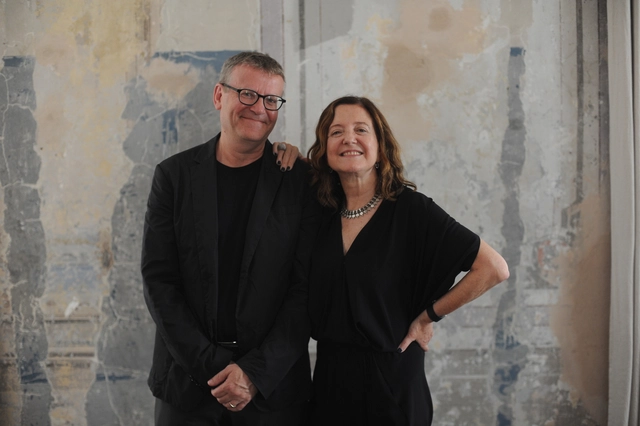
The American Institute of Architects (AIA) has announced Denise Scott Brown, hon. FAIA and Robert Venturi, FAIA, as joint winners of the 2016 AIA Gold Medal. The AIA cited the duo for their "built projects as well as literature that set the stage for Postmodernism and nearly every other formal evolution in architecture." Scott Brown and Venturi are the first ever pair to receive the Gold Medal, after the AIA approved a change to its bylaws in 2013 that allowed the award to be presented to up to two individuals working together.

Denise Scott Brown and Robert Venturi Win 2016 AIA Gold Medal - Image 1 of 4Denise Scott Brown and Robert Venturi Win 2016 AIA Gold Medal - Image 2 of 4Denise Scott Brown and Robert Venturi Win 2016 AIA Gold Medal - Image 3 of 4Denise Scott Brown and Robert Venturi Win 2016 AIA Gold Medal - Image 4 of 4Denise Scott Brown and Robert Venturi Win 2016 AIA Gold Medal - More Images+ 2

2016 YAP P.S.1 Shortlist

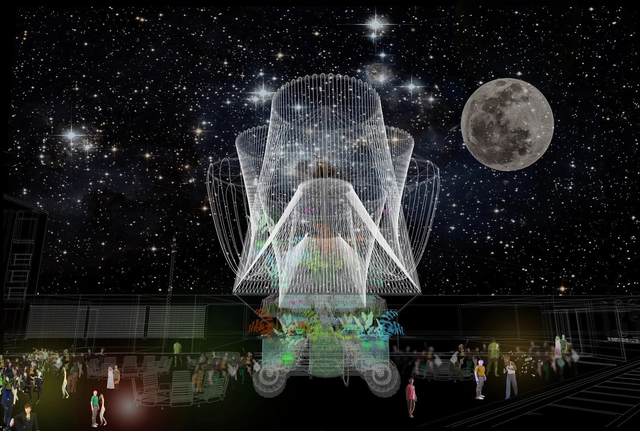
MoMA P.S.1 has announced five finalists to compete in the 2016 Young Architects Program (YAP). Now in it’s 16th edition, the competition will challenge a group of emerging architects to design a temporary installation within the walls of the P.S.1 courtyard for MoMA’s annual summer “Warm-Up” series.

The 2016 shortlist includes First Office / Andrew Atwood + Anna Neimark (Los Angeles, CA); ESCOBEDO + SOLIZ / Lazbent Pavel Escobedo Amaral + Andres Soliz Paz (Mexico City, Mexico); ULTRAMODERNE / Yasmin Vobis + Aaron Forrest (Providence, RI); COBALT OFFICE / Andrew Colopy and Robert Booth (Houston, TX); and Frida Escobedo (Anzures, Mexico). The winners will be announced in early 2016.

Previous winners include COSMO (Andrés Jaque), The Living (Hy-Fi), CODA (Party Wall), Interboro Partners (Holding Pattern), Work AC (Public Farm 1), MOS (Afterparty) and SO-IL (Pole Dance).

Paul Goldberger: "Frank Gehry Really Doesn’t Want To Be Remembered as Somebody Who Just Did a Few Iconic Buildings"

Paul Goldberger: "Frank Gehry Really Doesn’t Want To Be Remembered as Somebody Who Just Did a Few Iconic Buildings" - Image 7 of 4
Guggenheim Bilbao (1997). Image © Ivan Herman (ivan-herman.net) licensed under CC BY-ND 3.0

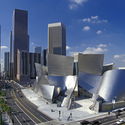
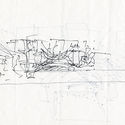
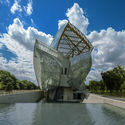
After he achieved celebrity status at the turn of the millennium, in recent years the conversation around Frank Gehry has switched tones, going from near-universal admiration to widespread controversy. Yet according to Paul Goldberger, whose biography of Gehry was released in September, both adoration and critique of the architect might engender an overly simplistic interpretation of his long and storied career. In this interview originally published by Metropolis Magazine as "Q&A: Paul Goldberger on Frank Gehry's Life and Work," Goldberger delves into the many ways Gehry has been misunderstood over the years, and how his work, his psyche, and the interplay between the two have made him one of the most conversation-worthy architects of a generation.

Frank Gehry isn’t just the world’s foremost architect; he is, by all public standards, also one of our greatest living artists. Paul Goldberger’s new biography (his first), Building Art: The Life and Work of Frank Gehry, acknowledges the architect’s celebrity status but doesn’t acquiesce in it. Rather, Goldberger interrogates the peculiar psyche and restless contradictions of the man to shed light on the motivations behind the architecture. Metropolis editor Samuel Medina speaks to the newly minted biographer about defying genre conventions, unpacking the ambiguities of Gehry’s work, and giving reporters the finger.

Paul Goldberger: "Frank Gehry Really Doesn’t Want To Be Remembered as Somebody Who Just Did a Few Iconic Buildings" - Image 1 of 4Paul Goldberger: "Frank Gehry Really Doesn’t Want To Be Remembered as Somebody Who Just Did a Few Iconic Buildings" - Image 2 of 4Paul Goldberger: "Frank Gehry Really Doesn’t Want To Be Remembered as Somebody Who Just Did a Few Iconic Buildings" - Image 3 of 4Paul Goldberger: "Frank Gehry Really Doesn’t Want To Be Remembered as Somebody Who Just Did a Few Iconic Buildings" - Image 4 of 4Paul Goldberger: Frank Gehry Really Doesn’t Want To Be Remembered as Somebody Who Just Did a Few Iconic Buildings - More Images+ 5

Starting Your Own Practice: The Challenges and Rewards, According to ArchDaily Readers

Subscriber Access | 

Architecture is in some ways a paradoxical profession. On one hand, it projects a popular image of the lone, creative genius, taking control over all aspects of a building project and forming them to their creative ideals. But in reality, most projects take a huge team of people, all working together to produce a building which usually represents the creative input of not only many different people, but many professions too.

One way to find a balance between these two extremes is to take more creative control over the decisions of the group - in other words, to start your own practice, guided by your creative input alone. But is that goal worth the difficulty it might take to get there? This was the question we had in mind when we asked our readers to let us know the pros and cons of starting your own firm last month. Interestingly, not a single commenter left any response about the joys of working for someone else, and the consensus was firmly that running your own practice is preferable - provided you can deal with the significant problems of doing so. Read on to find out what they had to say.

Colomina and Wigley Announce Theme For 2016 Istanbul Design Biennial: "Are We Human?"

At a media meeting this morning at the Istanbul Archaeological Museums Library, the curators of the 3rd Istanbul Design Biennial Beatriz Colomina and Mark Wigley announced the theme of next year's event, titled “ARE WE HUMAN?: The Design of the Species: 2 seconds, 2 days, 2 years, 200 years, 200,000 years.” The event, which will be held from October 22nd to December 4th next year, is intended to combine elements of both media documentary and archaeological project and according to the curators "will explore the intimate relationship between the concepts of 'design' and 'human.'"

A Virtual Look Into Pierre Koenig's Case Study House #22, The Stahl House

Subscriber Access | 

Without a doubt, it’s among the most famous houses in Los Angeles. The house is easy to describe: a steel framed L-plan, divided into bedrooms and the communal living spaces, all wrapped around a turquoise pool seemingly impossibly poised above the city. But words don’t do it justice. Julius Shulman’s 1960 photograph of Pierre Koenig’s Case Study House 22, perhaps better known as Stahl House, changed the fantasies of a generation.

ArchDaily Readers Debate: Preservation, BIG in Pittsburgh and Foster Imitating Frank Lloyd Wright

Subscriber Access | 

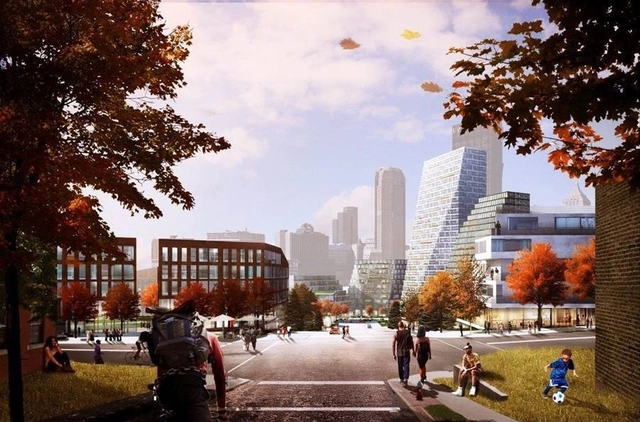
The past two weeks have seen a number of high-profile designs unveiled, including OMA in Manchester, SANAA in Budapest, Libeskind in Vilnius, Foster + Partners in Chicago and two projects involving BIG in Pittsburgh and New York. As ever with such renowned practices scooping up work, opinions flew and in some cases also produced reasoned debate over the new projects. Read on to find out what people had to say about them.

Do Architectural Preservationists Know What They’re Fighting For?

Subscriber Access | 

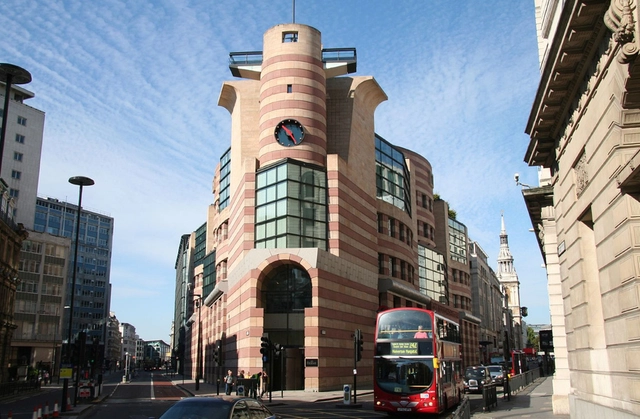
If there’s one thing that can get the architectural community up in arms, it’s the threat of demolition being placed over a much-loved building. Whether it’s a 44-year-old bus station, a 38-year-old hospital, or even a 12-year-old art museum, few other news stories can raise such a sustained outcry. And recently, some have started to turn their eyes toward the next wave of preservation battles: the upcoming crop of Postmodern buildings which are increasingly being placed under threat. But in all of these heated debates about preservation, do people really know what they’re arguing for?

SANAA Selected to Design Hungary’s New National Gallery – Ludwig Museum

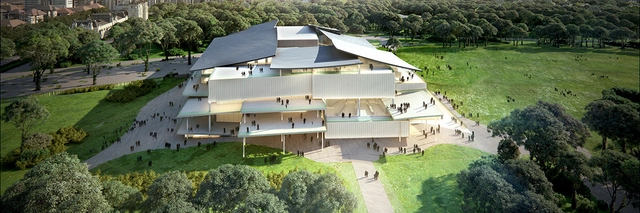
After having tied with Snøhetta in a restricted competition to design the New National Gallery -- Ludwig Museum in Budapest, SANAA’s proposal has ultimately been selected as the winner, following negotiations held over the past few months. The gallery and museum will be located in the 200-year-old Városliget (City Park) and are part of the larger Liget Budapest project, which seeks to revive the park by 2018 with the addition of five new museum buildings, including Sou Fujimoto’s House of Hungarian Music.

Why Cost Management Works Better when Architects Are in Charge

Subscriber Access | 

To talk about architecture and construction without ever mentioning cost overruns is not an easy thing to do. These kind of unforeseen problems happen in the majority of projects, as the dynamics of architecture and construction are extremely complex and often present challenges that aren't 100% controllable. Over the years, project management consultants have been integrating cost management into their services, making an effort to fill this market gap with a proper solution. Still, most of this work is performed by consultants with a financial background and little knowledge of architecture and construction solutions and processes.

With this increased attention to budgetary issues, the cost performance of projects has been steadily improving, but usually at the expense of the project’s aesthetic concept and final quality. Would it be possible to put architects in control of this kind of management? After all, they’re the ones with the conceptual sensibility and the technical knowledge necessary to perform this work in a truly integrated way.

AD Interviews: Francis Kéré / Chicago Architecture Biennial

Subscriber Access | 

Kéré Architecture’s “Place for Gathering” exhibition at the Chicago Architecture Biennial creates a meeting place at the entrance to the Chicago Cultural Center. Made from a locally sourced material (wood), the exhibition emits a fresh, natural smell, and creates a place for people to meet, connect and share “differing cultural narratives, traditions and aspirations," writes Kéré in the official Chicago Biennale Guidebook.

Selected by ArchDaily Editors as one of their favorite exhibitions at the Biennial, “Place for Gathering” is based on two themes that are central to the work of Francis Kéré: “maximizing local resources and facilitating the exchange of ideas and knowledge." Listen to Kéré explain the inspiration and philosophy behind the exhibition in the video above.

6 Designs By And For Architects that Made TIME's 25 Inventions of the Year

Subscriber Access | 

In this day and age, innovation is occurring at a faster rate than ever before. And while a majority of ideas may make a small impact before fading away, some inventions are able to slip through the cracks and become a real game changer in their field. Our field, of course, is architecture, and this year there have been no shortage of inventions that may change the way we live and work forever. In TIME magazine’s annual release of inventions of the year, at least 6 may have an impact on the world of architecture, encompassing inventions within the field of architecture itself and developments that could change how we design and experience space. Read on for those projects and what they might mean for our future.

Smart Moves for Cities: The Urban Mobility Revolution Will Start With These 3 Projects

A smart city isn’t necessarily a city brimming with technology. This crucial (and, thankfully, growingly accepted) clarification was strongly emphasized by a panel of experts during the Smart City Expo in Barcelona. However, the piloted driving—which, in layman's terms means cars that drive themselves—that Audi has been testing and implementing is as high-tech, impressive and brimming with technology as one might expect. Beyond the “ooh and aah” factor of a car that needs no human driver, the spatial implications for our cities are undeniable, and the sooner architects can learn to work with and appreciate this technology, the better. In a city equipped with smart mobility solutions, we can expect technology to drive positive changes to social behavior and the affordability of the cities. But for this, we need visionary leaders.

Last week Audi showed their commitment to finding these visionary leaders in the field of architecture by announcing the implementation of three Urban Future Partnerships in Somerville/Boston and Mexico City. In the words of Audi CEO Rupert Stadler, the three pilot projects represent a key move for the car manufacturer: “The development of an investment logic for mobility infrastructure in cities will be an integral part of our company strategy.”

OMA Selected to Design Manchester's 'Factory', Their First Public Project in the UK

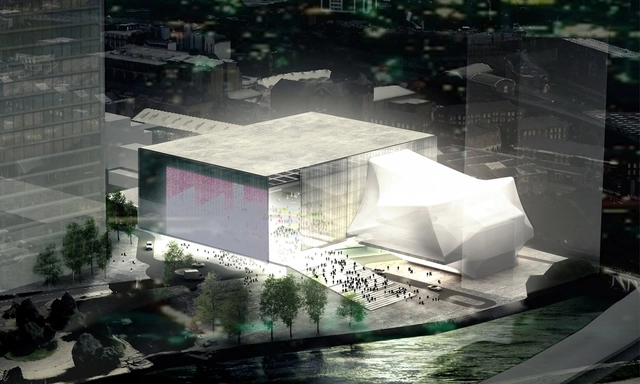
Rotterdam-based Office for Metropolitan Architecture (OMA) have been announced by the UK's Chancellor of the Exchequer as the winning team in the competition to design the city of Manchester's high-profile Factory art space. Following the announcement of the shortlist earlier this year, featuring practices including Rafael Viñoly, Diller Scofidio + Renfro, Zaha Hadid and Mecanoo, it has since been reported by The Guardian that the British government's original pledge of £78million ($117million) to the cost of the building will be raised by a further £9million per year from around 2018.

How Donald Judd's 100 Shimmering Aluminum Boxes Light Up the Chinati Foundation

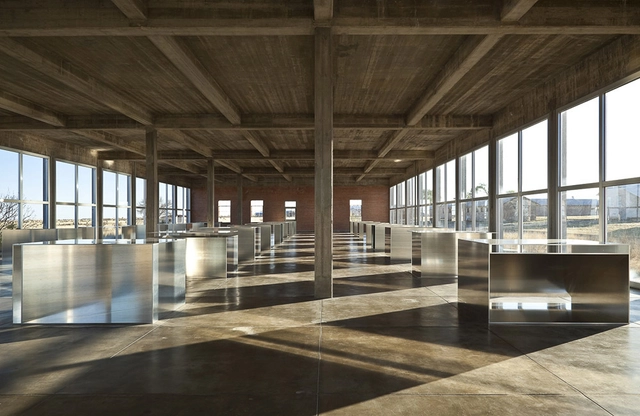
Completed in 1986, Donald Judd's 100 aluminum boxes offer one of the most exciting locations to study the grace of minimalism. His vision at Marfa in Texas has transformed a piece of military history into a peaceful and unique environment for art and architecture. Here, the shimmering material transcends the formal strictness of plain patterns and the narrow concepts of minimalism. The multiple reflections of light and space create an illusionary atmosphere beyond ascetic ideas.

IFAC: A Romance Between Art and Architecture

Subscriber Access | 

Held annually, the International Festival of Art and Construction (IFAC) is a 10-day event that brings together 300 students from all over the world, joined by architects, scientists, musicians, artists and craftsmen. Together they carry out 30 workshops across different disciplines that “are bound together by the architecture through which they are expressed,” according to the website. In an article originally written in Spanish for ArchDaily en Español, Ana Asensio Rodríguez shares her experience at the 2015 edition of IFAC, reflecting on the powerful intersection of art and architecture, and the collective nature of the event.

Sometimes you get to meet people who fill you with energy and electricity -- fleeting, intense crossroads full of shared views and beautiful ideas. Spontaneous connections, which however tiny, will remain with you for a very long time.

Sometimes, these crossroads are not between people, but between arts, crafts, talents and experiences. Among these intersections is the inevitable attraction between art and architecture: explosive collages, a romance drunk with imagination. And, on very few occasions these two types of crossroads occur at the same time. And in those moments you can only hope that it will happen again.

It's called IFAC, the International Festival of Art and Construction. It is a 10-day long celebration that brings together more than 300 people from all over the world - creatively restless individuals, who meet somewhere in the European countryside. I felt immeasurably lucky to be one of those 300 people, and so I wanted to share how fascinating IFAC is from the inside.

You've started following your first account!

Did you know?

You'll now receive updates based on what you follow! Personalize your stream and start following your favorite authors, offices and users.