Alejandro Aravena and the jury for the 15th International Architecture Exhibition at La Biennale di Venezia have just announced the winning participations.
The Golden Lion for Best National Participation went to Spain for UNFINISHED. The jury cited Carlos Quintáns & Iñaqui Carnicero's "concisely curated selection of emerging architects whose work shows how creativity and commitment can transcend material constraints."
"Architecture is about giving form to the places where we live. It is not more complicated than that, but also not easier than that." - Alejandro Aravena
On the first day of the vernissage 15th International Architecture Exhibition at La Biennale di Venezia, ArchDaily is pleased to show you a preview of the exhibitions and installations that were hand selected by Alejandro Aravena and his firm Elemental. Separate from (but in dialogue with) the National Pavilions, "Reporting From the Front" celebrates work that "address[es] a problem that matters and for which quality architecture made a difference."
In an exhibition whose aim is to share the "success stories" where architecture is making a difference, Alejandro Aravena has convened offices and practitioners from across the globe to show—"in the simplest possible terms (without trivializing)"—projects that demonstrate innovation, resolve and quality problem-solving abilities.
The resignation itself was demanded* by Princeton University President Christopher Eisgruber after Zaera-Polo was accused of plagiarizing parts of a text he produced for the “Elements of Architecture” exhibition curated by Rem Koolhaas at the 2014 Venice Biennale. From the start, Zaera-Polo has denied that his texts violate Princeton’s academic code of conduct, but nevertheless agreed to Eisgruber’s demand. In the documents leaked Tuesday, Zaera-Polo criticizes the actions taken by Princeton both before and since his resignation, arguing that they have damaged his reputation. He is thus suing them on four charges: “breach of contract,” “breach of the implied covenant of good faith and fair dealing,” “tortious interference with contract and prospective economic advantage,” and finally “trade libel.”
The story will undoubtedly receive a lot of attention, given that it involves a controversial dispute between an internationally renowned architect and a university with an international stature. But the real story behind the dispute is not about Alejandro Zaera-Polo’s academic conduct or Princeton’s handling of its staff contracts; instead, it has everything to do with our expected standards for architectural research.
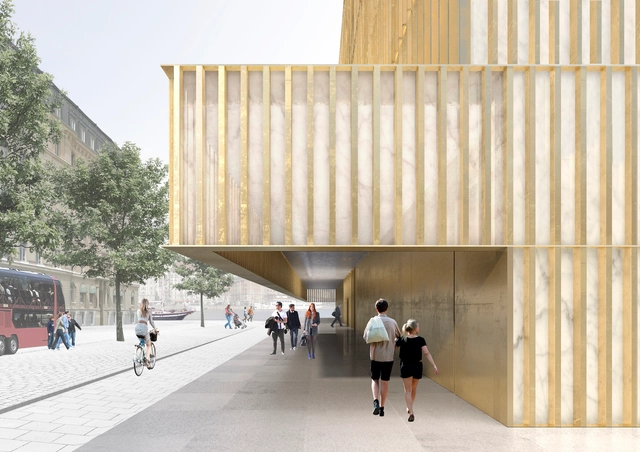
David Chipperfield Architects has made further refinements to the design for the Nobel Center in Stockholm. First revealed in October 2013, the project received harsh criticism for being an incongruous presence in the city’s historic center, which lead to a reduction in size amidst other changes in September of last year. Building on the 2015 revision, a more finalized version of the design has now been revealed in new exterior and interior renderings.
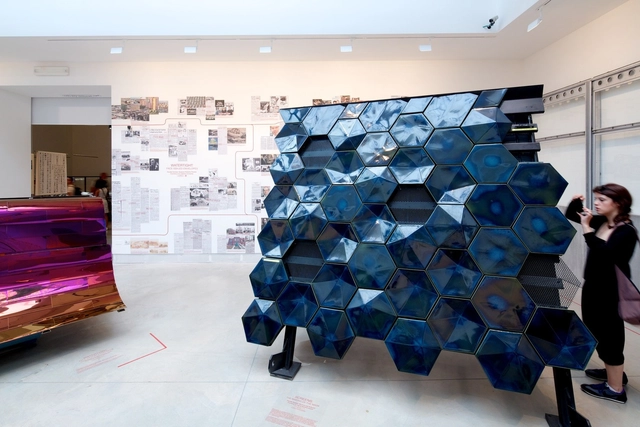
The Victoria and Albert Museum has unveiled its latest installation: the Elytra Filament Pavilion, a project displaying the culmination of four years of research on the integration of architecture, engineering, and biomimicry principles, in an exploration of how biological fiber systems can be transferred to architecture.
The 200-square-meter structure is inspired by lightweight construction principles found in nature, namely "the fibrous structures of the forewing shells of flying beetles known as elytra," states a press release.
In the newest video by architects Wahyu Pratomo and Kris Provoost of YouTube’s #donotsettle, the duo visit MVRDV’s "The Stairs" installed outside Centraal Station in Rotterdam. The project commemorates the 75th anniversary of the city’s reconstruction after World War II by devising the staircase now attached to the Groot Handelsgebouw, a landmark and one of Rotterdam’s first post-war buildings. In the video, Pratomo and Provoost discuss the idea of temporariness, experience-driven architecture, context, and symbolism inspired by MVRDV’s intervention, all the while asking other visitors for their own reactions to the spectacle.
Growing out of the success of coworking, the latest big phenomenon in the world of property is coliving. Like its predecessor, coliving is predicated upon the idea that sharing space can bring benefits to users in terms of cost and community. And, like its predecessor, there are already many variations on the idea with numerous different ventures appearing in the past year, each tweaking the basic concept to find a niche.
There are a lot of existing accommodation types that are “a bit like” coliving—depending on who you ask, coliving might be described as either a halfway point between apartments and hotels, “dorms for adults” or “glorified hostels.” And yet, despite these similarities to recognizable paradigms, countless recent articles have proclaimed that coliving could “change our thinking on property and ownership,” “change the way we work and travel,” or perhaps even “solve the housing crisis.” How can coliving be so familiar and yet so groundbreaking at the same time? To find out, I spent a week at a soon-to-open property in Miami run by Roam, a company which has taken a uniquely international approach to the coliving formula.
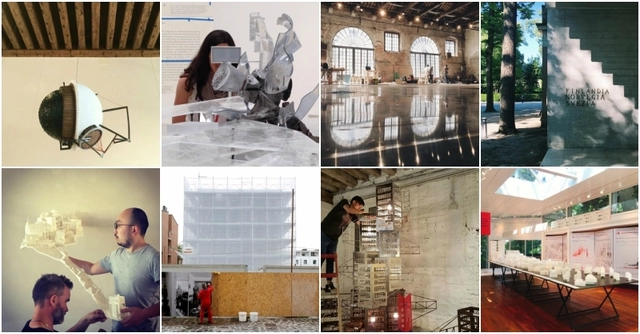
As the 2016 Venice Biennale is set to begin this upcoming Saturday, May 28th, the first glimpses of the pavilions have begun to roll in through the social media wires. In addition to the event’s main exhibition, curated by this year's Pritzker Prize winnerAlejandro Aravena, there will be 63 exhibitions held in country pavilions throughout the grounds responding to this year’s theme of “Reporting From the Front.” We've taken to Instagram to round up the best sneak peeks of the exhibitions coming together at architecture’s preeminent event—read on to take a look.
In this new collaboration, originally titled "Architecture for the system and systems for architecture," Spanish architect and cofounder of the blog MetaSpace, Manuel Saga, reflects on the experience of developing (and taking on) a game where architecture plays a key role for the designer, and for the player. The case studies? No less than four major titles of our times: Starcraft, Age of Empires, Diablo and Dungeon of the Endless.
On MetaSpace we have introduced a general overview of the challenges that video game designers face when creating buildings, cities and even maps. This time we will go one step further: what happens when a game doesn’t offer a narrative or a fixed, open map, but rather an architectural system that the player can take control of? How does a design team respond to something like that?
One of the most significant buildings of the late modernist style, Le Corbusier’s Convent de la Tourette exemplifies the architect’s style and sensibilities in the latter end of his career. Built between 1956 and 1960 on a hillside near Lyon, France, the priory dominates the landscape, with its strict, geometric form.
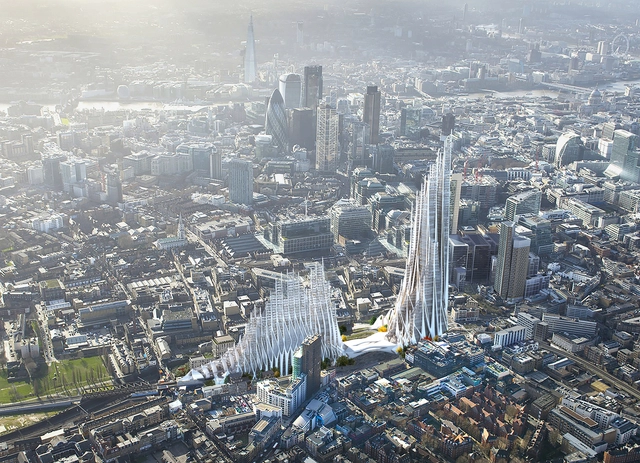
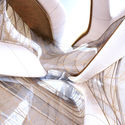
In their semester-long project at Zaha Hadid’s final studio course at the Yale School of Architecture, students Lisa Albaugh, Benjamin Bourgoin, Jamie Edindjiklian, Roberto Jenkins and Justin Oh envisioned a new a high density mixed-use project for London's Bishopsgate Goodsyard, the largest undeveloped piece of land still existing in central London.
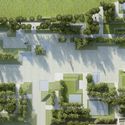
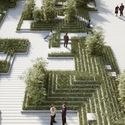
Penda has designed a landscape for Hyderabad, India, inspired by the country's stepwells and water mazes. When completed, the 8,000 square meter (85,000 square foot) Magic Breeze Landscape will serve 145 apartments in a development by Pooja Crafted Homes. Some of the landscape's signature features will be its bamboo coves, flower gardens, water displays, and built-in benches. The steps found throughout the landscape will double as planters for flowers, herbs, and grasses, that will serve as a communal garden for residents.
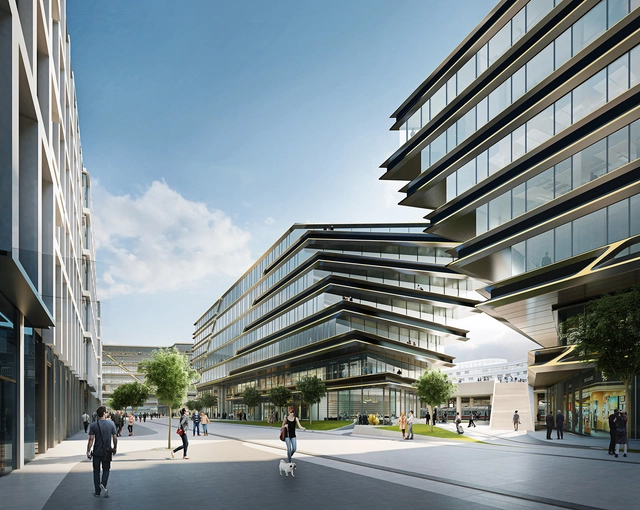
In a city as renowned for its historic buildings as Prague, urban change can often be hard to come by – which is why the announcement earlier this month that Zaha Hadid Architects will be designing a large complex of buildings around a railway station close to the city's historic center was big news. But is this the design that Prague needs? In this interview, originally published in Czech by Česká televize, Michaela Polakova speaks to Martin Barry, the Chairman of Prague-based NGO reSITE, for his analysis of how the design will impact the city's future.
Michaela Polakova: What is your opinion on the new Zaha Hadid Architects building in Prague?
Martin Barry: To me, it seems is too early to comment on the aesthetics of the buildings. We should focus on how the collection of buildings enhances the urban character of the city, and how they can improve the urban condition around the buildings. The city is a collection of buildings; the spaces between are what influence people’s lives; not so much the materials and forms of the architecture. That being said, this is a major development site and relatively large footprint of buildings from ZHA adjacent to the historic center of the city. So, we should pay close attention to how the designs develop. At present, it is clear that it is early and they need work.
Can architects have a truly active role in pressing social problems? Malkit Shoshan, the curator of the Dutch Pavilion at the 2016 Venice Biennale, thinks so. Her career is evidence of this: advocating for the incorporation of a fourth 'D' in the criteria of the UN (Defence, Diplomacy and Development) in its peacekeeping missions around the world, Shoshan has sat at the same table as military engineers and policy makers to analyze the urban impact peacekeepers have left around the world.
For the Dutch Pavilion, Shoshan has focused on the case of the joint mission of the Netherlands and the UN in Gao (Mali). In 2012, Gao was declared capital of the Independent State of Azawad, a nation not recognized by the international authorities, following Mali's Tuareg rebellion. "Although [these peacekeeping missions] occupy large plots of land in hundreds of different cities around the world, it is rarely discussed or addressed by our profession," says Soshan in the following interview.
We spoke with the curator of the Dutch pavilion after her recent visit to Mali to discuss the principles of the Netherlands in the next Venice Biennale; the impact of military drones in public spaces and why, according Shoshan, there is a close relationship between architecture, public policy and ideology. "[With design,] we can make resources available to communities that are exhausted by militarized conflicts, long periods of drought, famine and disease," she says.
A little over a month since Rotterdam-based practice MVRDV announced a new temporary urban structure—a 180-step staircase, 29 meters tall and 57 meters long—for the heart of city of Rotterdam, the project has been officially opened. Those who ascend the staircase will find a temporary observation deck looking over Rotterdam Centraal, a rooftop bar, and the temporary reopening of the Kriterion cinema that was last active in the 1960s.
At this year's Biennale, "Reporting from the Front," MIT will have an unusually widespread presence. Ten full-time and visiting faculty, six alumni, and a handful of other MIT-affiliates (many invited by curator Alejandro Aravena himself) will contribute to over 15 installations, including "Rwanda Droneport," a full-scale earthen masonry shell designed by Norman Foster, which will serve as a small airport for drones delivering supplies to inaccessible areas of Rwanda, and "Courtyard House Plug-In," a prefabricated building system designed to be inserted into Beijing's dilapidated courtyard houses. To discuss MIT's significance on the architectural stage today, we spoke with the Dean of MIT's School of Architecture and Planning, Hashim Sarkis, who, it was recently announced, will also serve on the Biennale jury.
What do we mean when we say that our homes are “extensions” of ourselves? To put it more precisely, can a home be an extension of more than one person’s sense of “self”? And what happens when a single building is expected to be a home for two very different people? These are the questions asked in the project “Home at Intersection” by Netherlands-based architect Yushang Zhang.
Developed as a personal project in Zhang’s spare time Home at Intersection is, at its heart, as much a story told through architecture as it is an architectural design. The story chronicles the relationship of two young lovers as they embark upon a new chapter in their life together, building and then inhabiting their dream home. But much more than that, the project investigates themes of individuality and social bonds, using architecture as a medium to understand our hidden emotions.
Located in the arid desert of the San Rafael Valley, Arizona, Casa Caldera by DUST is a unique object in the vast landscape. In this video, architects Jesus Robles and Cade Hayes explain their project as viewers are taken on a vivid tour of the building and site. The camera moves through the desert, unveiling the house gradually, as one would truly experience it.
“One of the unique things about Casa Caldera is the experience of the approach,” Hayes says. “Two hours of travel are actually part of the experience of arriving. It isn’t until you are 20, 30 feet from the house that you get a good look.”


.jpg?1464428401&format=webp&width=640&height=580)


.jpg?1464428401)

.jpg?1464273616 "© Laurian Ghinitoiu")
.jpg?1464273639 "© Laurian Ghinitoiu")
.jpg?1464273508 "© Laurian Ghinitoiu")
.jpg?1464273743 "© Laurian Ghinitoiu")
.jpg?1464273296)



_NAARO.jpg?1463781566&format=webp&width=640&height=580)
.jpg?1464091234&format=webp&width=640&height=580)



.jpg?1464091234)








.jpg?1460846971&format=webp&width=640&height=580)
.jpg?1463424218&format=webp&width=640&height=580)