A decade before Le Corbusier and Louis Kahn appeared on the Indian architectural scene, Golconde—the first example of pre-independence modern architecture—was being developed in an enclave of French India, Pondicherry, in 1938. Thirty years later, The Mother envisioned a new city, Auroville, named after Sri Aurobindo and dedicated to achieving human unity and understanding, serving as an example to the international community.
National Architecture Award book cover. Design: Florencia Labbé F.
This book is a unique and iconic project that captures—in a format that enhances both written and graphic information—the essence of contemporary Chilean architecture. It serves as a comprehensive and detailed record that, beyond acting as a form of creative memoir of our heritage, allows us to understand the past, present, and future of architecture, our cities, and our country.
Cover of the book "Pandemic and Confinement Through the Eyes of an Architect." Author: Marta Miret. Cover photograph: self-portrait from the balcony during lockdown.
In her new work, Pandemic and Confinement Through the Eyes of an Architect, Marta Miret Rodríguez explores architecture by offering a perspective on how the profession viewed the situation experienced in 2020: a global pandemic.
Mark Wigley is a professor at GSAPP, Columbia University (New York), where he served as dean from 2004 to 2014. He has written extensively on the theory and practice of architecture. His books include: Passing Through Architecture: The 10 years of Gordon Matta-Clark; Cutting Matta-Clark: The Anarchitecture Investigation (2018); Buckminster Fuller INC: Architecture in the Age of Radio (2015); Casa da Musica / Porto (2008), Constant’s New Babylon: The Hyper Architecture of Desire (1998), White Walls, Designer Dresses: The Fashioning of Modern Architecture (1995); and The Architecture of Deconstruction: Derrida’s Haunt (1995).
Francesca Hughes is an architectural theorist, educator, and specialist in the relationship between architecture and technology. She is the director of the School of Architecture at the University of Technology Sydney, Australia. She has taught workshops and courses in history and theory at the Architectural Association and the Bartlett School of Architecture, UCL in London, where she is from. She has also taught at The Berlage, TU Delft, and served as a visiting professor at KU Leuven in Belgium.
This study presents a rich field of intersections between the modern radical avant-garde—before and after the Situationist International—and social architecture projects centered on the lifestyles of Roma, southern migrants, and the urban lumpenproletariat. These are the very sites where various flamenco heterodoxies emerge, fostering new forms of habitability, symbolic production, and the reinvention of audiences, spaces, and places.
For some time, an entire generation of architect-educators has been exploring the real connections between the speculation inherent in design studios and the professional practices of those who lead them.
The Ugly is the first posthumous book by Mark Cousins (1947–2020), the renowned British cultural and architectural theorist and critic who sadly passed away a few months ago.
The book’s title is a provocation—an invitation to rethink landscape not as a given, but as something constructed through history, design, art, technique, representation, and experience, among other lenses.
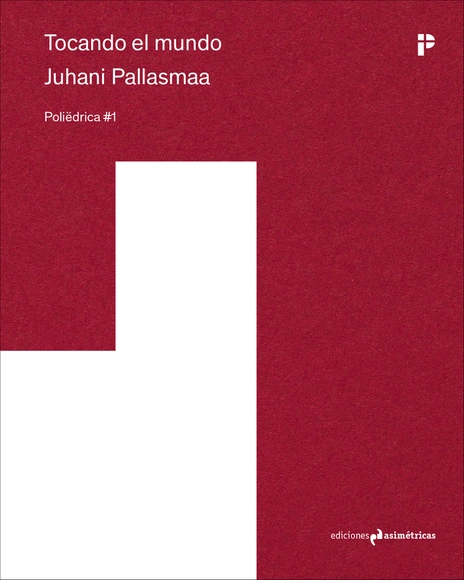
Juhani Pallasmaa himself explains this book: "I have given the six lectures a unifying title: 'Touching the World Through Architecture,' derived from a comment by Maurice Merleau-Ponty on the paintings of Paul Cézanne, which 'make visible how the world touches us.'"
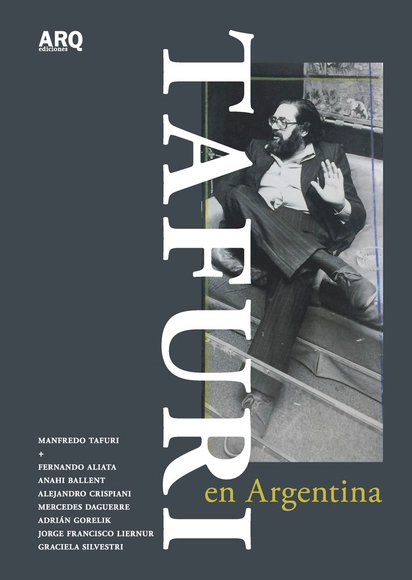
In August 1981, the Italian architect, historian, and critic Manfredo Tafuri visited the cities of Buenos Aires and Rosario in Argentina, marking his only visit to Latin America. This book presents the conversations, interviews, and lectures Tafuri gave during his visit; among other topics, they discuss the role of criticism, his work in Venice, and even his historical research methods. Additionally, the book includes a series of texts by a group of Argentine scholars close to Tafuri, who reconstruct the political, social, and intellectual context of his visit and analyze his work and legacy.
Alejandro Crispiani—Full Professor at the UC School of Architecture, architect, and PhD in Human and Social Sciences from the University of Quilmes, Argentina—explores the socio-cultural role of architecture in the wake of the February 2010 earthquake in Chile in La arquitectura y su reverso. Meanwhile, in Hacer sin esperanza, he examines the legacy and cultural production of the Pontificia Universidad Católica de Valparaíso School of Architecture through the lens of the "poetic act."
In this notable attempt to define the meaning and idea of architecture, José Ricardo Morales proposes the noun Arquitectónica. Starting from a critical analysis of the prevailing trends in 19th-century art history and a precise dismantling of early 20th-century architectural theories—form, function, and space—Morales clears the ground to propose his own theory of architecture.
Each issue of engawa magazine is a new experiment born from the image on its cover, which serves as a common thread. From there, the articles diverge, interweave, or simply juxtapose, forming a tapestry that everyone is invited to read, discuss, and contribute to.
Alejandro de la Sota is one of the great masters of modern Spanish architecture, the author of such notable buildings as the Civil Government (Tarragona, 1957–1964) and the Maravillas School gymnasium (Madrid, 1960–1962).
This book compiles various essays, originally published in different media, in which the Galician architect reflects on the legacy of the Modern Movement and its atypical integration into the cultural landscape of Franco-era Spain. Simultaneously, it serves as a chronicle of the challenges faced by Spanish architecture from the 1950s until the architect’s death in 1996.
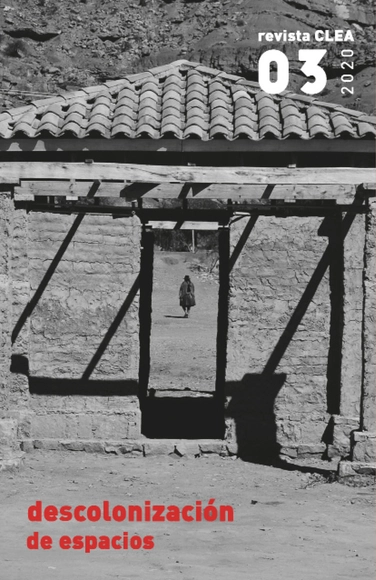
We carry memory within us. Mauricio Mendez Arévalo, 2018. Project by Estudio Kaiser Arquitectura, Wilfredo Carazas, UAJMS students, and the community. Valle de Cinti, Bolivia. Palca Grande Kiosk Tourist Center.
CLEA Magazine is an annual publication that seeks to promote and disseminate the analysis of the diverse social and spatial realities throughout Latin America. By gathering the experiences and perspectives of students and professionals—who are active participants in the conceptualization and materialization of spaces at all scales—the magazine encourages the exploration of new and more conscious understandings of architecture, the city, the territory, and those who inhabit them.