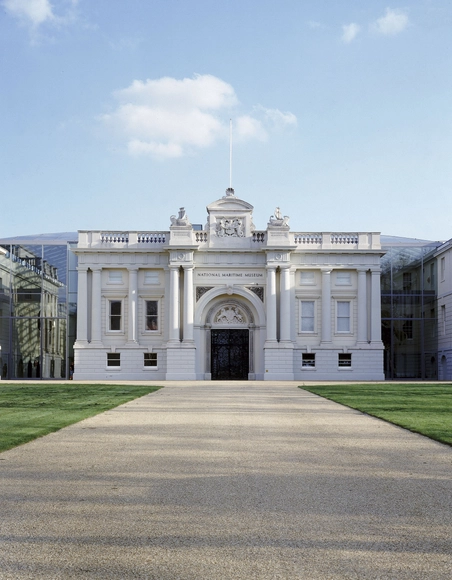
London’s National Maritime Museum is looking for an architect to revamp its West Central Wing building. As the Architects’ Journal first reported, the 1807 Daniel Asher Alexander-designed structure will be given £2 million to upgrade its facilities and establish new galleries, as well as connect the West Central Wing to the museum’s BDP and Rick Mather-designed Neptune Court podium via a bridge. All requests to participate are due January 20, 2015. Find more details, here.
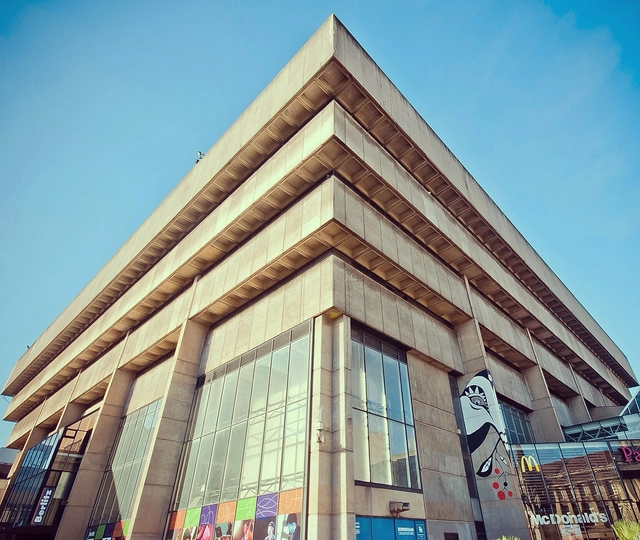
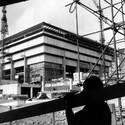
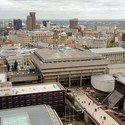
Work has begun on the demolition of the UK city of Birmingham's former Central Library, designed by home-grown Brutalist architect John Madin. The move by Birmingham Council to not retain the structure of the library, in spite of ideas and petitions put forward by numerous public groups (including one titled Keep The Ziggurat), has been widely met with disappointment among the architectural community. The BBC recently compiled some of the most interesting ideas for reuse which included, among others, transforming the concrete structure into a new English Parliament, an international trade centre, and an enormous space for rock climbing.
Madin, who passed away in 2012, had at least three of his major Modernist projects demolished during his lifetime. His design for Birmingham Library had been met with criticism from the likes of the city's Director of Planning and Regeneration of the time who described it as a "concrete monstrosity." Prince Charles famously described it as "looking more like a place for burning books than keeping them."
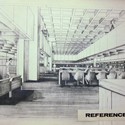
See photographs of the former library under construction and in use after the break.
In this installment of the Louisiana Channel, world-renowned architect Steven Holl discusses his philosophy on organic architecture and its ability to generate a specific experience. "I believe architecture is an art, that it changes peoples' lives, and I think that's what architecture has the potential to do," Holl remarks.
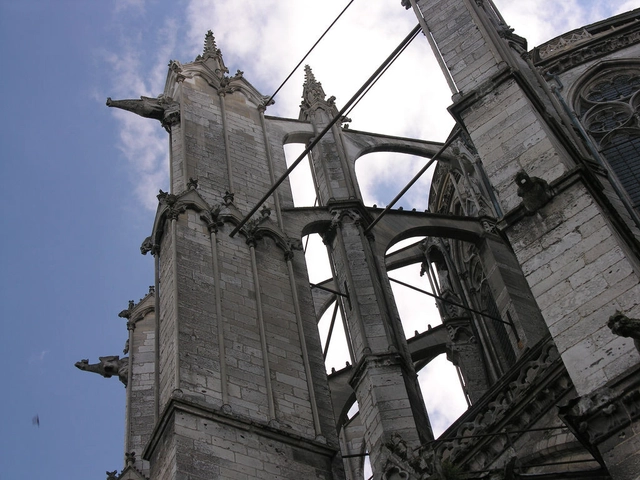
The Gothic cathedrals of the middle ages have long been respected as sites of significant architectural and structural experimentation. Hoping to reach ever closer to God, the master masons of the period took increasingly daring structural risks, resulting in some remarkably durably buildings that are not only timeless spaces for worship but miraculous feats of engineering. However, according to new research by a team of French archaeologists and scientists, we still haven't been giving these historic builders enough credit.
Though iron components feature in many Gothic buildings, often forming structural ties to stabilize tall stone buttresses, it was previously assumed that these were later additions to shore up precarious structures. However, thanks to a highly sophisticated carbon dating technique, the team consisting of the Laboratoire archéomatériaux et prévision de l'altération, the Laboratoire de mesure du carbone 14 and "Histoire des pouvoirs, savoirs et sociétés" of Université Paris 8 have shown that iron fixtures were an integral part of cathedral construction techniques from as early as the late 12th Century - meaning that many buildings from the period were essentially hybrid structural systems.
Every year for the past 25 years, the Swedish town of Jukkasjärvi has erected its famous ICEHOTEL. Built almost entirely from the ice of the nearby Torne river, the building begins to take shape in October and is ready for business by December. Fifty thousand people visit annually, many choosing to stay overnight in the rooms which maintain a balmy air temperature of 17ºF. The sculptural and often ornate design of the building's "art suites" is the work of handpicked artists from around the world, and is one of the most popular aspects of staying at the hotel. See photos from this year’s suites, and learn more about ICEHOTEL's construction, after the break.
A 176-pound (80 kilograms) chunk of concrete cladding has fallen from year-old Library and Learning Centre at the University of Economics Vienna. This, unfortunately, isn’t the first time the Zaha Hadid-designed structure has malfunctioned; last year, an “assembly error” was deemed the reason why a large piece of fiberglass-reinforced concrete crashed down in front of the building’s entrance.
Embracing Limits. Image Courtesy of Architecture at Zero
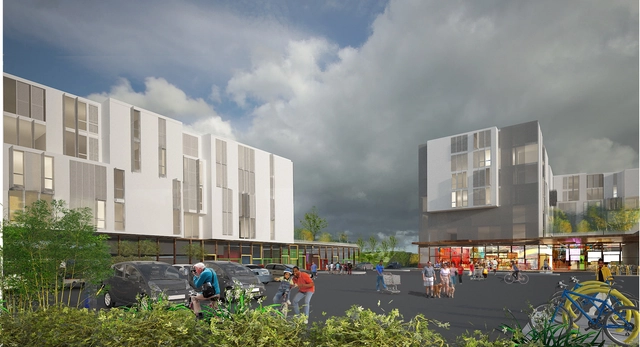
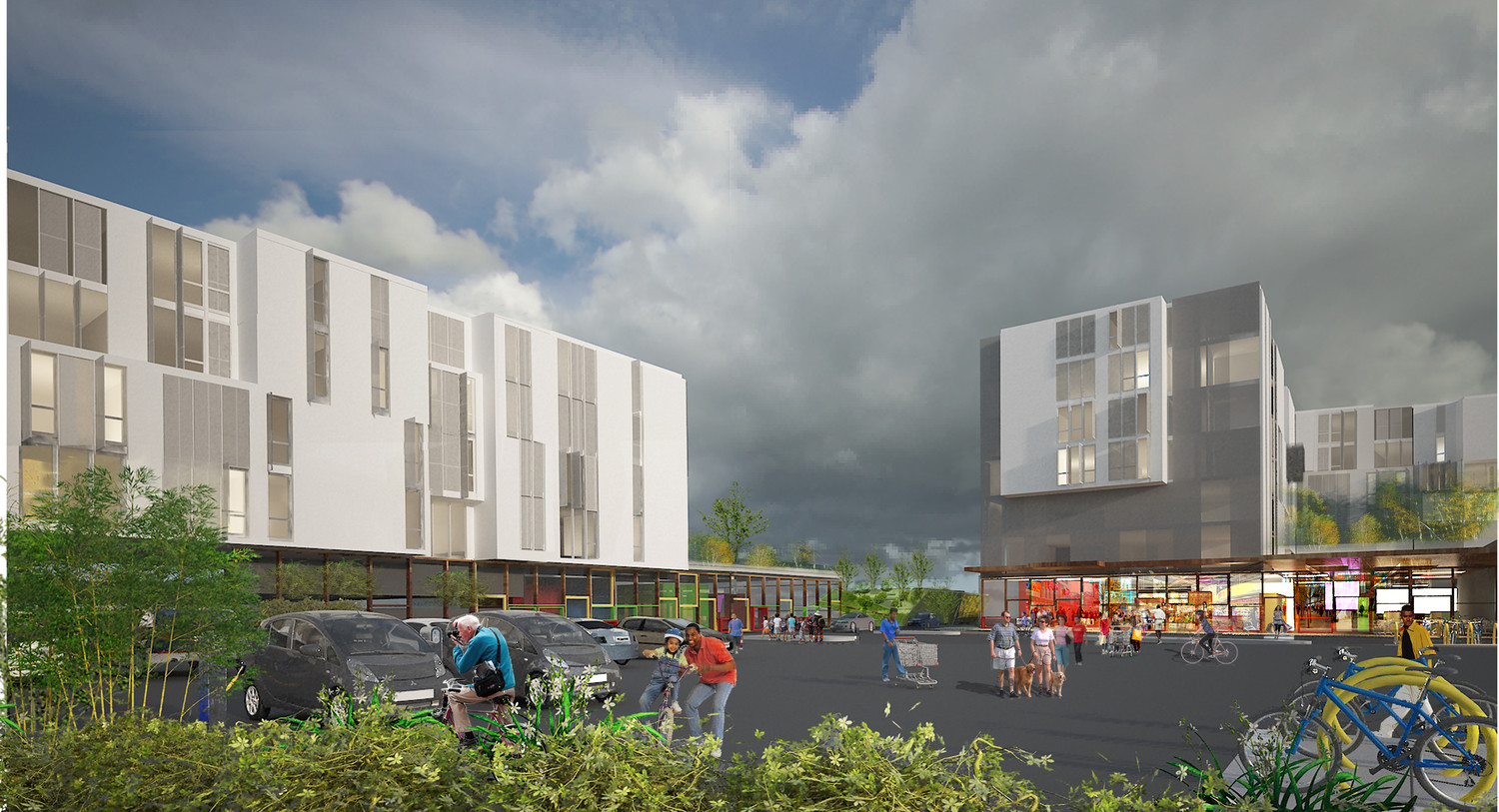
Recently, the Architecture at Zero design competition, sponsored by Pacific Gas and Electric Company, came to a close. Open to a variety of fields and skill levels, the competition challenged entrants to create a zero net energy (ZNE) design specific to an Oakland-based site run by the East Bay Asian Local Development Corporation (EBALDC). ZNE buildings maintain equal amounts of energy input and output annually, and thus function as independent sustainable units, making them a smart solution when considering future impact.
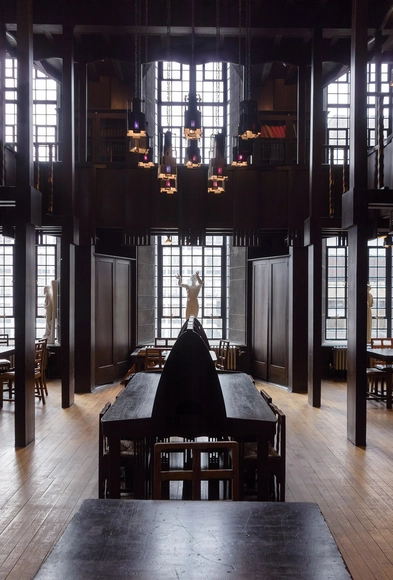
Following the unfortunate series of events that saw the Glasgow School of Art's (GSA) iconic Mackintosh Library devastated in a fire in May of last year, a leading Scottish architect has stated that he is "seriously against the idea of remaking the library" as a replica of Charles Rennie Mackintosh's original acclaimed design. Talking to the Scottish Herald, Professor Alan Dunlop has stated that "there is actually no way you can replace it as it was [as] there was 100 years of age and patina that you would have to replicate." Furthermore, he believes that it would not be something that "Mackintosh would do," citing the expansion of "his work in the years between each part of the Mackintosh Building being built [in 1899 and 1909]" as justification. It is his feeling that "the former library had essentially become a museum [and] not a viable working room for students and staff."
Elizabeth Chu Richter, FAIA, CEO of Richter Architects in Corpus Christi, Texas, has been inaugurated as the 91st President of the American Institute of Architects (AIA), succeeding Helene Combs Dreiling, FAIA, in representing over 85,500 AIA members.
“As architects, we use our creativity to serve society—to make our communities better places to live. Through our profession and our life’s work, each of us has shaped and re-shaped the ever-changing narrative that is America in both humble and spectacular ways,” said Richter. “We have created harmony where there was none. We have shown we can see what is not yet there. We have shown we have the courage to grow, to change, and to renew ourselves.”
Read on to learn the three critical issues Richter plans to address during her presidency.
The American Institute of Architects (AIA) has announced that former president Bill Clinton, founder of the Clinton Foundation, will give the keynote address on May 14 at the 2015 National Convention in Atlanta. Learn more, after the break, and view the convention's complete schedule, here.
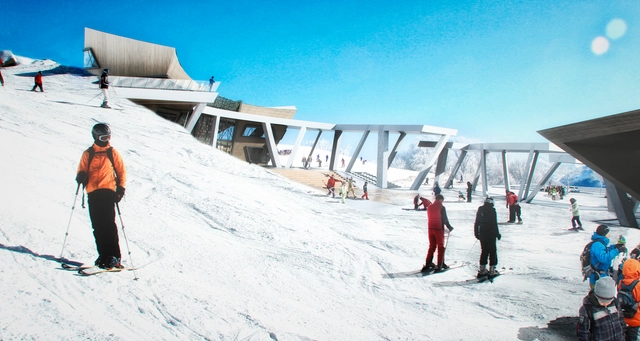
Daniel Libeskind has been commissioned to design a leisure destination for the Lithuanian city of Vilnius. Perched on the highest point in the city, between Vilnius’ historic center, business district and airport, the “Vilnius Beacon” aims to become a cultural and recreational attraction at the Liepkalnis Ski Hill that offers a range of summer and winter activities.
“I was inspired by the landscape of this beautiful city. My goal with this project was to bring an exciting dimension of architecture that respects the natural elements, while providing a year- round sustainable center for the citizens of Vilnius,” said Libeskind. “The Beacon is set to become a new epicenter of entertainment, leisure and culture for the city.”
One of the most hyped stories in the world of technology is the development of powerful, affordable virtual reality headsets for the commercial market. For architects, the ability to immerse yourself in an imaginary world is an enticing prospect, for both professional and recreational uses - but at $200 and upwards for what is still a product under development, devices like Oculus Rift are not for the faint-hearted.
But now Google, ever the ambassador for the more fiscally-cautious tech junkie, has a solution that won't break the bank. Their contribution to the emerging virtual reality market is "Google Cardboard," which creates a simple headset from an Android-powered smartphone and - you guessed it - some cardboard. Read on to find out how it works.
Videos
Courtesy of Metropolitan Redevelopment Authority
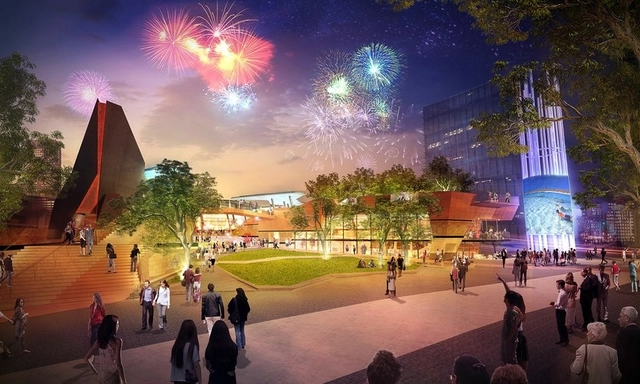
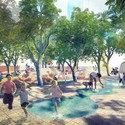
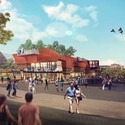
The Metropolitan Redevelopment Authority of Perth has released conceptual images for what is to become the city’s latest public space, designed by a team comprised of Aspect Studios, Iredale Pedersen Hook, and Lyons Architecture. With construction to begin in mid-2015 and slated for completion in 2017, the square takes its name from Yagan, an Indigenous Australian warrior of Perth’s local Noongar people. Integral to early resistance against British colonization, Yagan’s tenacity, leadership, and subsequent execution by settlers have cemented his role in Indigenous Australian folklore. Read more about this significant acknowledgement of Indigenous history after the break.
NPR journalists David Eads and Helga Salinas have published a photographic essay by Patricia Evans alongside their story of Chicago’s public housing. Starting with Evans’ iconic image of a 10-year-old girl swinging at Chicago’s notorious Clarence Darrow high-rises, the story recounts the rise and fall of public housing, the invisible boarders that shaped it and how the city’s most notorious towers became known as “symbols of urban dysfunction.” The complete essay, here.
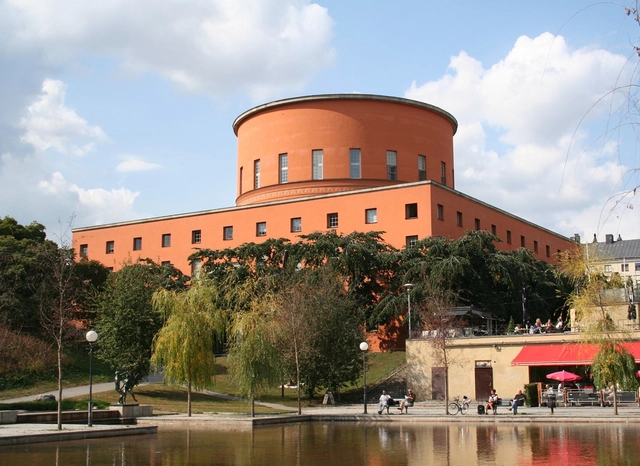
The City of Stockholm has named Caruso St John, working with Swedish practice Scheiwiller Svensson, as the architects for a renovation of Gunnar Asplund's 1928 Stockholm Public Library. The work will see alterations to the interior spaces of the main building and annex, as well as the three additional "bazaars" built to the west of the original building between 1930 and 1953, however there will be no alterations to the external appearance of the building.
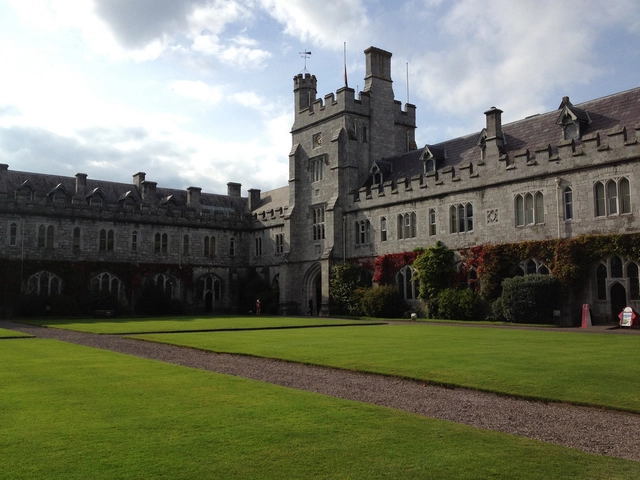
University College Cork has selected O'Donnell + Tuomey to design the university's new student hub, which will house learning, student support and administration spaces in a new building adjacent to the campus' Victorian Windle Medical Building, to the West of the main quadrangle. Selected for their ability to work within and around the historic buildings, the project will also see O'Donnell + Tuomey restore the medical building.
The new student centre will be the second building designed by the practice for University College Cork, a decade after the completion of their Stirling Prize-shortlisted Lewis Glucksman Gallery.
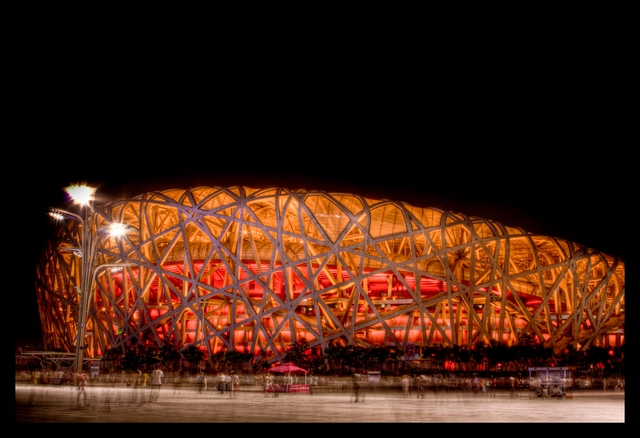
Herzog & de Meuron is said to be collaborating with Lifschutz Davidson Sandilands to explore options for expanding the Chelsea Football Club’s Stamford Bridge home stadium in west London. According to a report by the Architects’ Journal, news of the possible expansion first broke last June, after considerations of relocating the stadium were heavily criticized by the public.
The stadium, originally designed by Scottish architect Archibald Leitch and built in 1876, has already undergone several renovations. Chelsea FC hopes to increase its capacity from 41,837 to 60,000, as well as provide a new decking over the railway line on the east and north sides of the building.
More from Chelsea FC regarding the expansion, after the break.
One of four shortlisted proposals (click to view them all). Image Courtesy of The Architects' Journal
Sutherland Hussey, Faed Brown Architects, Daykin Marshall Studio, and Gibson Thornley Architects have been announced as finalists in the RIBA-backed competition for a new community hub and sports pavilion for the Sessay Cricket Club in North Yorkshire. The four shortlisted competitors, selected from over 80 entrants, will be reviewed by a judging panel on January 8. A winning team is expected to be announced shortly after.
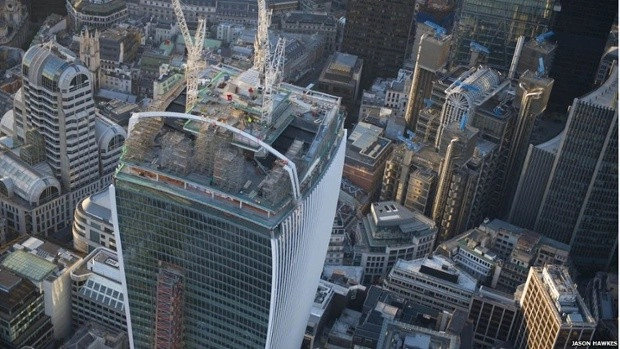
In a review of Rafael Viñoly Architects'20 Fenchurch Street, which is also known as the 'Walkie-Talkie' or 'Walkie Scorchie' after it emerged that its façade created a heat-focusing ray strong enough to melt cars, Rowan Moore questions London's preoccupation with iconic buildings and its money-driven planning schemes. Using 20 Fenchurch Street as a key example, Moore argues that not only does the building seem "to bear no meaningful relationship to its surroundings," but its Sky Garden - a terrace at the top of the building which claims to be "the UK’s tallest public park" - is a symbol of a bewilderingly unbalanced economy.
What is the most misused word in the world of architectural writing? Could it be "iconic"? What about "innovative"? The staff over at Curbed have a nomination: referring to spaces as either "masculine" or "feminine." In an op-ed published last month, they write that "the people who write about decor and design need to stop describing spaces with gendered terms," arguing: "Let's say two spaces were written up in a decor blog, and one was described as masculine, and the other feminine. Which would have white walls? Which would have raw concrete floors? ... If these have fairly easy answers, it's because we're in the realm of stereotype."
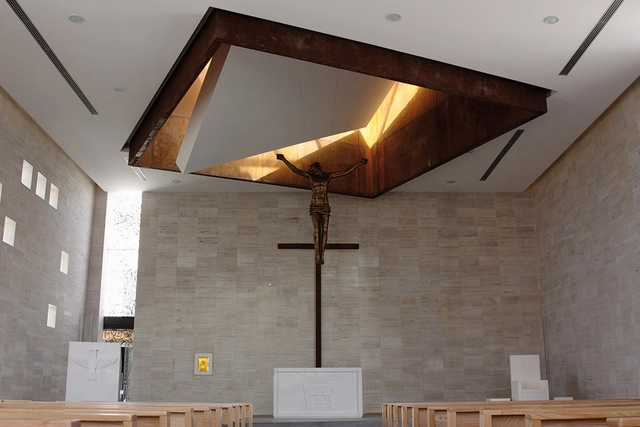
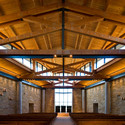
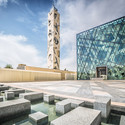
If the winners of Faith & Form's 2014 Religious Art & Architecture award are any indication, it may be something different every time. A high ceiling, curved walls, stained glass windows or lush landscaping -- no two winners are alike, and yet each offers viewers a fresh way of interacting with the divine.
Take a look at some of Faith & Form's 2014 award and honor award winners for religious architecture after the break
Architecture critic Alexandra Lange recently stumbled upon “On Architecture” - an Audible.com collection of over 16 hours of Ada Louise Huxtable’s best writings from the New York Times, New York Review of Books, the Wall Street Journal and more. Displeased with the narration, Lange has taken it upon herself to read Huxtable’s 1971 New York Times critique “A Look at the Kennedy Center” in honor of its “many famous witticisms." Give it a listen, here.
What happens at the intersection of urban culture and architecture? How can the four elements of hip hop (DJing, MCing, Breaking and Graffiti) inspire the built environment? Participants of JUX.TA.PO.SI.TION are encouraged to create a sketch using mediums of their choice to depict new building forms, urban design concepts, and/or architectural products inspired by the four foundational elements of hip hop. This international competition is open to all individuals including students, graffiti artists, architects, urban planners, landscape architects, graphic designers, muralists, etc. You can complete the free registration form and find more information, here.