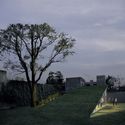
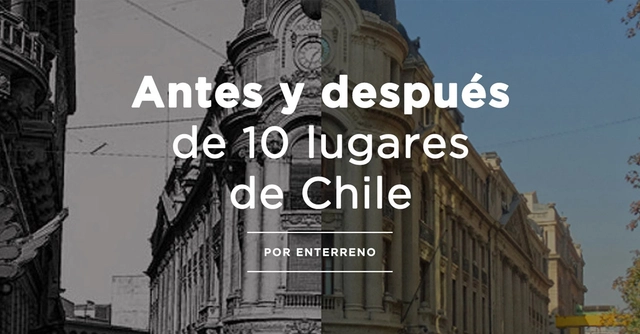
The website Enterreno is building the first “collaborative time machine” using historical images, allowing thousands of people to travel through time via their mobile devices from anywhere in the country or the world. The platform features over 45,000 photographs revealing what Chile was like in both the distant and recent past, shared by everyday people from their family archives and other sources.
By the end of 2018, at least five cities in Germany could test a model approach to combating pollution. The trial will discourage private vehicle use while offering free public transit—a solution currently adopted in only a few places.
Bonn, Essen, Herrenberg, Reutlingen, and Mannheim are the German cities included in the proposal drafted by the federal government. “We are considering making public transport free of charge to reduce the number of private cars,” German ministers stated in a letter sent to the European Commission. “Fighting air pollution effectively without unnecessary delays is of the highest priority for Germany,” the document adds.
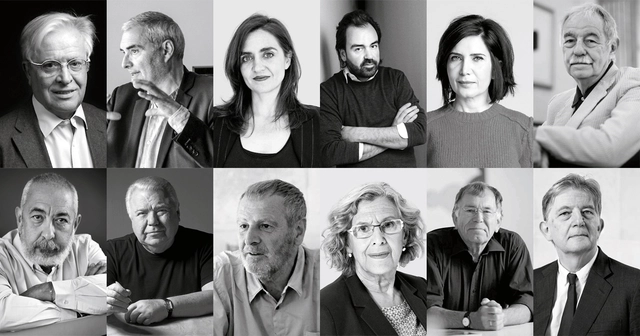
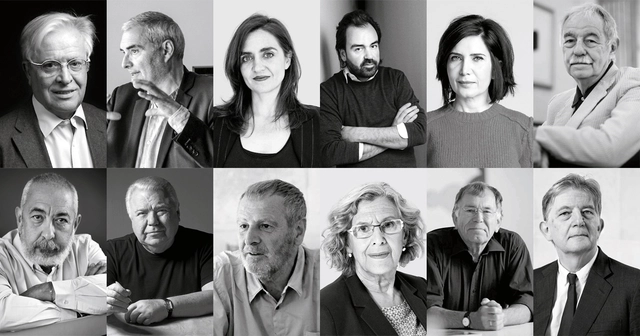
Ponentes del V Congreso Internacional de Arquitectura y Sociedad. Image Cortesía de Fundación Arquitectura y sociedad
On June 14, the second and final day of the 5th International Congress of Architecture and Society took place at the Baluarte Congress Center and Auditorium of Navarre in Pamplona, Spain. The day's sessions focused on topics as diverse as urban development, the political ecology of cities, mobility, and the future of our cities.
Architects Farshid Moussavi and Belinda Tato opened the day's first session, focusing their reflections on the importance of public spaces in cities as “generators of citizenship.” Both experts also highlighted the role of people in shaping cities.
https://www.archdaily.com/1113748/jan-gehl-we-have-lost-the-ability-to-create-neighborhoods-where-it-is-a-pleasure-to-grow-up-and-grow-oldJavier García Librero
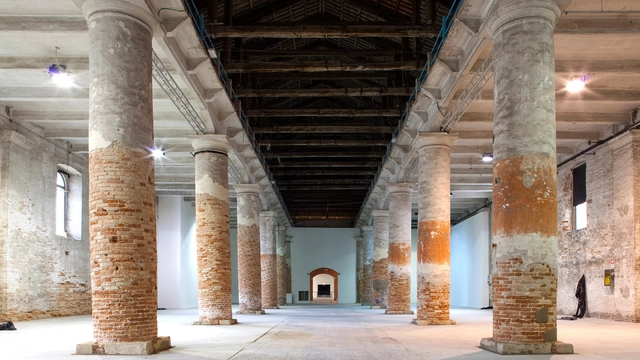
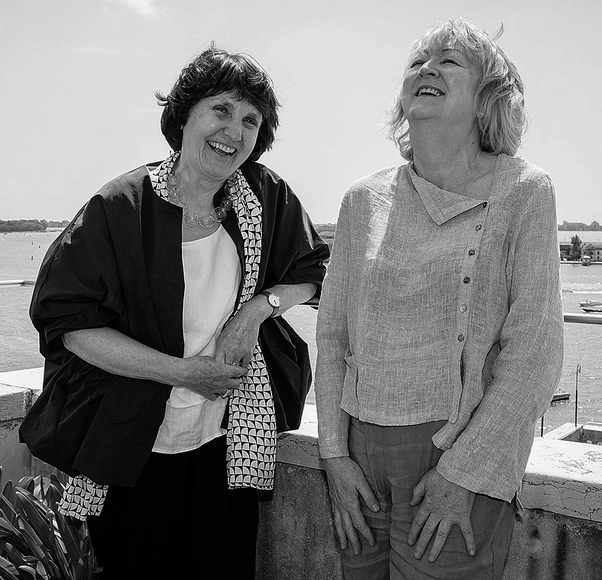
Curated by Irish duo Yvonne Farrell and Shelley McNamara, partners at Grafton Architects, this year's theme seeks to reveal "diversity, specificity, and continuity in architecture." According to Paolo Baratta, president of La Biennale di Venezia, FREESPACE aims to promote "desire" in architecture.
A "common, everyday, and collective" space is the goal set by the curatorial team of the upcoming 2019 Chilean Architecture and Urbanism Biennial. This was announced during the official launch last Thursday, November 8, at the headquarters of the Architects Association of Chile (Colegio de Arquitectos) in Santiago.
The first edition of the Biennial to be held in Santiago since 2013—the last two editions took place in Valparaíso—will be located in the traditional Franklin neighborhood of the Santiago commune, a historic sector of the capital currently undergoing urban transformation driven by real estate pressure, commercial reconversion, and historic preservation.
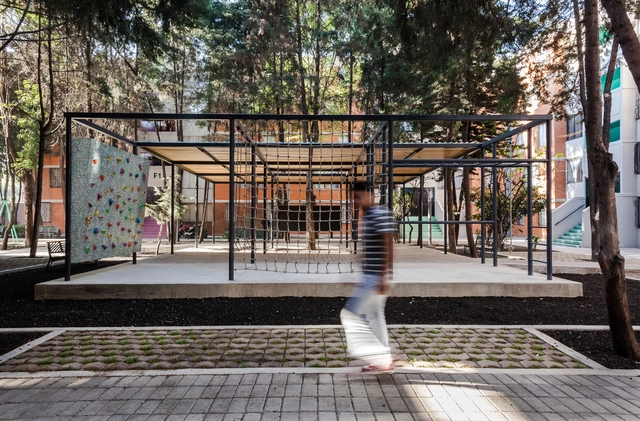
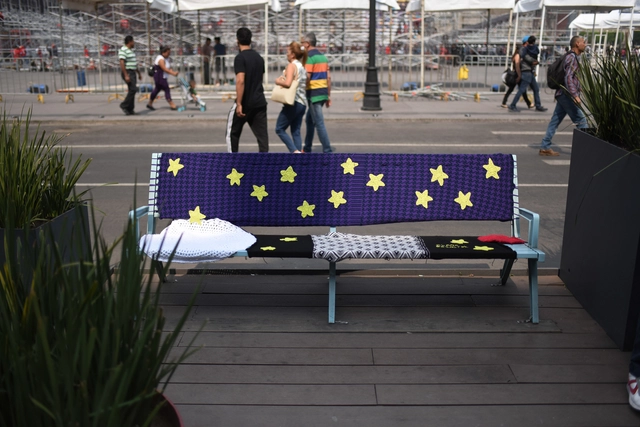
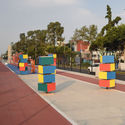
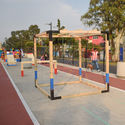
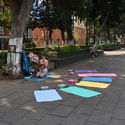
The 2nd Placemaking Latinoamérica Summit—organized by Lugares Públicos A.C.—took place in Mexico City during the first and second weeks of November. It featured various activities, including the rehabilitation of eight public spaces led by Mexican and Latin American participatory urban planning specialists in the boroughs of Cuauhtémoc, Iztacalco, and Miguel Hidalgo.
These interventions were carried out as part of a broader effort to reflect and act on the Placemaking methodology at a Latin American scale, fostering collaboration between organizations from different countries to improve public space. This process is detailed in the "White Paper on Latin American Placemaking: Tactical Urbanism and Innovation in Public Space Program," presented this week by the Alliance for Urban Regeneration (ARU) and Lugares Públicos.
Videos
Libro: Desde la resta. Image Cortesía de n`UNDO
More than six years have passed since n´UNDO launched its manifesto, which, through its 11 points, advocates for and promotes a new way of approaching architectural action based on non-construction and reuse. This approach is grounded in the re-architecture of territory and the city through subtraction and renunciation.
Since November 11, 2011, n`UNDO has built a highly active and compelling track record through urban and territorial intervention plans aimed at the social, cultural, environmental, and physical improvement and recovery of our surroundings. In addition, they have participated in several competitions, earning numerous awards and accolades, and have carried out extensive educational work through workshops, courses, lectures, and conferences. Notable among these was the symposium “Empty Space, Subtraction, and Silence: Subtraction and Renunciation in the Creative Process. An Interdisciplinary Perspective,” held in Madrid in November 2016.
https://www.archdaily.com/1113847/through-subtraction-a-different-and-necessary-way-of-shaping-the-cityJavier García Librero
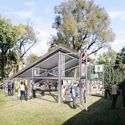
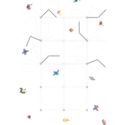
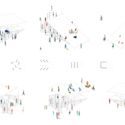
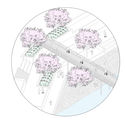
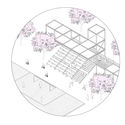
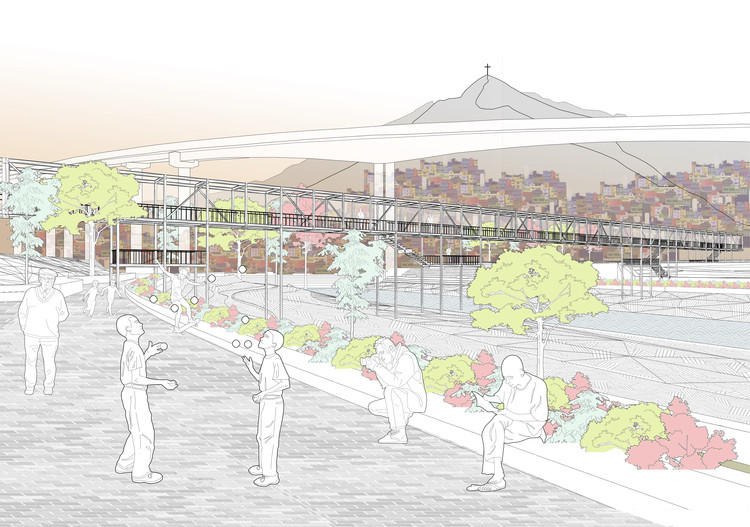
We must talk about this issue repeatedly until we truly listen: the city of Lima turns its back on the Rímac River, which spoke loudly to us last year with overflows and disasters following the El Niño phenomenon. Meanwhile, calls emerged to improve the reality surrounding this important river and contribute to national reconstruction. In this context, the much-needed idea competition ‘Rímac River Park’, organized by the urban solutions incubator Lima Design Network, promoted various ways to protect the boundaries between nature and appropriation, highlighting the imminent urgency for public space. It will not be built—not for now—but through this publication, we aim to stir the waters once again and move people with these sensitive, ideal projects for the city.
The Venice Biennale appointed Irish architects Yvonne Farrell and Shelley McNamara (Grafton Architects) for the 16th International Architecture Exhibition. “Freespace” is the theme, resulting from a series of lectures previously referenced by both architects in publications, exhibitions, and biennales: Architecture and New Geography, Arena for Learning, The Physics of Culture, and Dialogue and Translation. For Farrell and McNamara, “Freespace,” as a compound word, means:
https://www.archdaily.com/1113841/yvonne-farrell-and-shelley-mcnamara-directors-of-the-2018-venice-biennale-define-the-theme-freespaceJuan José Kochen
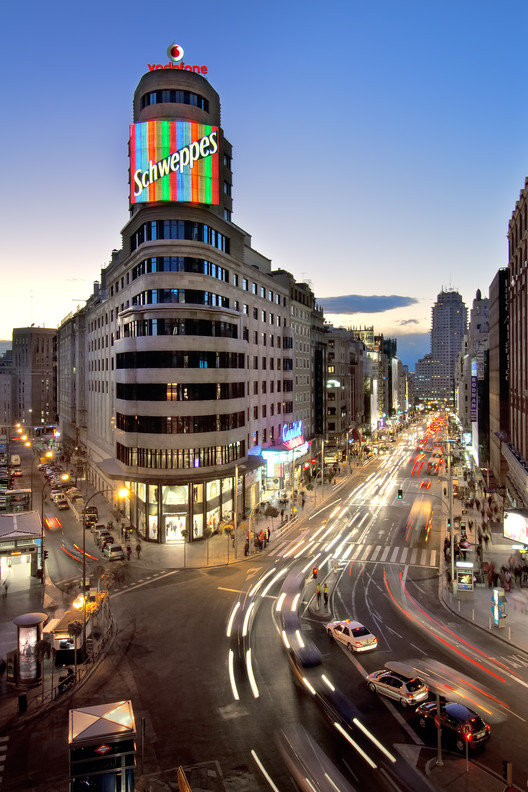
Edificio Capitol. Eced y Feduchi. Image Cortesía de Open House Madrid
Under the slogan Madrid in October is Architecture, details have been announced for the fourth edition of the Open House Madrid architecture and city festival. Led by architects Paloma Gómez Marín and Pati Núñez, this year's event will feature the most extensive program of any edition to date.
During the weekend of September 29 and 30, more than 120 buildings that are usually closed to the public will open their doors. In addition, over 30 activities have been organized throughout October, making this festival one of the most important cultural events of the year in the Spanish capital.
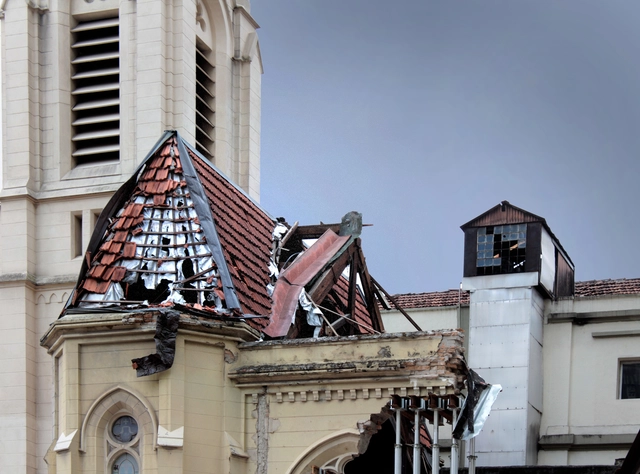
Exactly five months ago, residents of São Paulo witnessed the tragic collapse of the Wilton Paes de Almeida Building. Following a massive fire, the structure of the iconic 24-story modern building came down, leaving dozens dead and injured, and hundreds homeless. Located at the intersection of Rio Branco Avenue and Largo Paissandu, the collapse also affected three other adjacent buildings, including the headquarters of the Lutheran Church of São Paulo.
1º lugar. Image Cortesia de Concurso Público Nacional de Arquitetura para o Memorial às Vítimas da Kiss
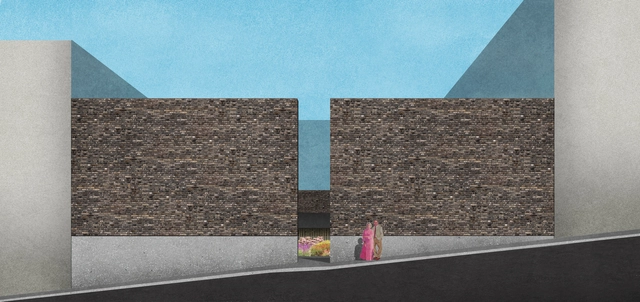
The results of the National Public Architecture Competition for the Memorial to the Victims of Kiss were announced this Tuesday morning (April 10) in a ceremony held in Santa Maria. The project unanimously awarded first place was by the firm Motta e Zene Engenharia e Arquitetura, from São Paulo (SP), represented by architect Felipe Zene Motta. The ceremony also recognized the five ranked projects and the five that received honorable mentions.
According to the jury, the proposal stands out for its appropriate urban integration and placement at the average level of the terrain, its symbolic character, and the delicacy of placing its focal point in a flower garden at the center of the exhibition. The project reinforces the emotional significance of the site of memory, while offering the city a narrative of the event that contributes to healing. Ease and simplicity of construction and maintenance are supported by the spatial organization of functions on a single level.
The São Paulo City Government has resumed discussions regarding property tax (IPTU) exemptions and discounts for landmarked buildings. Previously debated during the administrations of Gilberto Kassab and Fernando Haddad, the issue is currently the focus of a newly drafted bill.
The proposal limits the IPTU exemption to landmarked properties located in downtown São Paulo, within a perimeter that is still being defined. It will not apply to properties subject to general zoning restrictions, such as those in historically preserved neighborhoods like Jardins and Pacaembu.
On the morning of March 10, 2018 (Beijing time), at the 2018 Civic Trust Awards ceremony held at Manchester's iconic Old Trafford stadium (home of Manchester United), OPEN's completed project, the “Tsinghua Ocean Center,” was honored with a Civic Trust Award!
Established in the UK in 1959, this prestigious award is highly regarded, because it recognizes not only outstanding project design but also its value to the public. From urban planning to public art, the awards consider the built environment within a broader context, driven by the belief that design must serve its users.
https://www.archdaily.com/1113669/uks-2018-civic-trust-awards-announced-tsinghua-ocean-center-designed-by-open-architecture-wins韩爽 - HAN Shuang
Alongside Tiê, an adventurous capybara, Lina sets off on a journey through ten public spaces around the world – such as the High Line in New York or Paulista Avenue in São Paulo – to discover the secrets of how cities are built. The two are the main characters of the book Casacadabra – Cidades para Brincar (Cities to Play), a new release from Pistache Editorial, which launches its crowdfunding campaign on April 16 on Catarse. The book features text by Bianca Antunes and Simone Sayegh, with illustrations by Luísa Amoroso. This is the second title in the Casacadabra series – the first, titled Invenções para morar (Inventions for Living), presented the architecture of ten houses around the world.
As you know, ArchDaily has joined forces with Spotify, the world's largest music streaming platform. From the start, we have been sharing our own playlists for those moments in the lives of all architects. We have also invited architects from Latin America and Spain to share the music that inspires them, or better yet, the sounds that have shaped their careers.
In this installment of ArchDaily en Español + Spotify, we share an ad hoc playlist to close out the year: Fiesta para Arquitectos. A constantly updated playlist to get the party started... while you edit your plans.
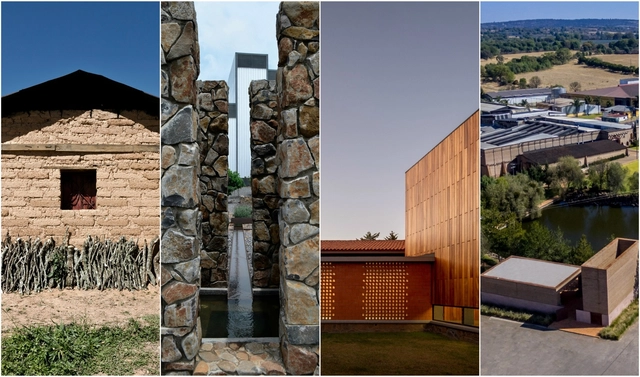
The 21 projects making up the Official Selection of the Mexican Pavilion at the 16th International Architecture Exhibition of the Venice Biennale converge across latitudes, geographical regions, and echoes of the territory, responding to the curatorial theme “Freespace.” In four installments, we will share the work and philosophy of each of the participants representing Mexico in Venice. Read on to discover the second part of these projects.
Protagonistas del V Congreso Internacional de Arquitectura y Sociedad. Image Cortesía de Fundación Arquitectura y sociedad
Yesterday, June 13, marked the opening of the 5th International Congress of Architecture and Society, an event presided over by King Felipe VI for the second consecutive edition. The President of the Government of Navarra, Uxue Barkos, and the Minister of Development, José Luis Ábalos, also participated in the official opening.
Architect Francisco Mangado was responsible for opening the event, which in its fifth edition will focus on cities and the challenges architecture faces in addressing urban demands. The architect from Navarra stated that “Architecture is not an isolated event of personal preferences; it is a profoundly cultural and social act, linked to the city as a reality that belongs to the common good,” adding that “the quality of architecture and the city is not a luxury, it is a right for all citizens.”
https://www.archdaily.com/1113864/francisco-mangado-opens-the-v-congress-of-architecture-and-society-the-quality-of-the-city-is-not-a-luxury-it-is-a-rightJavier García Librero
On Thursday, November 15, a new edition of the Obra del Año Awards took place—the competition that gathers votes from ArchDaily readers to determine the best architectural works built in Latin America over the past year.
https://www.archdaily.com/1113858/this-is-how-the-2018-building-of-the-year-awards-were-experienced-in-santiago-chilePola Mora
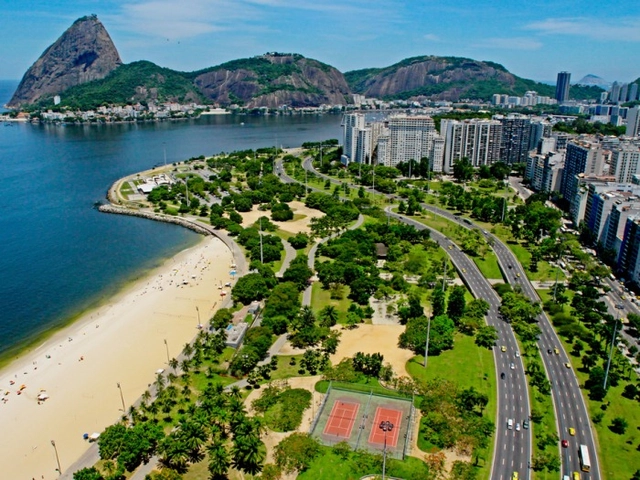
The Council of the International Union of Architects (UIA), meeting in Oaxaca, Mexico, unanimously approved on May 18 the nomination of the city of Rio de Janeiro as the UIA/UNESCO World Capital of Architecture for 2020. Securing this title is part of the program proposed by the City of Rio, with support from the Institute of Architects of Brazil (IAB), for 2020, when the city will host the 27th World Congress of Architects.
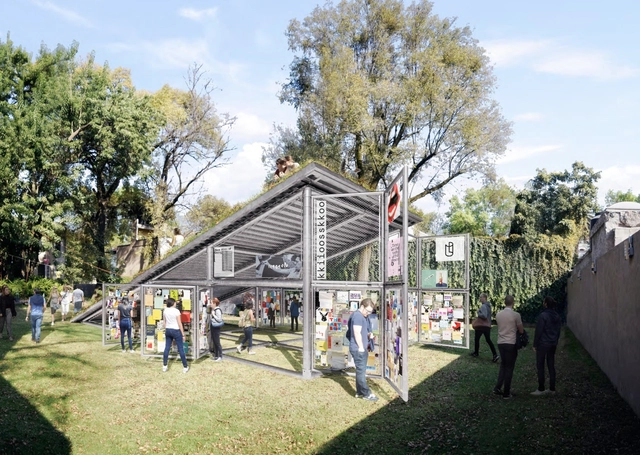
Kiosko, the Alumnos47 initiative that explores publications outside of publishing, now has a winning design for its pavilion. Following the launch of the open call last year, forty-nine proposals were received from different states across Mexico, as well as one from abroad. After a lengthy and rigorous deliberation, the jury—composed of Chus Martínez, Daniel Garza Usabiaga, Tiago Pinto de Calvalho, and Fermín Espinosa—awarded an honorable mention and selected five finalists, from which a winner was chosen.
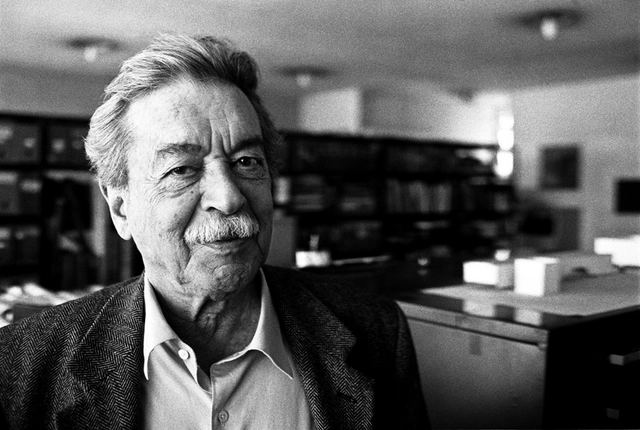
Invited by the organizers of UIA2020Rio, architect Paulo Mendes da Rocha will chair the Honorary Committee of the World Congress of the International Union of Architects, which will take place in two years in Rio de Janeiro under the theme "All worlds. Just one world. Architecture 21."


_at_Cuadra_San_C....jpg?1518020946&format=webp&width=640&height=580)
_at_Cuadra_San_Cri....jpg?1518020987 "Sean Scully Wall of Light Cubed, Mexico 2018 Stone sourced locally near Mexico City © Sean Scully. Image © Felix Friedmann")
_at_Cuadra_San_Cristobal__....jpg?1518020930 "Sean Scully Landline That Pink, 2017 Oil on Aluminum © Sean Scully")
_at_Cuadra_San_C....jpg?1518020946 "Sean Scully Wall of Light Cubed, Mexico 2018 Stone sourced locally near Mexico City © Sean Scully. Image © Felix Friedmann")
_at_Cuadra_San_Cristobal__....jpg?1518020961 "Sean Scully Brown Silver Tower, 2016 Corten and Stainless Steel © Sean Scully. Image © Felix Friedmann")
_at_Cuadra_San_C....jpg?1518020946)



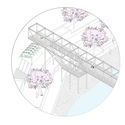
-v1.jpg?1530921892 "ATMÓSFERA_Escala Intermedia (Variación). Image Cortesía de RIMAC")



.jpg?1520927101&format=webp&width=640&height=580)