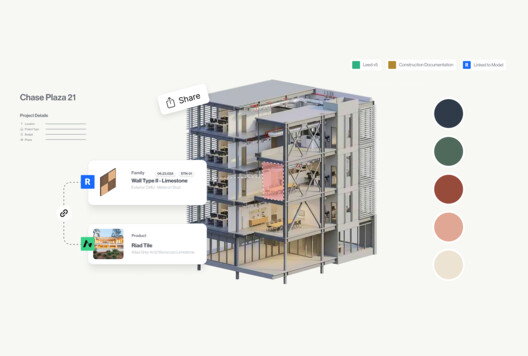
Move a wall in Revit and every plan, section and schedule follows. Change a material, though, and the team is often back in specifications, spreadsheets and drawings, checking that they all describe the same choice.
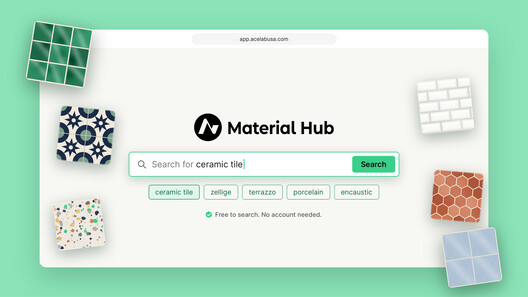
For Dave Lemont, who led Revit Technology before Autodesk acquired it, that gap is BIM's unfinished work. Now Executive Chairman of Acelab, he is focused on a Material Intelligence Model: one structured product record, connected to every document where that selection appears. It is also something architects can now try for themselves, since Acelab has opened Material Hub search to anyone, no account required.
In this conversation, he discusses what connected material data means for architects and owners, where AI helps, and why the final call still belongs to the designer.
From Revit to the material gap
Eduardo Souza (ArchDaily): When you were bringing Revit to market, what did you hope to change about architectural practice?
Dave Lemont (Acelab): Everything was 2D. The plan, section, elevation and schedule were drawn separately, as unrelated drawings that happened to describe the same building. Move a
wall and someone had to find it again in each one and change it by hand. The breakthrough was the parametric building model: one model, with every drawing as a view of it. Change the model and the drawings update; edit a drawing and the model updates. The name Revit came from "revise instantly." The larger idea, which later took the name BIM, was that a building could be represented as intelligent objects carrying all the material information, not just geometry.
The drawings agreed only because a person made them agree.
AD: Why is material information still so difficult to connect across tools and documents?
DL: Because nothing connects a material's attributes to all the documents that describe it. The information lives across models, specs, PDFs, spreadsheets and manufacturer sites, and someone moves it between them by hand.
Take a porcelain tile selected early in design. It goes into the schedule under one name, the spec under the manufacturer's product line, and a keynote under shorthand typed before a deadline. Months later the contractor prices the spec, the tile has a sixteen-week lead time, and the approved substitute never makes it back into the drawings. Every document reflects a different stage of the decision, and nothing keeps them aligned.This results in costly errors and change orders.
Material intelligence, and search anyone can use
AD: What led you from BIM to material intelligence, and how do the two connect?
DL: I kept watching the same gap persist from the Revit days. BIM gave architects a coordinated model of geometry, then left them to make the highest-consequence decisions, the material selections, off the platform in PDFs and phone calls.
Material intelligence gives every product selection the treatment Revit gave geometry. We call it the Material Information Model: a single structured record carrying the material's full attribute set, connected to every document where it appears. Make the selection once and the schedule, spec, keynote and drawing all draw from the same source. Join that to the building model and you get what I call material-forward design, where choosing materials is part of designing rather than a chore that comes afterward.
AD: Performance, cost, availability and environmental impact pull in different directions. How can a system help architects compare them without suggesting one "best" material?
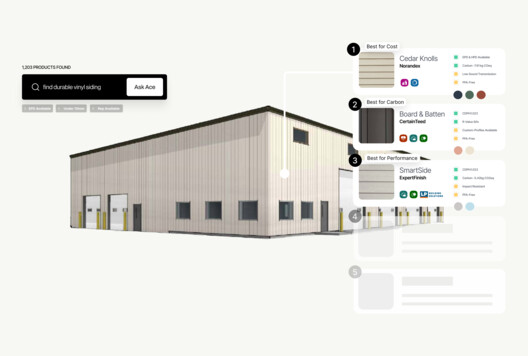
DL: The best material selection is not always what was chosen before. The right answer changes by project, client and region. What a system can do is make the trade-offs visible on a common basis. We normalized product data into one schema, so every product can be compared side by side, including HPDs, EPDs, certifications and code requirements. Our AI assistant ACE will lay out comparisons, analyze lessons learned from past projects and make recommendations but the judgment remains with the architect.
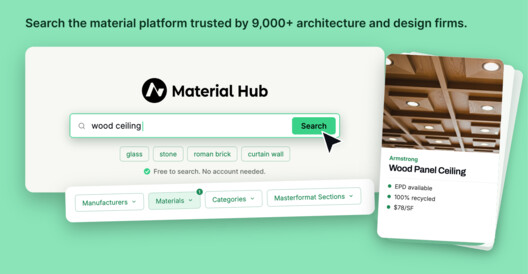
We've also opened Material Hub search to everyone. Any architect can now search products and compare their attributes side by side, without creating an account.
What it changes for owners and architects
AD: Where does the return show up, for owners and for the design team?
DL: It comes from every stakeholder working from the same record early, when decisions are still inexpensive to change. Materials cost 50% of every building, yet owners rarely see those selections while they're being made. With one source, they can see what's selected, at what cost and against what standard, in real time. A choice that's over budget or off the owner's standard gets caught at selection, not in a change order months later.
Architects gain too. Documentation generated from a coordinated source cuts the last-minute discrepancies teams fix for free. And when a contractor proposes a value-engineering alternative, it's checked against the original criteria on the spot, so the cheaper option still meets what the project required.
The value carries past handover. A building that leaves construction with a structured record of what it's made of is far easier to maintain, renovate and evaluate for reuse. Across a portfolio, every project becomes a record the next one can learn from.
AD: Where can AI help, and how do you keep it from reducing selection to a score?
DL: Adding more data fields is easy. The hard part is knowing which attributes matter for a given decision. Fire rating matters on a corridor ceiling. Acoustic performance matters in a classroom.
That's the work Ace, our AI assistant in Material Hub, is doing today. It reasons across performance data, code requirements and a firm's project history at once, flags what needs an expert's eye, and connects a choice to its consequences downstream. It also catches errors and inconsistencies in the data, because bad data in a decision system is worse than none: people act on it.
Architects are right to resist being scored. Selection draws on precedent, visual judgment and instinct no algorithm has. A good tool doesn't rank products. It puts the data, visual reference, cost and the firm's own history with a product side by side, with sources visible, so the architect makes the call with everything in view.
Numbers inform the choice. They do not make it.
Where BIM goes next
DL: More data is worth adding only when it changes a decision. If it lets someone choose better, coordinate better or defend a choice, it earns its place. If it only makes the model heavier, it's a liability. So decide what question you're answering, then carry only the information that answers it. Some of the most valuable data is the firm's own. Every project teaches something about which products performed, which caused RFIs and which a client asked never to see again. Today that knowledge lives in people's heads and old project folders, and it leaves when people do. Our AI works from our product catalog alongside a firm's or owner's past project data and standards, so each project starts from what the organization already learned.
Data only travels as far as its format allows. That's why Acelab is working with the Innovation Design Consortium (IDC) on another key initiative: an open data schema for the industry. A common standard lets manufacturers, consultants and design teams contribute data in a form any model can use, instead of each arriving in its own format. When everyone works from the same structure, data gets used more effectively and collaboration across the project team gets easier.
The next step is a two-way connection between material selections and the model, so a change carries through to the drawings, specs and schedules. Revit kept different views of a building coordinated as the design changed. Material decisions deserve that same continuity. We've introduced the first phases of this, syncing keynotes and material tags between Material Hub and Revit. Next, we want to tie design swatches and assemblies directly to their visual representation in the model, so material selection becomes part of the design itself rather than a separate track. That means faster iteration, better decisions and better design.
See how it works. Material Hub search is free and open to all at.
