While complex, layered with meaning, and categorized into various forms, heterotopia, a concept developed by the philosopher Michel Foucault, can broadly be understood as the manifestation of alternative realities. Unlike utopias – idealized, unreachable non-places – heterotopias are tangible, real-world spaces that operate according to their own internal logic, offering a lived alternative to dominant spatial and cultural paradigms.
Escapism, in an architectural sense, is not merely about fleeing standard realities; it is a critical tool for reimagining them under different cultural, social, and environmental conditions. Temporary installations serve as fertile testing grounds for these spatial possibilities. Often framed as sanctuaries or refuges, these works intentionally detach from pre-conceived norms – whether by seeking a return to a primal way of living or by provoking radical perceptual shifts.
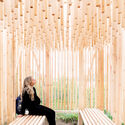
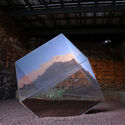
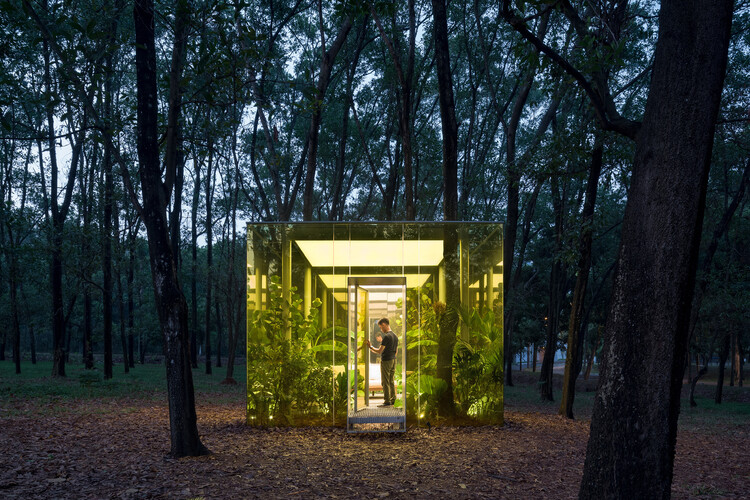
Just as escapism has long driven design speculation, temporary installations allow architects to materialize not only abstract concepts, but distinct worldviews. They establish an expanded field of experimentation for designers who refuse to limit their practice to permanent, traditional construction, as seen in the projects presented below.
Related Article
Ephemeral Architecture Prototypes: The Future of Public SpacesRoom Installation / Tamara Wibowo Architects
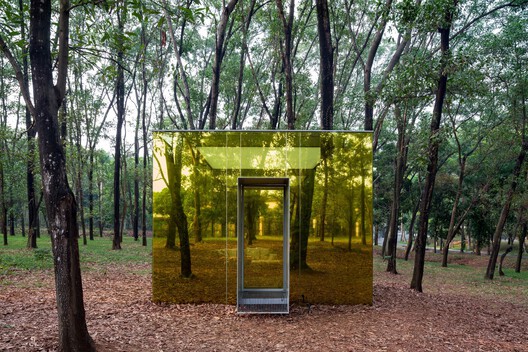
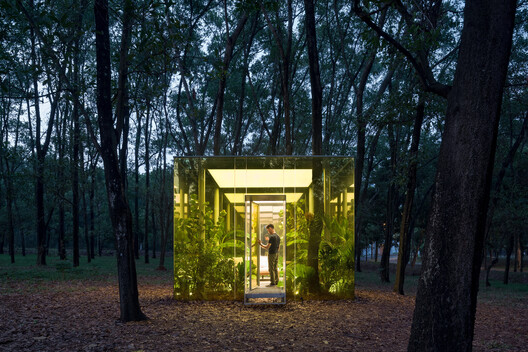
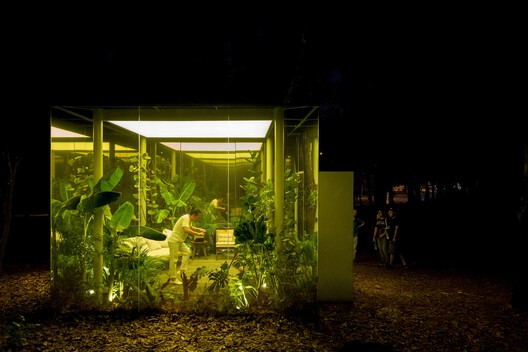
"Room" is a spatial meditation on duality—an architectural diptych that explores the delicate tensions between opposing realities. At its core, the installation confronts our binary understandings of space, materiality, and perception, inviting an intellectual dialogue on the boundary between nature and the built environment.
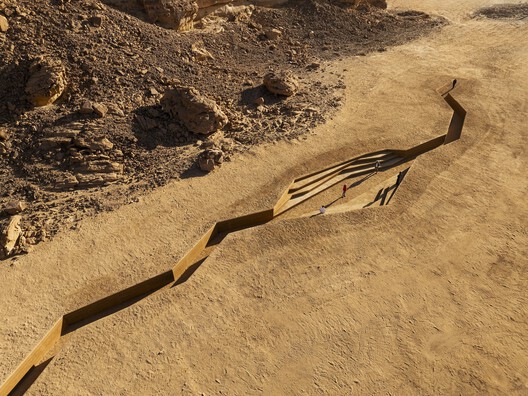
When the Earth Began to Look at Itself - Desert X Installation / Syn Architects
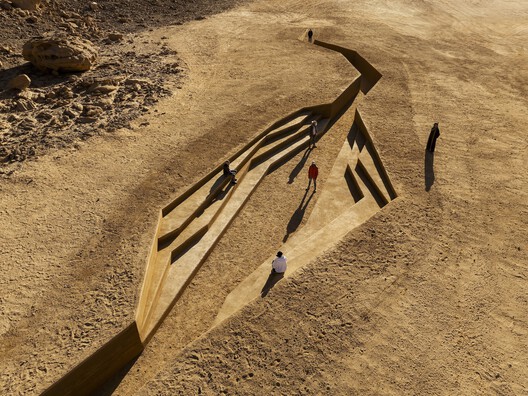
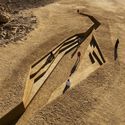
To further establish an understanding of subjectivity in relation to positionality, we reference Rosi Braidotti's notion of the 'nomadic subject'. In her writings, the nomad describes an epistemological condition, a kind of knowingness (or unknowingness) that refuses fixity, that allows us to think between or 'as if', to articulate another reality. These traces inform the pathway to the proposed work and prompt the discovery process of the larger site, playing an important role in creating new kinds of relationships between subject and object.
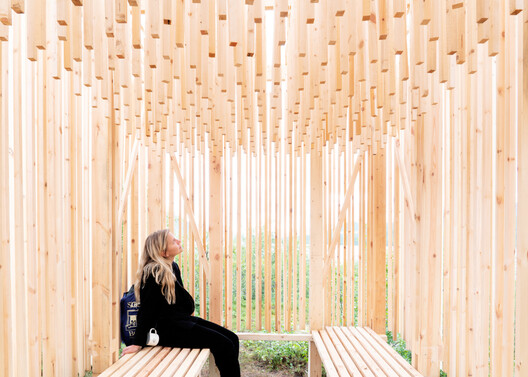
The Waterfall that Went Silent Installation / Umeå School of Architecture
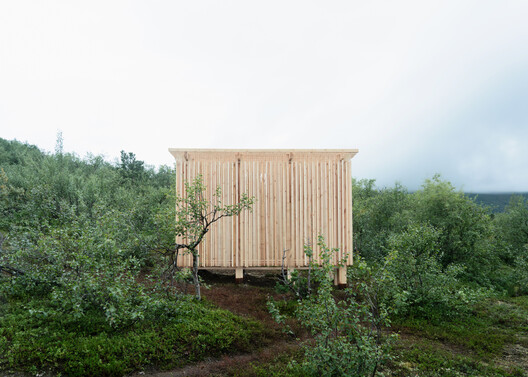
'The Waterfall that Went Silent' is a temporary sound installation and place for reflection located in the UNESCO World Heritage site Laponia. The installation seeks to remind visitors of the roar of the waterfall Stora Sjöfallet/Stuormuorkkegårttje (part of Lule River) which nearly disappeared together with a large amount of reindeer herding lands after Sweden started hydropower developments in the valley at the beginning of the 20th century. The installation reflects on the human drive for technological progress and the need for resources and energy over the natural and cultural environment. And the values that are lost in this process.
Vessel Installation / Erazo Pugliese
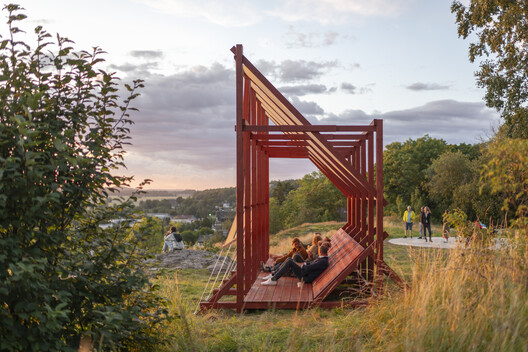
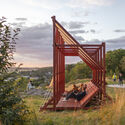
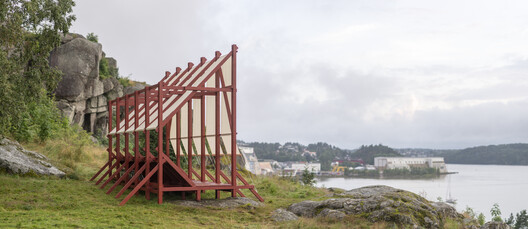
The asymmetrical "Vessel," lying on the rocks, invites visitors to experience their proximity to nature and the horizon as perceived from a terrestrial perspective: the partially fixed fabrics on the timber frame structure make one aware of the sound and intensity of the wind shifts, and framed views reestablish the relation between human-made artifacts and the landscape, while, in moments of calm it is possible to lay down or sit recalling the contemplative and existential feelings that can be experienced in nature.
Under the Same Sun Installation / Stephanie Deumer
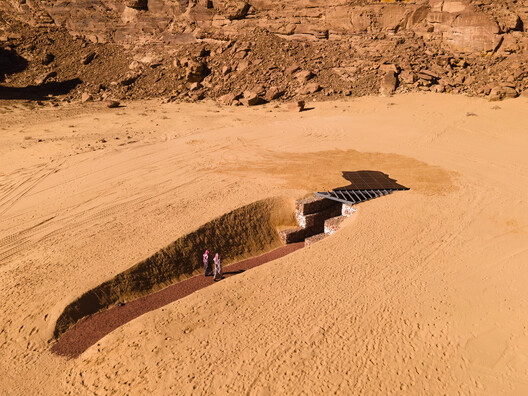
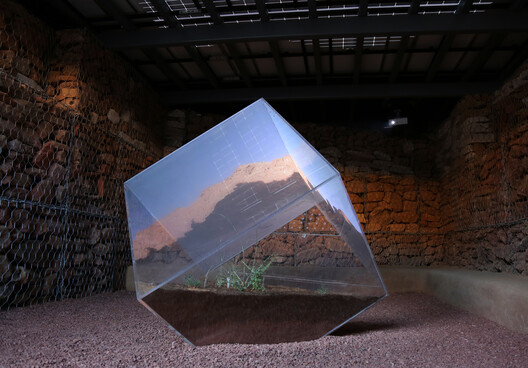
As part of the artist's continued exploration of simulacra and immersive environments, this work brings to life the spectacle of biological reproduction through technological and visual means. Projected live-feed footage of the aboveground landscape bathes the greenhouse with light, allowing the plants to photosynthesize and grow. The video projection and installation as a whole is powered by solar panels, which also serve as the roof to the sunken room. Taking the shape of a large puddle of water, the solar cells sit flush with the desert ground, mirage-like in appearance, and hinting at the sanctuary below.
This article is part of the ArchDaily Topic: The Lure of Escapism in Architecture and Alternative Worlds. Every month we explore a topic in-depth through articles, interviews, news, and architecture projects. We invite you to learn more about our ArchDaily Topics. And, as always, at ArchDaily we welcome the contributions of our readers; if you want to submit an article or project, contact us.


