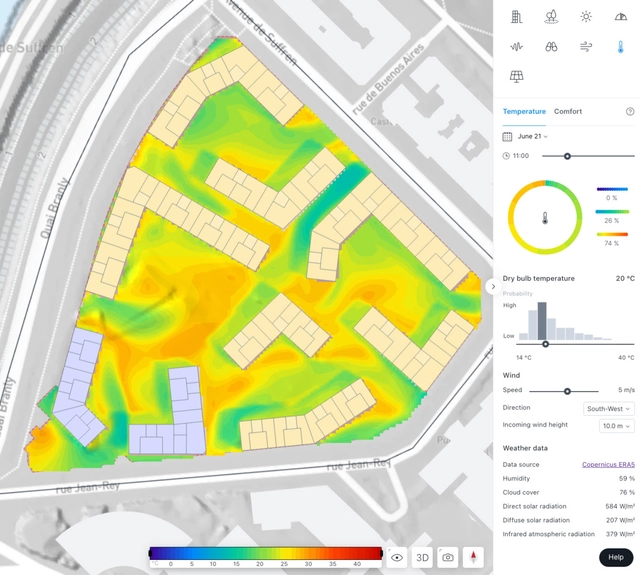
Microclimate analysis. Image Courtesy of Spacemaker
The United Nations estimates that the world population will reach 10.4 billion by 2100. Already by 2050, 2 out of 3 people will call cities home, coming in search of the opportunities, services and amenities on offer. That puts even more pressure on urban areas given all these people will need access to water, food, public space, good infrastructure and, above all, housing. In fact, estimates suggest more than two billion homes will need to be built by the end of the 21st century to accommodate this population explosion. As cities grow, so does urban sprawl, which brings its own set of environmental and social challenges. In the face of climate change, sustainable urban development must ensure that future housing solutions –new and renovated– are built to support healthy communities, prioritizing both human and environmental well-being. In turn, cities will need to be built denser and faster, but not without meeting a long list of stringent criteria. Only this way can we avoid the negative, often overlooked, effects of uncontrolled hyper densification that give urban development a bad name.
“Our planet is choking in plastic,” states the United Nations. While the man-made material has many valuable uses, our addiction to single-use plastic products has led to severe economic, health and environmental issues. Roughly one million plastic bottles are purchased every minute, and five trillion plastic bags are used every year worldwide –used just once, then thrown away. Plastics and microplastics have found their way into every corner of our natural environment, from the peaks of the highest mountains to the depths of the deepest oceans. So much so, that they have become part of the Earth’s fossil record and created an entirely new marine microbial habitat known as the “plastisphere.”
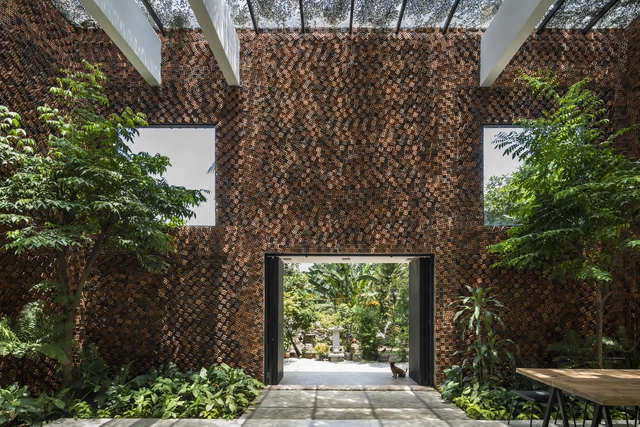
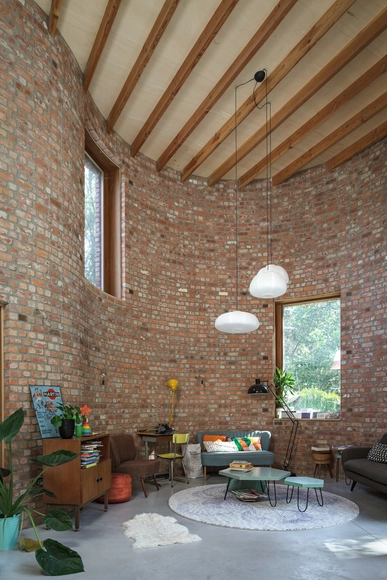
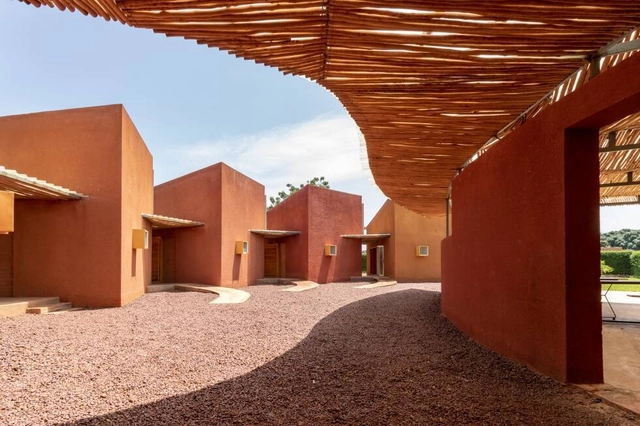
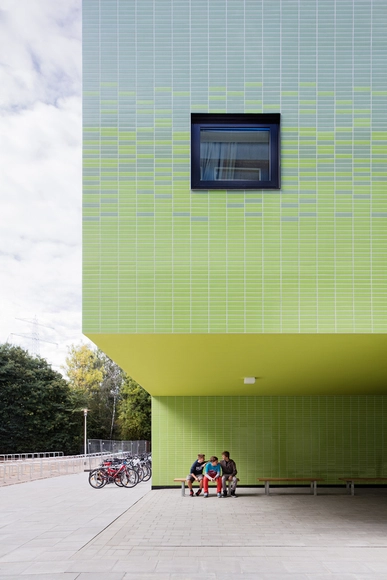
The Brick Award is an internationally established award that presents outstanding brick architecture from all around the world. Independent architecture critics, experts, architects and developers are invited to submit innovative and creative buildings and other construction works made of clay building materials. The spectrum of applications ranges from building solutions using classic clay blocks, facing bricks and roof tiles to the creative application of clay pavers and ceramic façade panels.
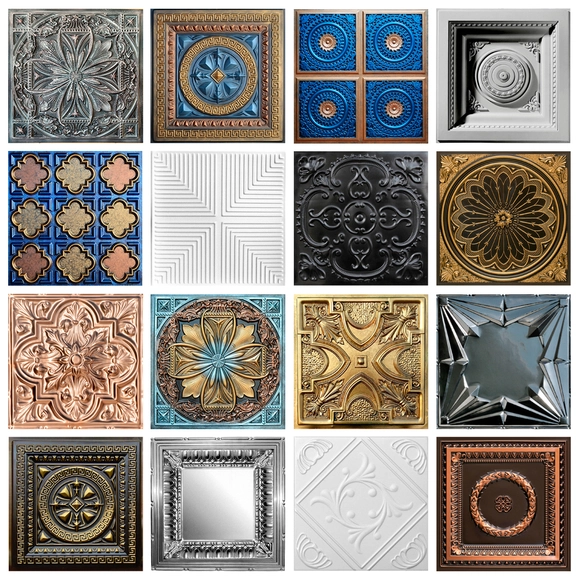
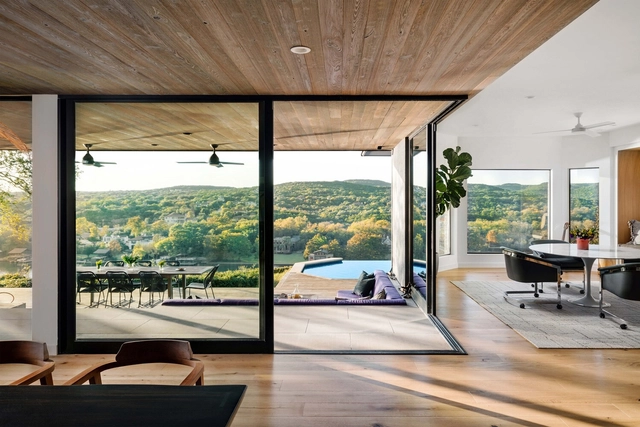
Ceilings were once a symbol of grandeur and opulence, adorning grand buildings, churches and palaces with their intricate and elaborate designs. We still find ourselves looking up in awe at these mesmerizing historical buildings, with our eyes drawn to their magnificent vaulted ceilings, remarkable truss structures or distinctive works of art depicting mythology, historical events and landscapes. Contemporary design, on the other hand, has shifted towards a sleek, minimalistic aesthetic; one where plain white ceilings have become the norm in most modern buildings. As Rasmus Wærn and Gert Wingårdh suggest in their book What is Architecture? And 100 Other Questions, “Ceilings have devolved from being the focal point of a room to being a zone for mechanical equipment.” And yet they have extraordinary creative potential.
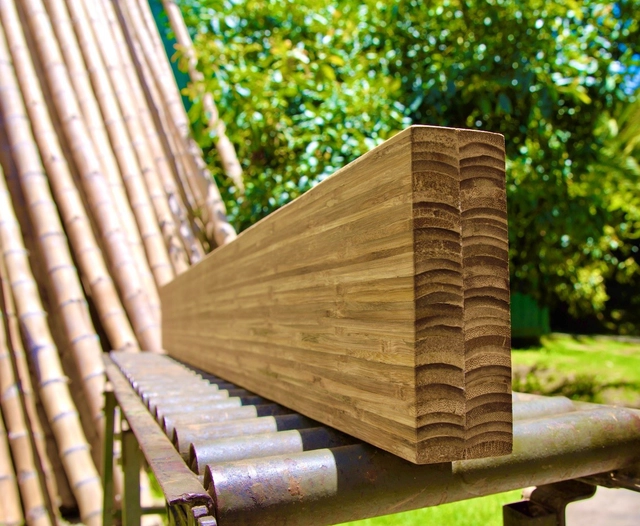
Pretentious as it may sound, we can say with certainty that bamboo is one of the most promising materials for the future of the construction industry. Neil Thomas, principal engineer at atelier one, says that if we were to design an ideal building material, it would look a lot like bamboo. This is because it grows very fast, is present in many countries around the world, has a highly efficient cross-section, and has impressive load-bearing strength. But beyond its structural use in its raw form, bamboo is also a material that allows a high level of processing and can be laminated for flooring, fixtures and, as we will see in this article, for Structural Engineered Bamboo (SEB) structures, which are very similar to Engineered Wood. We spoke with Luke D. Schuette, founder and CEO of ReNüTeq Solutions, LLC, a company in St. Louis, Missouri, that has been working with this structural material technology.
Students at the School of Engineering, RMIT University recently published a study experimenting with a new form of waste management and recycling. As they note in their research, cigarette butts are the most commonly discarded single waste item in the world, with an estimated 5.7 trillion having been consumed around the globe in 2016. However, the materials in cigarette butts—particularly their cellulose acetate filters—can be extremely harmful to the environment due to poor biodegradability. The RMIT study builds on a previous research study by Mohajerani et. al (2016) that experimented with adding discarded cigarette butts to clay bricks for architectural use. In their research, the RMIT students found that such a measure would reduce the energy consumption of the brick production process and lower the thermal conductivity of the bricks, but that other issues including bacterial contamination would have to be addressed prior to successful implementation. Below, we explore this research in more detail, investigating its relevance to the architecture industry and imagining possible futures of application.
https://www.archdaily.com/956164/is-it-possible-to-create-lightweight-bricks-by-recycling-cigarette-buttsLilly Cao
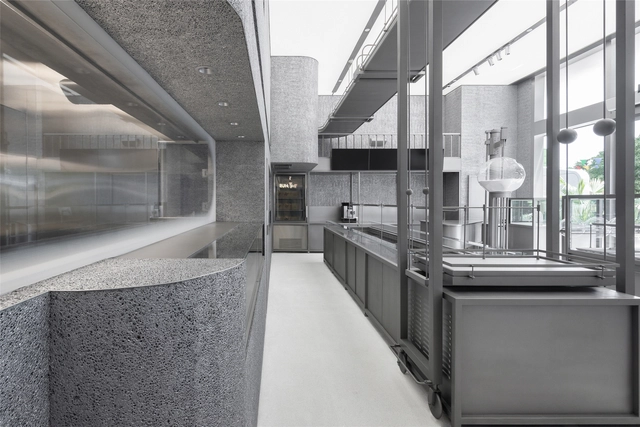
Stabilized Aluminum Foam is a unique looking material that combines the aesthetics of aluminum (its texture, shades and brightness) with a spongy, porous appearance. It is produced by injecting air into a cast aluminum alloy with stabilizing agents, which after curing, creates a porous and lightweight, yet highly resistant and rigid cellular structure. Because of its mechanical and thermal properties, it is particularly useful in applications in various industries, such as automotive, aerospace and marine, especially for energy absorption, thermal insulation, and sound dampening.
"It's all about attitude and adjusting to the existing circumstances", explains Boonserm Premthada, when asked about his conceptual process. Founder of Bangkok Project Studio, and one of today's most influential Thai figures in architecture, Premthada has been the subject of Bêka & Lemoine's latest documentary, ‘Big Ears Listen With Feet’. The film highlights the personal story of the architect, unveiling all the events and happenings that shaped his unique identity and sensibility. "Deaf from birth", the short movie looks at how the architect's disability led him to listen in a different way, learning from elephants. who "despite their large ears [...] perceive sound mostly through their feet."
During the first half of the 2nd century AD, one of the most important buildings in the history of Western architecture was erected in Rome: the Pantheon. Its main and most impressive feature is its coffered concrete dome, which ends in a perfectly round central opening. This oculus kicked off a series of later projects that noted the value of circular openings, which were replicated as glazed skylights and as compositional elements on facades. This eventually evolved, for example, into the detailed and colorful rose windows of the Gothic basilicas. In all its configurations, the oculus (meaning "eye" in Latin) holds symbolism that goes beyond that of a traditional window: its luminous projection gracefully marks the passage of time, solemnly highlighting an architectural space.
The world's oldest stained glass window (which is still standing) is conventionally believed to be in Augsburg Cathedral in the German state of Bavaria. Depicting the prophets David, Jonah, Daniel, Moses and Hosea, it is estimated to be nearly 1,000 years old, having undergone significant bombing during World War II. Long before that, however, mankind had been working with glass, and while today we have thin frames with crystalline sheets and a variety of properties, we had to come a long way to get here. In this article we will tell you a little about the evolution of glass windows and the technologies and possibilities that we have today.
Carbon footprint, circularity and environmental sustainability are terms that are increasingly present in many professional fields, but what do they mean? How do they relate to architecture and the built environment? We spoke with civil, environmental and sanitary engineer Lucas Rosse Caldas about these and other emerging architectural issues.
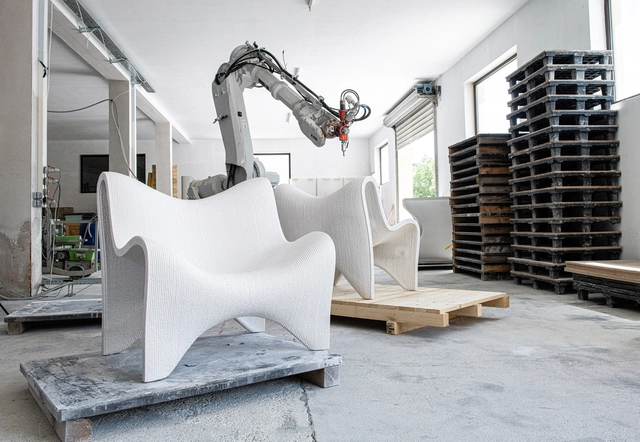
Can you imagine being able to prototype a piece of furniture at the touch of a button and testing it in just a few hours? This might become a common practice sooner than we may think. Fueled by material innovation, automation and cutting-edge technology, a new era in home decor is emerging; one where 3D printing opens up a world of creative possibilities that transcend the bounds of traditional design. Yes, furniture is still mass-produced using conventional methods –molding, cutting, bending–, but 3D printing continues to disrupt the industry. As the revolutionary technology evolves and becomes more accessible, it has unleashed an unparalleled level of creative expression and efficiency. The concept is simple: a digital design is created using 3D modeling software and then printed, layer by layer, in the form of a physical object, bringing complex geometries to life. It’s a whole new kind of digital craftsmanship.
The backyards, outdoor areas usually located at the back of the lot, are spaces dedicated to rest, entertainment and family interaction. Its setting is essential to guarantee the warmth and comfort we seek in our homes. At the same time, as they are areas exposed to rain, sun and, sometimes, snow, they also need to have resistant, durable and easy-to-maintain materials.
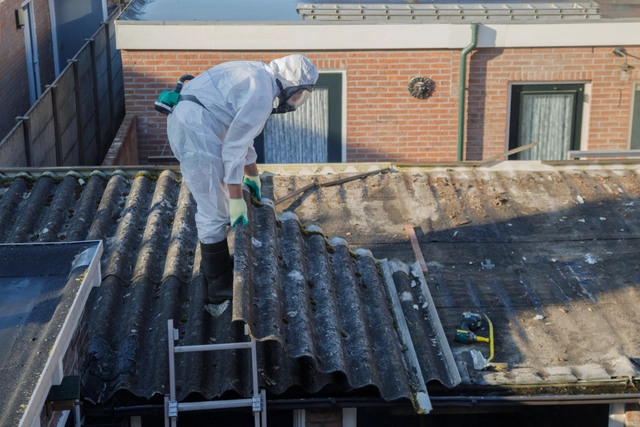
Dozens of countries around the world have already banned the use of asbestos in the civil construction sector. Cheap to extract and abundant in nature, it is a natural fiber used to manufacture water tanks, insulation, partitions, tiles and decorative elements. Its properties include great flexibility and high chemical, thermal and electrical resistance, making it a seemingly ideal material. However, there is scientific evidence that links exposure to asbestos to several types of cancer, as well as to asbestosis - when the fibers of the mineral lodge in the pulmonary alveoli, compromising the respiratory capacity. The asbestos case shows how certain construction materials can –suddenly or not– become a distant memory because of their negative impacts. In addition to the effects on health, the use of materials with high energy consumption or made of rare raw materials is currently under pressure, as experts call to reduce their use or to make their manufacturing methods "greener". The penalty? Disappearing in the near future, becoming yet another in the list of banned building materials. In this article, we delve into some of these materials and what their risks are.
Through shapes, colors, and the elements on their facades, many architects have sought to bring a sense of movement to works that are otherwise physically static. Santiago Calatrava, Jean Nouvel, and Frank Gehry are only a few of the masters who managed to provide a dynamic effect to motionless structures, highlighting the work in context using formal strategies borrowed from the plastic arts. In other cases, however, architects have also opted for physically kinetic structures that could bring a unique aesthetic or functional dimension to the work.
When children first learn to draw a house, there are four basic components they illustrate: a wall, a pitched roof, a door and one or more windows. Along with the common structural elements, windows have always been considered to be indispensable architectural features for their multiple functions. While providing views, daylight and natural ventilation, these insulate from cold and heat, protect from external threats and enhance a facade’s appearance. They are also associated with a strong poetic or symbolic value; it is through them that we are able to connect with and enjoy our surroundings, be it a beautiful natural landscape or a dense urban environment. An expressive part of any building, windows serve as a visual bridge between the inside and outside, acting somewhat as a refreshing escape from our everyday routine.
Everyone who has ever built anything—a model, a birdhouse, or small pieces of furniture—has a clear sense of the amount of things that can go wrong during the construction process. A screw that is impossible to tighten fully, a warped wooden board, an inattention or a miscalculation that can frustrate plans instantly. When we transport these small inconveniences to a building scale, with countless processes and many different people involved, we know how complex a work can become and how many things can get out of control, taking more and more time and requiring more and more resources to finish. And when we talk about a building that needs to float, be completely self-sufficient, and, after fulfilling its useful life, be completely reused—could you imagine the technical challenges of building something like this?
“Color is life; for a world without color appears to us dead.” Distinguished painter Johannes Itten described with these words the exceptional power of color in our perception of the world. As a sensory event, color not only defines what we see, but also how we feel and think; it has been shown to alter productivity, inspire decision-making, shape our perspective, and influence our well-being. Especially in architecture, these effects materialize and reach their maximum splendor. Design is, after all, a visual form of communication, and color palettes –coupled with light, shadow, texture and sheen– play a critical role in conveying a building’s message. They create the ambiance that supports the function of a space, completely transforming user experience. Even the greats have recognized this power: “Polychromy is as powerful an architectural tool as the plan and section,” Le Corbusier once said.