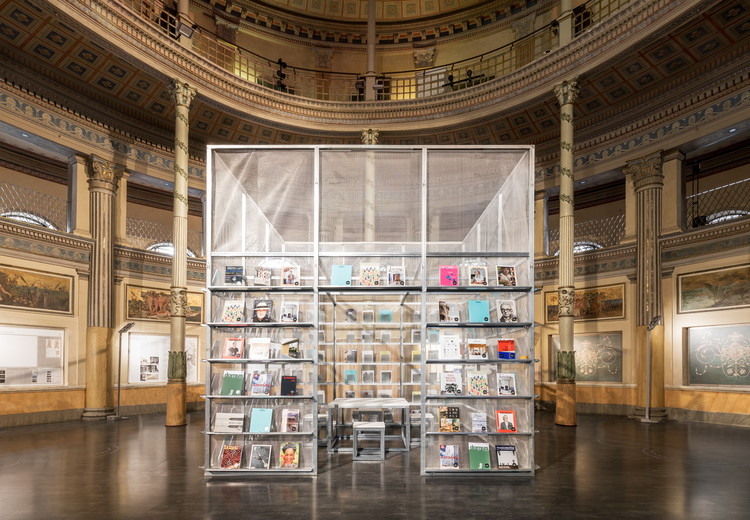
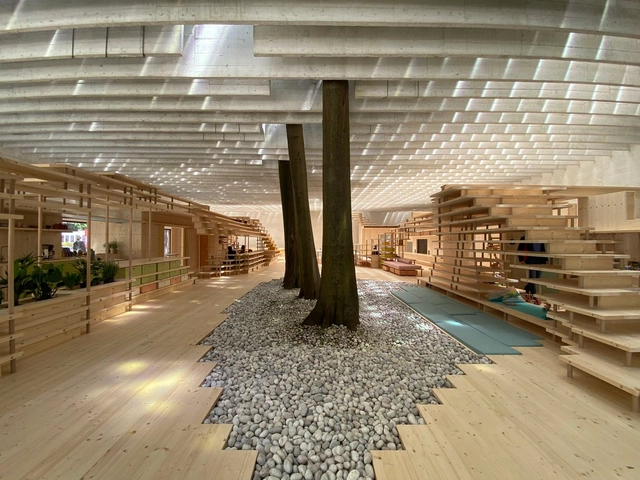
The 2021 edition of La Biennale di Venezia also includes 112 participants in competition from 46 countries, with 60 national participants in the Giardini, at the Arsenale, and in the historic city center of Venice, Italy. Moreover, the international exhibition welcomes three countries, being part of the most important architectural biennale of the world for the first time: Grenada, Iraq, and Uzbekistan.
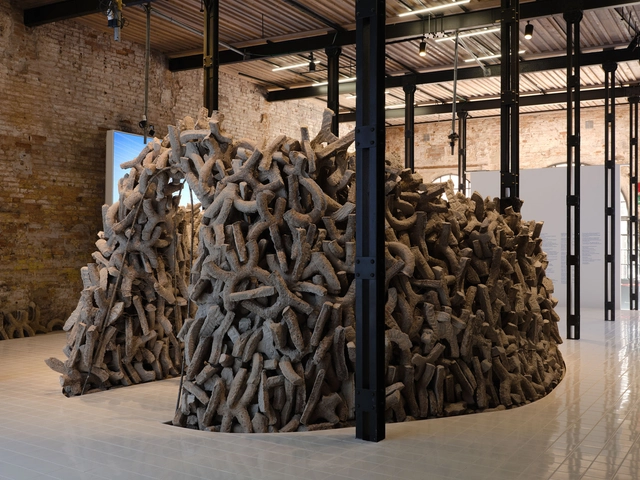
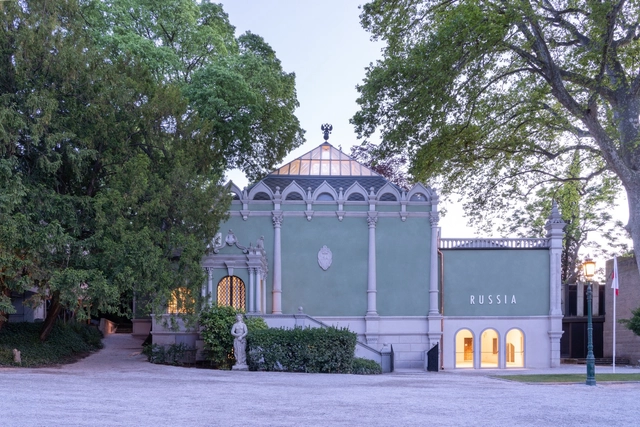
To answer the Biennale's question of "How Will We Live Together", curators of the national pavilions explored what the future would look like in an architectural, cultural, and environmental context. Many saw the future as an entirely virtual environment whereas other highlighted the cruciality of physical coexistence with neighbors. ArchDaily met with Ippolito Pestellini Laparelli, curator of the Russian Pavilion, to discuss how the idea of the pavilion came together throughout the year as a virtual platform for interdisciplinary creative thinkers, the role of cultural institutions across physical and digital spaces, and how digitalization is always part of the conversation.
In the Genesis flood narrative, Noah built an ark after a call from God, who decided to flood and destroy all life on Earth due to the misbehavior of humanity. Only Noah's family and a couple representatives of each species of animals could enter the huge vessel and save themselves. In the bible, the ark is described in the exact measurements of 300 cubits in length by 50 cubits in width by 30 cubits in height. This was a unit used at the time based on the length of the forearm, measured from the tip of the middle finger to the elbow. A Dutchman who has devoted himself to building a replica of Noah's Ark, without success in finding a correspondingly accurate value in the metric system, used his own body measurements as a module. Modulation in architecture means adapting the project to a defined measurement based usually on a specific dimension or material. Whether it is a meter, a brick, a tile, or a container, it serves to guide the design process and make it more efficient and sustainable.
In their newly released architectural film, photographer Laurian Ghinitoiu and filmmaker Arata Mori take viewers on a visually compelling tour of OMA’s MEETT Exhibition and Convention Centre, Toulouse’s new mega-scale parc des expositions. Exploring the design’s multiple facets, from the monumental to the mundane, the film constructs a detailed vision of the project sitting at the intersection of architecture, infrastructure, masterplan and public space.
OMA's new MEETT Exhibition and Convention Centre in Toulouse has officially opened. OMA Partner Chris van Duijn led the development, the third largest parc des expositions in France outside of Paris. The masterplan of MEETT was conceived as an active strip - ‘une bande active’ - forming a physical border between urban development and countryside. The project was made to help organize an integrated development approach for the city.
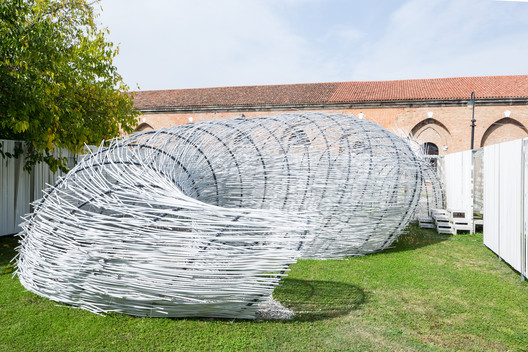
Casting complex shadows and engulfing visitors in a series of maze-like spaces, the Parasite Pavilion was constructed as part of the Synergy & Symbiosis event at the 2014 Venice Biennale, which showcased the best of the UABB Shenzhen and Hong Kong Biennale from 2005 to 2014. Based on the Bug Dome pavilion, a similar experiment from Hong Kong 2009, constructed by Weak! Architects as an icon of "illegal architecture," this new pavilion is the product of an intensive five day workshop, with the cooperation of architects and students from Europe, Australia, and China. Read on after the break to learn more about the Pavilion and Workshop.














.jpg?1602174447&format=webp&width=640&height=580)
.jpg?1602174471&format=webp&width=230&height=230&crop=true)
.jpg?1602174397&format=webp&width=230&height=230&crop=true)
.jpg?1602174433&format=webp&width=230&height=230&crop=true)
.jpg?1602174457&format=webp&width=230&height=230&crop=true)
.jpg?1602174447)
.jpg?1601298649&format=webp&width=640&height=580)
.jpg?1601298893&format=webp&width=230&height=230&crop=true)
.jpg?1601298025&format=webp&width=230&height=230&crop=true)
.jpg?1601298123&format=webp&width=230&height=230&crop=true)
.jpg?1601298172&format=webp&width=230&height=230&crop=true)
.jpg?1601298649)
.jpg?1601311239&format=webp&width=640&height=580)
.jpg?1601311432 "© Marco Cappelletti")
.jpg?1601311642 "© Marco Cappelletti")
.jpg?1601311316 "© Philippe Ruault")
.jpg?1601311542 "© Marco Cappelletti")
.jpg?1601311239)