-
Architects: Hyunjoon Yoo + Partners
- Area: 1594 m²
- Year: 2025


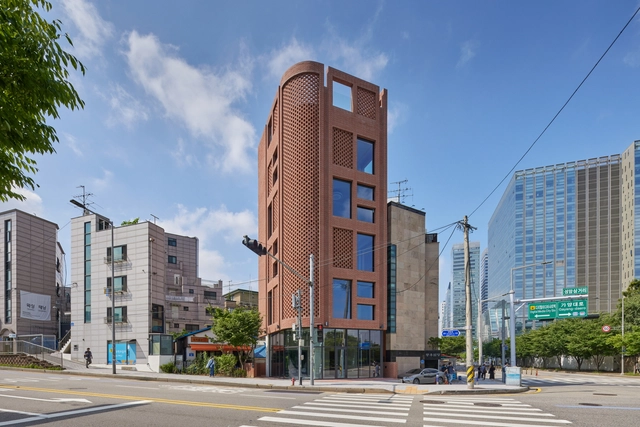
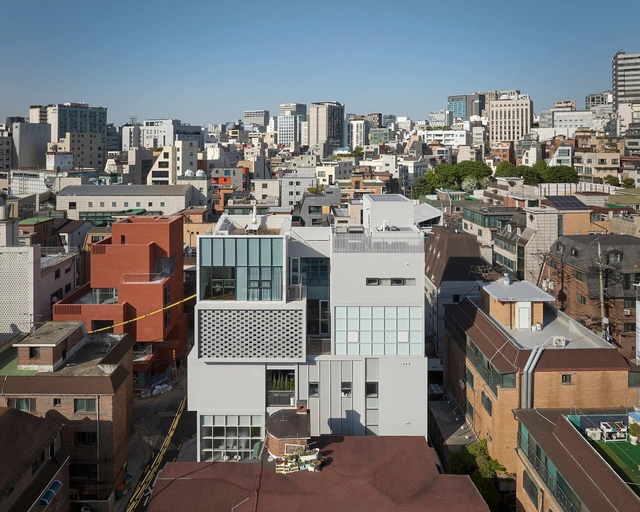
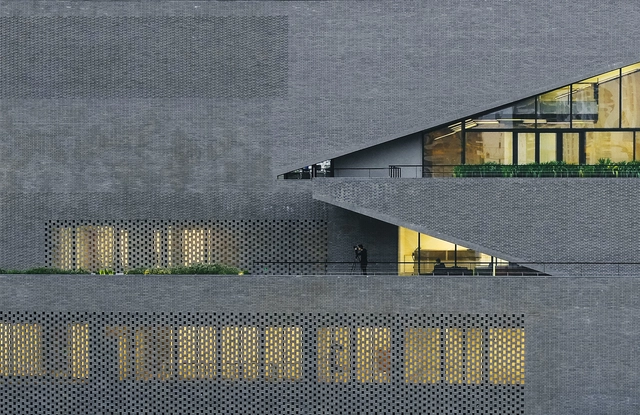
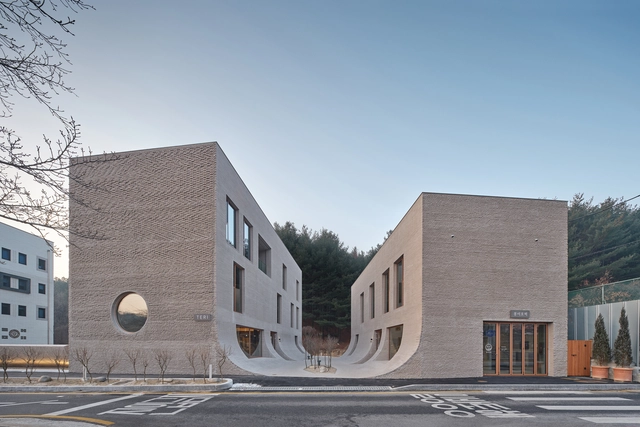
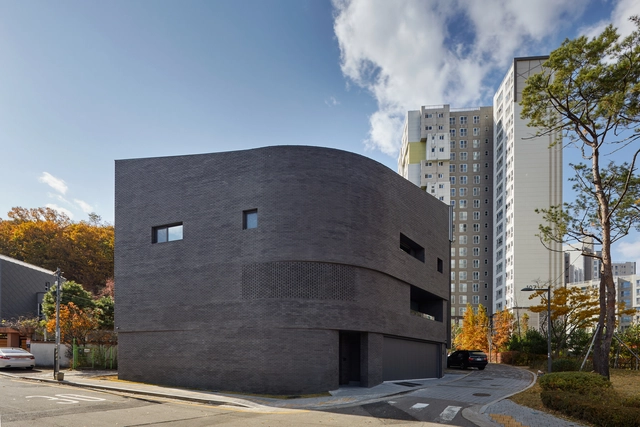
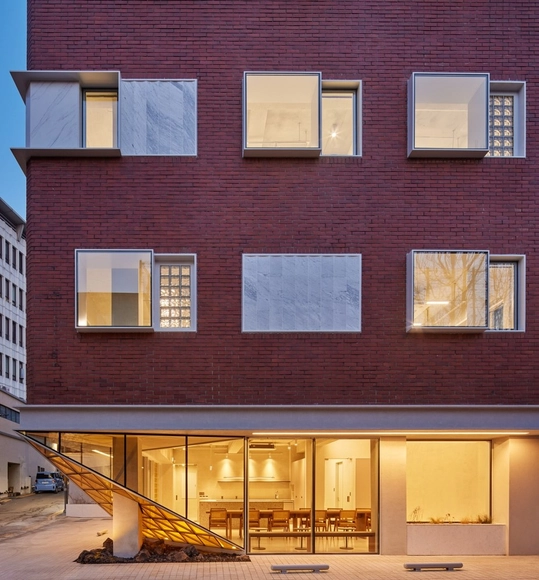
Pink Floyd's song “Another brick in the wall” criticizes an alienating and demotivating educational system. People, or children, are portrayed as bricks due to their homogeneity, whether in the way of living or thinking in a society that is not very fond of opposition. Bricks work very well in this comparison, having changed very little throughout history and around the world in their rectangular shapes. But that's not true of their colors. Although we tend to think of red when we talk about bricks, there are infinite possibilities of shades, depending on the composition and manufacturing process of the pieces.
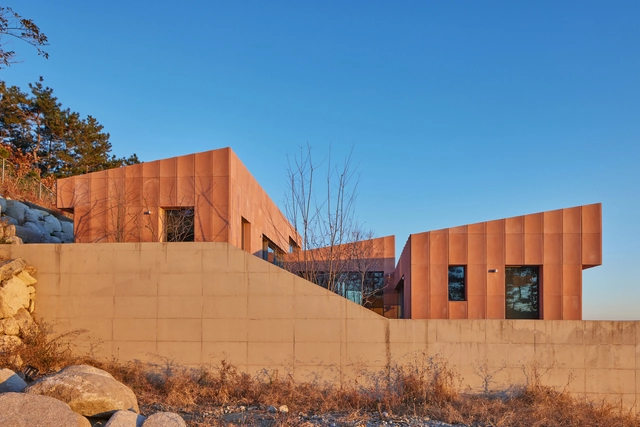

With the rise of social media, we have entered an era of a multimedia "society of the spectacle," where the influence of images on the public grows year by year. Visually-driven media platforms are increasingly dominating the market, serving as an alternative form of travel that allows people to experience breathtaking scenes from around the world without leaving home. Dedicated to bringing design inspiration to the public, ArchDaily established its presence on Instagram years ago. In 2022, we expanded onto China’s Xiaohongshu (RED), hoping to share exceptional projects with a broader audience. As expected, the influence of star architects remains strong, while playfulness, aesthetics, and relevance emerge as key terms guiding reader interest. Here, we present the top 20 most-liked architectural projects of 2022 on ArchDaily’s official Xiaohongshu and Instagram accounts. Read on to discover the public's architectural preferences.
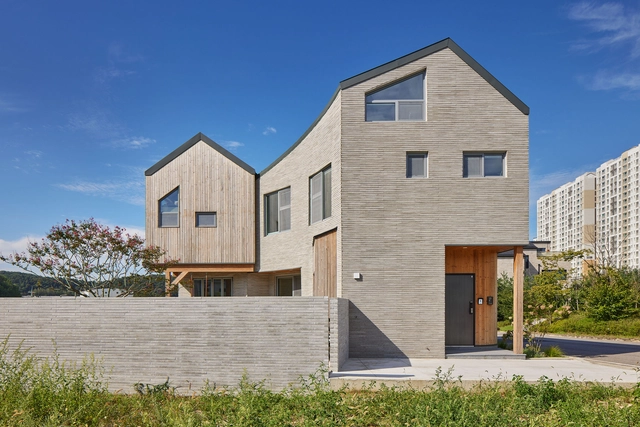

Humane cities center around the relationships between people and places. Communities thrive on shared resources, public spaces, and a collective vision for their locality. To nurture happy and healthy cities, designers and the public apply methods of placemaking to the urban setting. Placemaking—the creation of meaningful places—strongly relies on community-based participation to effectively produce magnetic public spaces.