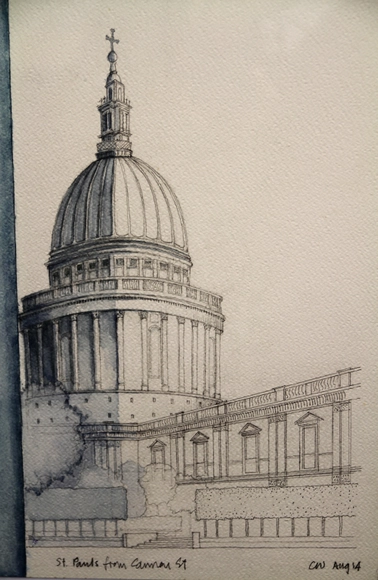
Chris Wilkinson Courtesy of Article 25

BROWSE ALL FROM THIS PHOTOGRAPHER HERE
↓
Subscriber Access

The Computer vs The Hand In Architectural Drawing: ArchDaily Readers Respond

In the architecture world, there are a handful of persistent debates that arise time and time again: the challenges of being a woman in the field of architecture is one of them, for example; the problems of a culture of long hours and hard work is another. But one of the most enduring arguments in architecture - especially in the academic sphere - is the battle between hand drawing and computer aided design. Both schools have their famous proponents: Michael Graves, for example, was known as a huge talent with a pencil and paper, and came to the defense of drawing in articles for the New York Times, among others. Patrik Schumacher, on the other hand, is famous for his commitment to the capabilities of the computer.

To advance this heated conversation, two weeks ago we reached out to our readers to provide their thoughts on this topic in an attempt to get a broad cross-section of opinions from architects from all walks of life. Read some of the best responses after the break.
Subscriber Access

Hand vs. Computer Drawing: A Student's Opinion

In the debate about how architects - both present and future - represent our ideas, it is easy to find a lot of articles supporting both sides. One can read as many arguments as they want and find valid points supporting both hand-drawing and computer production. One could argue that there is nothing prettier than a well done hand-rendering of a project. Another could say that, although hand-drawing is something that catches the eye, it is not practical at all, takes longer than doing it on the computer and does not allow architects to easily modify it.

There is however another facet that does not come up as frequently as it maybe should: how does this discussion affect students? I believe we lie in a cross-fire, between the idea of what architects do and what they actually do.