

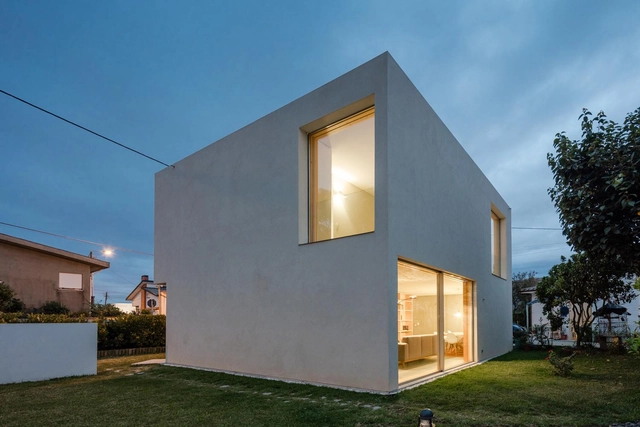

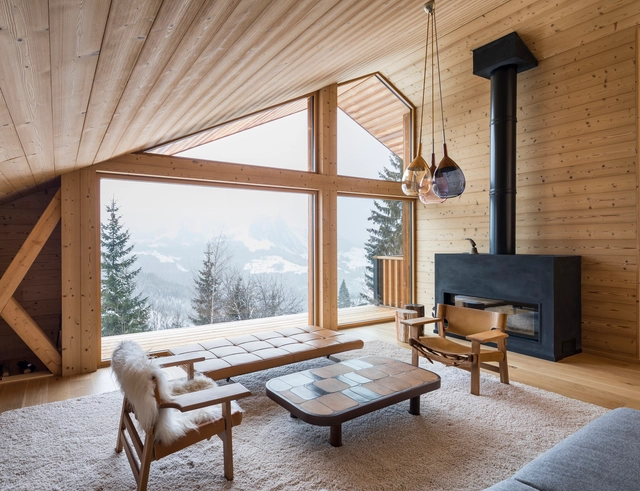
Mountain House / Studio Razavi architecture
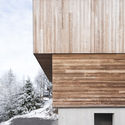
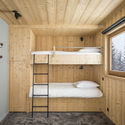

-
Architects: Studio Razavi architecture
- Area: 200 m²
- Year: 2017
-
Manufacturers: Dornbracht, Alape, Duravit, Blanc, Fondis, +5
https://www.archdaily.com/873306/mountain-house-studio-razavi-architectureRayen Sagredo
Be Open / Brenac & Gonzalez & Associés
Stefan_Tuchila_16_K3_7217.jpg?1496990500&format=webp&width=640&height=580)
Stefan_Tuchila_06_K3_6206.jpg?1496990378 "© Ştefan Tuchilă")
Stefan_Tuchila_58_K3_7768.jpg?1496991138 "© Ştefan Tuchilă")

Stefan_Tuchila_30_K3_5030.jpg?1496990776 "© Ştefan Tuchilă")
Stefan_Tuchila_16_K3_7217.jpg?1496990500)
-
Architects: Brenac & Gonzalez & Associés
- Area: 9630 m²
- Year: 2016
-
Manufacturers: Mermet
-
Professionals: AVLS, BATIPLUS, CSB, TERELL Groupe, TN+
https://www.archdaily.com/873304/be-open-atelier-darchitecture-brenac-gonzalezCristobal Rojas
d+k House / buck&simple


-
Architects: buck&simple
- Year: 2016
-
Manufacturers: Blum, Caesarstone, Escenium HAUS, Jetmaster, PGH Bricks
https://www.archdaily.com/873104/d-plus-k-house-buck-and-simpleDaniel Tapia
Power to the Bower: A Bird’s Architectural Method of Seduction

Think your decked-out bachelor pad is the slickest on the block? Think again. That reputation now resides in the carefully constructed abode of the bowerbird, which transforms the art of building into the art of seduction. Native to Australia and New Guinea, the bowerbird dedicates months to construct elaborate woven nests, known as bowers, as a means of attracting mates in one of nature’s most unique courting rituals.
https://www.archdaily.com/873098/power-to-the-bower-a-birds-architectural-method-of-seductionOsman Bari
6 Endangered World Heritage Sites as Seen from Space

Born between the Tigris and the Euphrates, ancient Mesopotamia, "the land between two rivers," is considered the cradle of human civilization or, at least, one of its main birthplaces. Archaeological discoveries place in this fertile crescent the earliest origins of agriculture, the birth of writing and the first religions, governments and social orders.
This historical land corresponds to most of the current Iraq and Kuwait, as well as to smaller parts of Syria, Turkey and Iran. Not only these countries, but the whole Middle East in general, is home to invaluable ancient treasures. However, a great number of the cultural sites there are faced with major threats, as they have been caught up in the middle of ongoing conflicts that are ravaging the region. As a consequence, UNESCO included several sites in the List of World Heritage in Danger, in the hope that the international community could join in an effort to save these endangered properties.
To reinforce this message, the Earth Observation company Deimos Imaging has released satellite images of six World Heritage sites in danger in Syria, Iraq and Yemen. The images were captured by the satellite Deimos-2, launched in 2014 and designed for cost-effective, dependable very-high-resolution Earth Observation applications, providing 75cm/pixel pan-sharpened images.
https://www.archdaily.com/873265/6-endangered-world-heritage-sites-as-seen-from-spaceDeimos Imaging
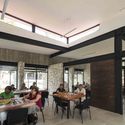
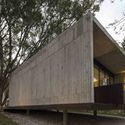
Casa del Abuelo / Taller DIEZ 05
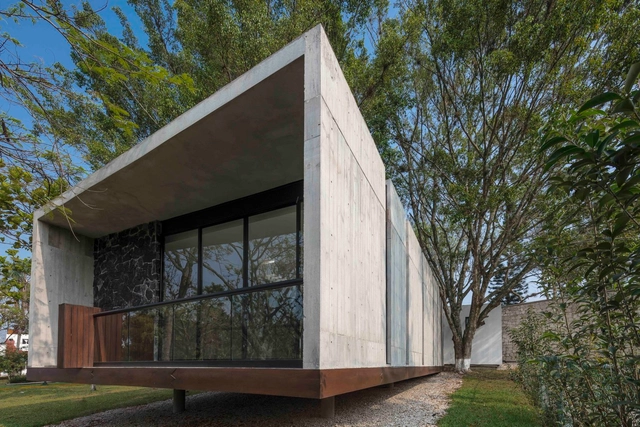


-
Architects: Taller DIEZ 05
- Area: 780 m²
- Year: 2016
-
Manufacturers: Cemex, Construlita, Interceramic
https://www.archdaily.com/872706/casa-del-abuelo-taller-diez-05Daniel Tapia
The New Yorker Cartoon That Accompanied the Opening of Frank Lloyd Wright's Guggenheim

From wonderment to disgust, the opening of Solomon R. Guggenheim Museum by Frank Lloyd Wright in 1959 was met with a wide range of reactions from the public. This profound cultural moment was distilled in a series of witty cartoons published in the New Yorker that simultaneously lampooned both the innovative architecture and its critics, which were recently shared in a blog post by the Guggenheim Museum. Through detailed sketches, cartoonist Alan Dunn represents the experience of the building, from staring into the exterior porthole windows to walking around the grand ramp. In one drawing he depicts the perspective from the first floor looking up at the dome, giving a sweeping sense of the curvature and geometries of the building.
https://www.archdaily.com/873335/the-new-yorker-cartoon-that-accompanied-the-opening-of-frank-lloyd-wrights-guggenheimAnnalise Zorn
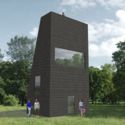
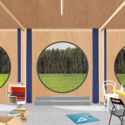
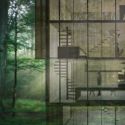
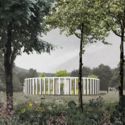
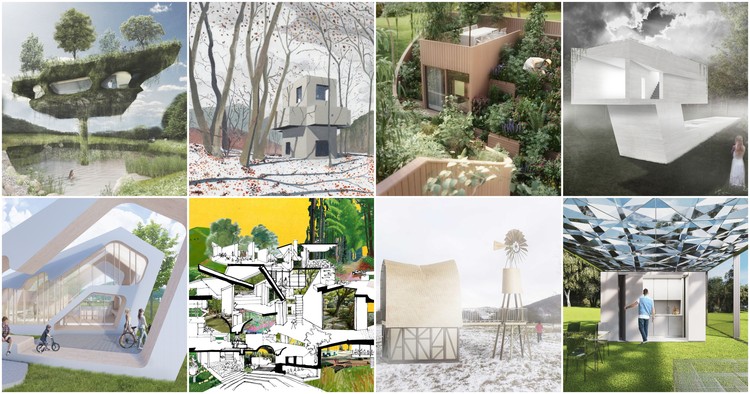
19 Emerging Firms Design Prototype Houses for Living Among Nature

As the boundary that separates work and leisure in the 21st Century continues to be blurred by technology, architects Christoph Hesse and Neeraj Bhatia sought out to uncover a tranquil solution. The pair are co-curating an upcoming exhibition at the Kulturbahnhof Kassel in Germany as part of Experimenta Urbana in a show called “Ways of Life,” which opens July 5th.
This international initiative seeks to discover “a new nomaticism.” A gathering of 19 emerging architecture offices each presents a dwelling encompassed in nature. These buildings are often equal parts project and manifesto. The show’s overarching theme is the delicate balance of naturally induced relaxation and programmatically encouraged productivity. Each firm must additionally consider constraints that include limited square footage, integration of rapidly advancing information technology, and a strictly sustainable design.
https://www.archdaily.com/873322/19-emerging-firms-design-prototype-houses-for-living-among-natureThomas Musca
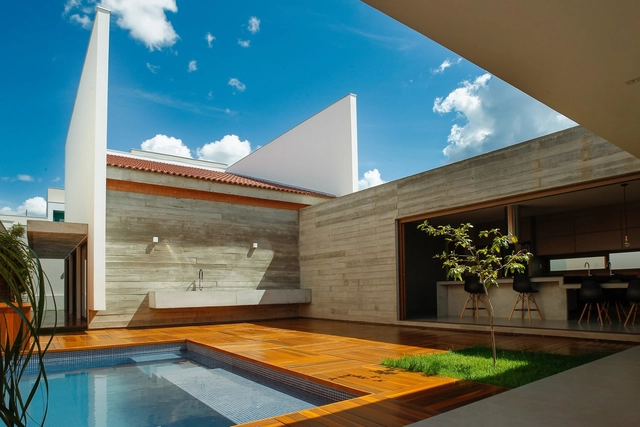
Cuiabá House / Allouchie Arquitetos

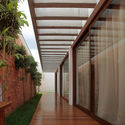
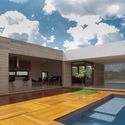
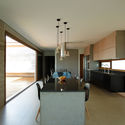

https://www.archdaily.com/872299/cuiaba-house-allouchie-arquitetosCristobal Rojas
In Seasonal Harmony - The Changing Nature of Frank Lloyd Wright's Fallingwater

This month marks the 150th anniversary of the birth of acclaimed American architect, visionary, and social critic Frank Lloyd Wright -considered by many to be one of the greatest architects of his time.
As a pioneer of the term 'organic architecture', one of his most iconic representative works is Fallingwater, set upon a waterfall in rural Pennsylvania. From its unveiling, the scheme has evoked enduring reflection on the relationship between man, architecture, and most prominently in Frank Lloyd Wright's mind - nature.
https://www.archdaily.com/873243/in-seasonal-harmony-the-changing-nature-of-frank-lloyd-wrights-fallingwaterMaría Francisca González
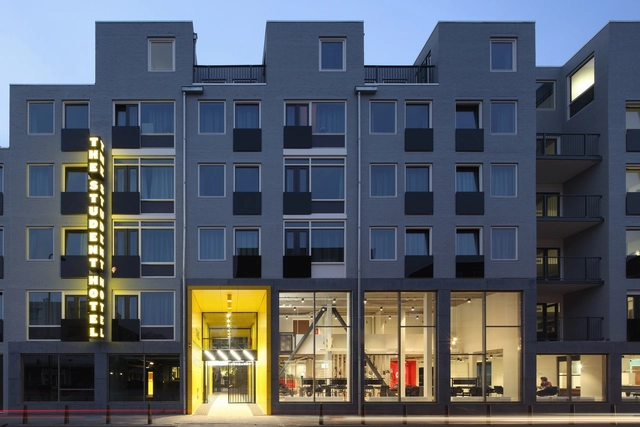
The Student Hotel The Hague / HVE Architecten





-
Architects: HVE Architecten
- Area: 12153 m²
- Year: 2015
-
Professionals: Hillen & Roosen
https://www.archdaily.com/872449/the-student-hotel-the-hague-hve-architectenCristobal Rojas
Michelberger Hotel, Room 304 / Sigurd Larsen

-
Architects: Sigurd Larsen
- Area: 50 m²
- Year: 2015
-
Manufacturers: Enrico Zanolla, SpinaLED, Vertigo Bird, Wewood
https://www.archdaily.com/872107/michelberger-hotel-room-304-sigurd-larsenAntonia Cayupe
Layer House / Robson Rak Architects and Interior Designers
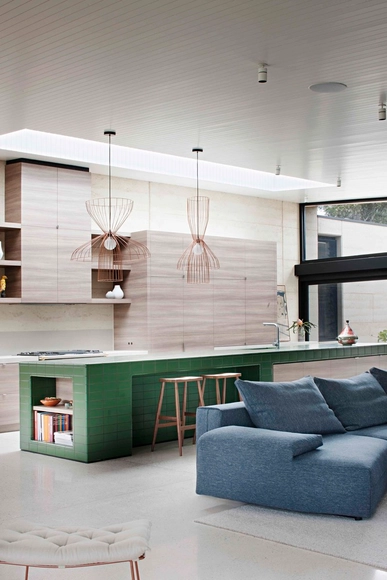


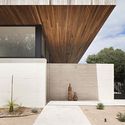


-
Architects: Robson Rak Architects and Interior Designers
- Area: 470 m²
- Year: 2016
-
Manufacturers: Capral, DTile, Rammed Earth
-
Professionals: Heycon Pty Ltd
https://www.archdaily.com/871521/layer-house-robson-rak-architects-and-interior-designersCristobal Rojas
Diversity of Use and Landscape Defines Denmark's New Rowing Stadium
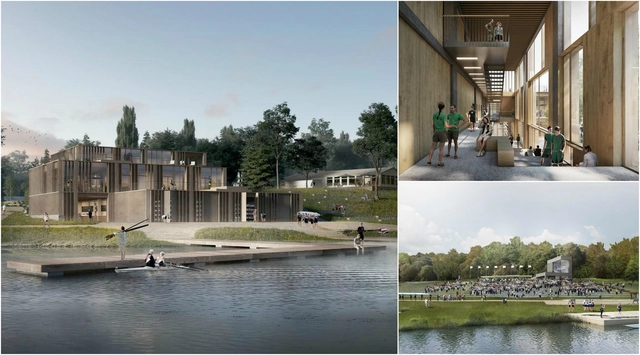
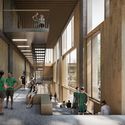
Denmark-based AART architects have been selected to design the country’s national rowing stadium, seeing off strong competition from prominent firms such as BIG and Kengo Kuma. Situated upon Bagsværd Lake on the outskirts of Copenhagen, the scheme seeks to allow the sporting elite and broader public to form a close interaction with picturesque natural surroundings.
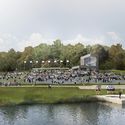
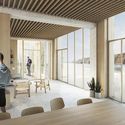


https://www.archdaily.com/873162/diversity-of-use-and-landscape-defines-denmarks-new-rowing-stadiumNiall Patrick Walsh
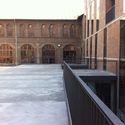
Academic Building Faculty of Arts UC / Fernando Pérez Oyarzun + José Quintanilla Chala



-
Architects: Fernando Pérez Oyarzun + José Quintanilla Chala
- Area: 1763 m²
- Year: 2015
https://www.archdaily.com/873258/academic-building-faculty-of-arts-uc-fernando-perez-oyarzun-plus-jose-quintanilla-chalaCristobal Rojas
TED Talk: Justin Davidson on the Pitfalls of Glass Skylines
Justin Davidson: Why glass towers are bad for city life -- and what we need instead
There's a creepy transformation taking over our cities, says architecture critic Justin Davidson. From Houston, Texas to Guangzhou, China, shiny towers of concrete and steel covered with glass are cropping up like an invasive species.
“That person sitting right next to you might have the most idiosyncratic inner life, but you don’t have a clue because we’re all wearing the same expression. That is the kind of creepy transformation that is taking over cities.”
Shiny, bland and homogenous. These characteristics are increasingly encapsulating the nature and identity of our cities through the use of glass as a dominant building material, says Pulitzer Prize-winning critic Justin Davidson. In this TED Talk, Davidson stresses the importance of the use of a varied palette of materials that evoke texture, color, roughness, and shadow, in order to create architecture of individuality and character to define and populate the world’s cities. The rapid growth of glassy skylines, which express a disdain for communal urban interaction, can be curbed through a combination of new and old building and material techniques, creating architecture that absorbs history and memory as a reflection of the diverse society it lives in.
https://www.archdaily.com/873289/ted-talk-justin-davidson-on-the-pitfalls-of-glass-skylinesOsman Bari
Frank Lloyd Wright's Early Blueprints of the Guggenheim Reveal Design Ideas That Didn't Make It
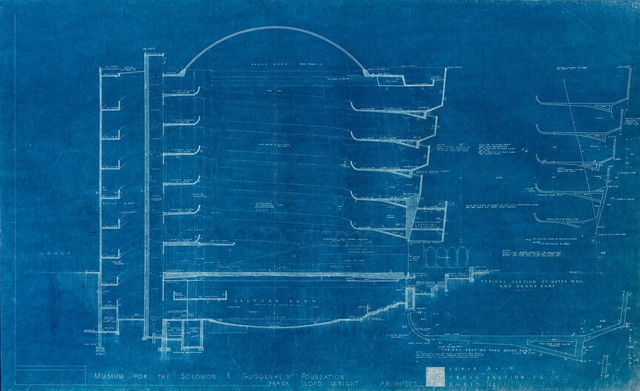
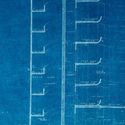
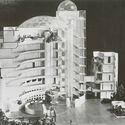
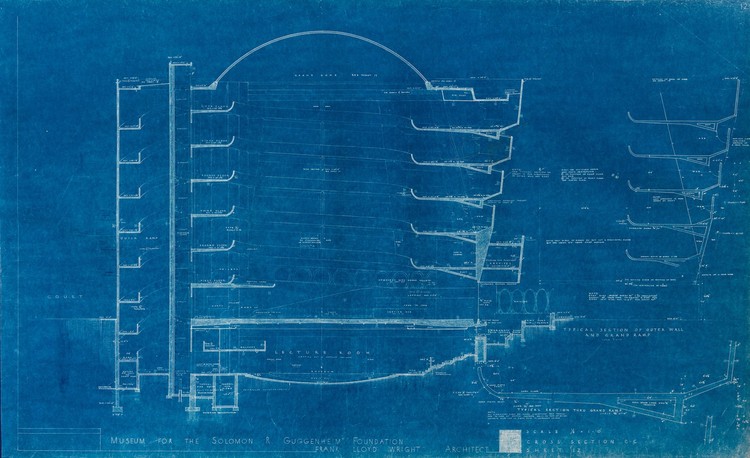
In a recent blog post from the Solomon R. Guggenheim Museum, curator Ashley Mendelsohn explores unrealized design details from Frank Lloyd Wright’s iconic design in New York City, based on blueprints and drawings from the museum’s archives. From large-scale questions of form to material choices, the 16-year period between the commission and the completion of the museum saw many design iterations. Most notable of these are the circulation paths drawn by Wright in the 1953 blueprints that include a steeper circular ramp—in addition to the "Grand Ramp"—that would allow for expedited access to the floors. Though replaced later with a triangular staircase, the "Quick Ramp" demonstrates Wright’s exploration of overlapping geometries.


https://www.archdaily.com/873259/frank-lloyd-wrights-early-blueprints-of-the-guggenheim-reveal-design-ideas-that-didnt-make-itAnnalise Zorn